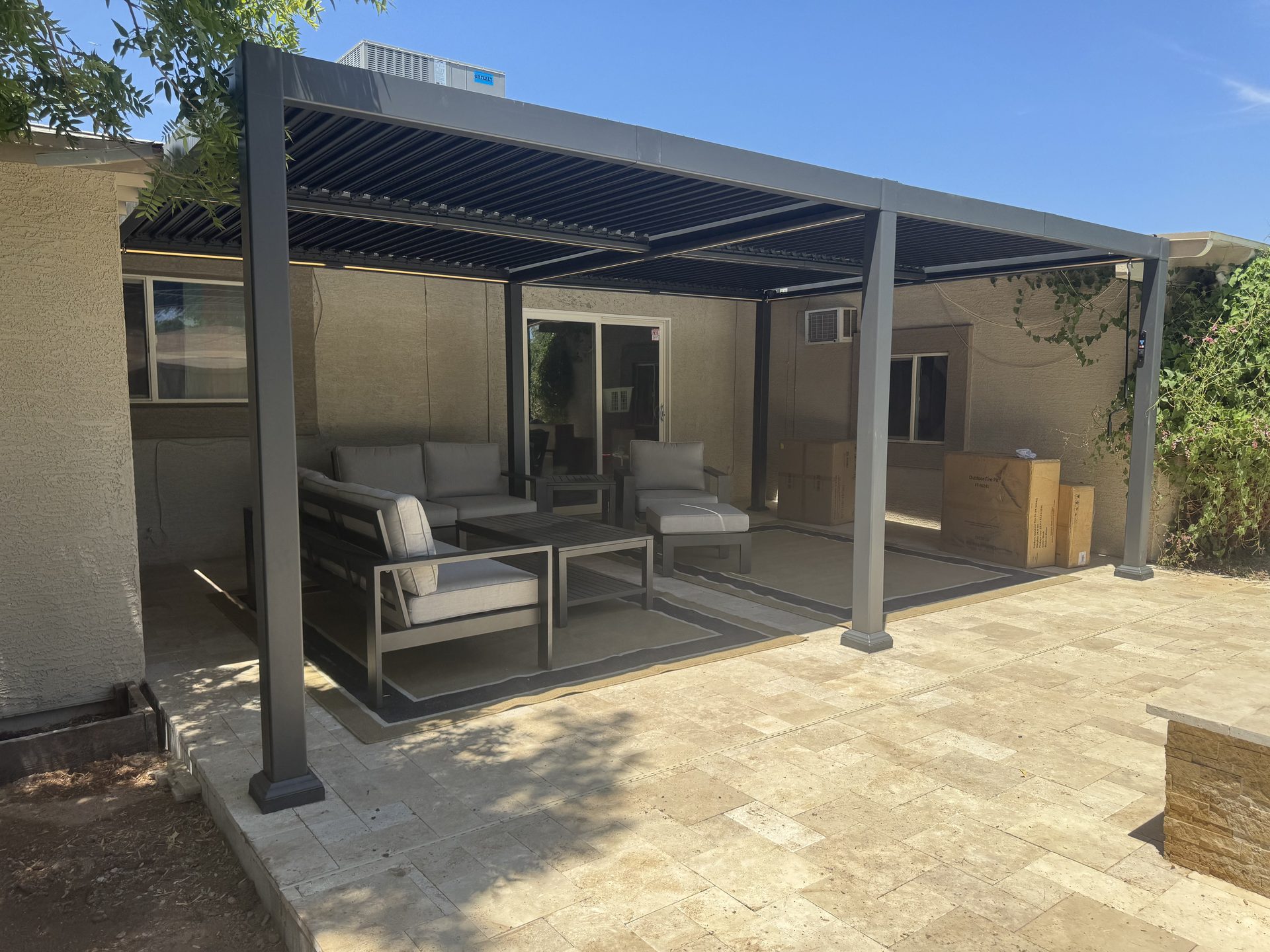
A homeowner in Phoenix bought a sharp aluminum louvered pergola with a motorized roof (a PURPLE LEAF model from Amazon) and ran into the part the box doesn't warn you about: assembling it and anchoring it permanently over an existing travertine paver patio is not a flat-pack weekend project. They called us to put it up right. We assembled the kit, set the posts in concrete footings cut through the pavers, let the footings set, and finished the install, so they ended up with a solid, shade-on-demand patio instead of a wobbly kit bolted to the surface.
Here's how the project came together, and why the way the posts are anchored matters more than anything else on a job like this.
Project at a Glance
- Location: Phoenix, Arizona
- Assembled a customer-supplied aluminum louvered pergola
- Motorized louvered roof you adjust by remote, plus integrated lighting
- Posts set in concrete footings cut through the pavers
- Freestanding over an existing travertine paver patio
- Built for Phoenix heat and monsoon wind
Why a Pergola Over Pavers Isn't a Flat-Pack Job
A louvered pergola is a big, sail-like structure, and where it really gets installed is below the patio, not on top of it. The two things that decide whether it lasts are how the posts are anchored and whether the frame goes up truly square and level. Get those wrong and you end up with a structure that racks, leans, or works loose in the first monsoon.
Pavers Aren't a Foundation
Travertine pavers sit on a bed of sand over compacted base. That's perfect for a patio surface and completely wrong as something to anchor a pergola to. Bolt the posts to the top of sand-set pavers and there's almost nothing holding the structure down when the wind gets under it. So the posts have to reach past the pavers to concrete footings poured into the soil below. That's the difference between a pergola that's part of the house and one that's just sitting on the patio.
Cutting Through the Travertine Without Wrecking the Patio
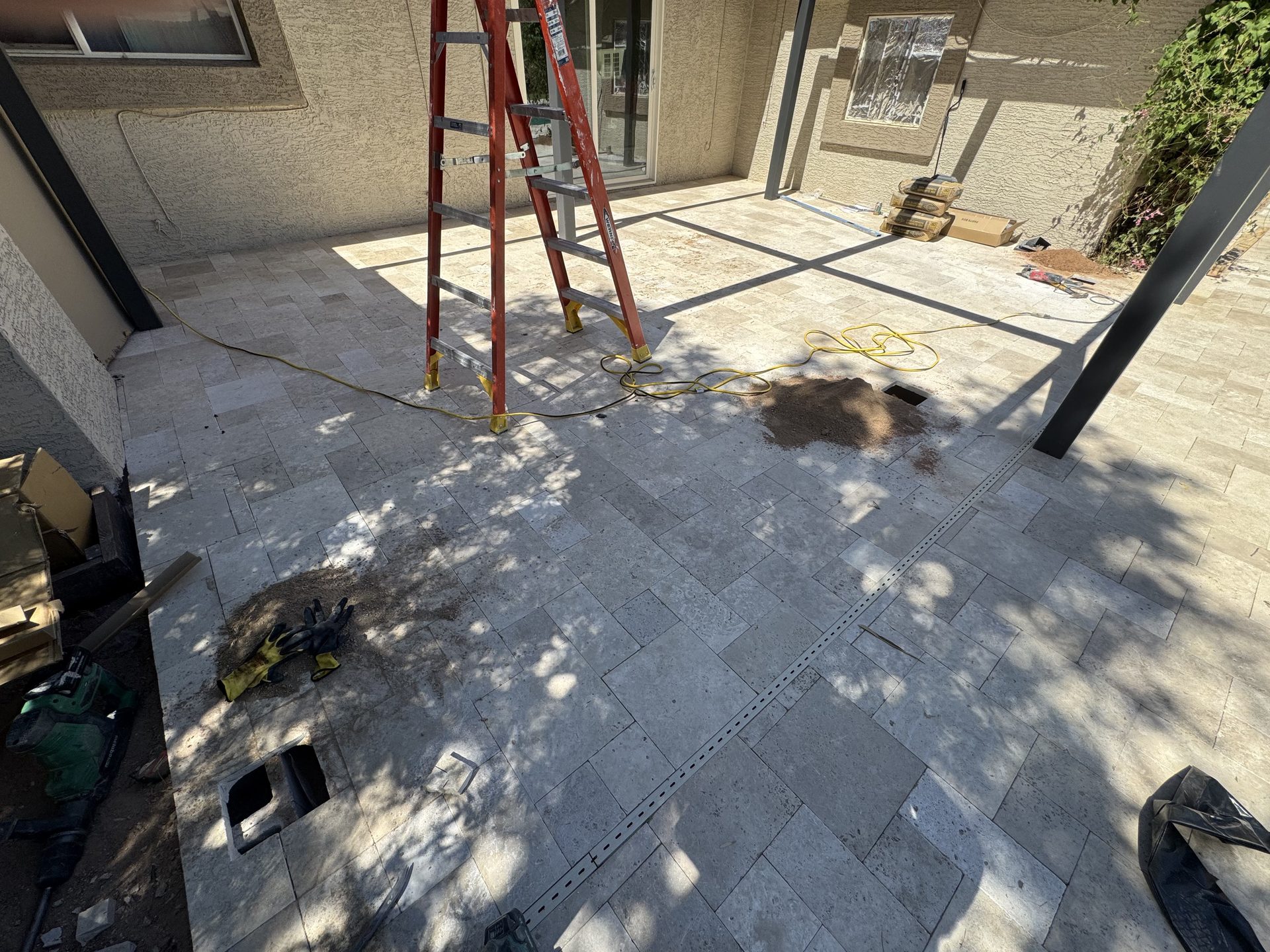
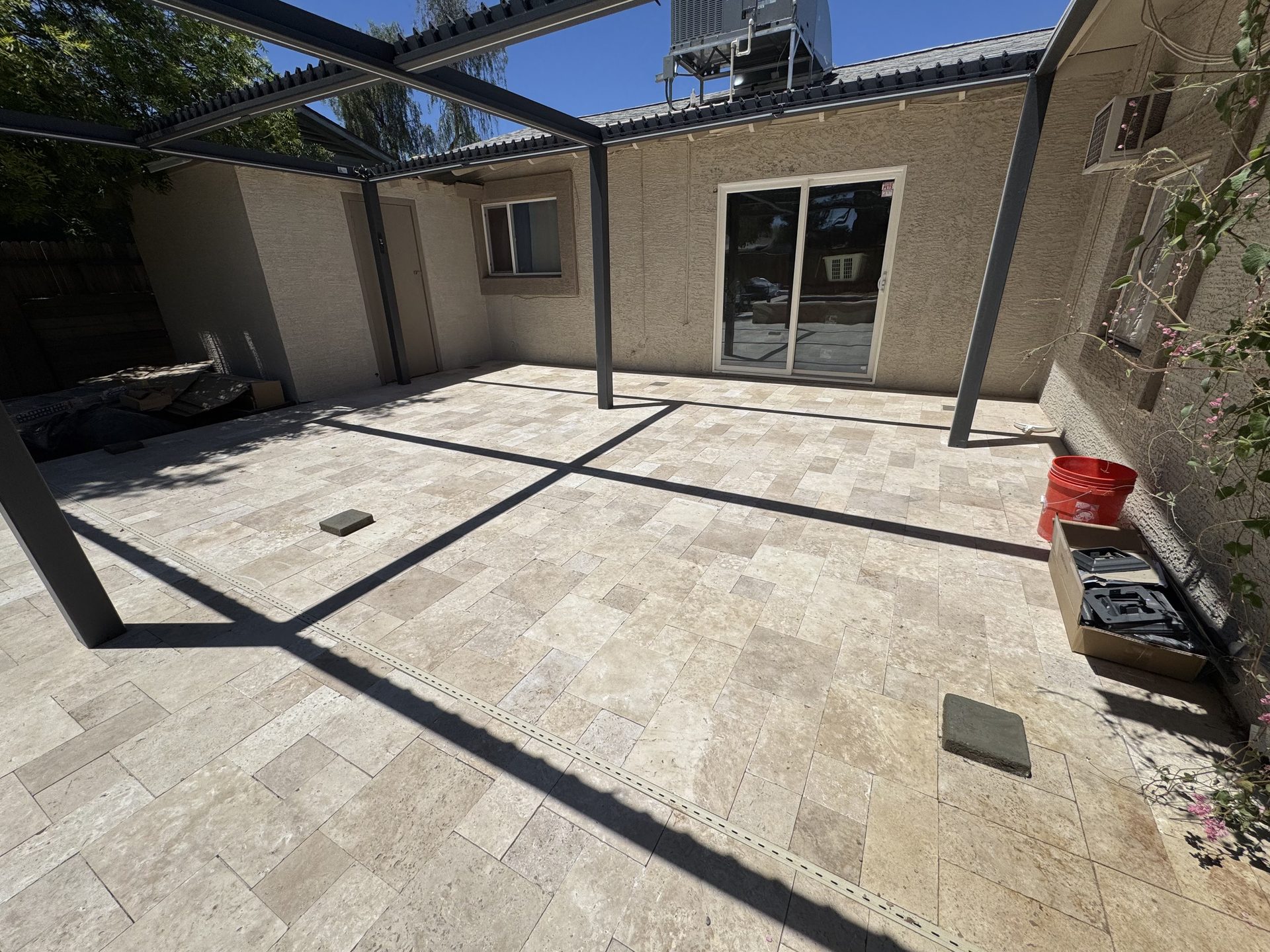
The trade-off is that footings mean disturbing the patio. At each post location we cut an opening through the travertine and the paver base so we could dig down into native soil. It's careful work, because the goal is to get the footings in and then patch the pavers back around each post so the finished patio still looks clean and intact. We're honest with clients about this up front: a few spots get touched, and it's worth it for a structure that holds.
How We Assembled and Set the Pergola
Layout and the Footing Openings
Before any digging we called Arizona Blue Stake (811) to mark underground utilities, then squared the post locations with string lines and checked the diagonals so the frame would end up true. Where the footings hit the hard, cemented caliche common in Phoenix soil, we soak and dig to full depth rather than stopping shallow, the same way we set fence posts.
Setting the Posts in Concrete
With the openings cut, we dug the footings, set the posts plumb, braced them, and poured the concrete. Plumb in both directions and a string line across the post tops keep everything in plane, which is what lets the louvered roof go on later without a fight. Then we let the footings set up before loading any weight onto the posts. You don't hang a frame on green concrete.
The Frame and the Motorized Roof
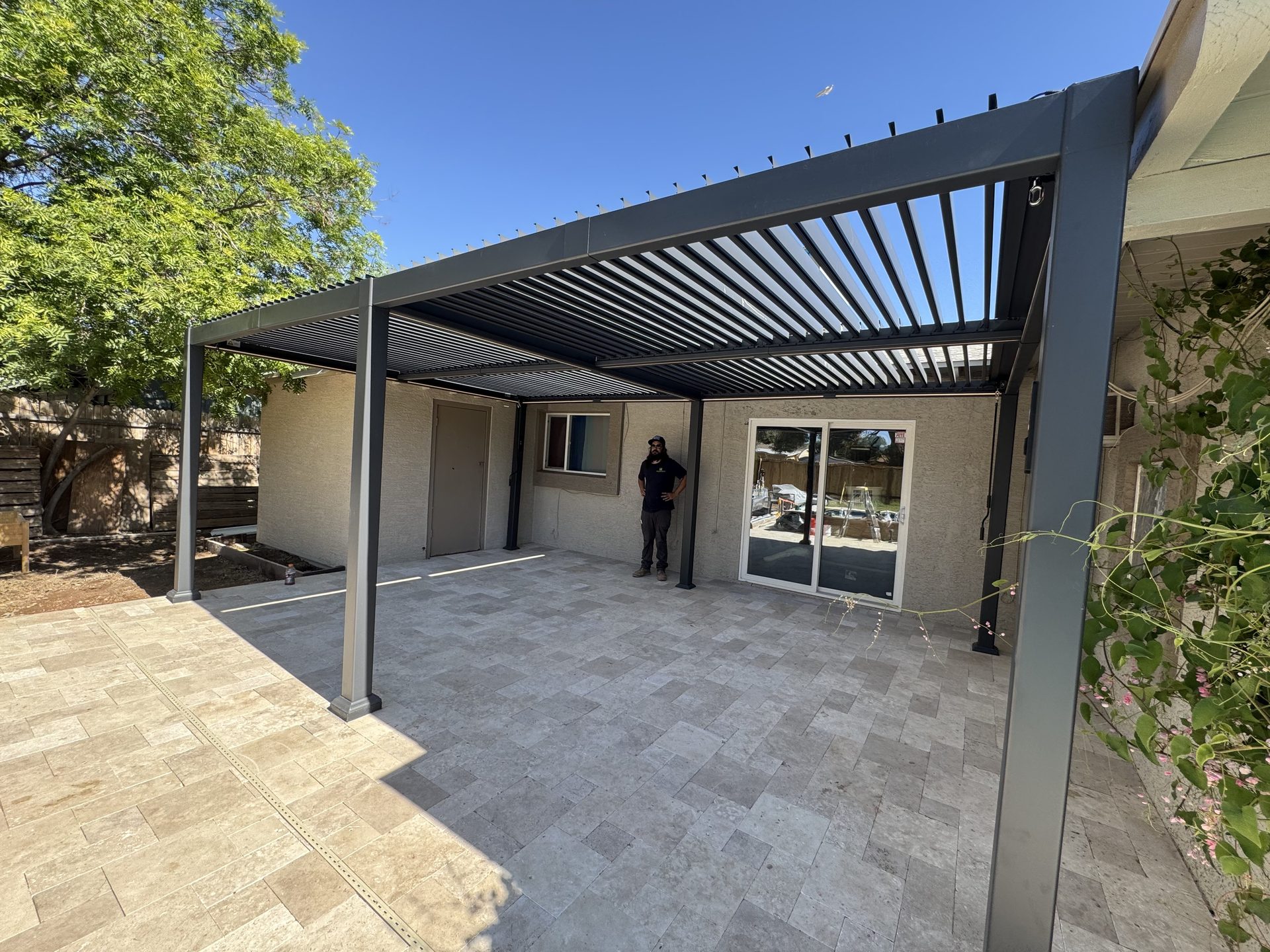
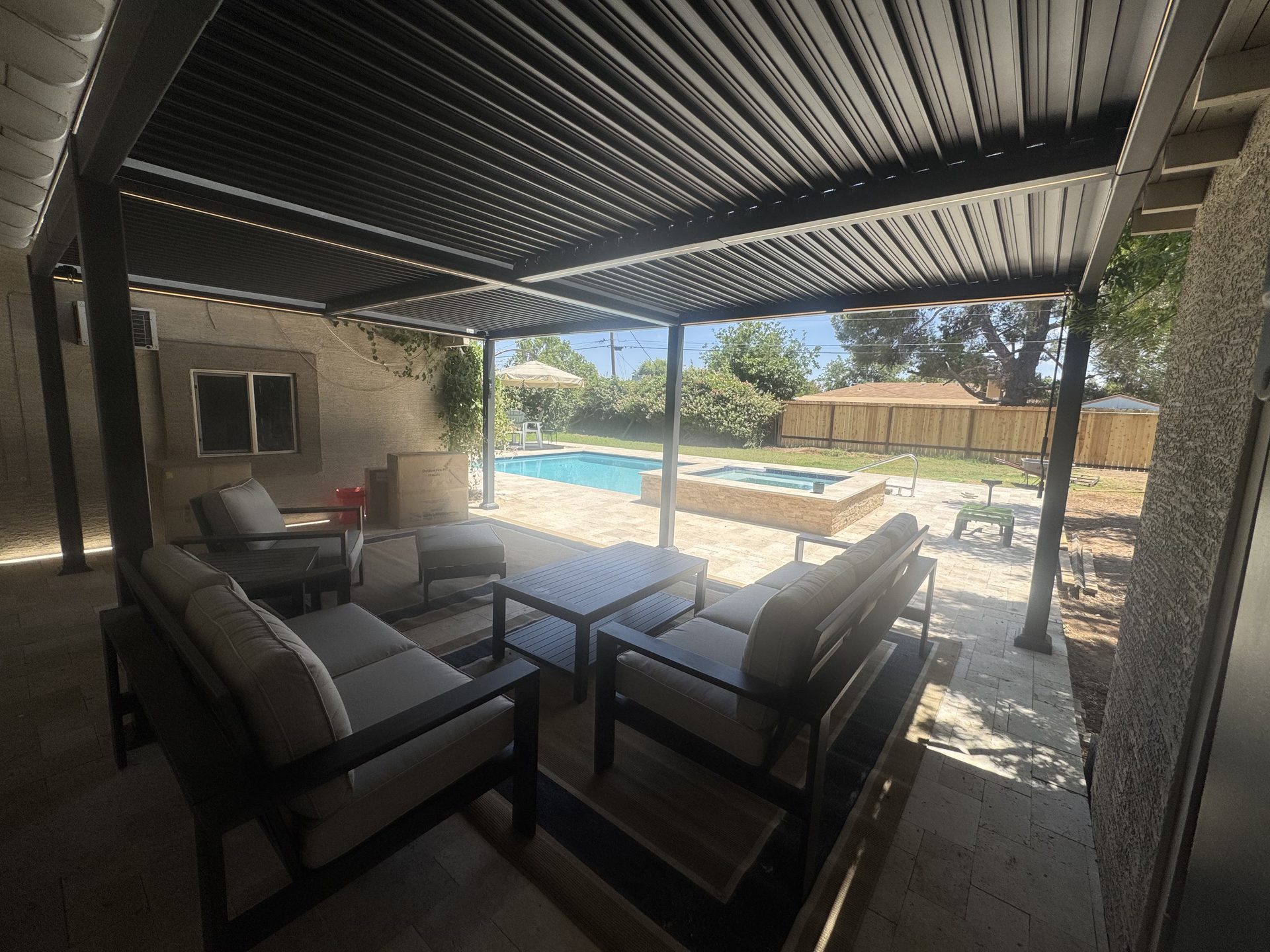
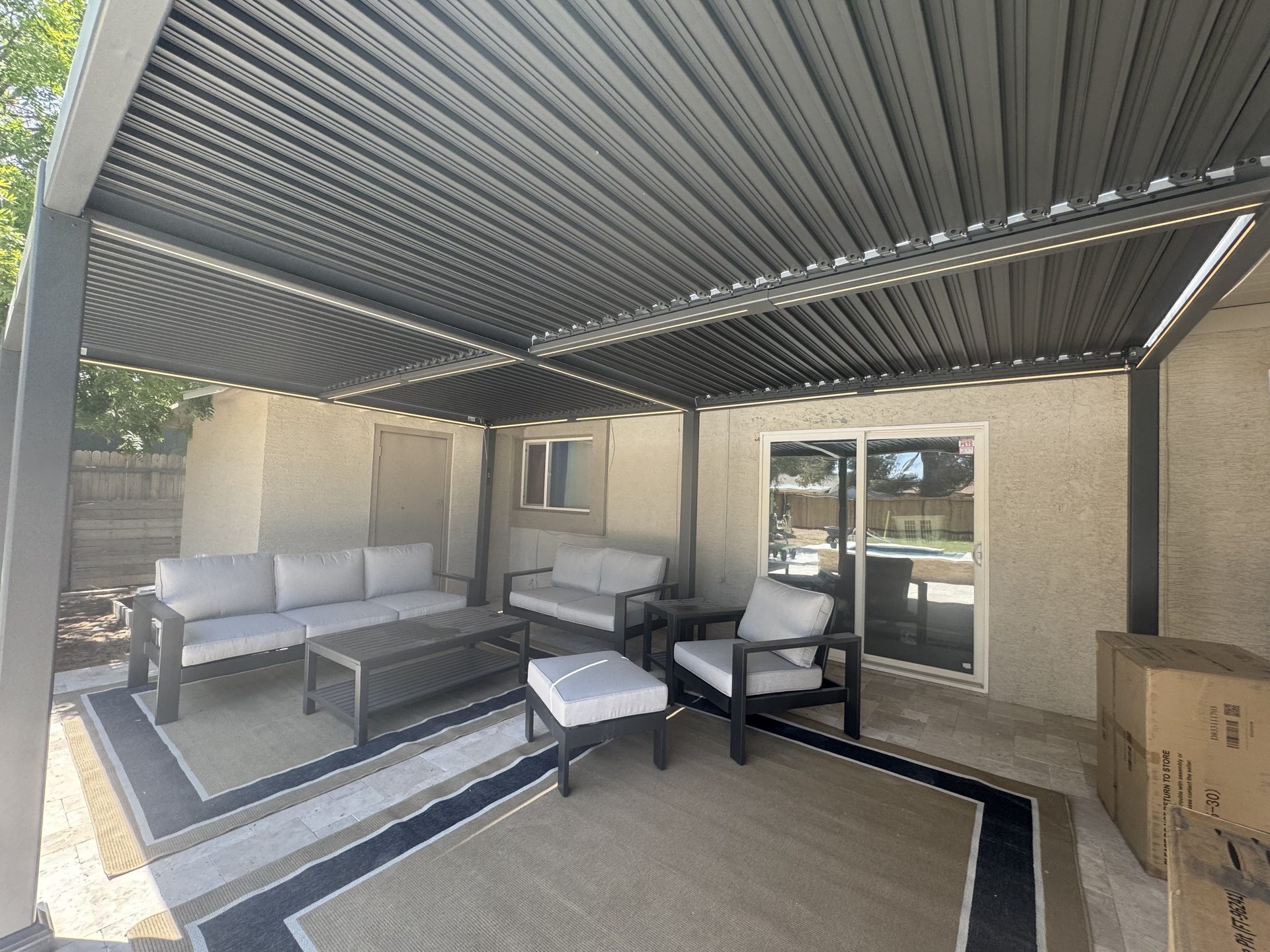
Once the posts were solid, the assembly moved quickly: the beams, then the rafters, then the motorized louvered roof that makes this kind of pergola worth it. At the touch of a remote, the louvers open and close so the homeowner can dial in full sun, dappled light, or near-solid shade, and the integrated LED lighting in the frame keeps the patio usable after dark. All the connections get checked and snugged, and the structure gets a final pass for level and plumb.
Will a Pergola Hold Up to Phoenix Heat and Monsoon Wind?
This is the real test in Arizona. The summer sun is constant, and monsoon storms hit with hard, gusty wind. Aluminum handles the heat and won't rot or check the way wood can. The wind is where the footings earn their keep: a pergola takes two kinds of force in a storm, uplift trying to lift it and racking trying to shove it sideways into a parallelogram. Posts set in real concrete footings resist the uplift, and solid, square connections resist the racking. That's the whole reason we anchor into the ground instead of bolting to the surface.
What a Pergola Like This Costs in Phoenix
The kit is its own cost that the homeowner buys, often from a retailer like Amazon. The installation is separate, and for a pergola like this it typically starts around $2,000 and runs to $5,000 or more for a larger louvered system, depending on the number of posts, how many footings have to be cut through the pavers, the patio patch-back, and site access. Because it depends so much on the specifics, we give you a firm install price after we look at the job, not a flat number sight unseen.
Thinking About a Pergola or Patio Cover?
Whether you've already bought a kit or you're just tired of an exposed patio in the Phoenix sun, we can help. We assemble customer-supplied pergolas and build patio covers, and we anchor them to last. You can read more about our pergola, patio cover, and ramada installation, see how we pour the concrete that anchors them, or browse the project gallery.
Pergola Installation FAQ
Can you install a pergola on an existing paver patio? Yes. We cut an opening in the pavers at each post, pour concrete footings into the soil below, anchor the posts, and patch the pavers back. The pavers aren't a foundation, so the posts have to reach concrete.
Do pergola posts need to be set in concrete? For a permanent structure that has to survive monsoon wind, yes. Footings resist the uplift and racking a tall pergola takes in a storm. Surface-bolting to pavers isn't strong enough.
Can you assemble a pergola kit I already bought? Yes. We assemble customer-supplied kits and handle the permanent install, including the footings. You pick the kit; we make sure it goes up square and built to last.
How long does it take? Usually two visits, because we let the footings set before loading the frame. The assembly itself is quick once the posts are solid.
Want a Pergola or Patio Cover That Lasts?
Bought a kit, or just want shade over your patio? We'll look at your patio, talk through anchoring and options, and give you a clear estimate. Every project starts with a free, no-pressure consultation from a licensed Arizona contractor, ROC #365090.
Request Free Estimate