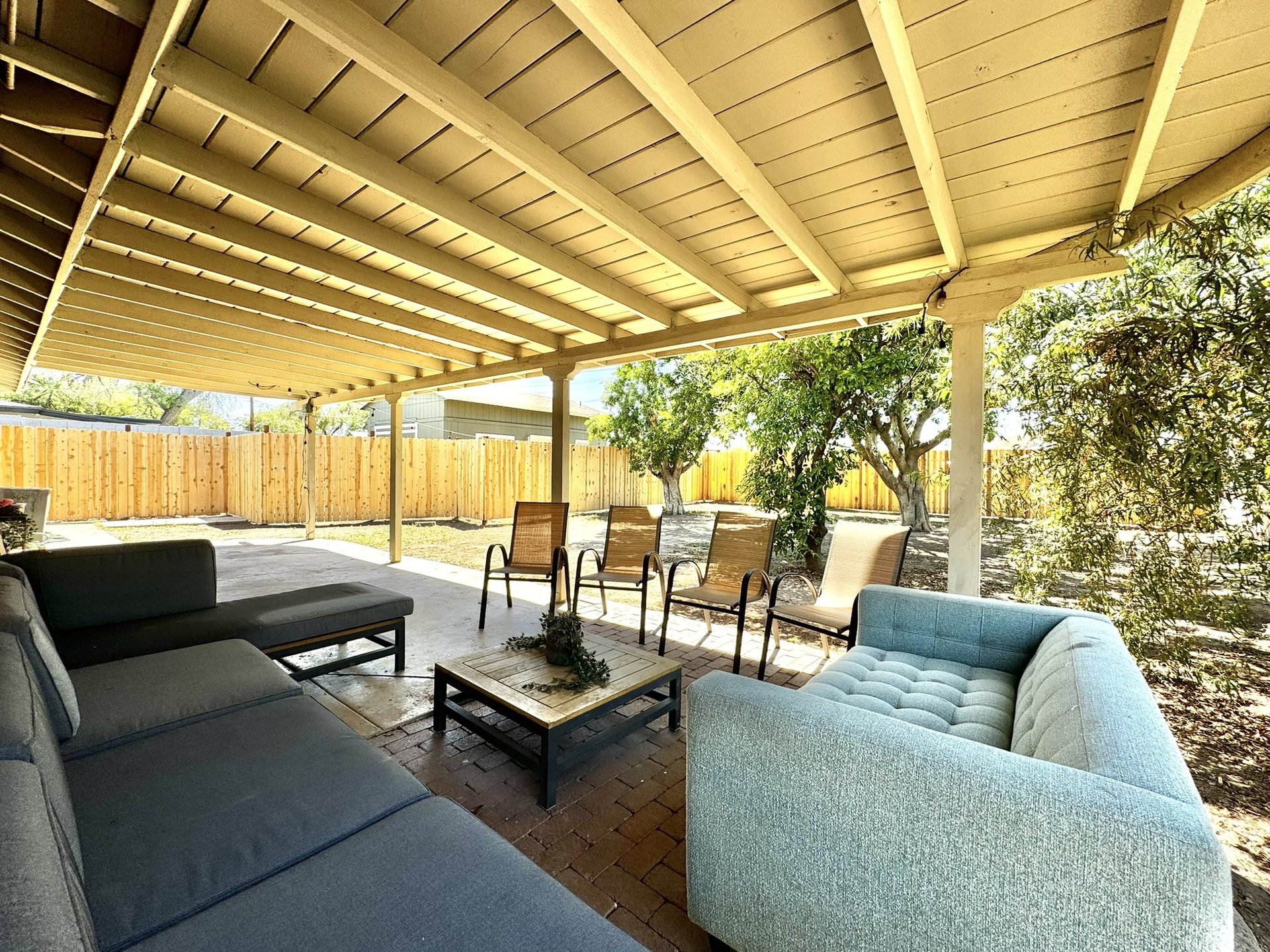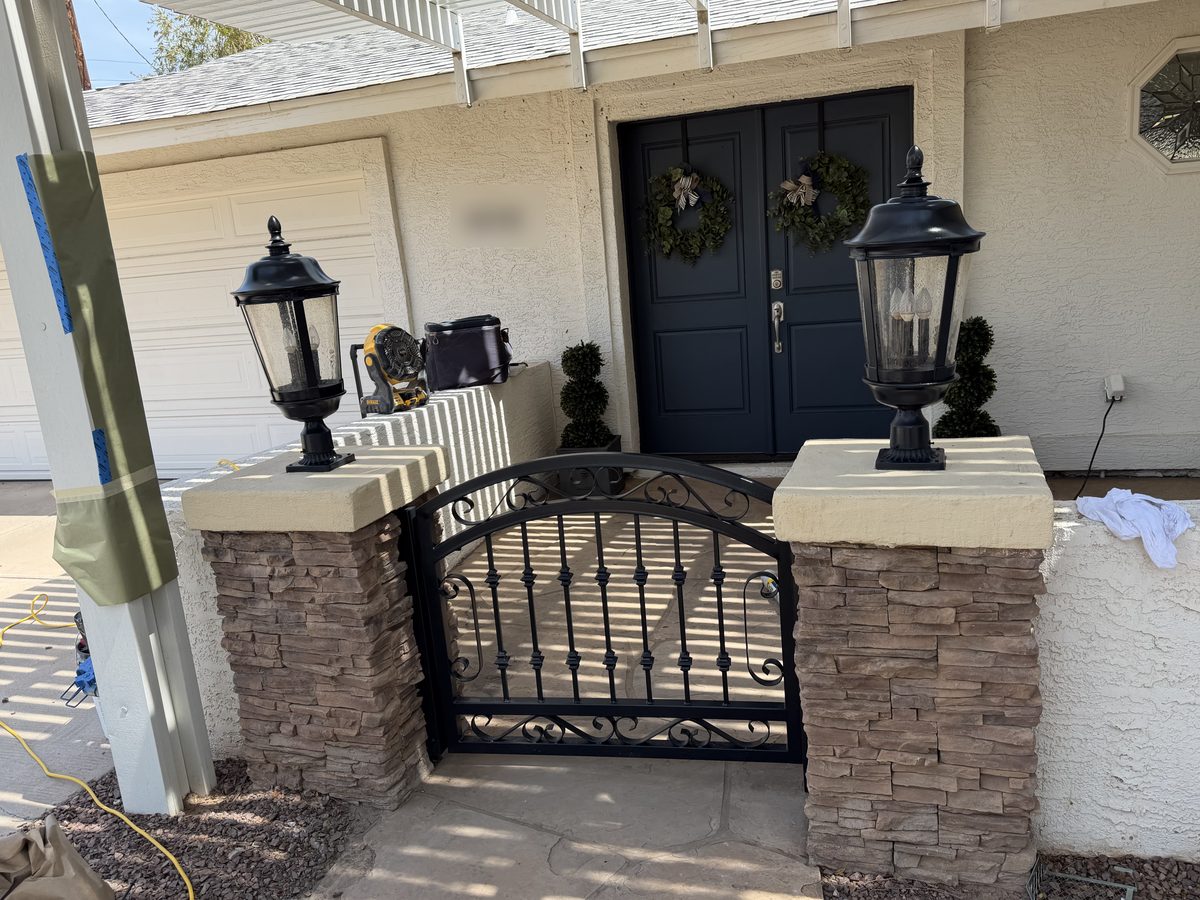
Refinishing two iron gates and a pair of entry lanterns at a central Phoenix home ran $750 across two days on site. The gates had rust flaking off the bottom rails and the lanterns had gone chalky in the sun. We took the metal back to sound steel, replaced the weathered wood slats in the side gate with new cedar, and put the lanterns back on their columns lit rather than buying new ones.
Project at a Glance
- Area: central Phoenix, a single-story ranch home
- Ironwork: an arched courtyard entry gate with scrollwork, a tall side gate with wood infill, plus railing sections and loose flat bar
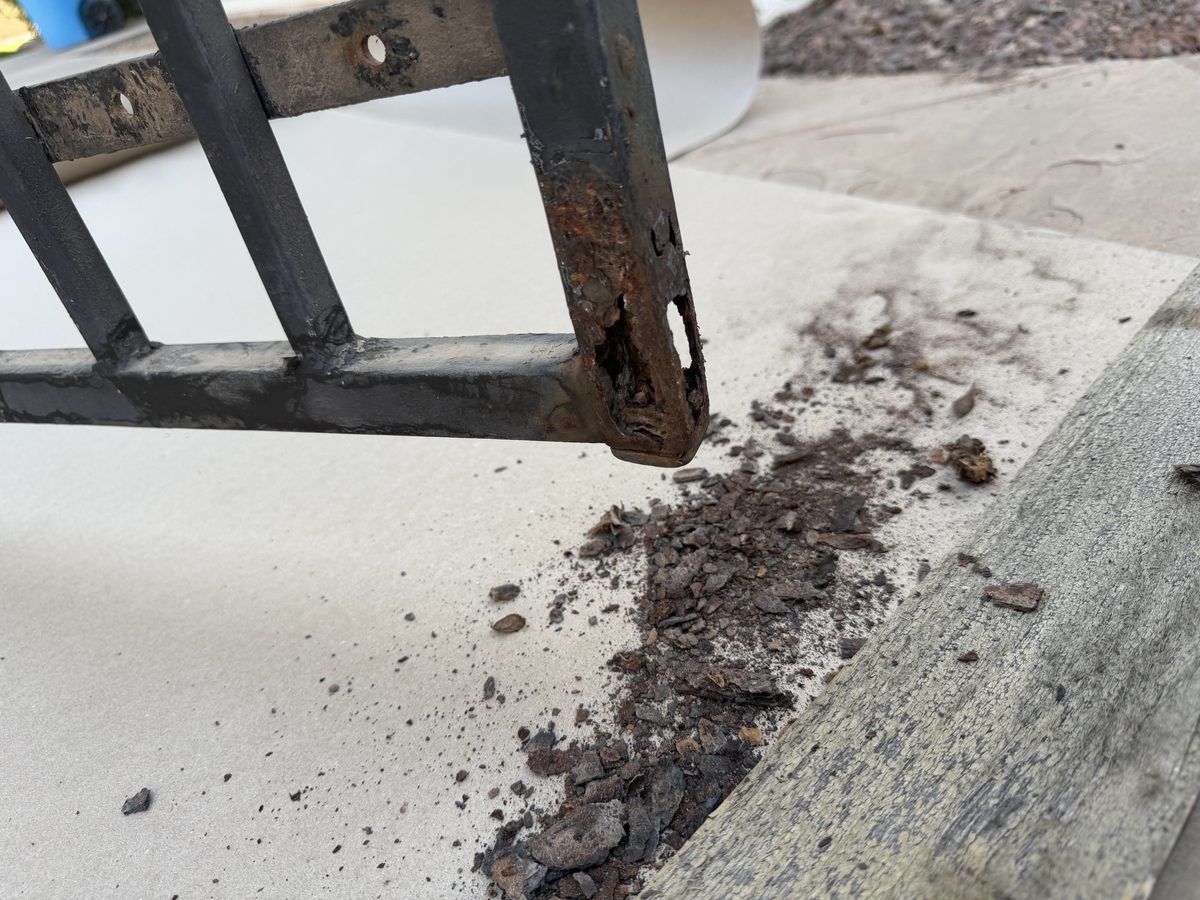
- The problem: rust concentrated at the post bases and along the bottom rails, flaking off onto the concrete
- Wood: the weathered slats in the side gate came out and new cedar went in, painted to match the front door
- Lighting: two pier-mount lanterns on the stacked-stone columns, disassembled and refinished rather than replaced
- Approach: the side gate came off its hinges, the courtyard gate was masked in place
- Cost and time: $750 for the ironwork and both lanterns, two days on site
- Materials: the homeowner supplied the paint on this job
What most people call wrought iron is really mild steel, and the difference shapes the whole job. True wrought iron went out of production around the middle of the last century. Almost every gate, railing and view fence on a Phoenix home is hollow square tube, solid bar and flat stock. Steel rusts in ways real wrought iron never did.
Why Iron Rusts in a Desert, and It Is Not the Rain
Phoenix gets around eight inches of rain a year, so rusted ironwork looks like a contradiction. The water is coming from the irrigation, not the sky.
Look at where the corrosion sits. It concentrates at the bottom of the posts, right where the steel meets concrete, and along the underside of the bottom rails. A drip emitter or a sprinkler head throwing spray at a post base several times a week, all year, delivers far more water to that spot than the monsoon ever does.
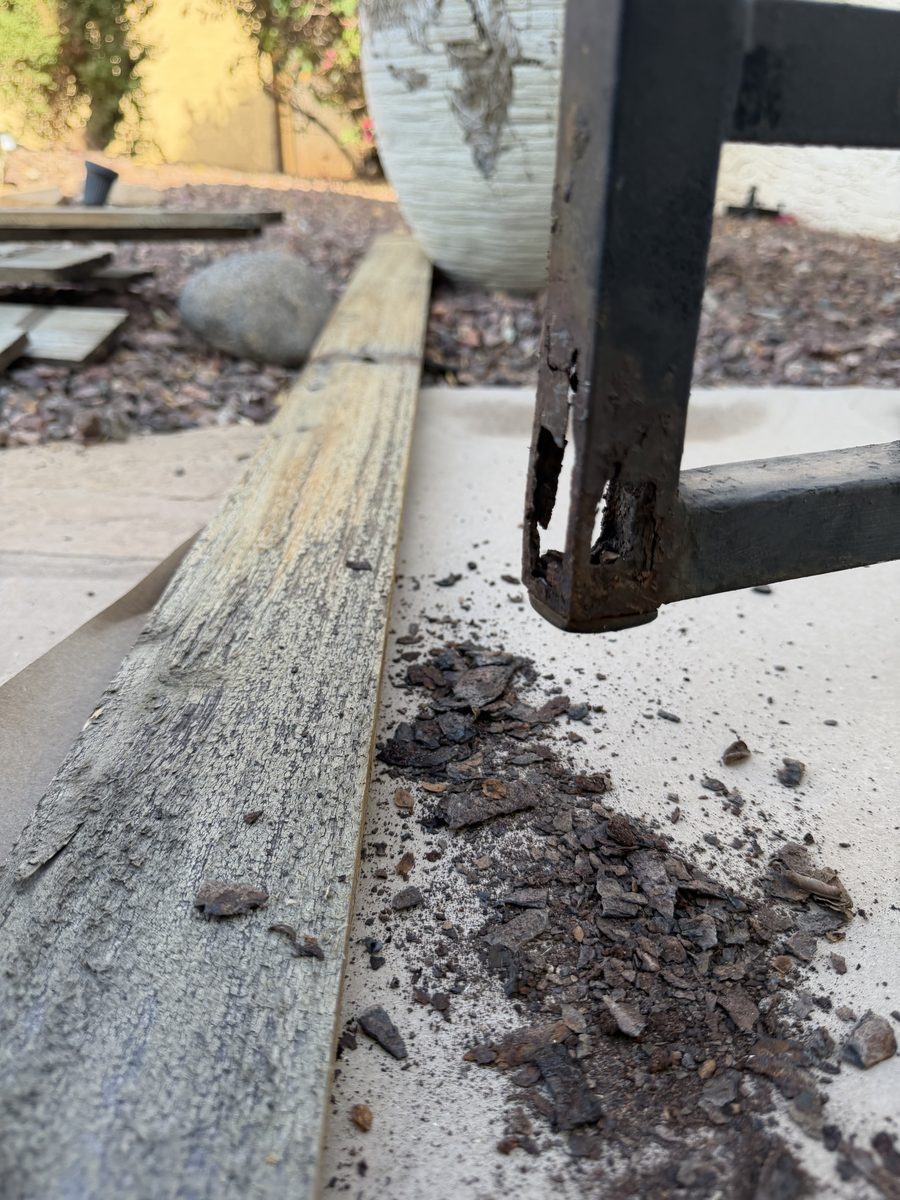
Three other mechanisms stack on top of that. The joint where steel meets concrete holds moisture and starves it of oxygen, and a corrosion cell forms right along that line. Hollow posts and rails rust from the inside out. Water gets in through open picket tops and failed welds, runs down inside and sits at the bottom. Because rust occupies several times the volume of the steel it came from, a corroding post can also split the concrete around it.
The cheapest thing a homeowner can do about any of this costs nothing. Move the drip emitters and sprinkler heads away from the post bases. That one change does more for how long a refinish lasts than any upgrade to the coating.
Repaint or Replace, and What Rust at the Base Really Means
Surface rust is a refinishing job and section loss is a fabrication job. That difference drives the price more than anything else on the gate.
The test is what the rust does when it comes off. Powder and light flake mean the steel underneath is still sound. Rust that lifts away in layered sheets, which is what came off this gate, usually means the metal has lost measurable thickness. An awl helps here. If it punches through, that is no longer a paint problem.
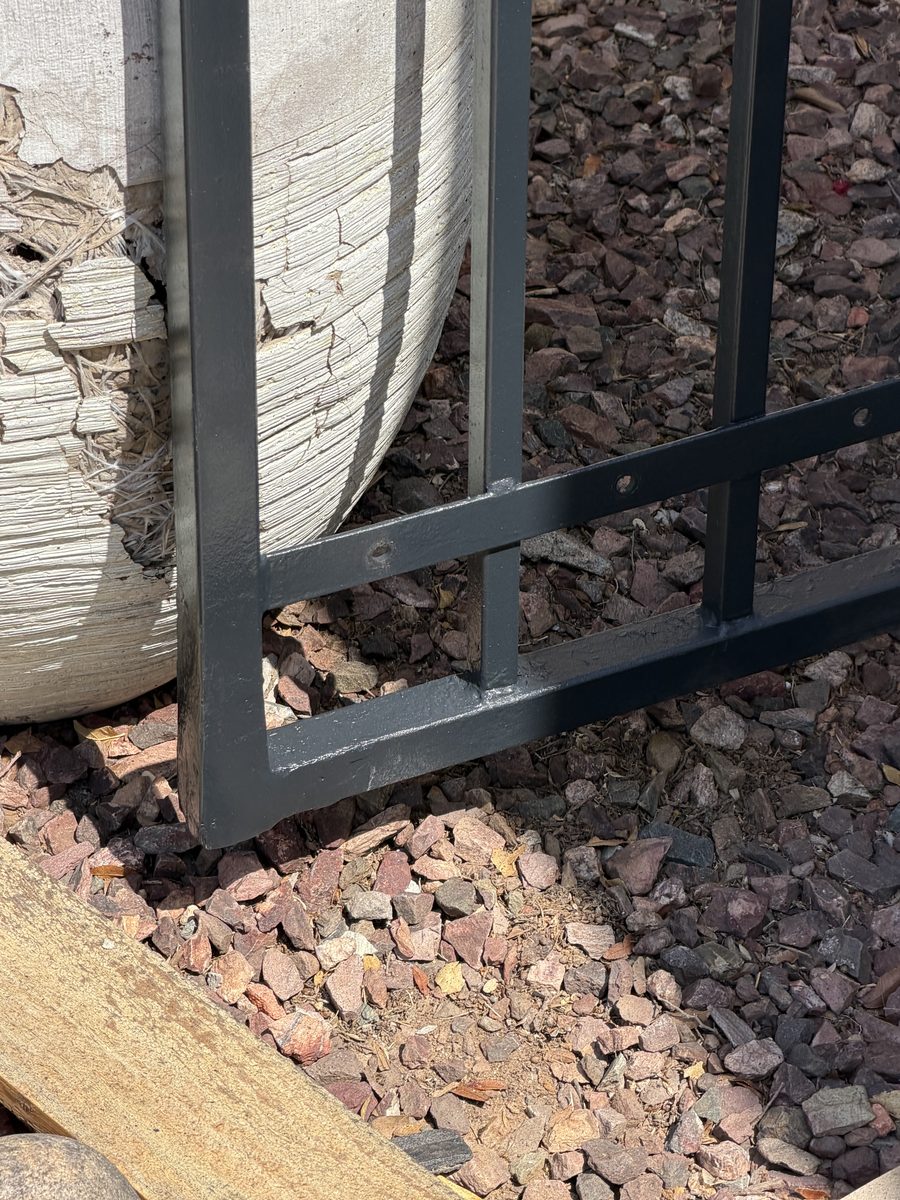
Where the base had pitted, we filled and faired it so the surface would take a smooth coating. That is a cosmetic repair rather than a structural one. It does not add steel back. What it does is restore the look and give the coating something sound to hold. When a post has lost real thickness the honest fix is cutting the bad section out and welding in new material. We say so instead of burying it under filler.
How We Prepped and Refinished the Ironwork
The side gate came off its hinges. You cannot prep the hinge side or the back of a gate while it is hanging. Off the hinges we could also work it flat and in shade. Loose flat bar came off the assembly for the same reason.
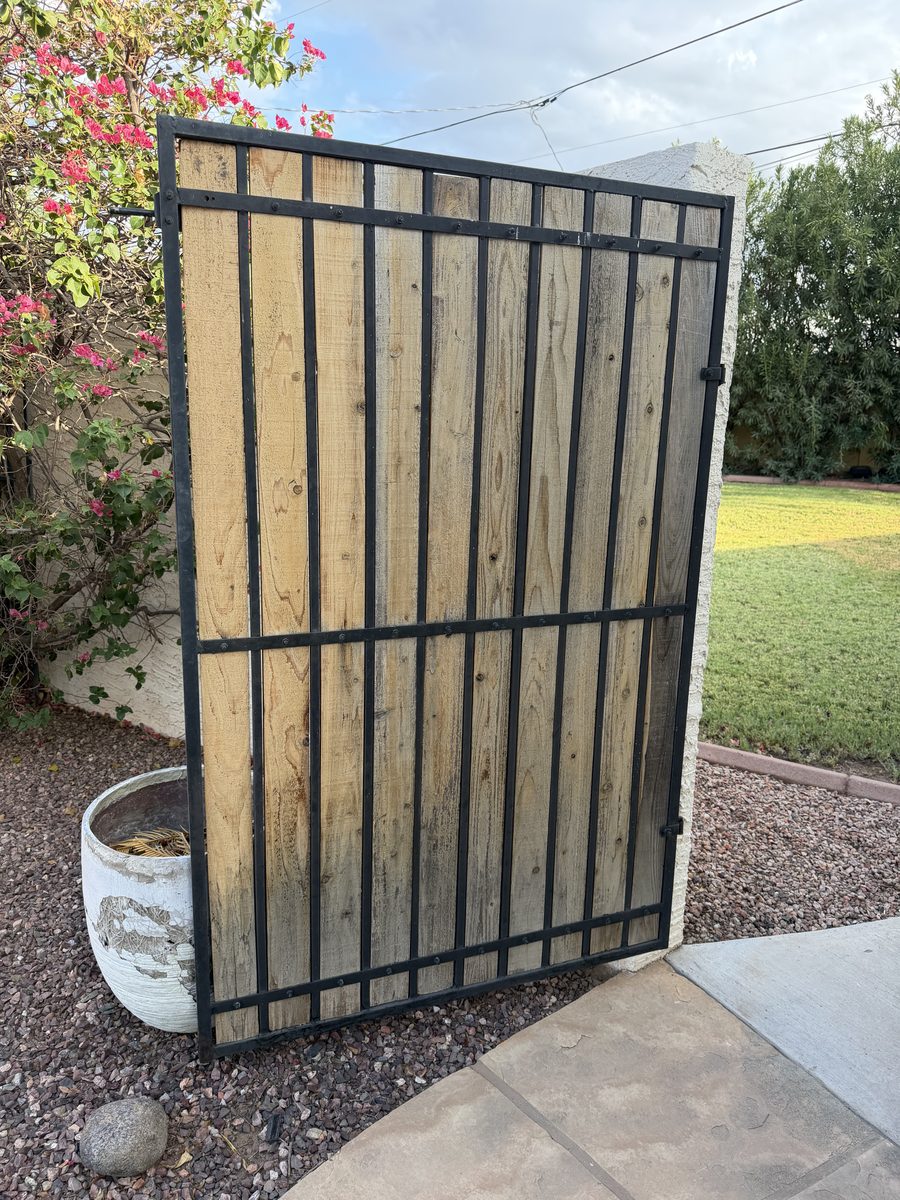
We washed and degreased everything and let it dry. Then the loose scale came off by hand and with power tools, which the coatings industry calls SSPC-SP 2 and SP 3, and the heavily corroded spots were cut back to bare metal. We feathered the edges of the sound coating so no ridge would telegraph through the finish.
The side gate needed more than paint. Its wood infill had gone gray and soft on the surface, which is what a decade of Phoenix sun does to exposed slats. Weathered wood like that has a degraded top layer, and nothing bonds to it durably. Rather than sand it back and hope, we pulled the old slats out and put new cedar in, then painted it to match the front door. Doing the wood after the metal matters, because grinding and wire-wheeling throw dust that would land in a fresh wood finish.
A wire wheel can burnish rust smooth in the bottom of a pit and leave a shiny film that primer will not grab. That is the honest line between where hand prep works and where a piece belongs at a blast shop.
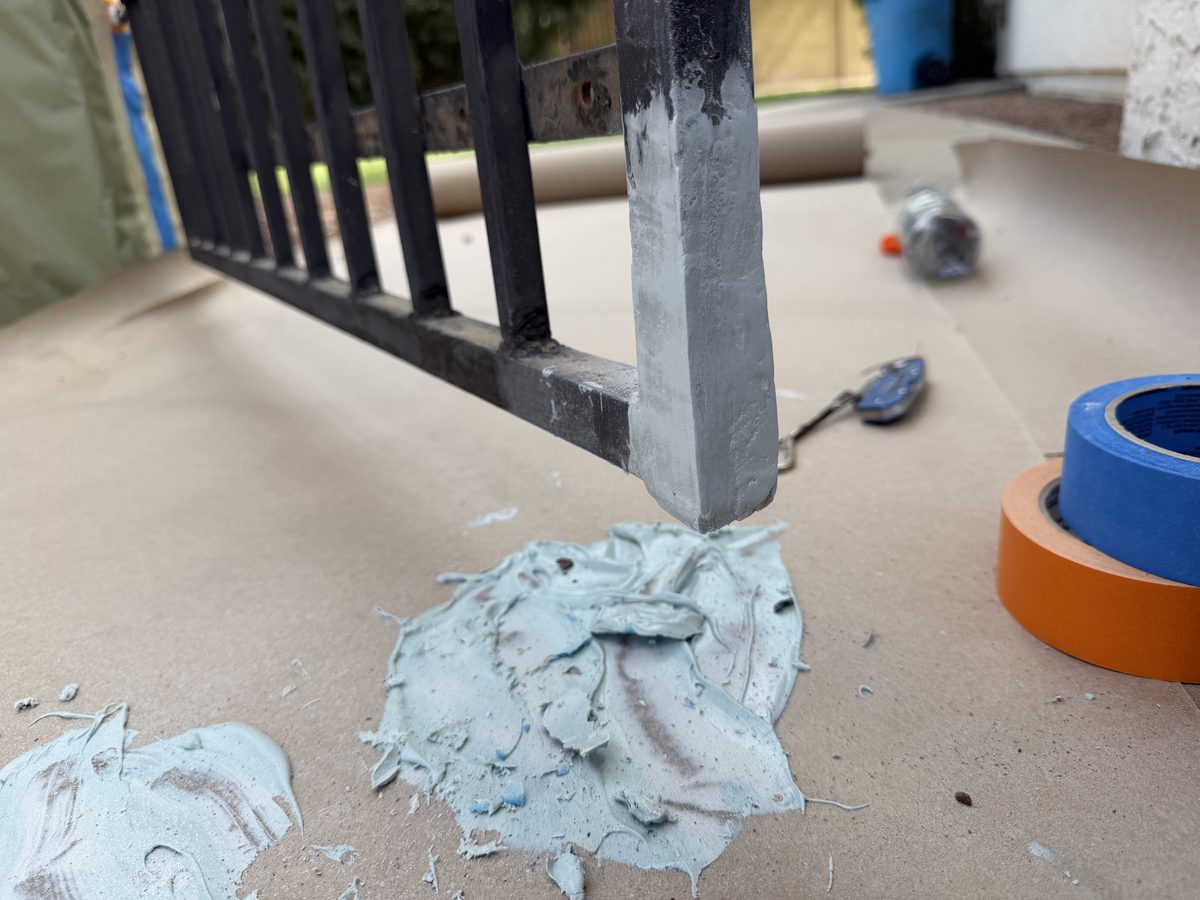
Bare steel gets primed the same shift it is cleaned. In August, with monsoon dew points, exposed metal flash-rusts within hours. Steel that has been hand prepped with tight rust still in the pits wants a rust-inhibitive metal primer that wets into it, along the lines of Sherwin-Williams Kem Bond HS or Rust-Oleum Rusty Metal Primer. Check with a magnet first. Aluminum and galvanized parts need a different primer entirely. Steel is magnetic and rusts orange. Aluminum is not magnetic and corrodes chalky white.
Topcoat is a direct-to-metal acrylic, something like Sherwin-Williams Pro Industrial DTM. Elastomeric coatings belong on stucco and never go near ironwork. The homeowner supplied the paint on this job, which is common enough. When a customer buys the material we still confirm the product is right for bare metal before anything goes on, because the wrong can undoes the prep. Satin is the right sheen. High gloss telegraphs every pit and every filler edge on a repaired base, and satin hides the fairing work.
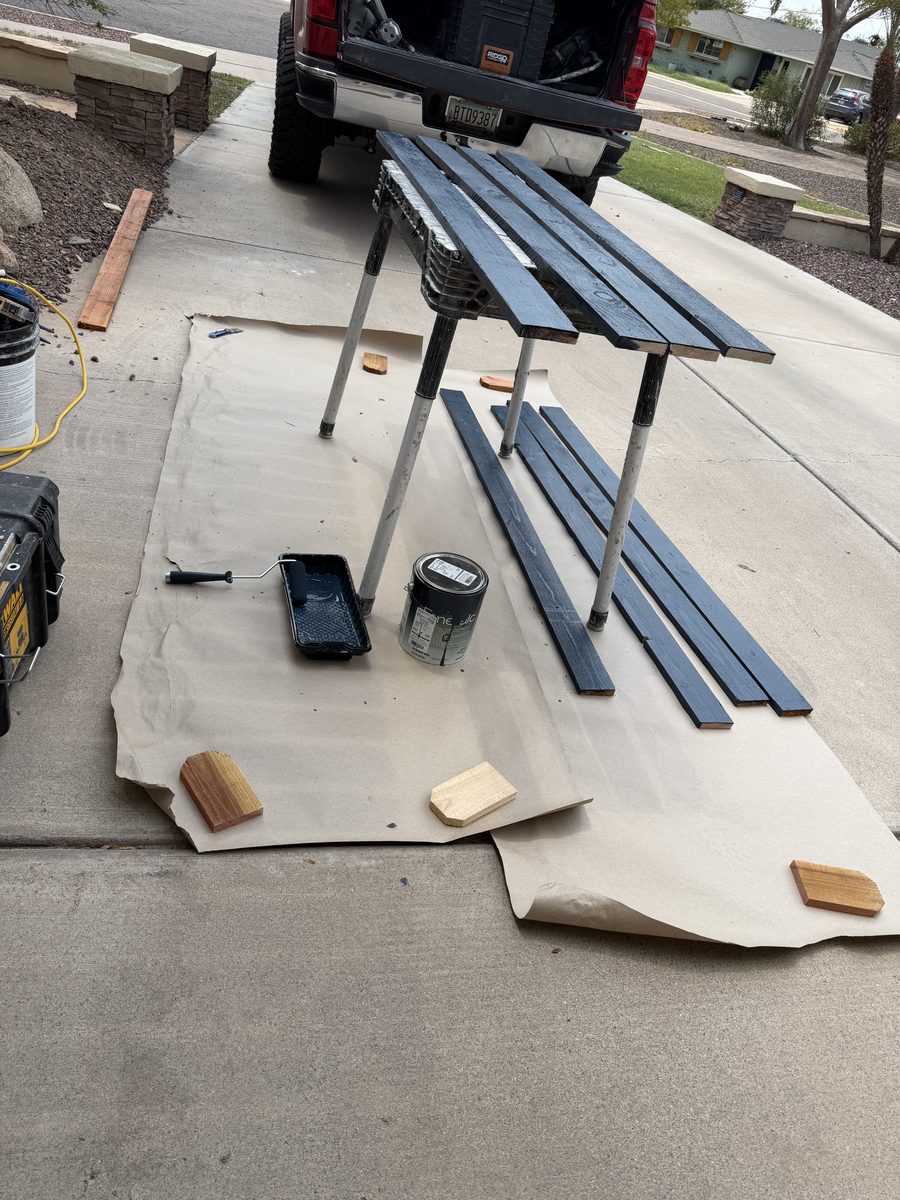
Working flat and in shade is the heat strategy. Surface temperature controls an August exterior job rather than air temperature. A black gate in direct Phoenix sun runs far above whatever the thermometer says. Above the manufacturer's ceiling the film sets before it levels, and heat drives air out of the pits and pinholes the finish. Chasing shade around the house and starting before six in the morning is the rest of the answer. Dust settling into a wet film is a more common August failure here than rain is.
Tape comes off the same day. Blue and orange painter's tapes are rated for clean removal on an indoor timescale. In 110 degree sun the adhesive transfers and bakes on within hours.
On homes built before 1978 we test the old coating for lead before grinding. Machine sanding or grinding lead paint without HEPA-filtered exhaust control is a prohibited practice under the EPA's Renovation, Repair and Painting rule.
Rebuilding Two Entry Lanterns Instead of Replacing Them
The two lanterns on the stone columns were structurally fine and cosmetically finished. Sun had taken the finish chalky. Replacing a matched pair of pier-mount lanterns is not cheap. There was nothing wrong with these two that refinishing would not fix.
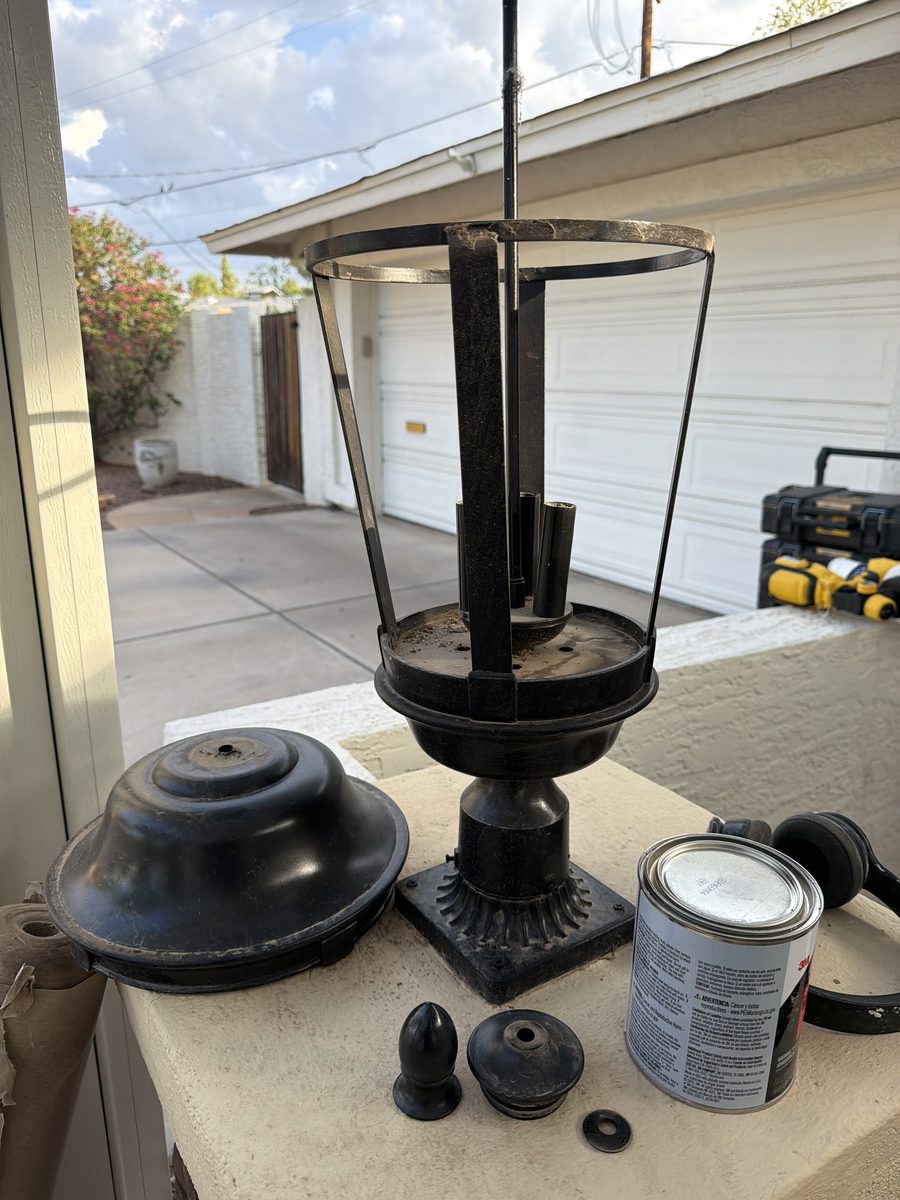
Each one came apart into a hood, a cage, a base and its finial. The glass came out rather than getting masked in place, because overspray on seeded glass is miserable to remove and paint on a gasket destroys the seal. Every glossy surface got scuffed before anything else happened. A factory finish on an exterior fixture is hard and low in surface energy. When paint peels off a refinished lantern a year later, the deglossing is nearly always what was skipped.
Some parts of a fixture never get coated. Sockets, contacts, wiring and the ground path stay clear for obvious reasons. Vent slots stay open, because sealing them traps heat and condensation around the socket. Threads get masked or chased afterward so the next person can take the hood off without breaking something. The rating label stays legible.
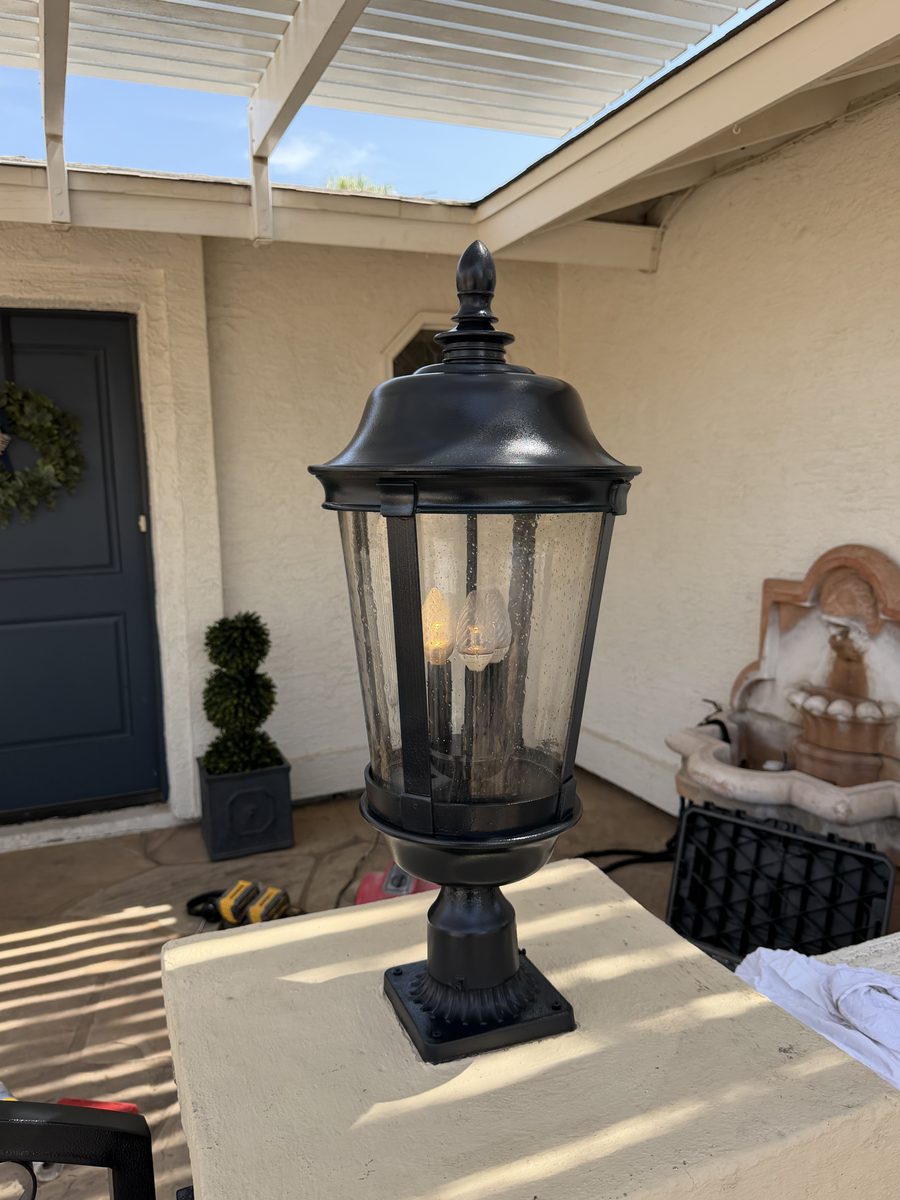
They were reassembled, re-lamped and put back on the columns. One detail worth passing on to anyone doing the same thing: a pier lantern is an enclosed fixture, and plenty of LED lamps are not rated for enclosed use. The wrong lamp cooks its own driver and dies early. Warm color temperature is what gives the light in the photo its look.
What It Costs to Refinish an Iron Gate in Phoenix
Ironwork is priced off what the metal needs rather than off square footage. Two gates that look identical from the street can be an afternoon apart once you see the bases.
| Line item | This job | What moves the price |
|---|---|---|
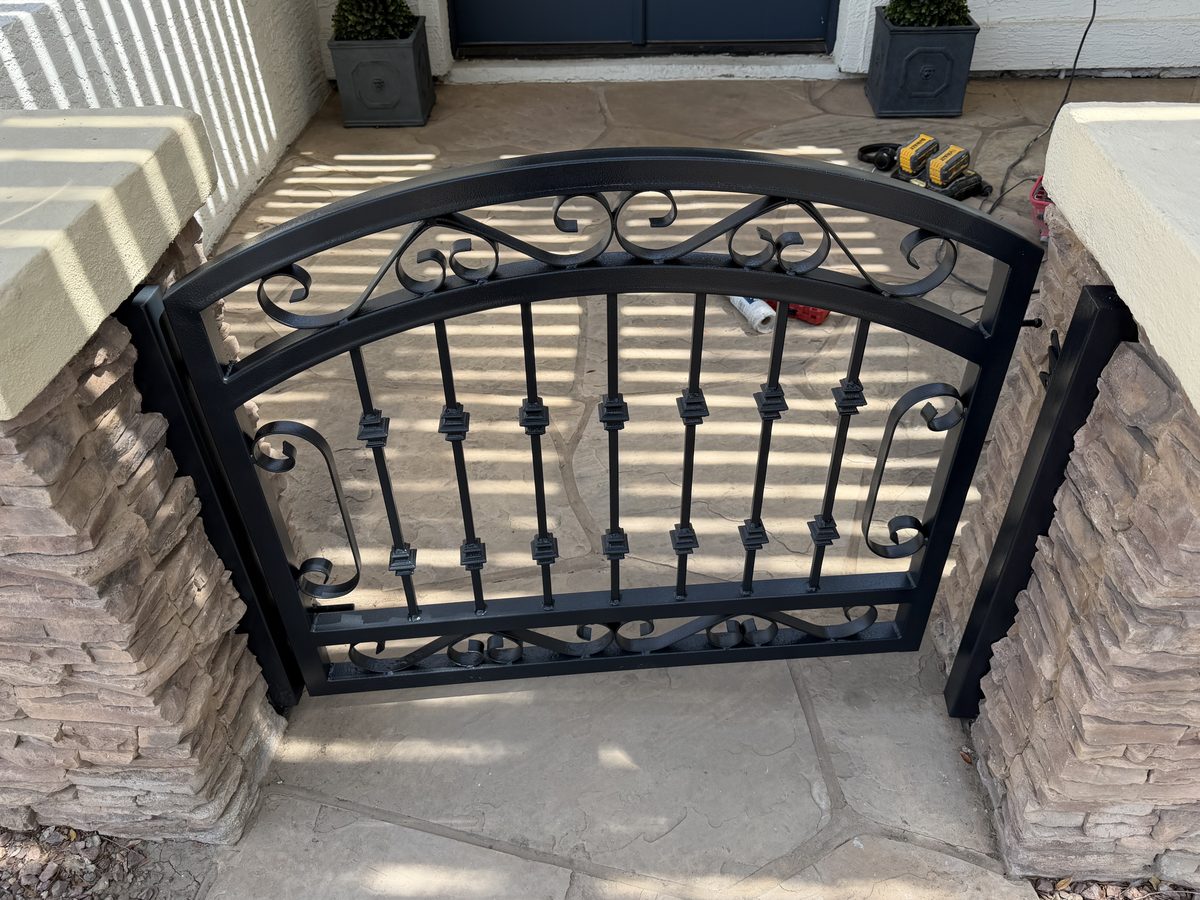
| Courtyard entry gate, arched with scrollwork | Masked and refinished in place | Scrollwork takes far longer to prep and coat than plain pickets |
| Side gate, steel frame with wood infill | Removed from hinges, frame refinished | Two materials, two systems, and a rehang at the end |
| Replacement cedar slats for the side gate | Old slats out, new cedar in and painted | Slat count and whether the frame lets them out from the back |
| Railing sections and loose flat bar | Coated off the assembly on drop cloths | Linear feet, and whether pieces come off or must be done in place |
| Corroded post base | Filled and faired, cosmetic | Section loss changes this from paint work to welding |
| Pier lanterns, pair | Disassembled, refinished, re-lamped | Refinishing beats replacing while the castings are sound |
| Ironwork and both lanterns, two days on site | $750 | Paint supplied by the homeowner on this job |
For scale on the wider job, exterior painting across the metro runs roughly $2.50 to $5 per square foot of wall area or more, so a single-story house usually lands in the $4,000 to $10,000 range or higher. Ironwork is normally a line inside that rather than a job of its own, and it is cheapest when the painter is already on site. The post bases decide the price and photos rarely show them, so we price it standing in front of the gate.
How Often Does Ironwork Need Repainting in Arizona?
A hand-prepped, primed, two-coat refinish typically holds five to eight years on the vertical and protected surfaces. At a post base where the moisture source is still present, expect three to five.
The first rust you see coming back will be at the base, long before the rest of the assembly needs anything. Touching up the bottom few inches every year or two is the cheap way to stretch the life of the whole refinish, and in our experience it roughly doubles it.
Questions About Painting Iron and Exterior Fixtures
Can you paint over rust, or does it all have to come off?
Loose scale has to come off. Paint bonds to what is under it, so a coating laid over a flake that is already lifting will fail with that flake. Tight residual rust down in the pits is a different case. Once the loose material is gone, a rust converter can stabilize what a wire wheel cannot reach, and then the surface gets primed. A converter used instead of removing scale seals the problem under a fresh coat of paint.
Is it cheaper to repaint an iron gate or replace it?
Refinishing usually wins by a wide margin when the metal is sound. Ornamental iron is heavy, and the cost of a new gate includes fabrication, delivery and hanging. The decision changes when the steel has lost real thickness. Rust that flakes off in sheets rather than powder usually means section loss, and at that point filler is cosmetic. The honest fix is cutting the corroded section out and welding in new material, and we say so rather than burying it.
Can old exterior light fixtures be refinished instead of replaced?
Often yes, and it is usually the better value. A cast lantern that has gone chalky is still structurally fine. It comes apart into a hood, a cage, a base and finials, and each piece can be deglossed, primed and sprayed off the column. The work is in the preparation rather than the paint. A factory finish is hard and glossy, so every surface has to be scuffed before anything will stick to it. Installing new exterior fixtures is a different job, and that is covered on our light fixture installation page.
Why does paint fail faster on metal than on stucco?
Metal moves more and it gets hotter. A dark gate in direct Phoenix sun runs far above air temperature, and it expands and contracts through that cycle every day while the stucco beside it barely notices. Metal also has no absorbency, so the coating is holding on by adhesion alone rather than soaking into the surface. Add a rust source at the base and the failure starts underneath the film rather than on top of it.
Do you have to prime bare metal before painting it?
Bare metal always gets primed. Bare steel in Phoenix flash-rusts within hours in monsoon season, so anything taken back to clean metal gets primed the same shift. The primer choice depends on the metal. Steel that has been hand prepped with tight rust remaining wants a rust-inhibitive metal primer that wets into it. Aluminum and galvanized parts need a different primer entirely. Steel rusts orange and aluminum corrodes chalky white, and a magnet tells you which one you have in about five seconds.
The Cheapest Time to Add the Rest of the Exterior
Masking is what eats the hours on an exterior day like this. The drop cloths, the ladders and a painter already walking your exterior are paid for the moment the first gate comes off its hinges. Put anything else on that list into the scope before the work starts and it commonly comes in 25 to 50 percent under standalone pricing.
- The rest of the exterior is the obvious one. Fascia, trim, the front door and the stucco all use the same crew and the same setup. See exterior house painting across the Phoenix metro.
- Fence line ironwork and gate hardware. Metal view fencing rusts at exactly the same places the gate did, and hinges and latches are cheap while the gate is already off. Our fencing page covers gates and dividing fences.
- A cracked column cap is often the reason the water was there. Stone and stucco columns take the same weather as the metal bolted to them, and patching one while the crew is on site costs very little. That falls under small exterior repairs.
- Landscape and path lighting can be matched now. If the entry fixtures are being refinished anyway, matching what runs along the walkway is worth pricing at the same time. See light fixture installation.
Get it all on one number while the gate is still off its hinges. A month later, every one of these is a separate trip out.
More of our work is in the project gallery, and a related exterior project is written up in a central Phoenix curb appeal build.
Rust Showing at the Bottom of Your Gate?
Send us photos of the gate and a close-up of where the posts meet the concrete. That bottom few inches decides whether this is a refinishing job or a welding job, and we will tell you which one you have before quoting it. Free estimate, licensed Arizona contractor, ROC #365090.
Get a Free Estimate
Written by Harrison Norem, owner of Norem Contracting and a licensed Arizona General Contractor, ROC #365090.