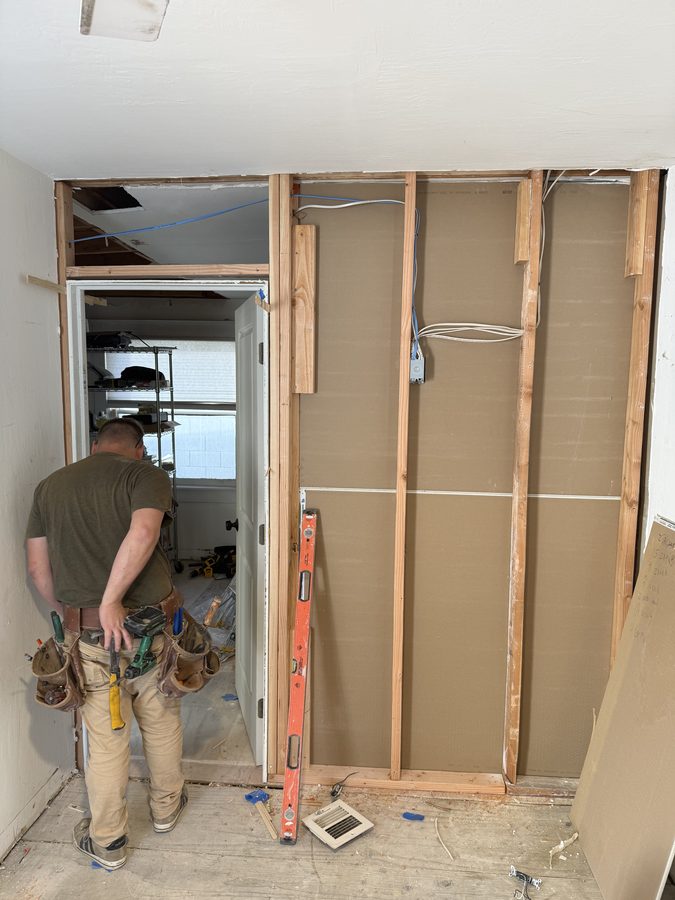
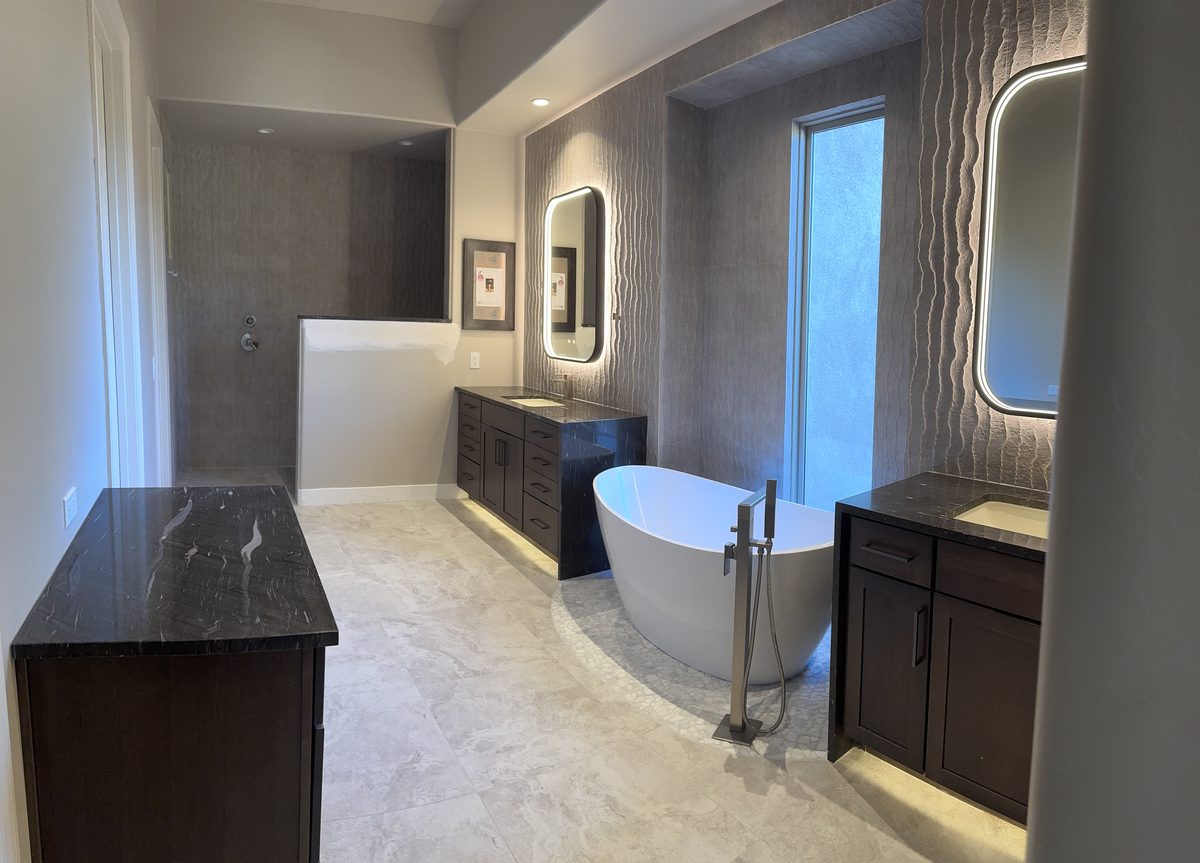
This Phoenix homeowner had no washer and dryer hookup anywhere in the house, and wanted a stacked unit without giving up real living space. The answer was a bedroom closet. We pulled the sliding closet doors, opened the space into a clean laundry alcove, and ran everything a laundry needs from scratch: new water supply, a proper drain, a new 240-volt circuit for the dryer, and a vent to the outside. The result looks like the house was built with a laundry there. Here's how a job like this comes together, handled end to end by a licensed general contractor and our licensed Phoenix handyman and installation services.
Project at a Glance
- Location: Phoenix metro area
- Converted a bedroom closet into an open laundry alcove (doors removed)
- New copper supply lines run to a recessed washer box — licensed plumber
- New 2" drain with a trapped, vented standpipe — licensed plumber
- New 240V dryer circuit plus a 120V outlet — licensed electrician
- Dryer vent run to the exterior with rigid metal duct
- Drywall patched, finished, and painted to look original
- Stacked front-load washer & dryer set and connected
Can You Add a Washer and Dryer Where There's No Hookup?
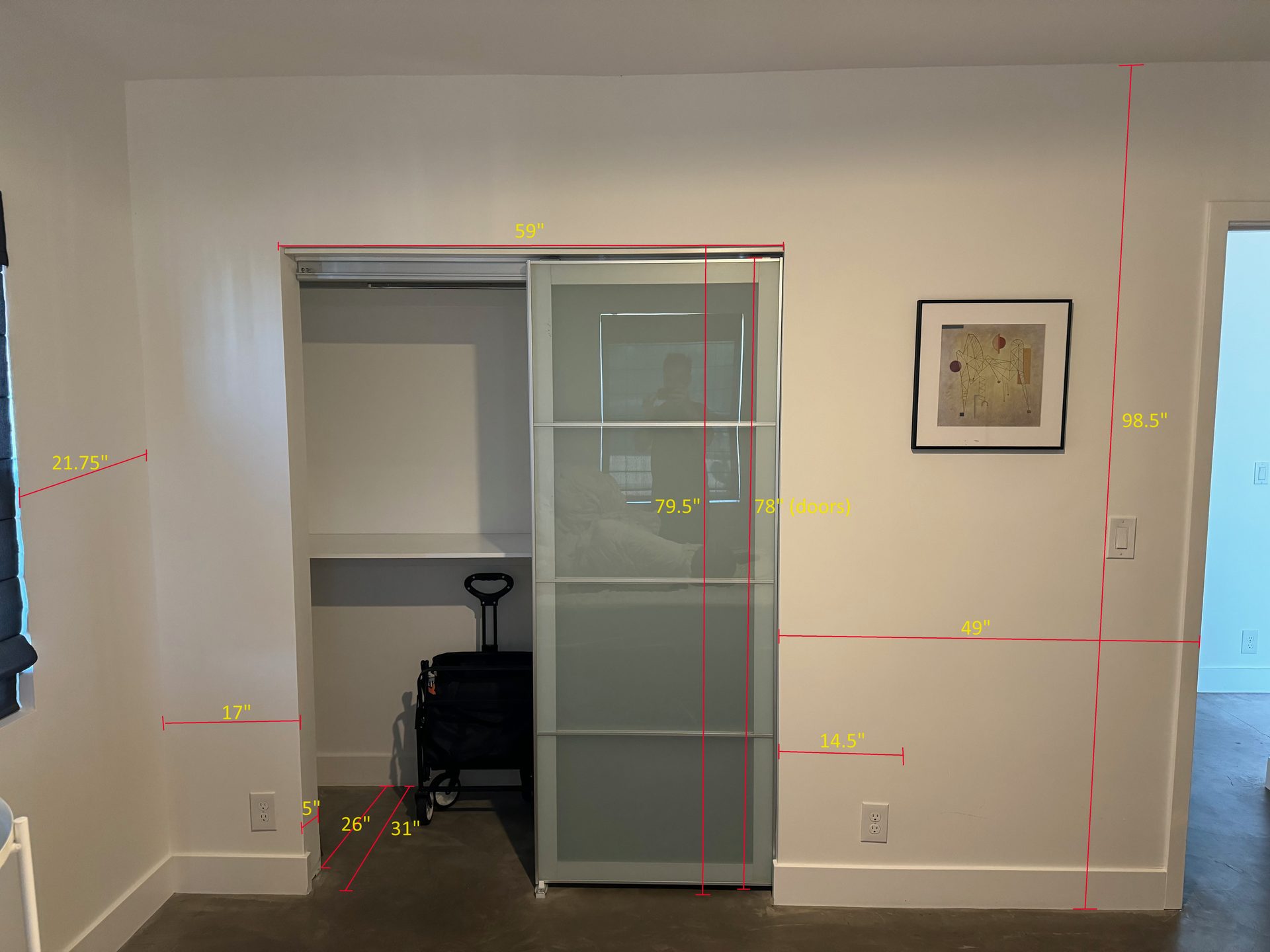
This is the question almost everyone asks first, and the answer is usually yes. A stacked front-load washer and dryer takes up a footprint close to a standard closet, so the space is rarely the problem. What makes a spot work comes down to four things:
- Room for the unit and a recessed water box, so the washer can sit flush against the wall.
- A path to run new water, both the hot and cold supply and, just as important, a proper drain.
- A way to vent the dryer to the outside on a short, safe run.
- Enough room in the electrical panel for a new 240-volt dryer circuit.
This closet started with none of it. So before anything else, we measured carefully against the actual unit's dimensions, checked the door swing and depth, and confirmed a recessed box would let the washer tuck in flush. Once we knew it fit, we planned the runs and got to work.
Opening Up the Closet
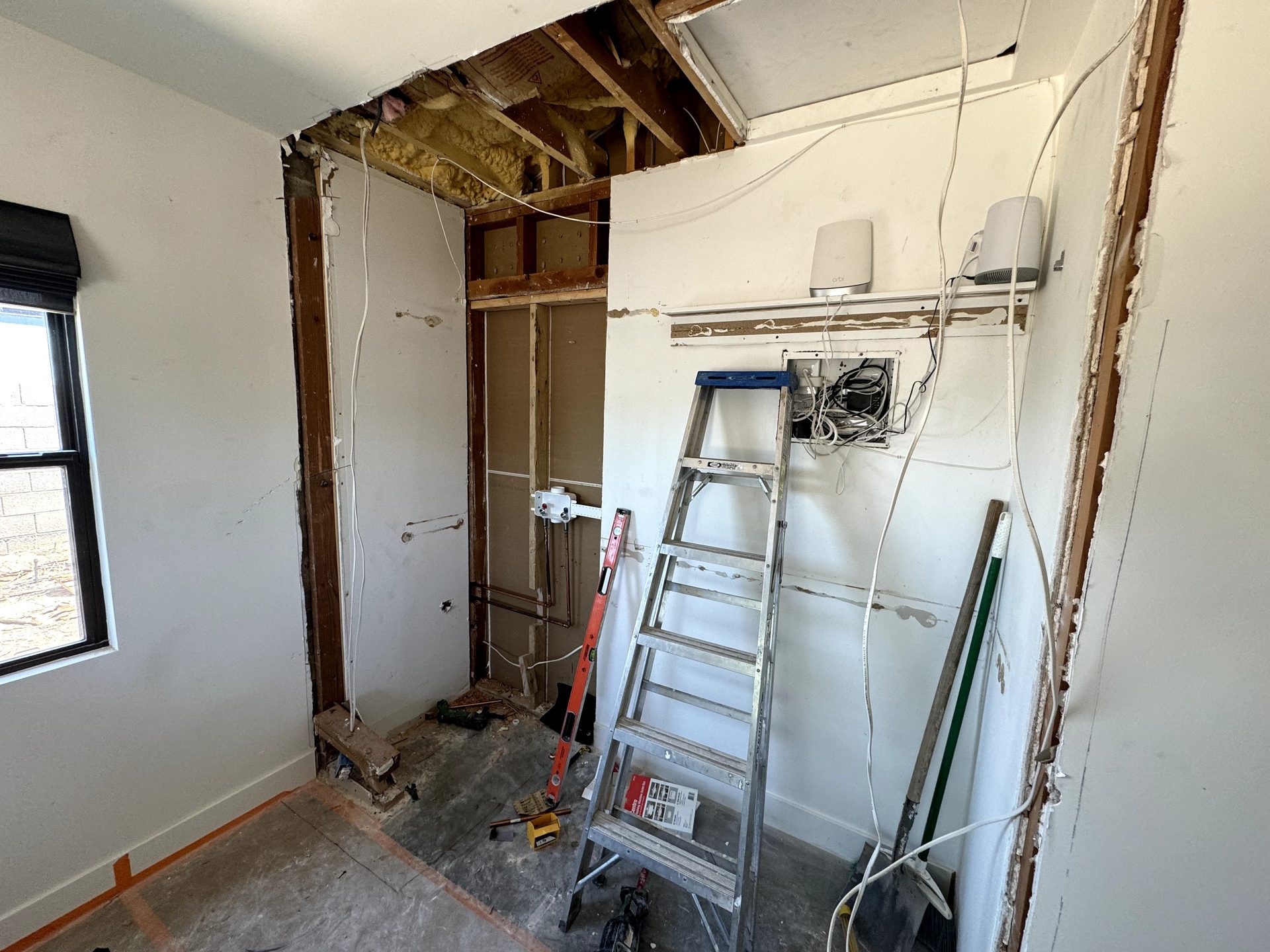
We pulled the sliding doors and track and opened the closet wall to expose the framing. Taking the space down to the studs is what lets you run new plumbing and electrical cleanly, instead of fishing lines blindly through a finished wall and hoping. With the framing open, we could see exactly where the supply, drain, vent, and circuit needed to go and lay them out around the existing structure. This is the same down-to-the-studs approach we use on bigger remodels, like this framing and drywall job in Glendale.
Running New Water, Drain, Power, and a Vent
This is the heart of the project, and where adding a laundry from scratch differs from a simple appliance swap. As the general contractor, we planned and managed it all, and the licensed trades performed the work in their lane.
New copper supply lines
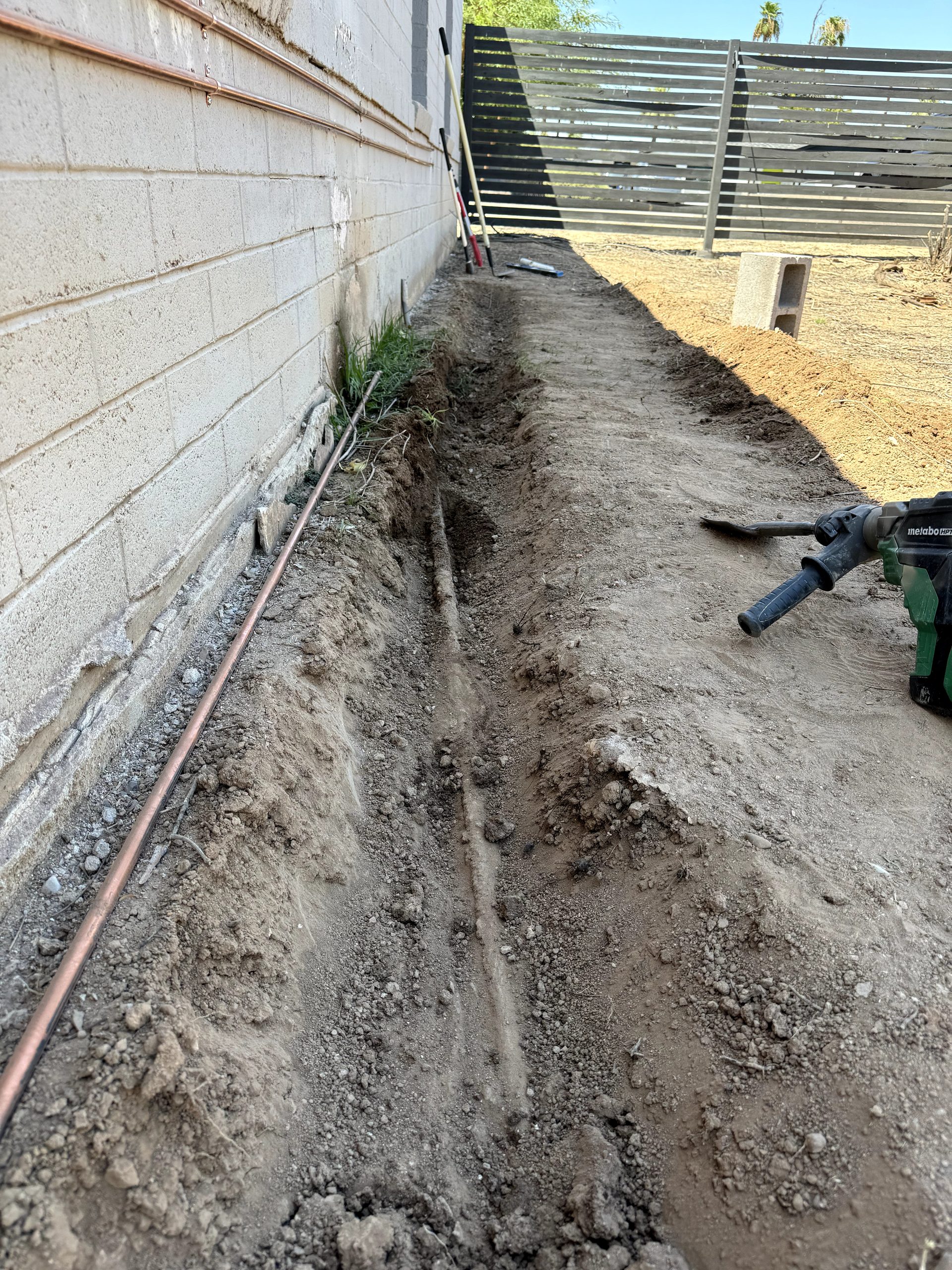
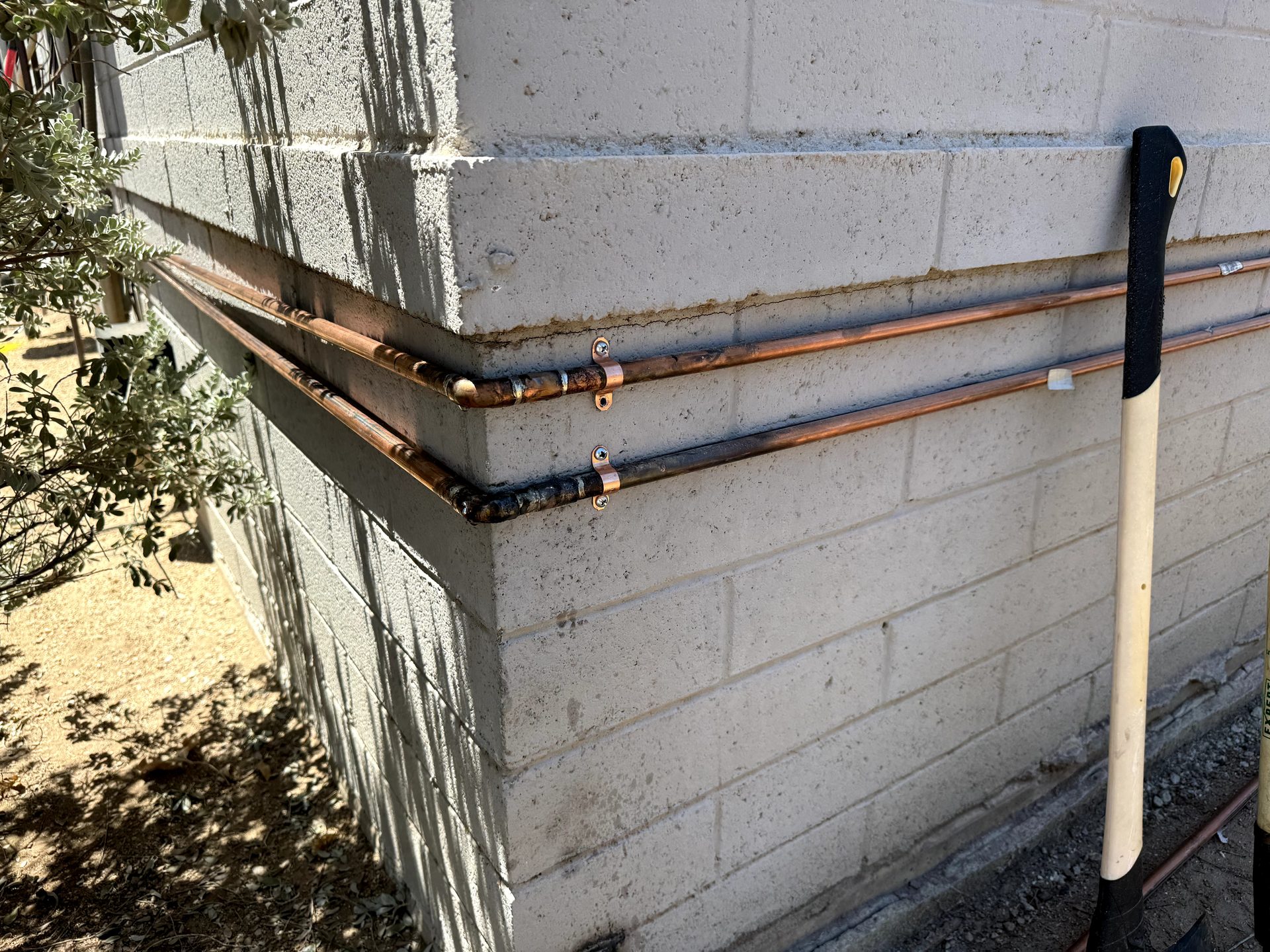
Our licensed plumber ran new copper hot and cold supply lines to the alcove, trenching along the exterior block wall to reach a clean tie-in point. The buried run sits below grade, the copper is sleeved where it passes against the block so it isn't sitting on the masonry, and the short section where the line comes up out of the trench is insulated. Hard freezes are rare in the Valley, but an exposed supply line still wants protection from the occasional cold snap and from physical damage, so that's the right call.
Water out, not just water in
A washer needs a drain, not just supply. It dumps a lot of water fast, so it can't share a sink-sized drain. Our plumber ran a 2-inch drain with a properly trapped and vented standpipe back to the home's waste line, which is what makes the install both legal and functional. The standpipe is set to the height your city's code calls for, generally somewhere in the 18-to-30-inch-above-the-trap range, so the washer drains without siphoning or backing up. We also set water-hammer arrestors at the valves. Washing-machine valves snap shut instantly, and without arrestors that closing sends a thud through the pipes that's both annoying and hard on the joints over time. It's a cheap part that separates a clean install from a noisy one.
A new 240V circuit for the dryer
This was an all-electric setup, so a licensed electrician ran a new 240-volt circuit for the dryer, on a standard 30-amp, four-prong receptacle (NEMA 14-30), plus a 120-volt outlet for the washer. Under current code that 120-volt laundry receptacle is GFCI-protected and its circuit is AFCI-protected, the kind of detail an inspector checks on a new circuit. No gas line was involved. Adding a new circuit means confirming the panel has the capacity for it first. If your panel is already full, that's a bigger conversation handled by the licensed sub. It's the same licensed electrical work we coordinate on every job.
The recessed washer box and dryer vent
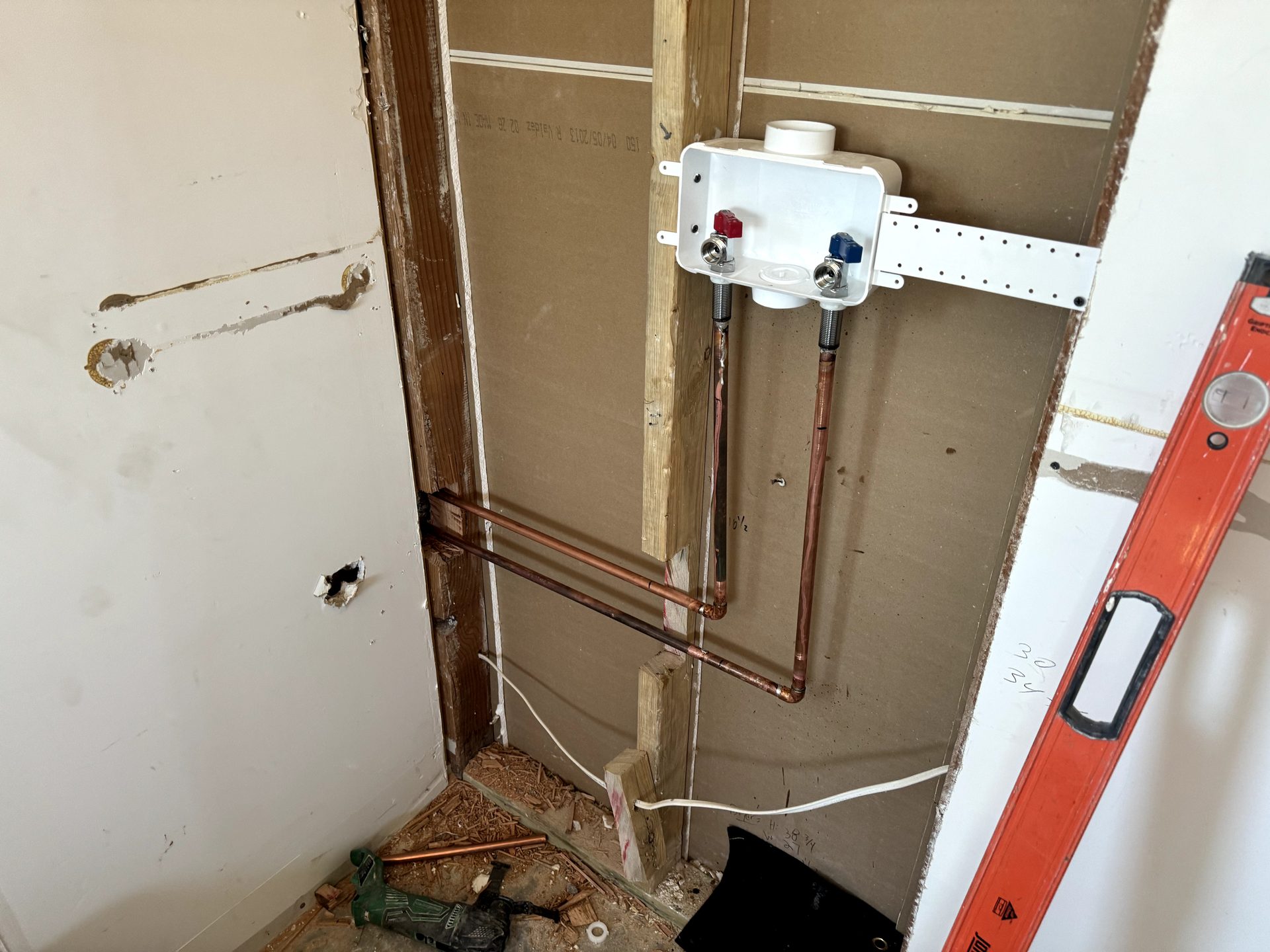
With the wall still open, we set the recessed washing-machine outlet box. That's the single panel that holds the hot and cold supply valves and the washer's drain connection behind one clean trim plate, with the trapped 2-inch standpipe running in the wall behind it, so the washer sits flush to the wall. The dryer vent was run to the exterior in rigid metal duct, fastened without screws poking into the duct, since lint catches on screw tips and that's a real fire risk. Code caps the total vent run at roughly 35 feet of equivalent length, with every elbow eating into that, which is exactly why a short, straight shot to an outside wall is the install you want.
Closing It Up: Drywall and Paint
Once the rough-in passed inspection, we closed the wall back up: drywall, tape, mud, texture to match the existing wall, then prime and paint. This is the step that makes the difference between a laundry that looks original to the house and one that looks bolted on. When we were done, the alcove read like it had always been there, just with a recessed box, a dryer vent, and a 240-volt outlet waiting for the unit.
Setting the Stacked Washer and Dryer
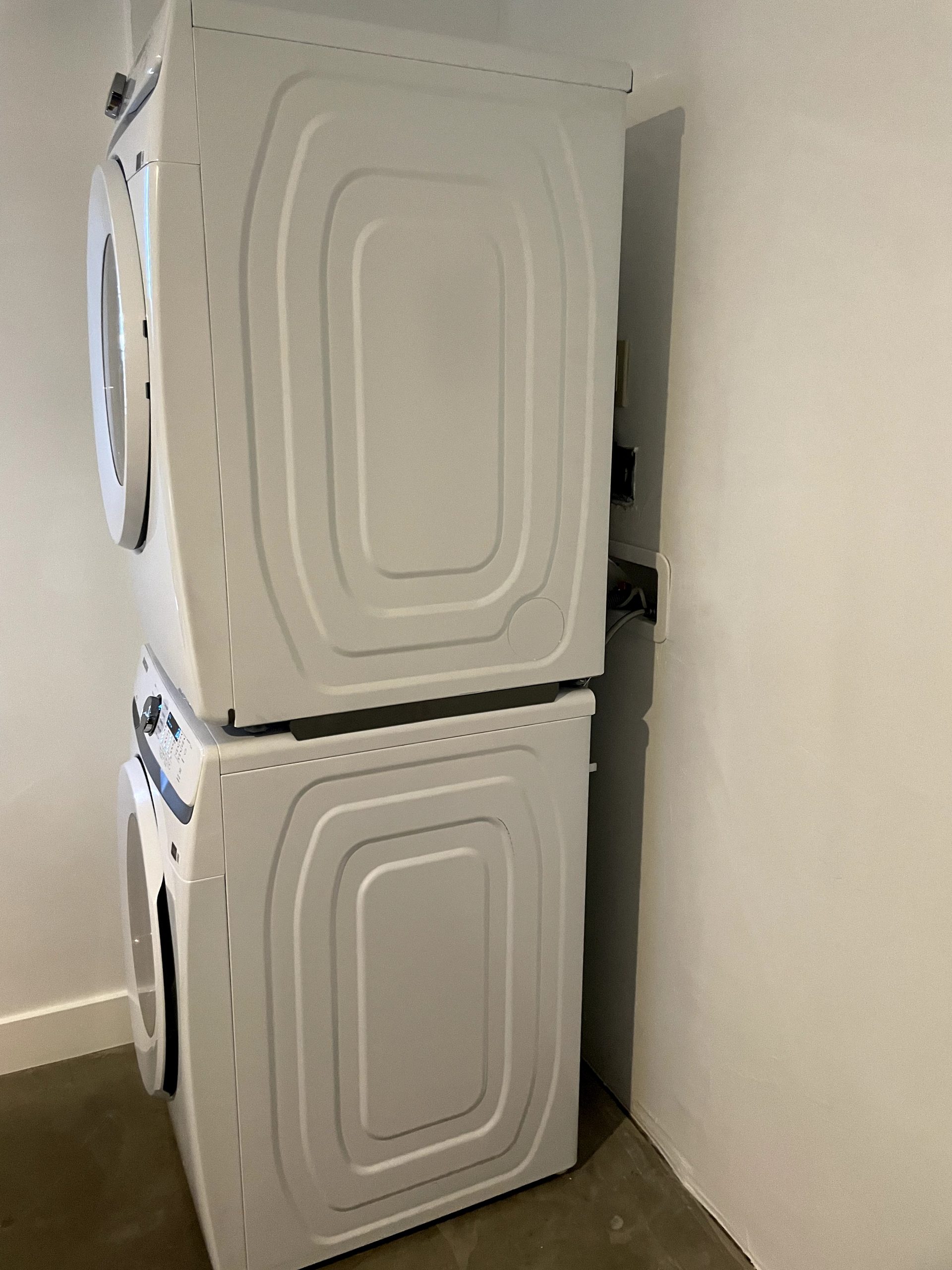
Last step: we set and connected the stacked front-load washer and dryer, leveled the unit, hooked up the supply, drain, vent, and power, and ran it to confirm everything worked clean and dry. A closet that held a few shirts a week earlier was now a working laundry. You can see more of our finished projects in the gallery.
What a Project Like This Costs in the Phoenix Area
Every one of these is priced per job, because the cost lives in the details you can't see from the doorway. As a general range, adding a laundry hookup where none exists runs somewhere around $2,500 to $6,500 in the Phoenix metro, with longer plumbing or electrical runs pushing higher. That covers the new supply and drain, a 240-volt circuit, the vent, the recessed box, and the drywall and paint. It doesn't include the appliances.
What moves the number, in roughly the order that matters:
- Distance to the drain. The single biggest variable. A wall backing up to an existing bathroom is cheap; a long drain run with a new vent is the expensive case.
- Distance to the electrical panel, and whether the panel has a spare slot for the new 240-volt circuit.
- How far the water has to travel to a usable tie-in point.
- The vent path, short and straight to an exterior wall versus a long run.
- Finishes, the drywall, texture match, paint, and any door or closet changes.
Because this added new plumbing and a new electrical circuit rather than swapping a fixture, it's the kind of work that's typically permitted and inspected in Phoenix-area cities. We handle pulling the permits and coordinating the inspections so the rough-in is signed off before the wall is closed. That's the advantage of running it through one contractor: the plumbing, the electrical, the carpentry, and the finish all happen in the right order, with one company accountable for the whole thing.
Want a Laundry Where You Don't Have One?
Closet, garage, hallway, or somewhere you haven't thought of yet. Tell us about your space and we'll tell you honestly what it takes. Every project starts with a free, no-pressure estimate from a licensed Arizona contractor, ROC #365090.
Request Free EstimateFrequently Asked Questions
Can you add a washer and dryer where there's no hookup? Usually, yes. A stacked unit fits a standard closet, and the rest is about a path for new water and a proper drain, a vent to the outside, and panel capacity for a 240-volt circuit. This closet had none of that, and we added all of it.
Does a washer need a drain, or just hot and cold water? Both. A washer drains fast, so it needs a 2-inch drain with a trapped, vented standpipe, not just supply lines. Adding a laundry from scratch means running water in and water out.
Does a stacked electric dryer need a 240V outlet? Yes. An electric dryer runs on a dedicated 240-volt circuit, typically 30 amps on a four-prong receptacle. This was all-electric, so no gas line was involved.
Do you need a permit to add a laundry hookup in Phoenix? New plumbing and a new circuit generally make this permitted, inspected work in Phoenix-area cities. We pull the permits and coordinate the inspections.