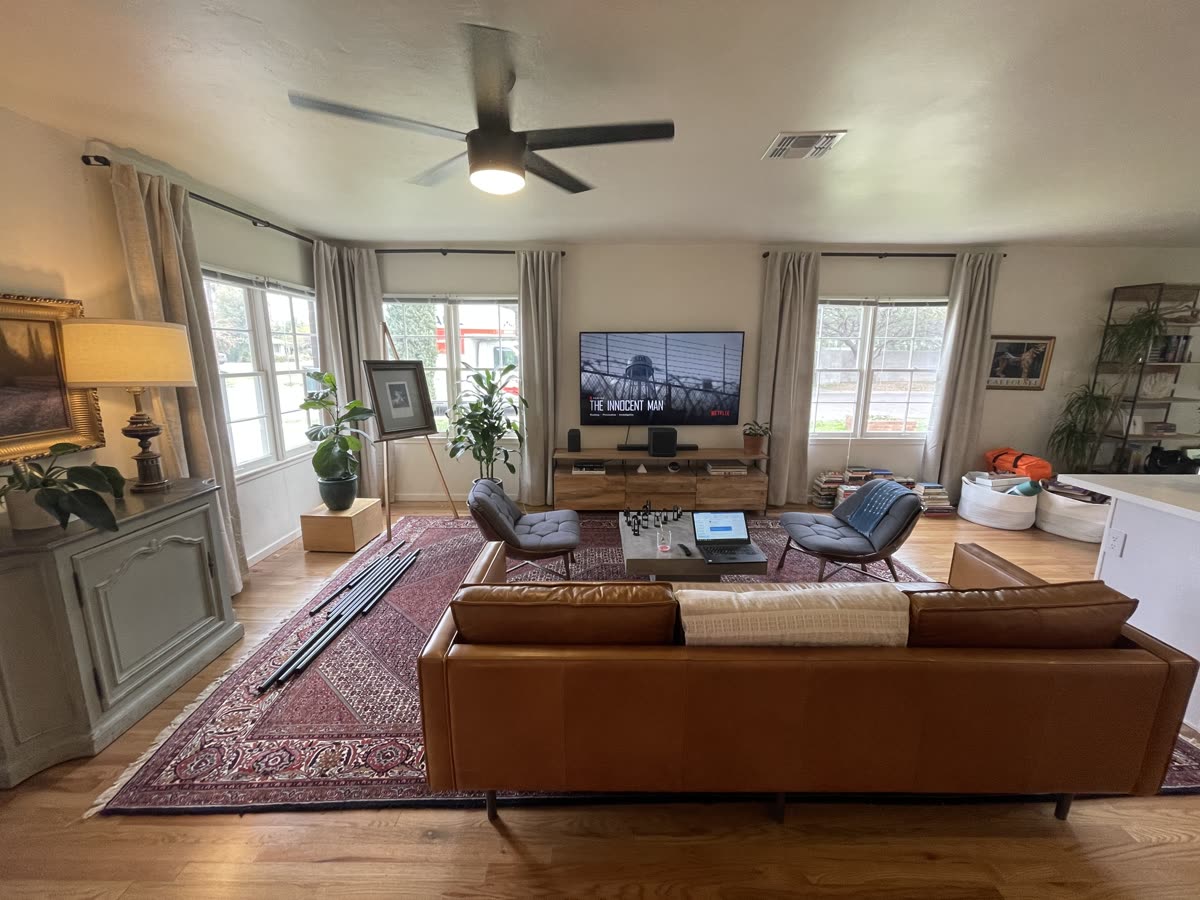
Good drapery, hung right, makes a room look finished. Hung wrong, the same panels look crooked and cheap, rods sagging, one window short and the next one floor length. The difference is not the fabric. It is the measuring and the mounting. Here is a living-room drapery install we did in Arcadia, where the goal was custom linen panels on black rods that look like they came with the house.
This was a curtain installation in Phoenix on the smaller end, a same-day finish job rather than a remodel. It is the kind of work that falls under our handyman services, and the care is the same as on a full remodel. Below is how we measured, mounted the rods level across windows of different sizes, and anchored everything so it stays put.
Project at a Glance
- Area: Arcadia, a neighborhood in Phoenix near Scottsdale and Tempe
- Scope: measure and mount black curtain rods across several living-room windows, including a corner run
- Treatment: hang custom linen drapery panels, floor length
- The details: rods mounted high and wide, brackets leveled across windows of different sizes
- Anchoring: into studs where they landed, with proper anchors for the plaster and block elsewhere
- Turnaround: same day
Why Curtain Installs Go Wrong
Most bad-looking curtains are not a fabric problem. They are a layout problem. The three things people get wrong are height, width, and level, and once any one of them is off, the whole wall reads as sloppy.
Height is the most common miss. People mount the rod right on top of the window trim, which makes the window look squat and the ceilings look low. Width is the next one. A rod cut to the exact window width means the open panels cover part of the glass, so the room feels darker and the window looks smaller than it is. And level matters more than people think, because the eye catches a rod that drops half an inch over six feet long, especially when there are two or three rods on the same wall that should line up with each other.
None of that is hard to avoid. It just takes measuring before you drill, instead of holding the rod up and eyeballing it.
Measuring and Mounting: Height and Width
The rule we follow is mount high and wide. We set the rod well above the window, partway to the ceiling rather than right on the trim, so the panels draw the eye up and the window feels taller. On this Arcadia job that put the rods several inches above each window frame.
For width, we run the rod past the edge of the window on both sides so the open panels stack off the glass instead of over it. That lets the full window show during the day and gives the panels somewhere to live when they are open. It is also what makes ready-made panels look custom. When the drapery covers wall on either side rather than choking the window, the whole thing reads as intentional.
Panel length came next. Floor length looks finished, so we measured for panels that just kiss the floor, not a few inches short, which is the most common giveaway of a rushed job. We measured each window, marked the bracket heights so every rod on the wall sat at the same line, and checked level before a single hole was drilled.
Handling the Corner Run
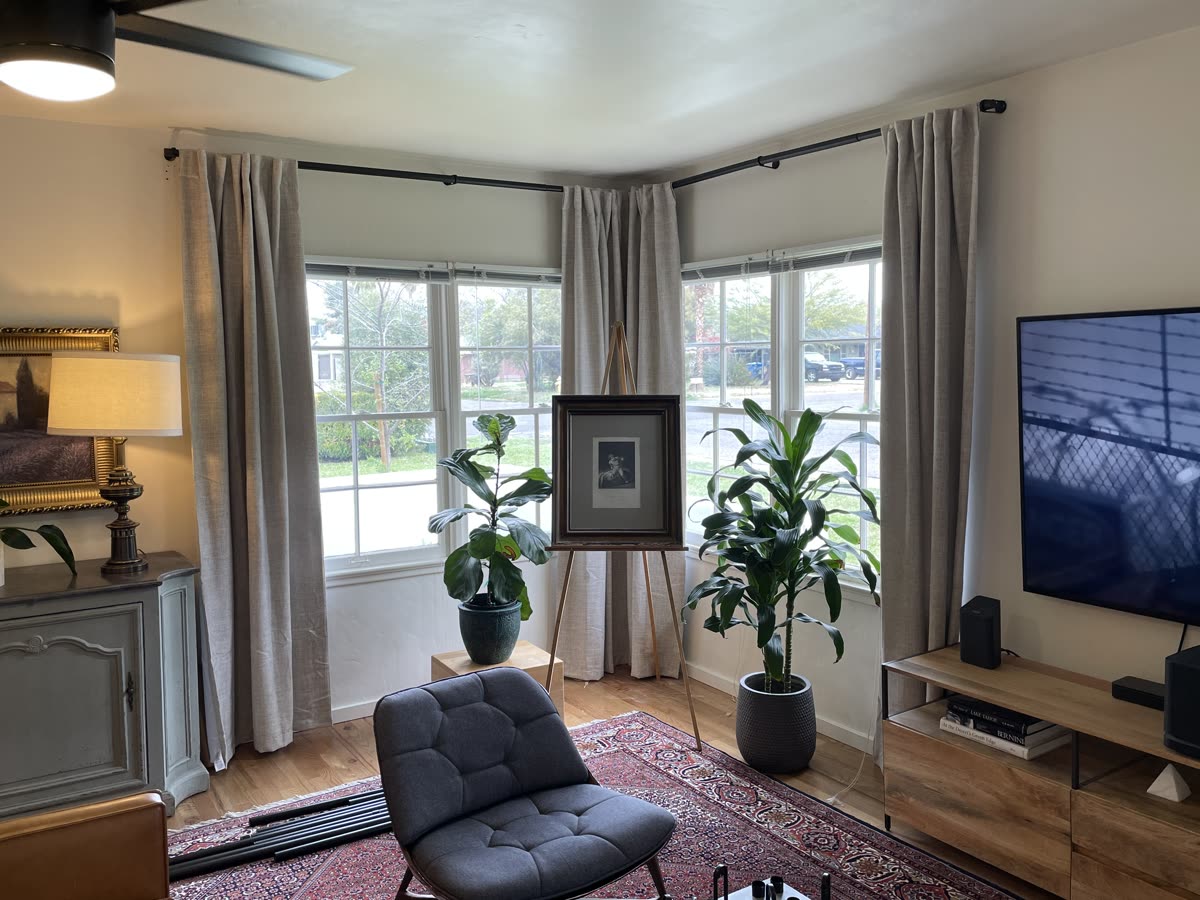
This living room had a corner where two windows met, which is where a lot of curtain installs fall apart. You cannot just butt two separate rods into a corner and hope they meet. The brackets fight each other, the panels bunch, and the rods rarely end up at the same height.
We planned the corner first and worked out from it, setting the bracket heights on both walls to the same line so the rods carry around the corner cleanly and the panels hang continuous instead of broken. Getting that one transition right is most of what makes a corner or bay run look custom rather than pieced together. The rest of the wall is easy once the corner is solved.
Anchoring Into Plaster, Block, and Studs
A curtain rod loaded with linen panels carries real weight, and it gets pulled on every time someone opens or closes the drapery. If the brackets are only biting into drywall or a soft plaster surface, they work loose and eventually tear out, usually taking a chunk of wall with them.
Older Phoenix and Arcadia homes are often plaster or block rather than standard framed drywall, so anchoring is the part you cannot shortcut. Where a bracket landed on a stud, we screwed straight into it, which is the strongest hold there is. Where it did not, we used anchors rated for the wall we were in, masonry anchors for block and the right plaster anchors elsewhere, so each bracket holds the load without working loose. That is the boring part of the job and also the part that decides whether the rods are still straight a year from now.
The Finished Room
With the rods mounted level, set high and wide, and anchored solid, the panels did the rest. Floor-length linen across the living-room windows, rods lined up at the same height around the room and through the corner, glass left open during the day. The room went from bare windows to finished in a single afternoon.
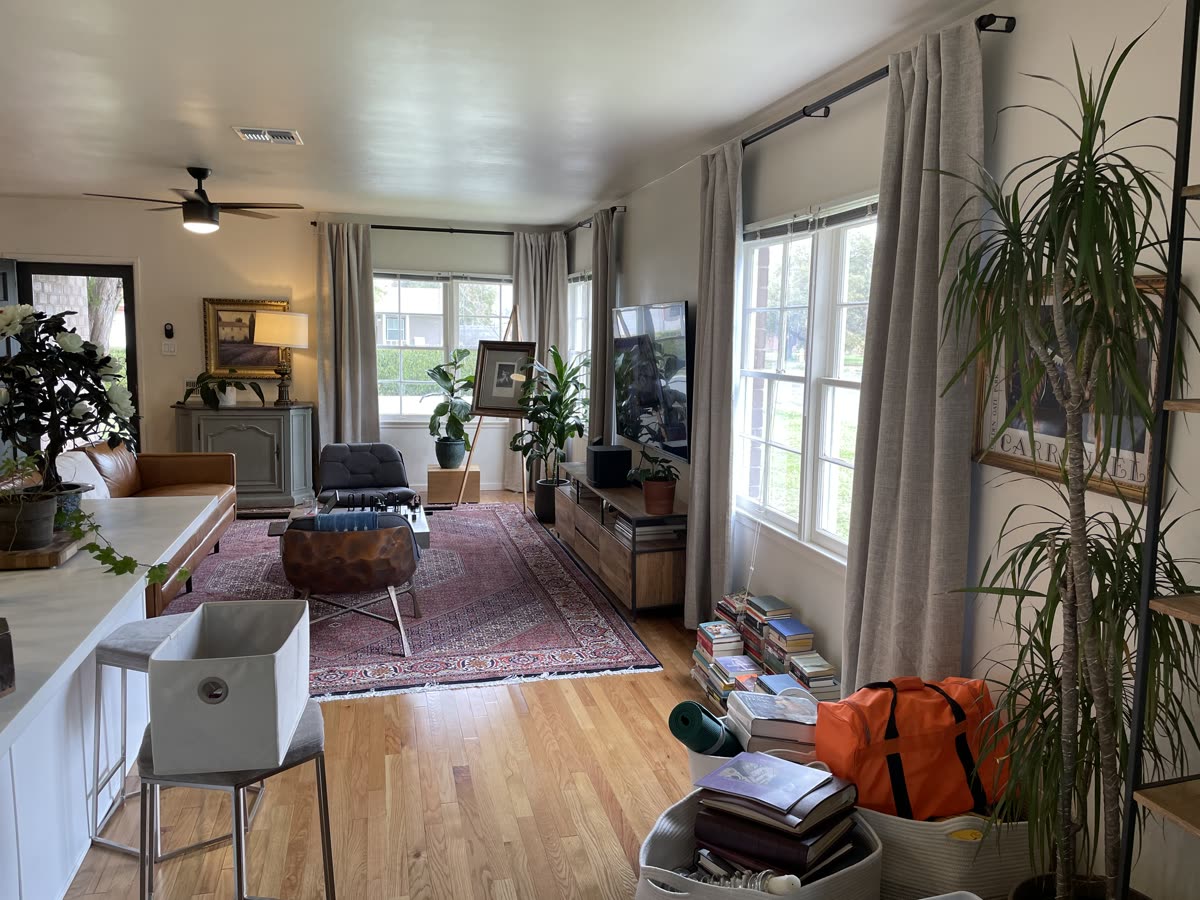
That is the whole point of a window treatment installation done right. The work is mostly invisible. You do not notice the level rods or the proper anchors. You just walk in and the room looks put together.
Frequently Asked Questions
How much does it cost to hang curtains and rods in Phoenix?
Hanging curtains and a rod usually runs about $75 to $200 per window or area, depending on the rod, the mounting height, and the wall type. A full living room with several windows, like this Arcadia job, generally lands around $300 to $800 total. Plaster and block walls take a little more time than drywall, which is the main thing that moves the number.
Can you mount curtain rods on plaster or block walls?
Yes. Plaster and block are common in older Phoenix and Arcadia homes, and rods mount fine on both with the right anchors. We hit a stud whenever the bracket lands on one, and where it does not we use anchors rated for plaster or masonry so the rod holds the weight of the panels without pulling loose.
Do you supply the rods and panels or install ones I bought?
Either works. Most customers buy their own rods and panels because they want a specific look, and we install what they picked. If you would rather we source the hardware, we can do that too. We are also glad to advise on rod length and panel sizing before you buy, so the finished look comes out right the first time.
Want Your Drapery Hung Right?
We hang curtains and drapery in Arcadia, Phoenix, Scottsdale, and Tempe, from a single window to a whole living room. Even small jobs get the same care, and every one starts with a free on-site consultation where we look at your windows and walls and give you an honest number.
Request Free Estimate