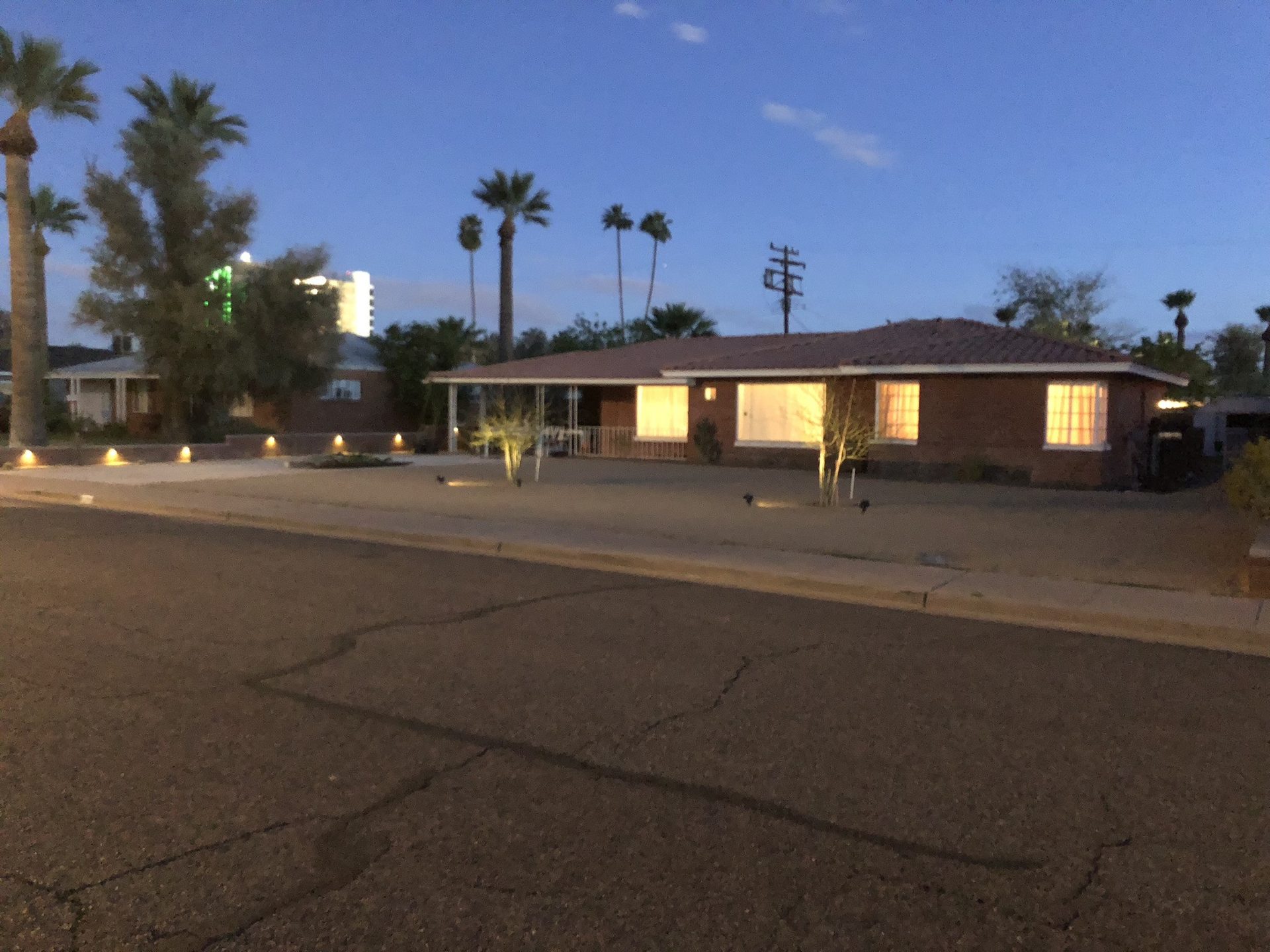
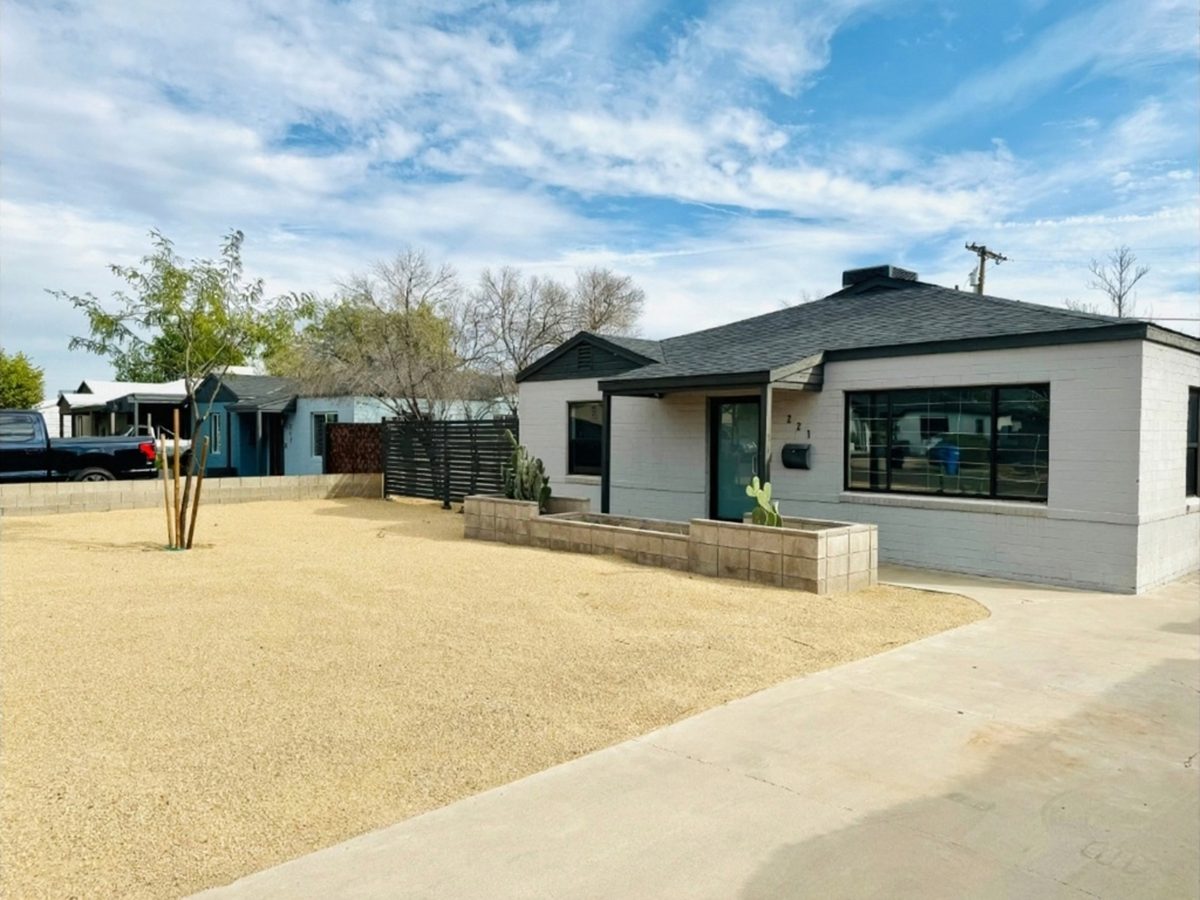
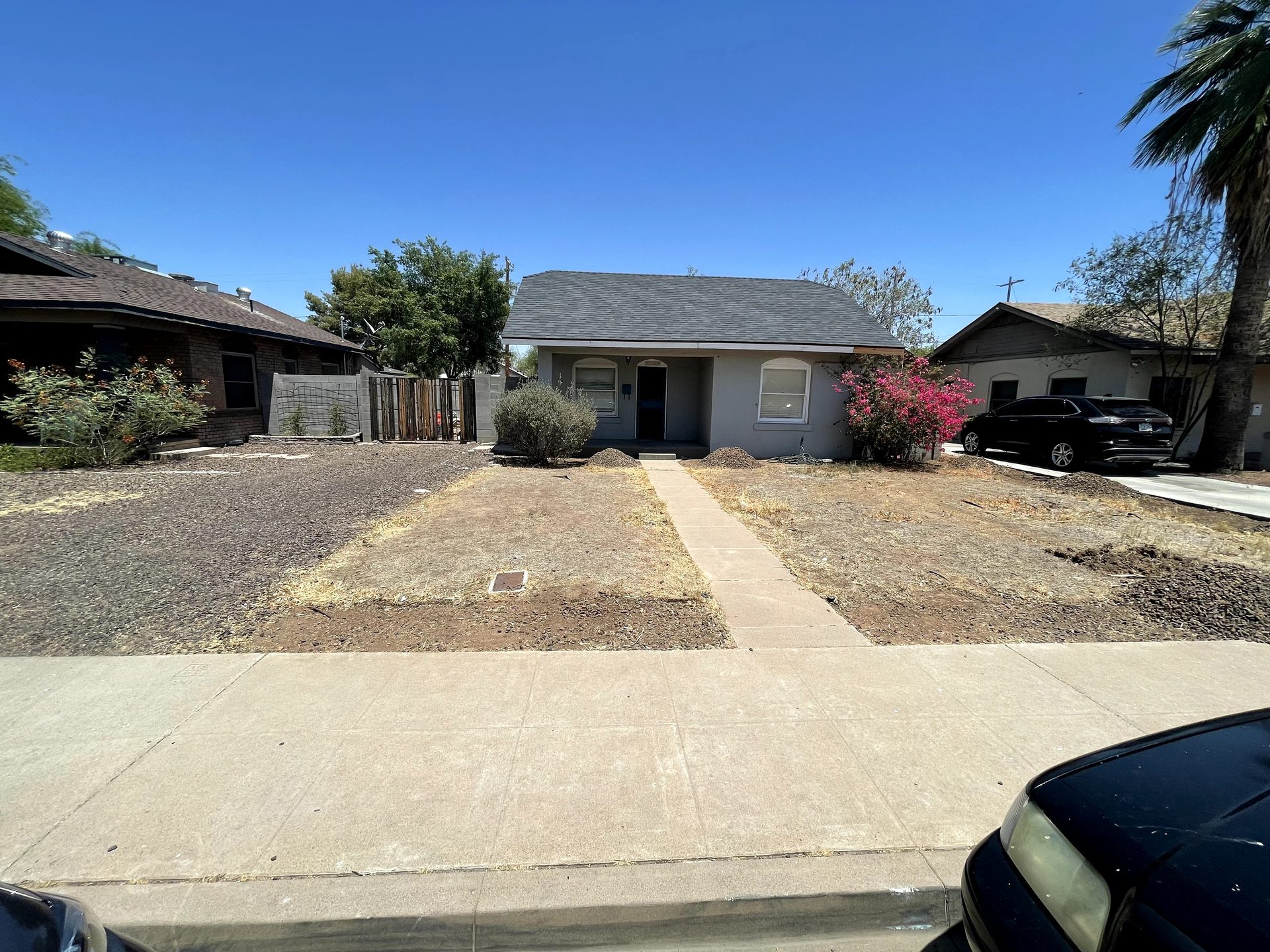
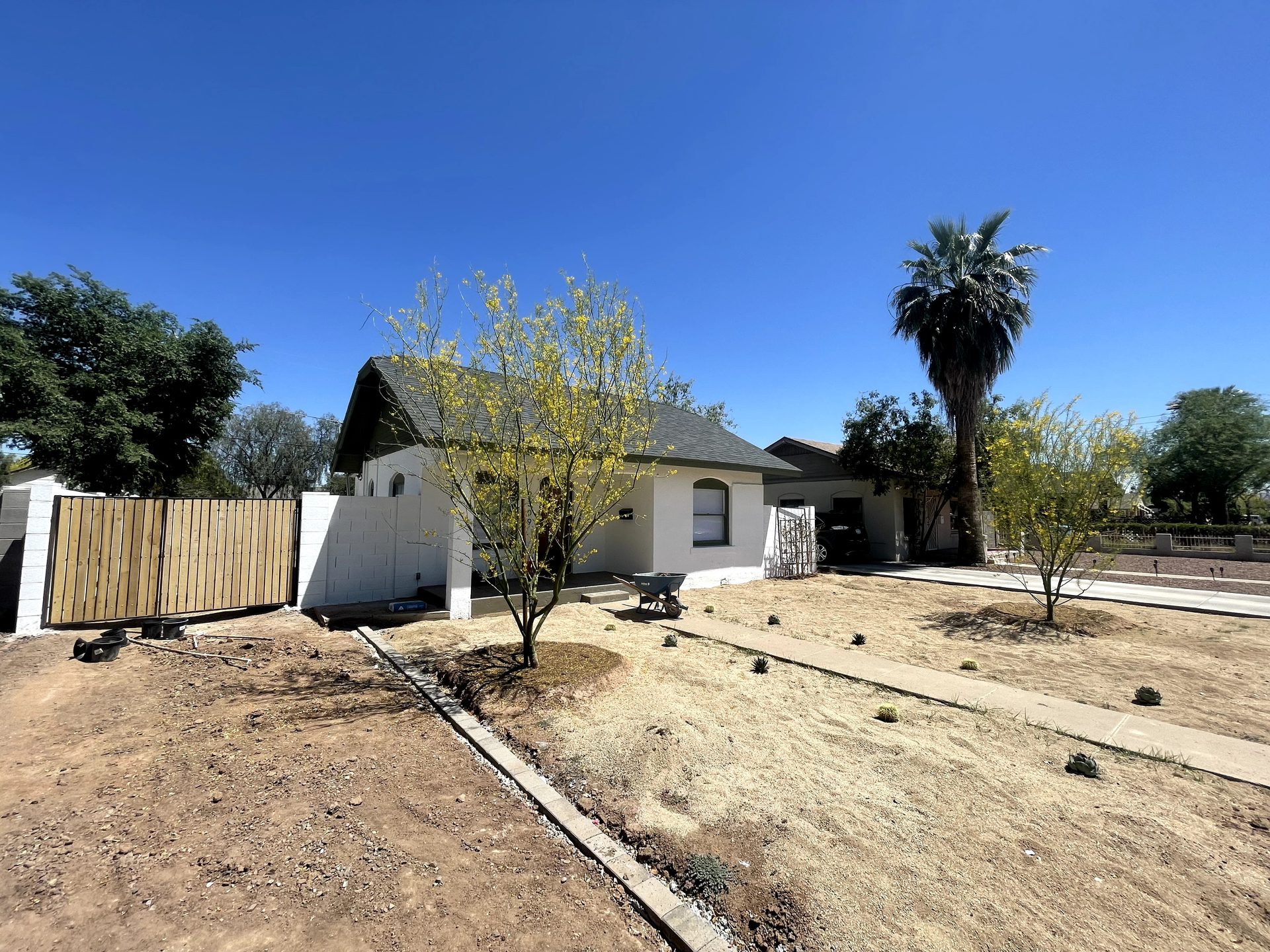
Coronado is one of Phoenix's prettiest historic neighborhoods, full of 1920s and '30s bungalows on tidy, walkable streets. The front yard on this one was bare dirt, with nothing to soften it from the sidewalk. The homeowner wanted a low-water desert landscape that fit the character of the district, looked finished and intentional, and didn't cost them a fortune in water every month. Here's how we turned it into one of the better-looking front yards on the block.
Quick version first, then the full walkthrough.
Project at a Glance
- Location: Coronado Historic District, Phoenix, Arizona
- Skid-steer demo and grading of the bare dirt yard
- Decomposed granite graded and compacted across the yard
- New concrete front walkway with paver-style edge banding
- Two 'Desert Museum' palo verde trees for shade and spring bloom
- Golden barrel cactus and accent desert plants
- Drip irrigation on a timer for the new plantings
- Graded for drainage so water sheds away from the house
Landscaping a Front Yard in a Historic District Like Coronado
A desert conversion in a neighborhood like Coronado isn't just about the plants. The look has to suit a district full of period bungalows, so the goal was a clean, intentional yard that reads as designed, not a flat field of gravel dropped in front of a 90-year-old house. That meant real desert plants placed with purpose, a granite surface that ties the yard together, and a proper concrete walkway to give it a spine.
There's also a practical point worth knowing if you own in a historic district. Standard front-yard work, swapping dirt or grass for granite and desert plants, usually doesn't need a building permit. But Coronado is a designated historic district, and street-visible changes can sometimes require review by the City of Phoenix Historic Preservation Office, occasionally a Certificate of No Effect or Certificate of Appropriateness. It's worth checking before you start rather than after, and it's the kind of thing we help homeowners sort out.
Clearing the Yard: Skid-Steer Demo and Grading
Before any digging, we called Arizona Blue Stake (811) to have the underground utilities located. It's free, it's required by law, and it's not a step you skip.
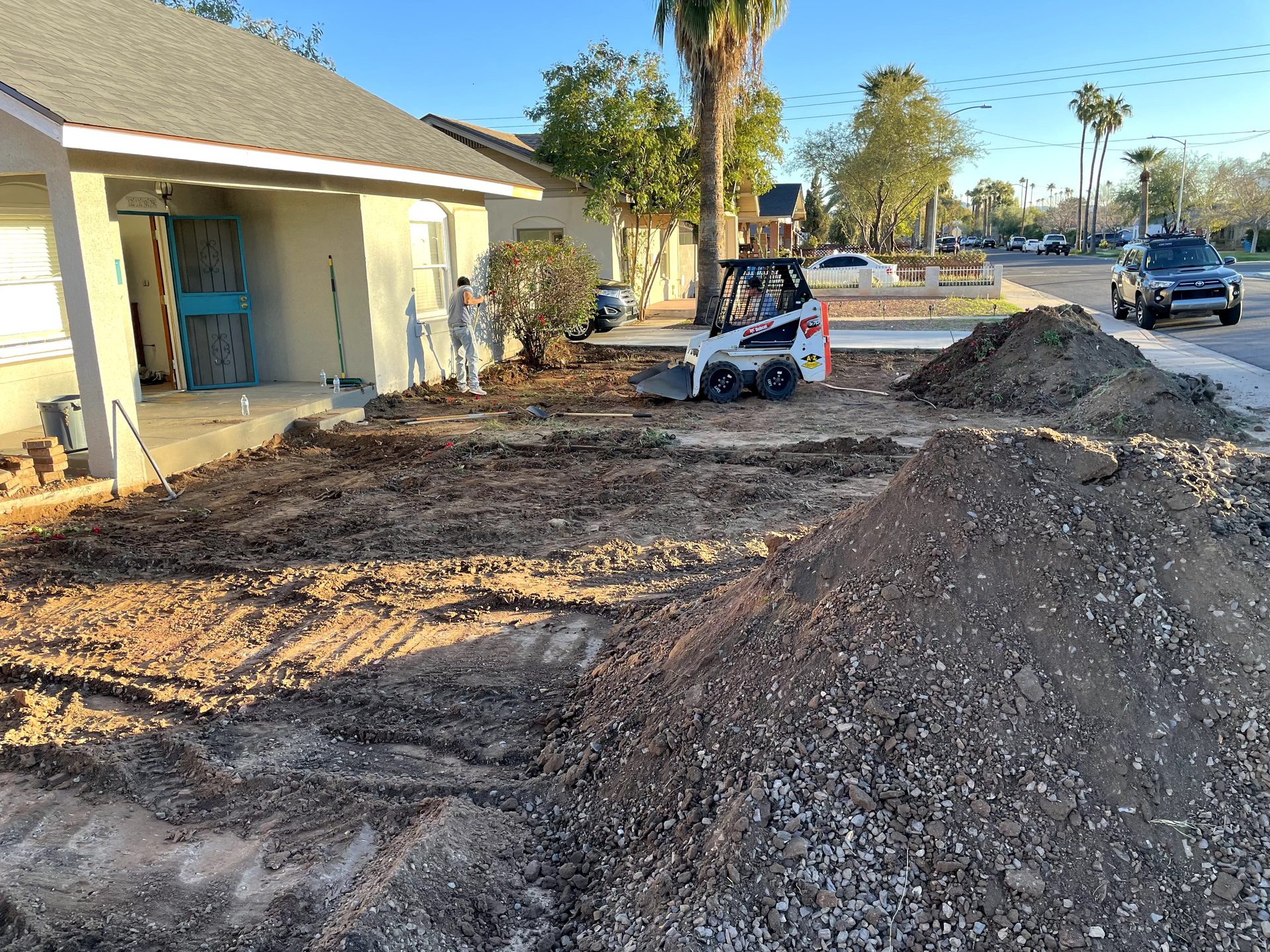
With the lines marked, we brought in a compact skid steer to strip the yard, knock down the high spots, and load the spoil for haul-off. A machine earns its keep on a job like this. Grading a full front yard by hand is slow, punishing work, and the skid steer let us shape the whole yard and get the grade right. And the grade is the part that matters most: we set a gentle slope so water runs away from the house instead of pooling against it. Everything that goes down afterward, the granite, the walkway, the plants, sits on top of that grade, so getting it right first is what makes the finished yard drain and last.
The New Concrete Walkway and Edge Banding
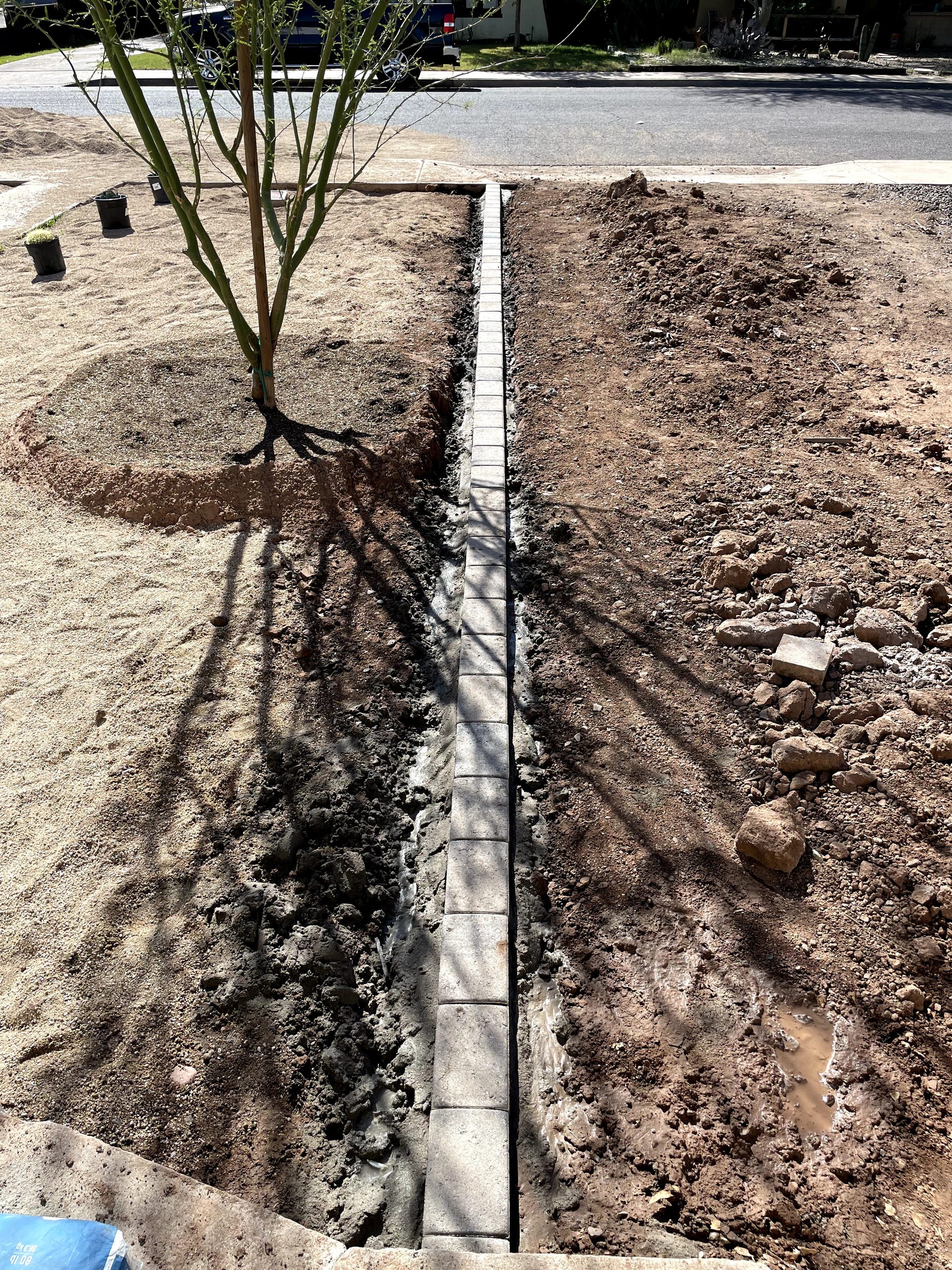
The spine of the new yard is a poured concrete walkway running from the sidewalk to the front porch, with a clean paver-style band edging the walk and the planting beds. We pour the flatwork before the granite goes down. You don't want to spread and compact a finished granite surface and then tear it up to form and pour concrete, so the walkway comes first and the granite ties into it.
A residential walkway like this is four inches of concrete over a compacted base, with tooled control joints so any cracking happens along a straight line instead of wherever it wants. We finished it with a light broom texture for slip resistance, which is the standard for a walkway and looks right on a historic bungalow. One thing we pay attention to in Phoenix: concrete poured into full summer sun wants to flash-cure, which causes surface cracking, so we keep it damp while it sets rather than letting the heat rush it. The edge banding around the walk and beds is the detail that pulls it all together. That crisp hard line is most of what separates a yard that looks designed from one that just looks filled in. If you're weighing a walkway, patio, or other flatwork, here's more on our concrete patios and walkways in Phoenix.
A Clean Decomposed Granite Base
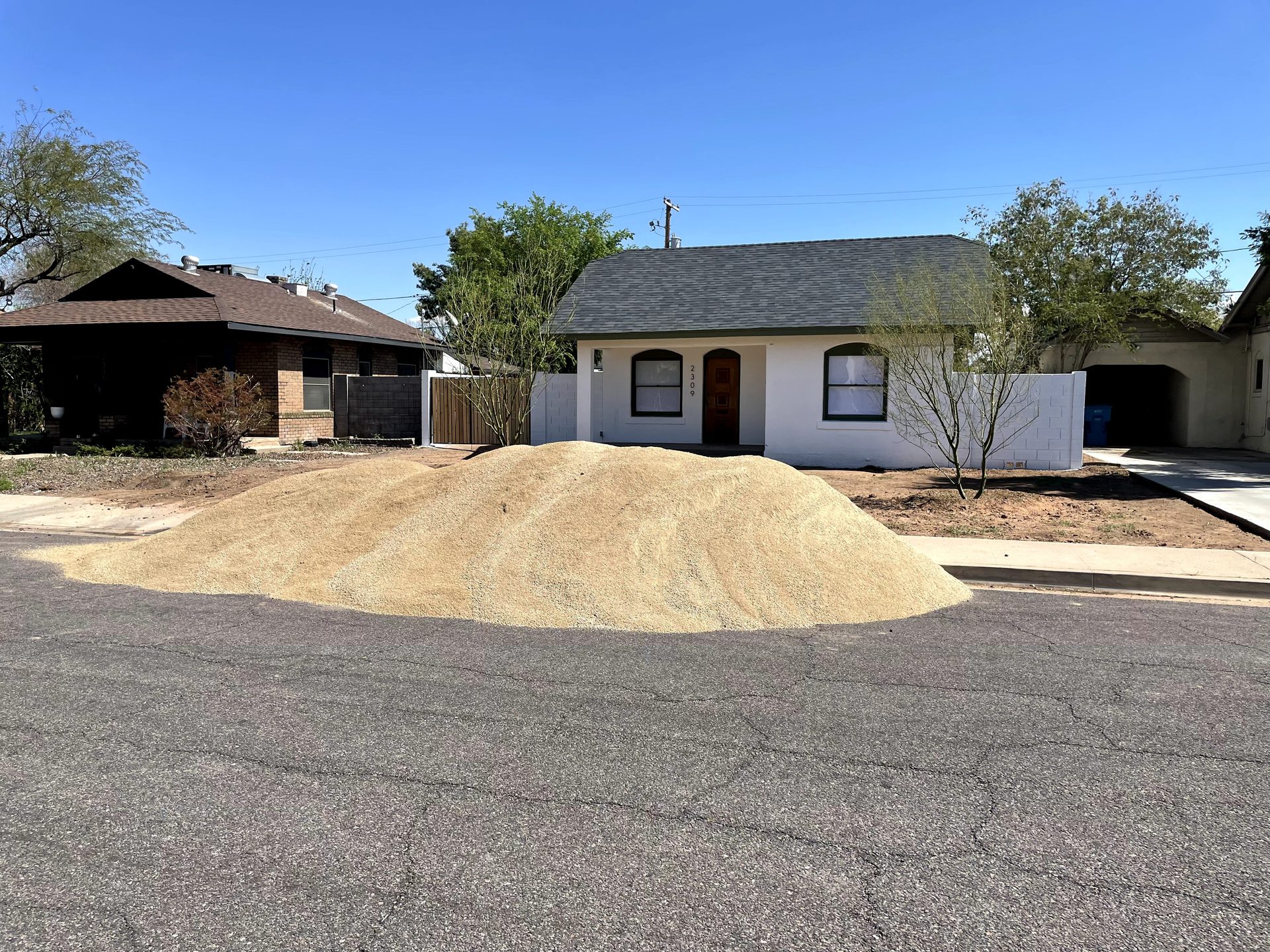
With the yard graded and the walkway poured, we brought in decomposed granite, usually shortened to DG. It's a fine, crushed granite that compacts down into a firm, natural-looking surface, and that's the key difference from loose landscape rock or gravel, which never really settles and shifts around underfoot. DG is what gives a desert yard that clean, finished, walkable look instead of a loose pile of stone.
We spread it about two inches deep over the graded yard, screeded it level, then dampened and compacted it so it sits tight and even and ties cleanly into the new walkway. Underneath, we ran a commercial-grade, water-permeable weed barrier to cut down on what grows up through it. It helps a lot, but we're straight with homeowners about it: no desert yard is ever fully weed-free, because wind drops seed right on top of the granite no matter what's underneath. A yard like this is low-maintenance, not no-maintenance.
Desert Plants That Suit a Historic Home
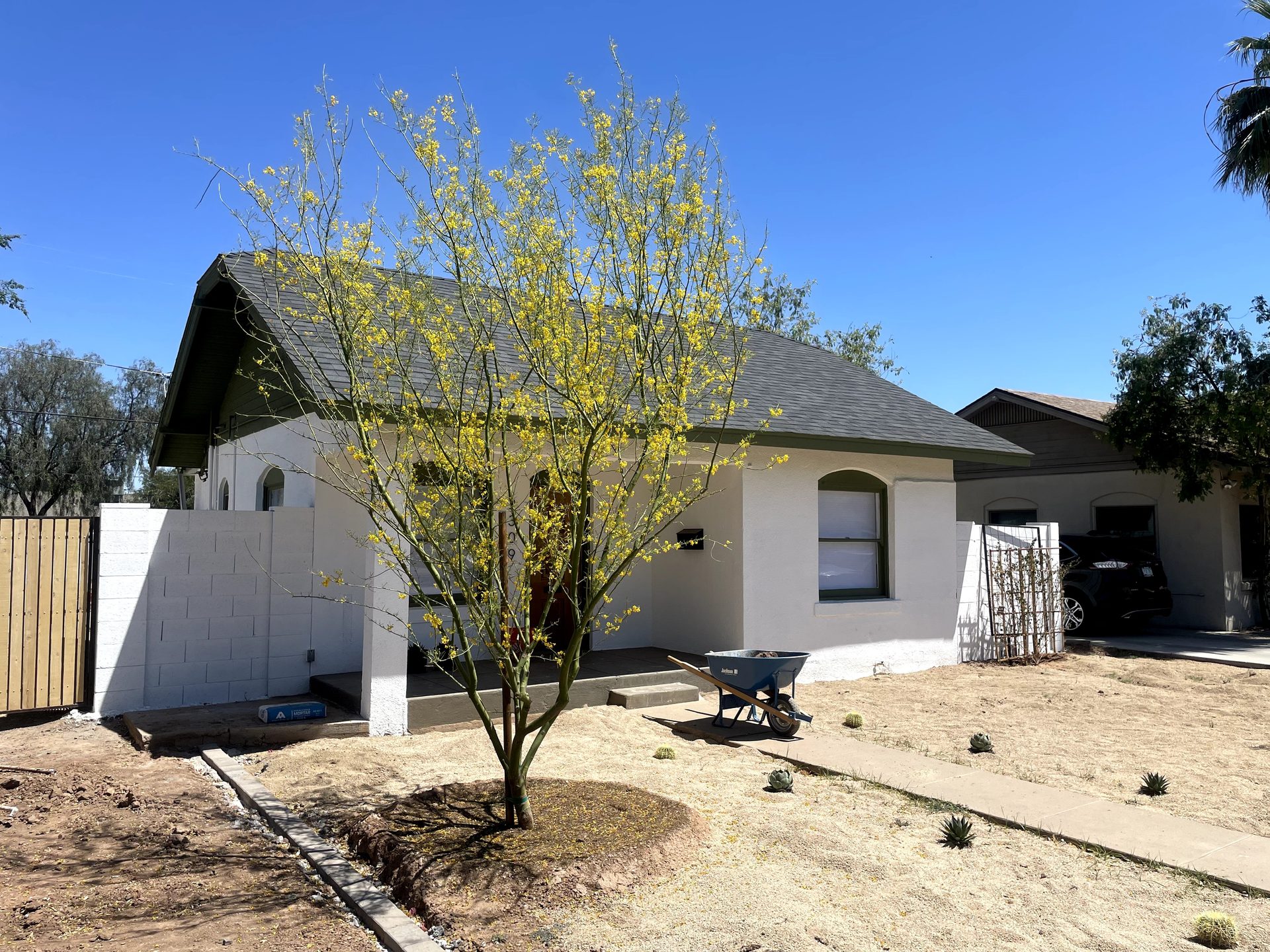
The anchors of the yard are two 'Desert Museum' palo verde trees. It's a thornless hybrid of Arizona's green-barked desert tree, about as fitting a choice as there is for a Phoenix yard. It grows fast, throws a bright yellow bloom in spring, and keeps a light, open canopy that suits a bungalow without swallowing it. Planting two gives the front yard balance and spreads the shade across the house instead of piling it in one spot. They went in young, so we staked them with a little flex in the ties to let the trunks build strength, and the stakes come off once they establish. A Desert Museum does want some structural pruning while it's young so it builds good branch architecture, and regular drip water for the first year or two. After that they get by on very little and start throwing real shade over the front of the house.
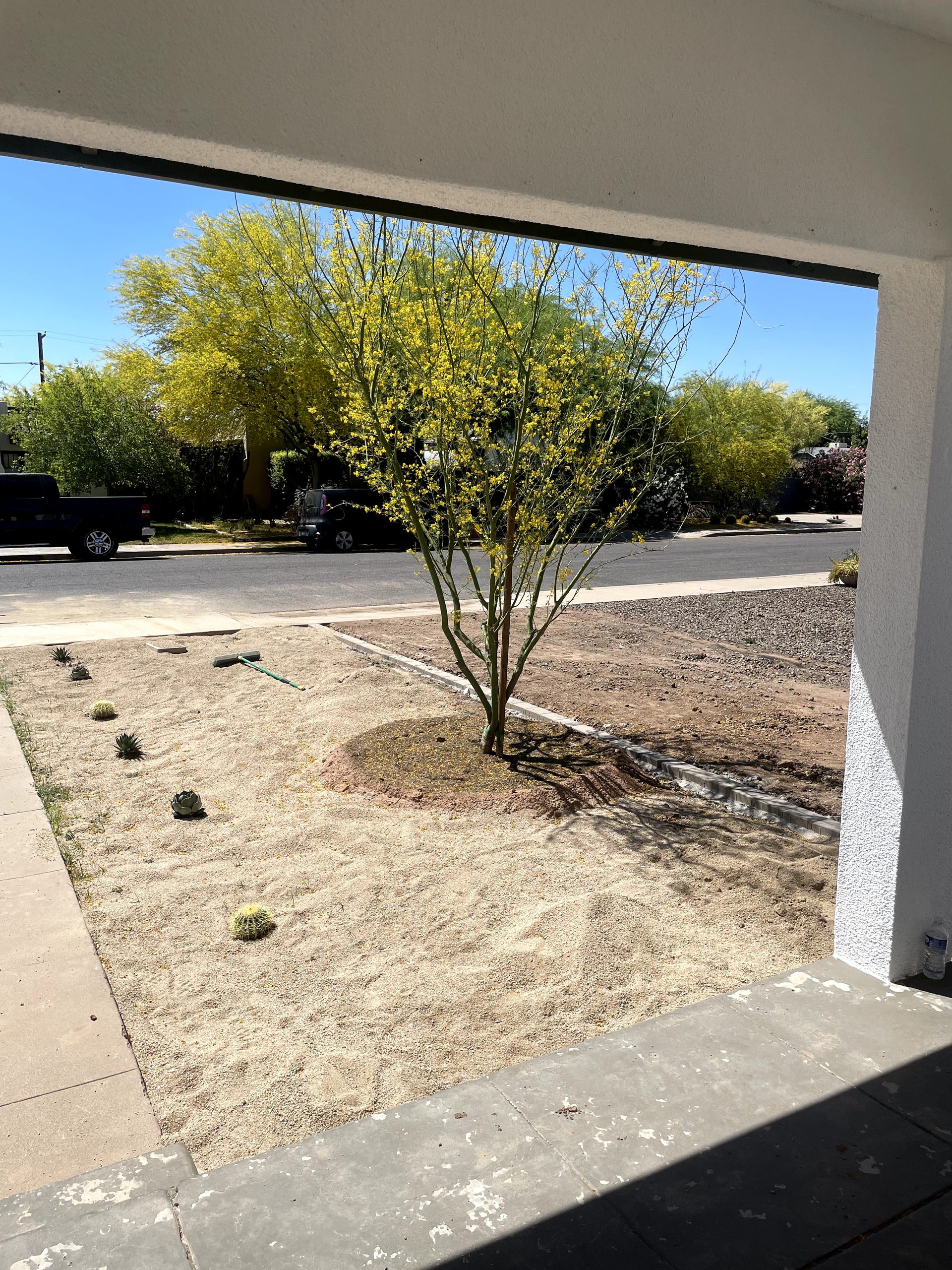
Around them we set golden barrel cactus and a few other desert plants, chosen for a range of heights and shapes that reads as intentional year-round. Golden barrels are slow-growing, very low-water, and about as tough as a plant gets in full Phoenix sun, which makes them a reliable architectural accent. Even hardy desert plants need help getting started, so we ran drip irrigation on an automatic timer that delivers water right to each plant's roots instead of spraying the whole yard. For the first season or two it keeps the new plants healthy while they settle in. After that, plants like these ask for almost nothing.
The Result: Low-Water Curb Appeal in Coronado
What used to be bare dirt is now a low-water desert yard that works with the climate instead of against it. The water demand dropped to almost nothing, the upkeep is a fraction of what a lawn takes, and water sheds away from the house the way it should. Best of all, the yard finally looks like it belongs to the house and the neighborhood it sits in.
A yard like this is a good example of what hiring one contractor gets you. The demo, the grading and drainage, the concrete walkway, the granite, and the planting all happened under one roof and in the right order, instead of the homeowner lining up a grading crew, a concrete guy, a landscaper, and a haul-off truck on their own. If you're considering a conversion of your own, here's more on our desert landscaping in Phoenix, and two more outdoor projects worth a look: another Phoenix grass-to-desert front yard and a dead lawn we turned into a desert yard. You can also browse our project gallery.
Common Questions About Desert Landscaping a Historic Home in Phoenix
Can you do desert landscaping in a historic district like Coronado? Yes. A standard front-yard conversion to granite and desert plants usually doesn't need a building permit. The wrinkle is that street-visible changes in a designated historic district can require review by the City of Phoenix Historic Preservation Office, so it's worth checking before you start. We help homeowners sort that out.
Is a 'Desert Museum' palo verde a good tree for a front yard? One of the best. It's thornless, grows fast, blooms yellow in spring, and keeps a light canopy that suits a bungalow. We planted two here for balance and shade. They want regular drip for the first year or two and some young-tree pruning, then very little.
Why pour a concrete walkway as part of a desert yard? It gives the yard a spine and a finished look, and it holds up to daily foot traffic better than loose granite. We pour the walkway first, then tie the granite into it so the whole front reads as one design.
Do you put weed barrier under the granite? Yes, a commercial-grade, water-permeable one. It cuts weed pressure but doesn't eliminate weeds entirely, since wind drops seed on top of the granite. We'd rather tell you that than promise a yard that never needs a thing.
Thinking About a Desert Front Yard in Phoenix?
Whether you're in a historic district like Coronado or just tired of watering grass, we'll walk your yard, talk through the options honestly, and give you a clear estimate. Every project starts with a free, no-pressure consultation from a licensed Arizona contractor, ROC #365090.
Request Free Estimate