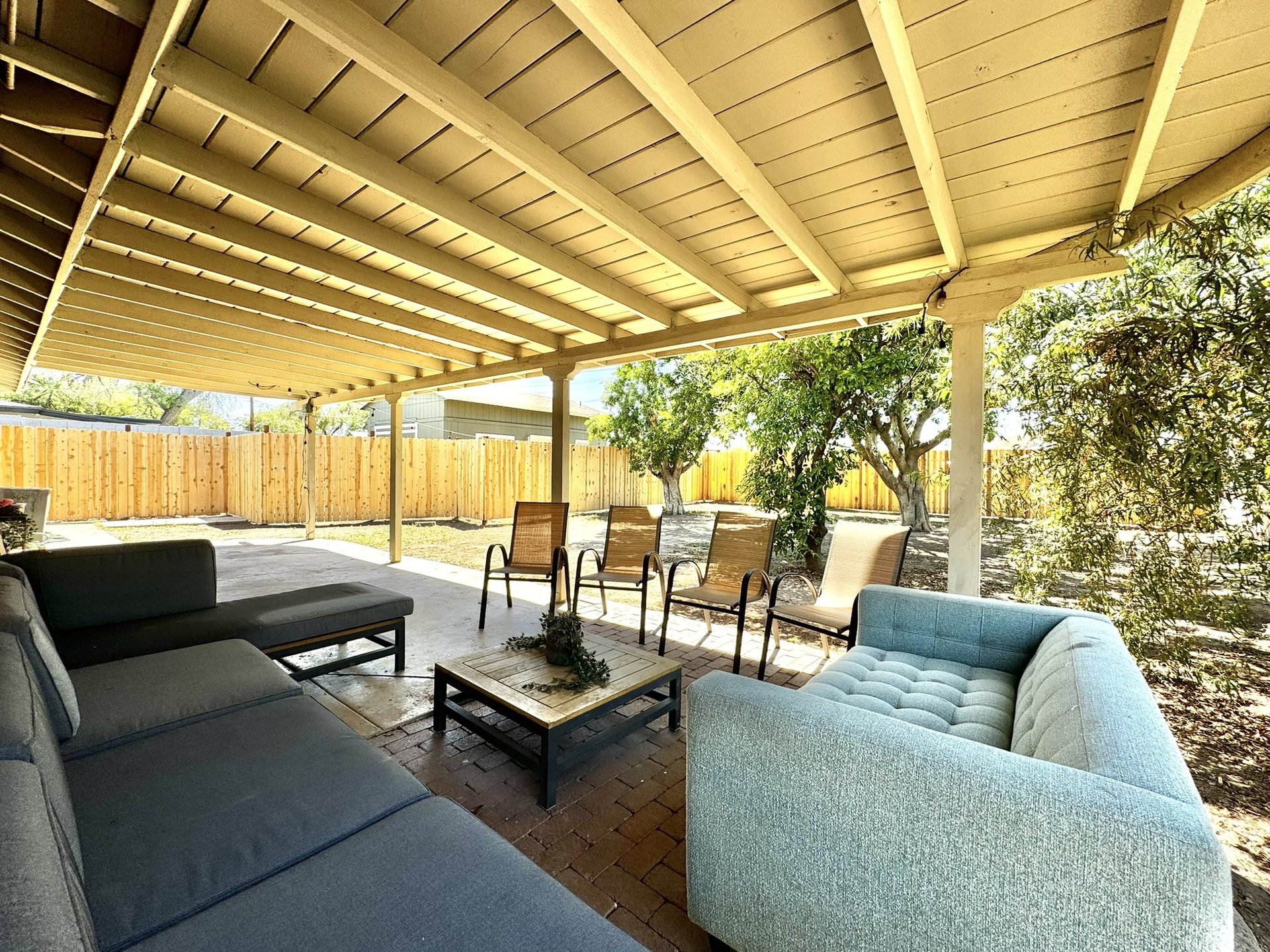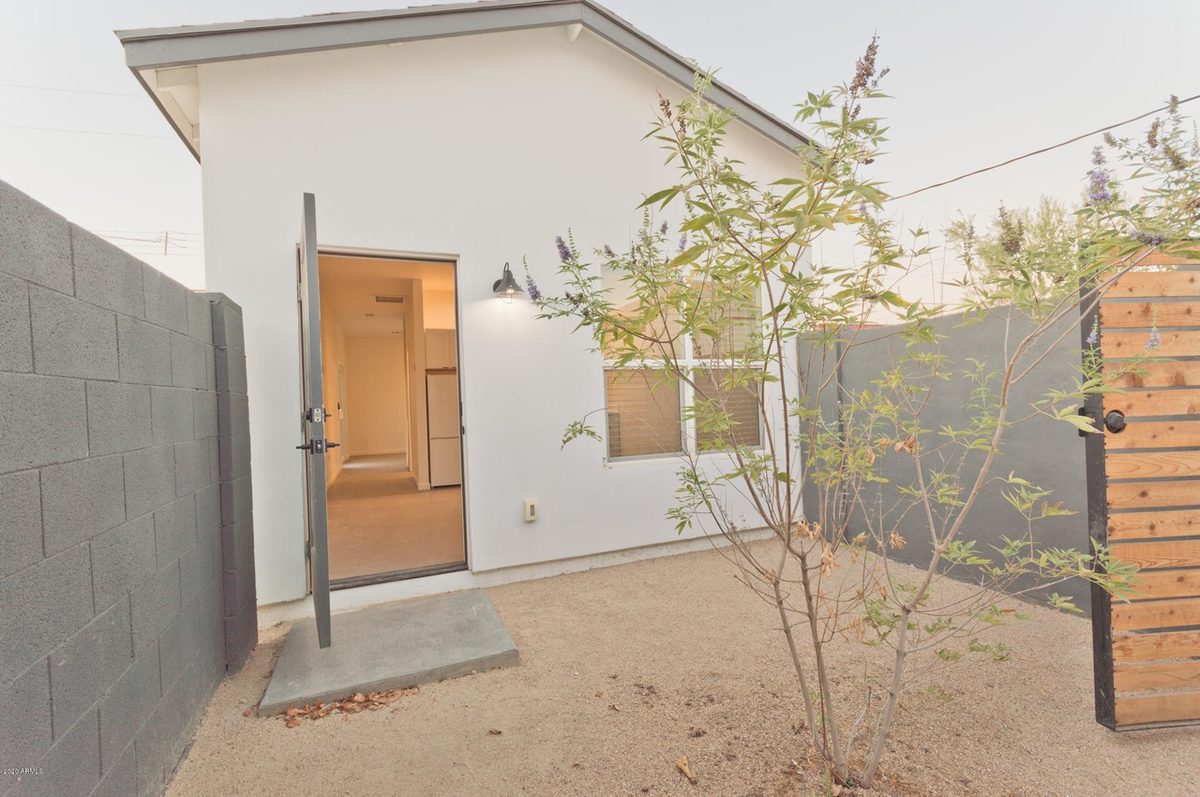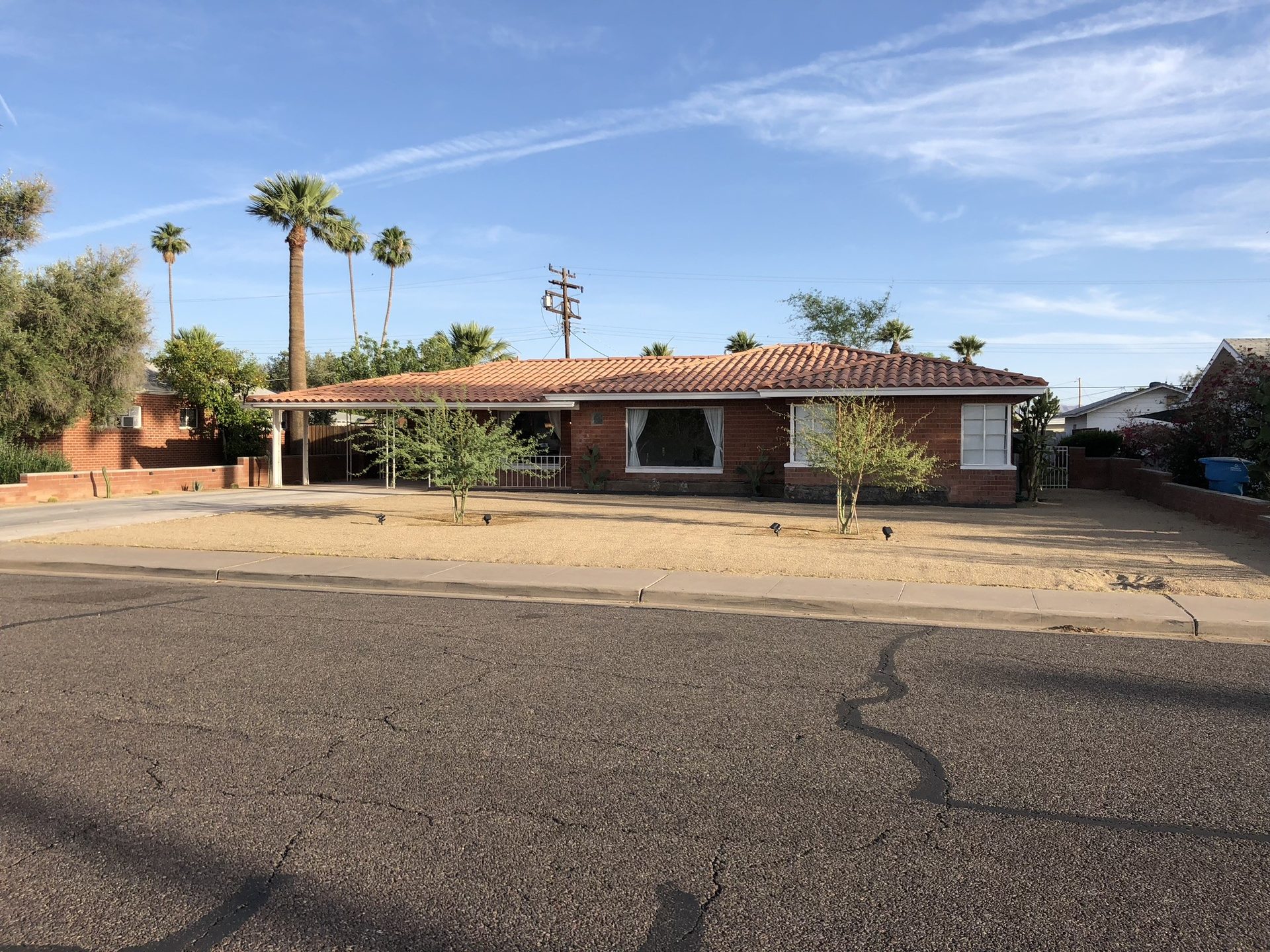
A green lawn in front of a Phoenix house always comes with a water bill to match. The homeowner on this project was tired of paying to keep a thirsty front yard alive, and the yard itself had gotten away from them: grass, overgrown shrubs, and a row of planters built right up against the house. They wanted something that actually fit the desert. Not a flat field of gravel, but a clean, architectural front yard with real desert plants, good lighting, and almost no water demand.
That's exactly what we built. Here's the quick version first, then the full walkthrough.
Project at a Glance
- Location: Phoenix, Arizona
- Removed the grass lawn and overgrown vegetation
- Pulled out planters built against the house to restore drainage
- Installed decomposed granite across the yard
- Curated desert plants: golden barrel, agave, prickly pear, ocotillo
- Metal-edged beds for a crisp, architectural look
- Two 'Desert Museum' palo verde trees in the front yard
- Drip irrigation on a timer for the new plantings
- Low-voltage lighting: path lights and tree uplighting
The Goal: Lose the Lawn Without a Yard of Bare Rock
Plenty of grass-to-desert jobs end up looking like a parking lot: rock wall to wall, a couple of sad shrubs, done. That was the one thing this homeowner did not want. The brief was to cut the water and the upkeep, but keep the yard looking designed. So the plan came together around a few real desert plants placed with intention, a clean granite surface, crisp edging, and lighting to carry the look into the evening.
The house is a brick mid-century ranch, which gave us a clean, simple backdrop to work against. The job came down to four things: take everything out, prep the ground right, plant a curated palette, and light it well.
Out With the Lawn: Turf and Vegetation Removal
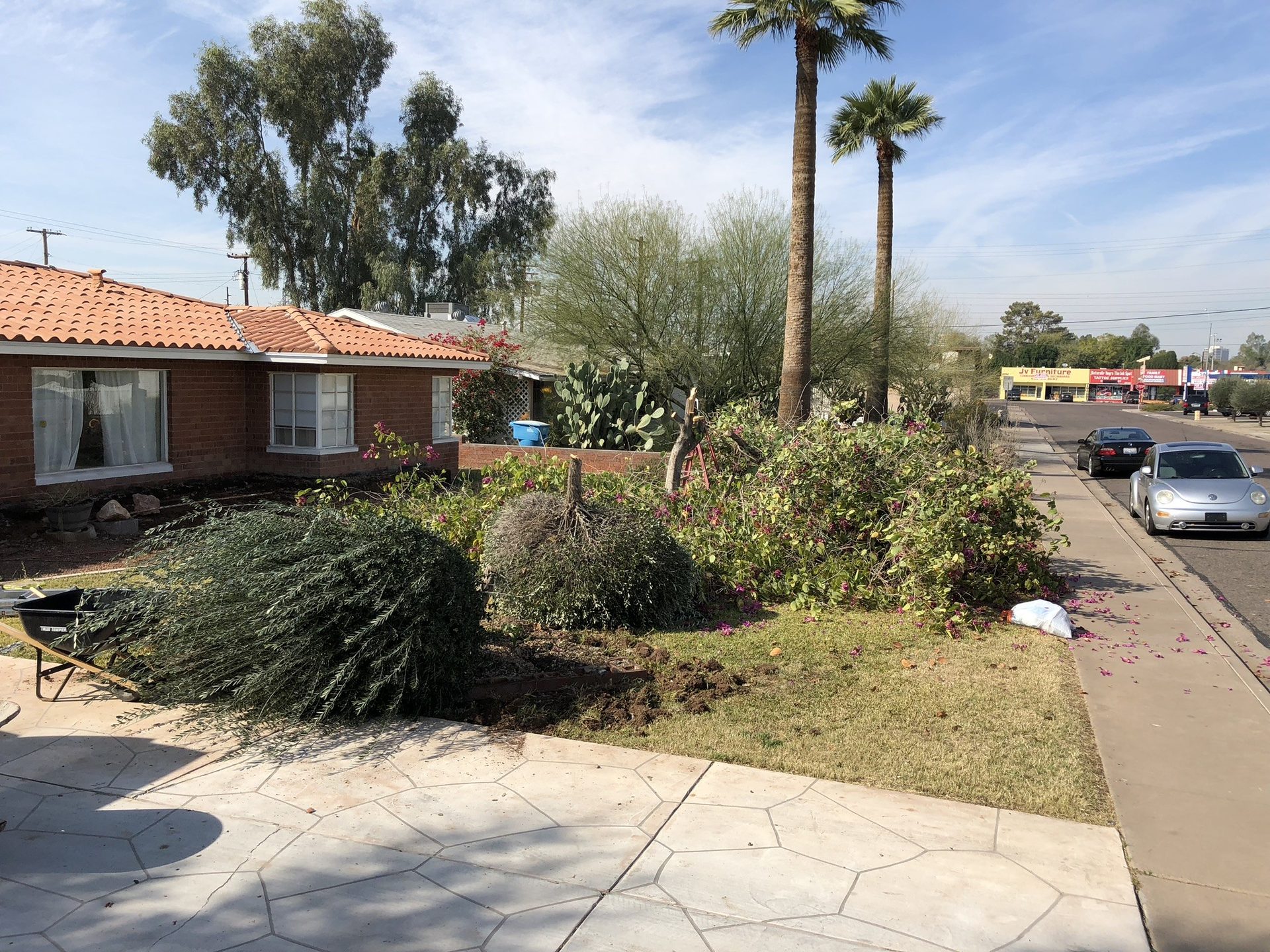
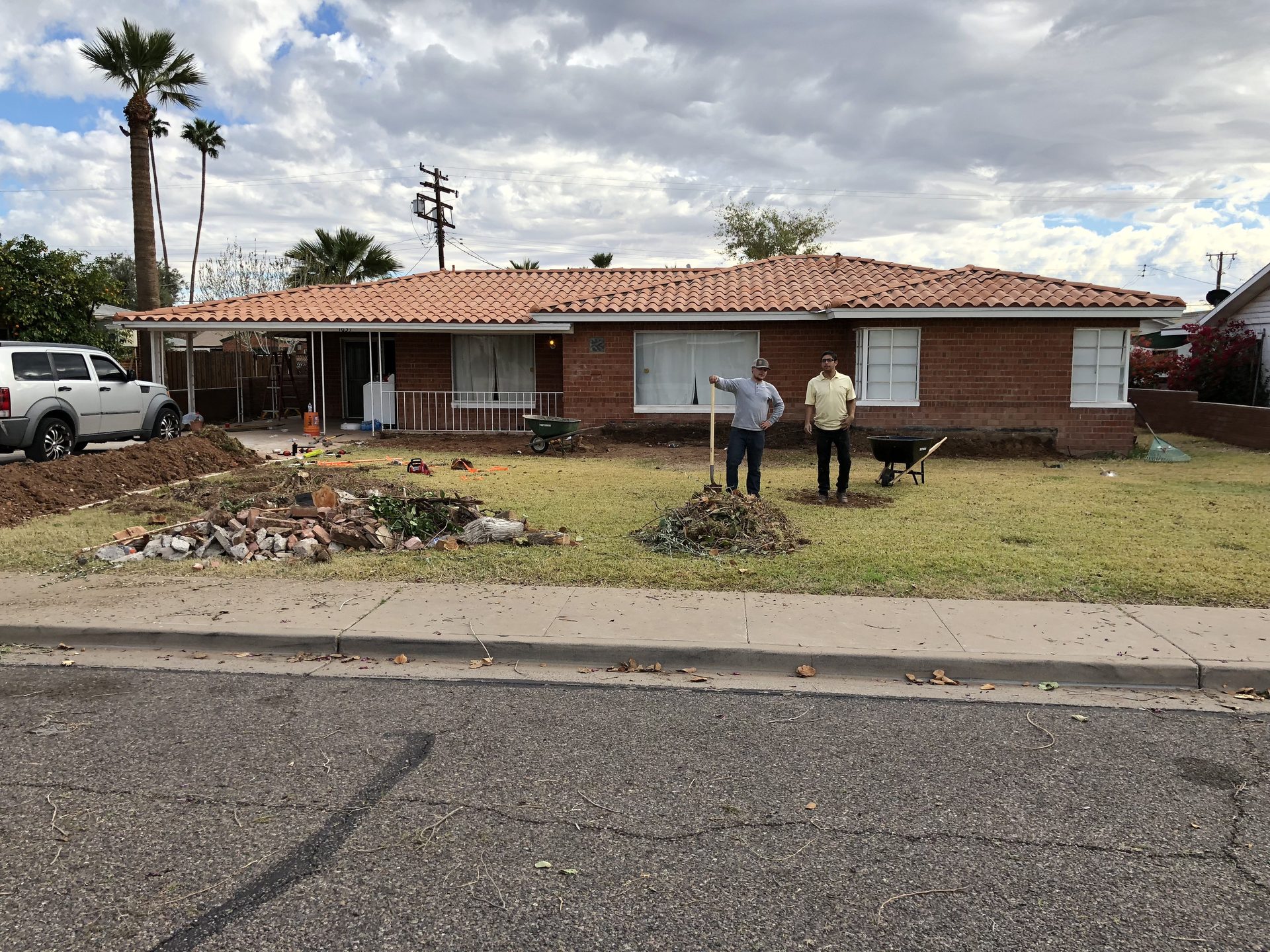
The first phase was demolition. We stripped the grass, cut down and pulled the overgrown shrubs, and grubbed out the roots so nothing would try to come back through the new yard. Before any digging, we called Arizona Blue Stake (811) to mark the underground utilities. It's free, it's required by law, and it keeps a shovel from finding a gas or irrigation line the hard way.
All of the old material left by dump truck. Stripping a full front yard down to bare dirt is a lot of volume, and hauling it off cleanly is part of the job most homeowners never think about until they're staring at a pile.
Removing the Planters Built Against the House
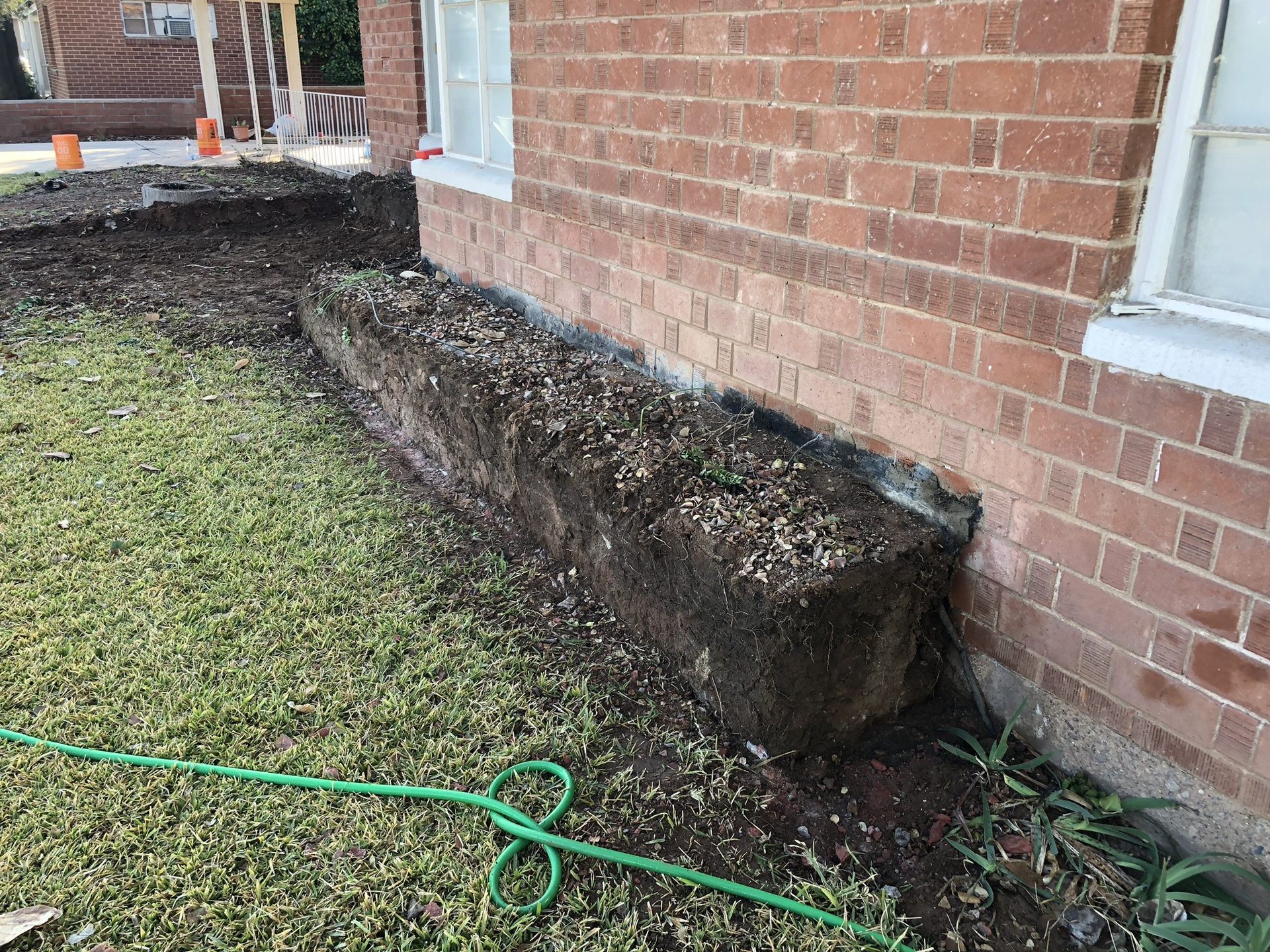
The part of this job that mattered most isn't the part you notice first. Someone had built raised planters directly against the brick wall of the house, packed with soil right up against the foundation. That's a setup worth fixing. Soil and planter material held against the wall traps moisture exactly where you don't want it, keeps the base of the brick damp, and works against the goal of water draining away from the home.
We removed the planters entirely, cleaned up the wall, and let that area dry out and breathe. Then we graded the yard so water runs away from the house instead of pooling against it. We're not making a structural diagnosis here, just removing a clear moisture risk and putting the drainage back the way it should be.
A Clean Base: Installing Decomposed Granite
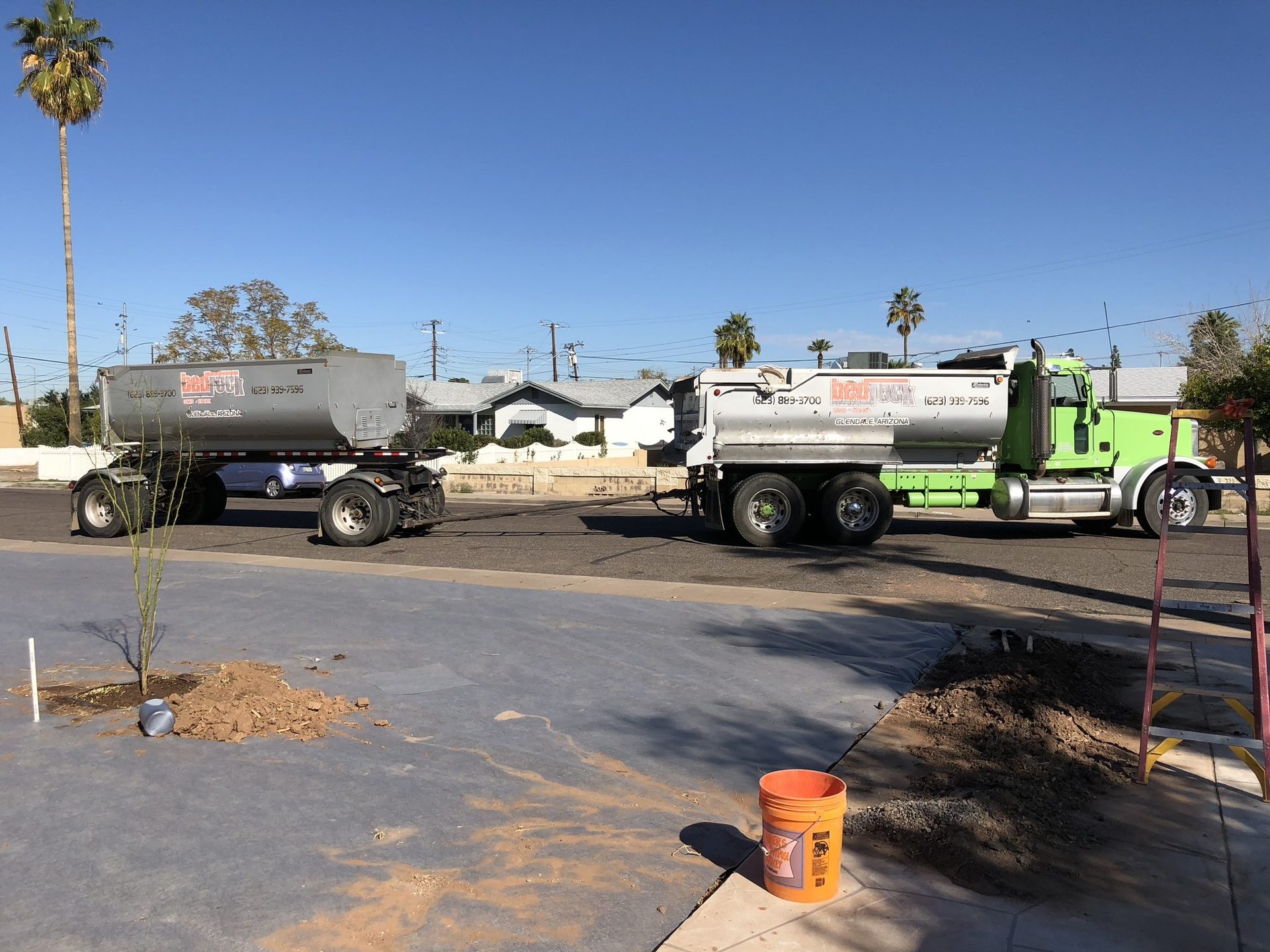
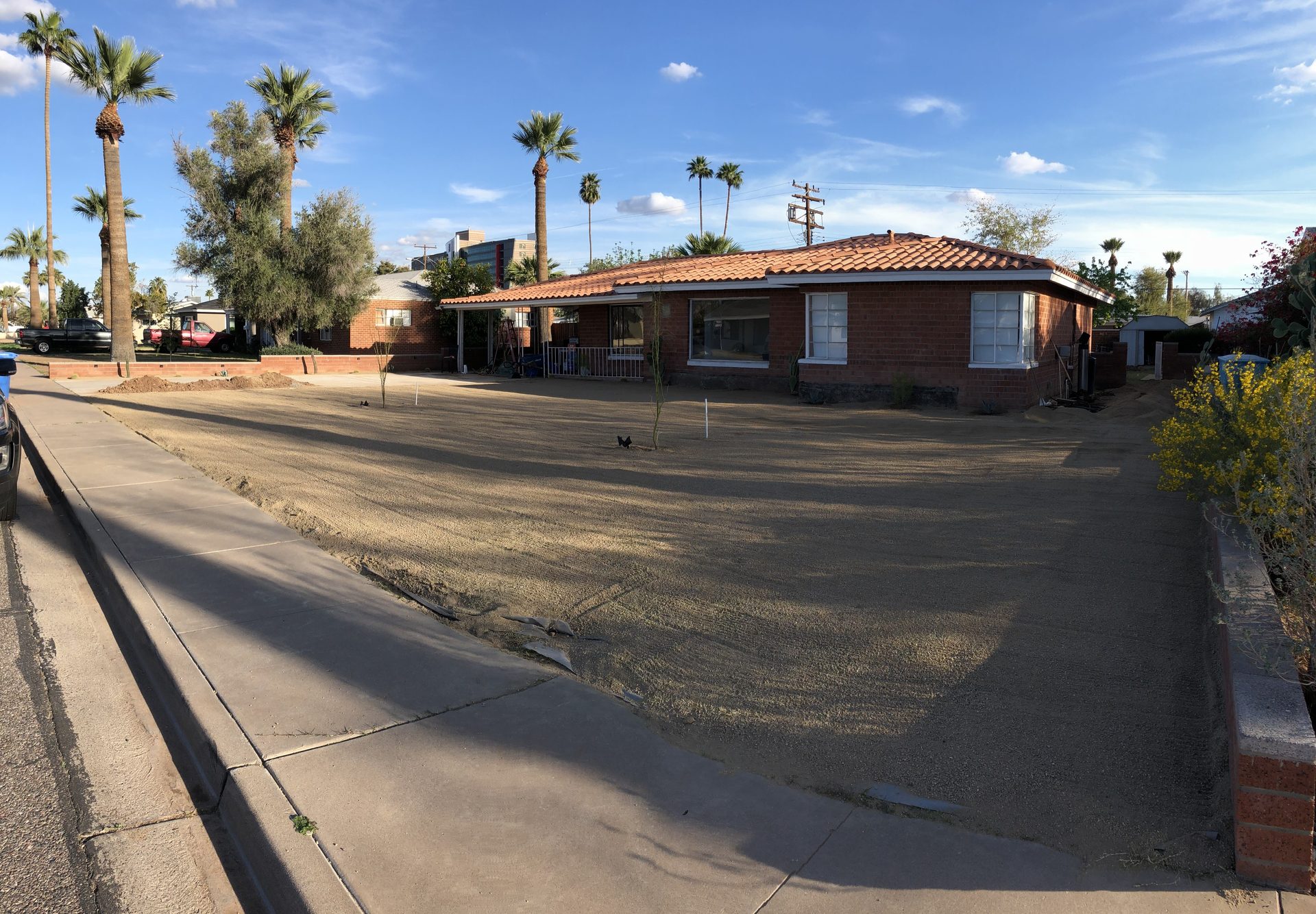
With the yard cleared and graded, we brought in decomposed granite, usually shortened to DG. It's a fine, crushed granite that compacts down into a firm, natural-looking surface. That's the key difference from loose landscape rock or gravel, which never really settles and shifts around underfoot. DG is what gives a desert yard that clean, walkable, finished look instead of a loose pile of stone.
We spread the granite across the yard, screeded it to grade, then dampened and compacted it so it sits tight and even. Done right, the surface holds its shape and gives every plant and tree a crisp setting to sit in. We also ran a weed barrier under the granite to cut down on what grows up through it. That dramatically reduces weeds, though no desert yard is ever truly weed-free, since wind drops seed on top of the granite no matter what.
Choosing Desert Plants That Earn Their Spot
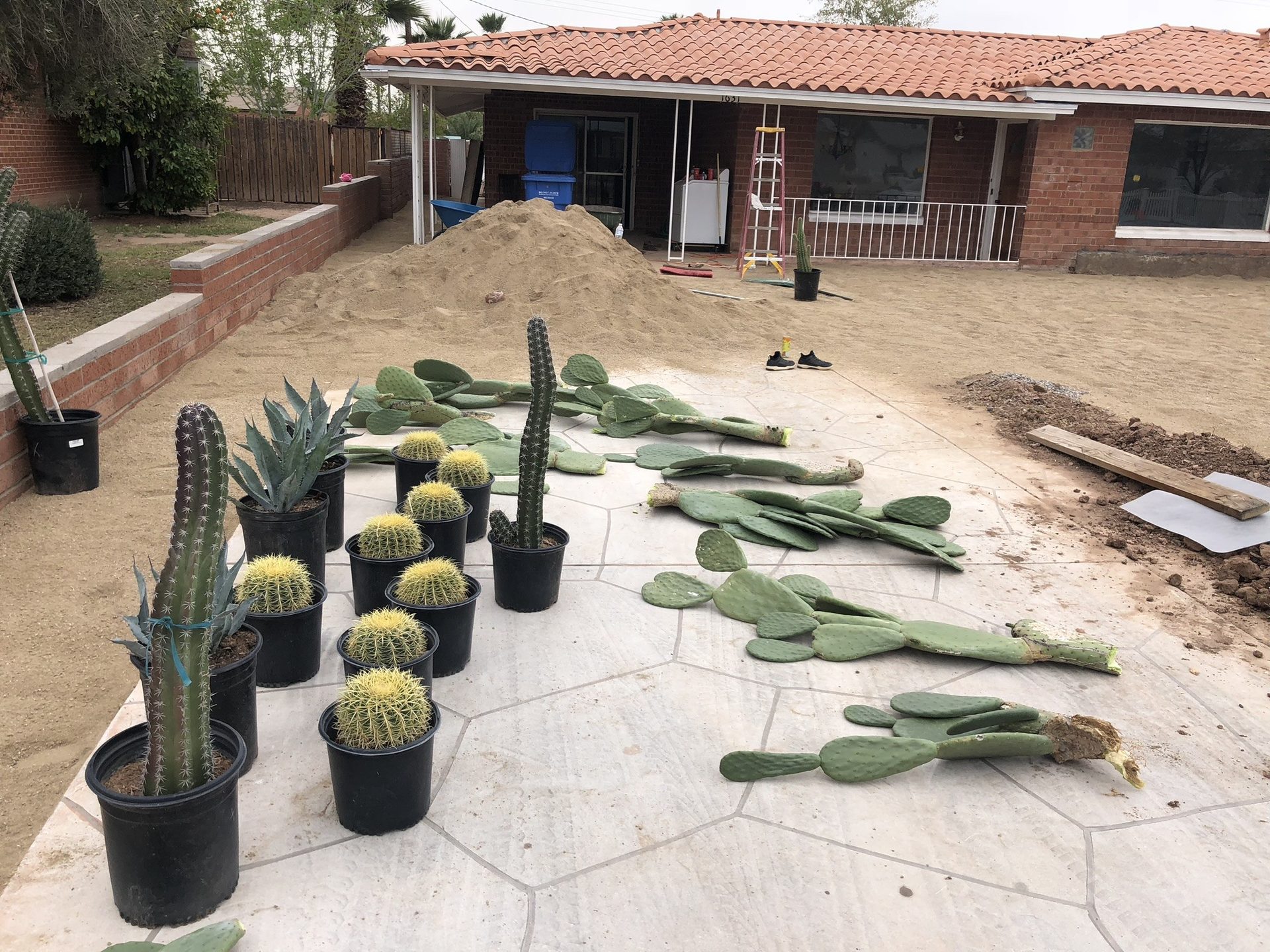
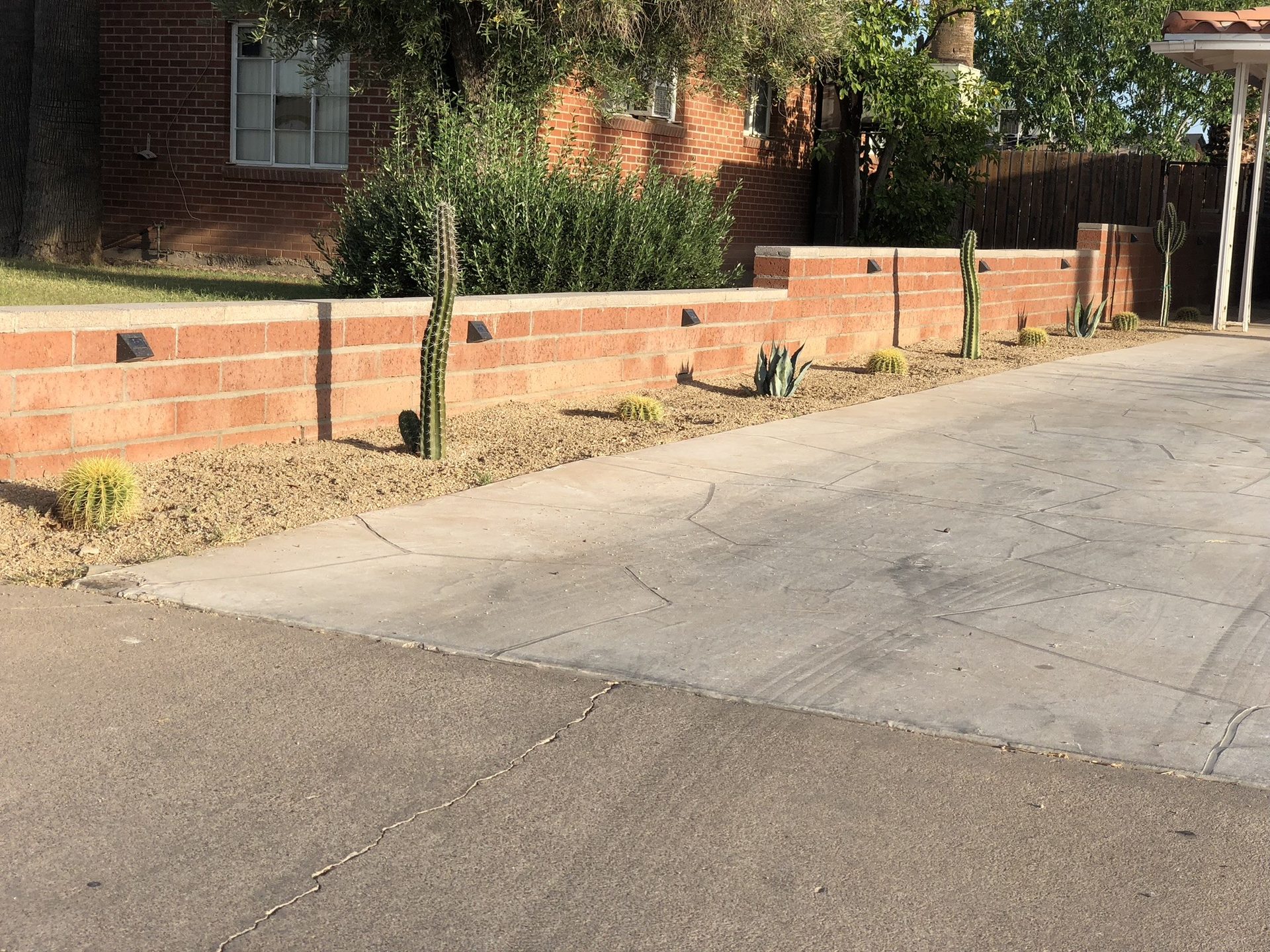
This is where the yard stops looking like bare ground and starts looking designed. Instead of scattering plants around, we curated a palette and placed it with purpose: a run of plants along the edge of the property wall shared with the neighbor, and a set of beds in front of the house where the old planters used to be. The mix included golden barrel cactus, agave, prickly pear, a few columnar cactus, and an ocotillo, chosen for a range of heights and shapes that reads as intentional all year.
Even drought-tolerant desert plants need regular water to get established. So we installed a drip irrigation system on an automatic timer that delivers water right to each plant's roots instead of spraying the whole yard. For the first year or two it keeps the new plants healthy while they settle in, and after that plants like these get by on very little.
Metal Edging for a Crisp, Architectural Look
The detail that pulls the front beds together is the edging. We set metal landscape edging to define the planting beds in front of the house, giving them clean, deliberate lines instead of a soft, fuzzy border between plants and granite. It's a small thing that does a lot of work. That hard edge is most of what separates a yard that looks designed from one that just looks filled in.
Two Palo Verde Trees for Shade That Belongs Here
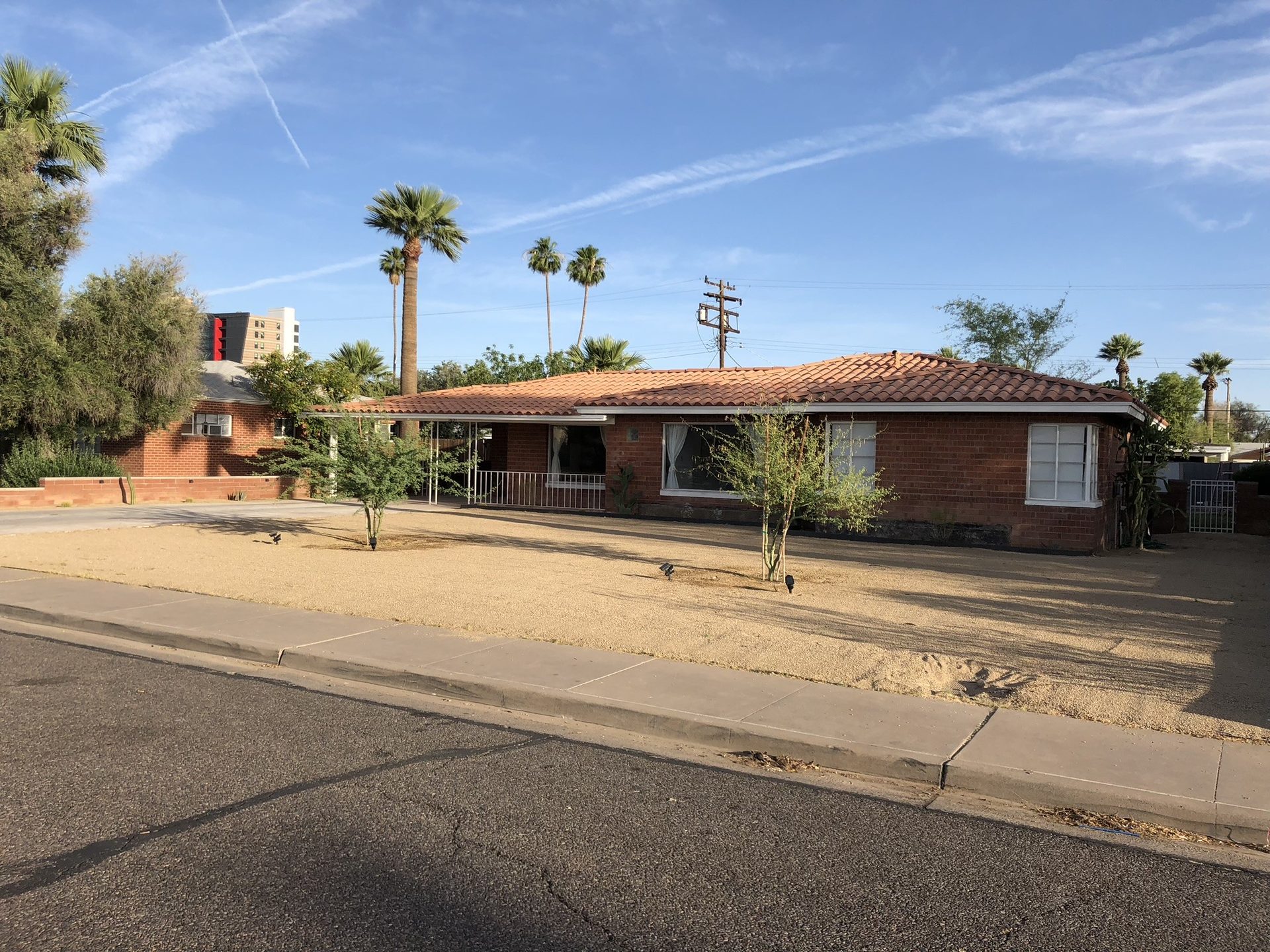
We planted two 'Desert Museum' palo verde trees in the front yard. It's a thornless, fast-growing variety of Arizona's green-barked desert tree, and about as fitting a choice as there is for a Phoenix yard. They go in young, so we staked them with a little flex in the ties to let the trunks build strength, and the stakes come off once the trees establish. Give them a few seasons and they'll throw real shade over the front of the house while asking for almost no water.
Lighting It for the Evening: Low-Voltage Path and Tree Lights
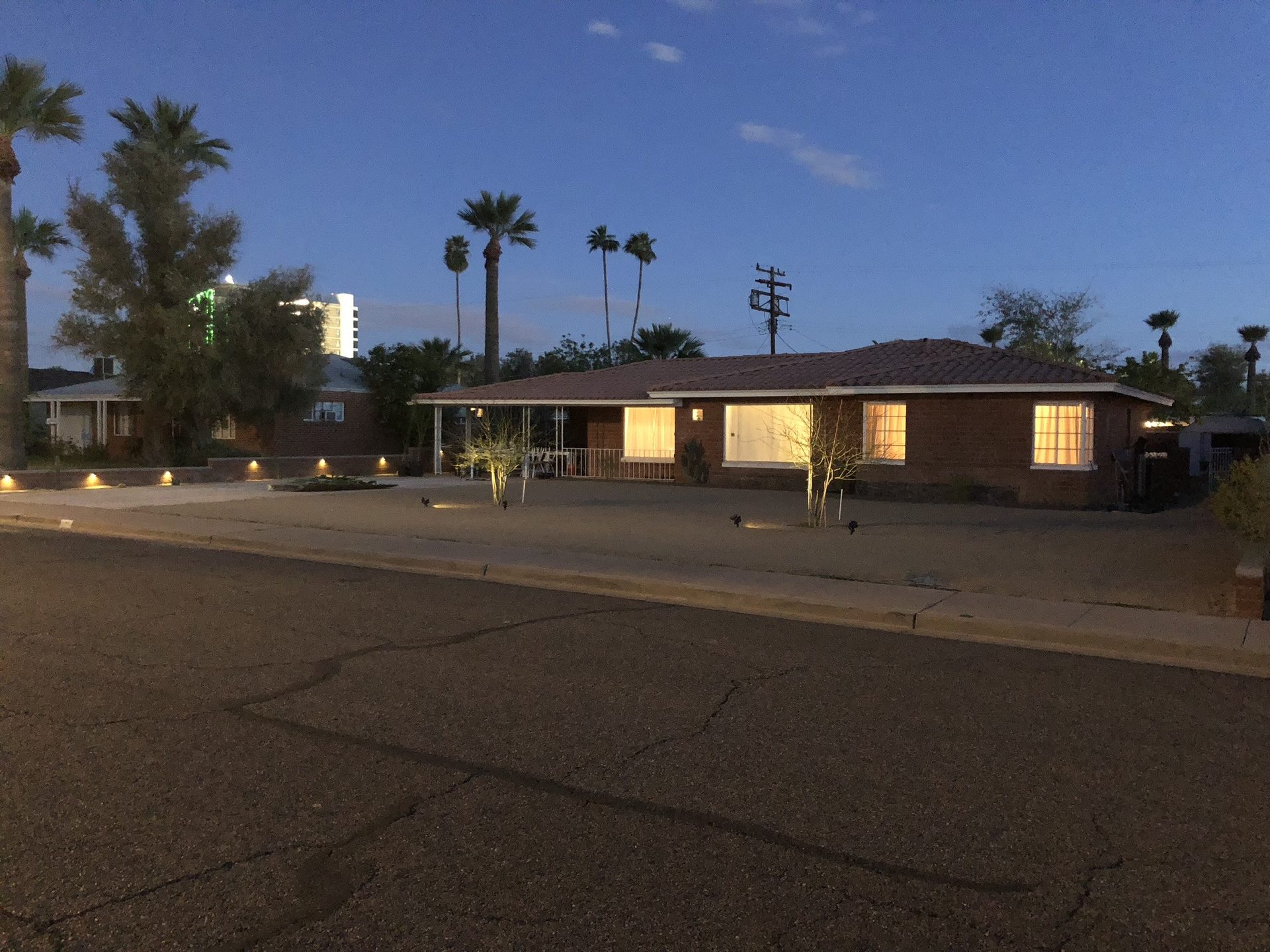
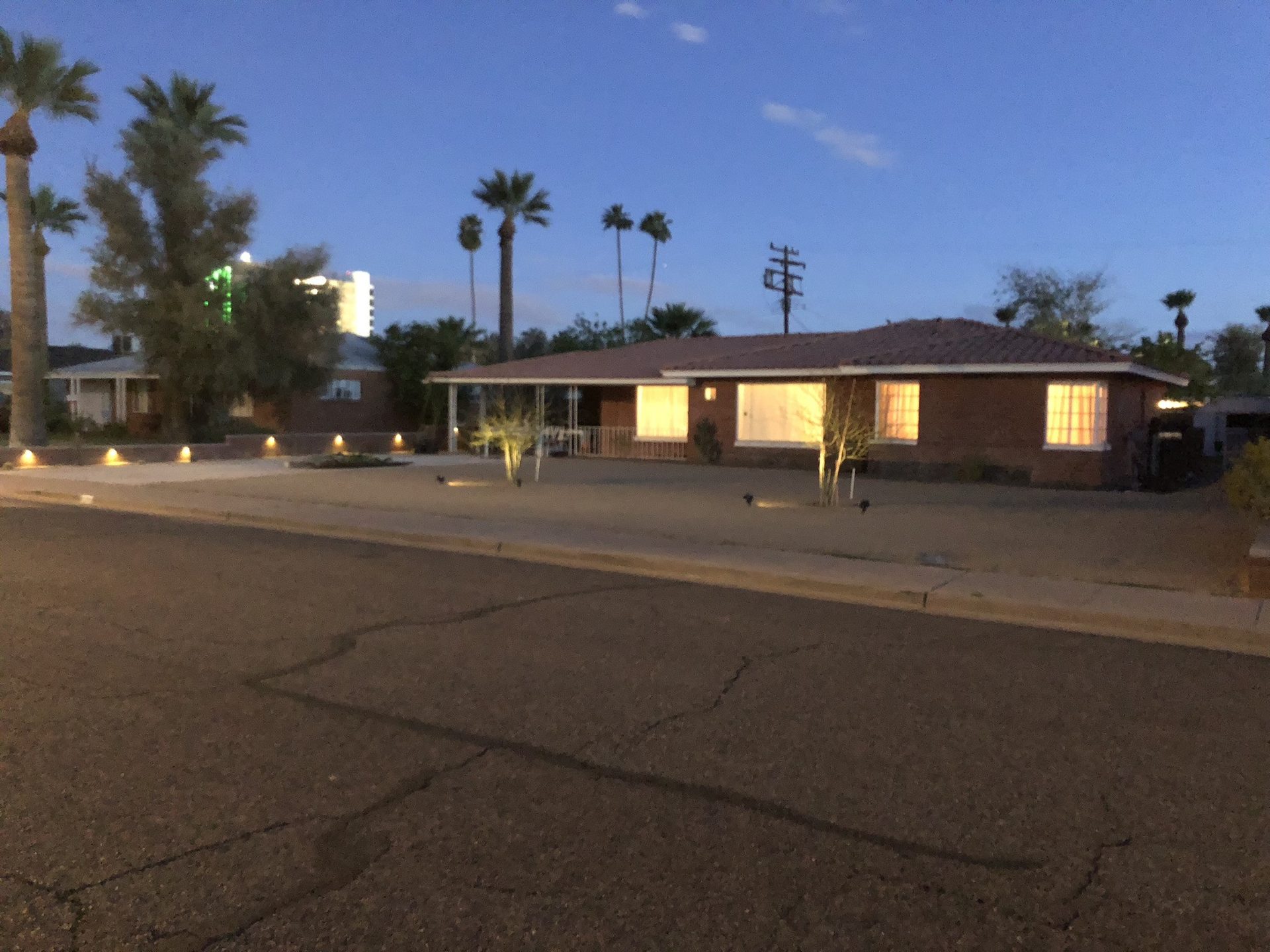
A desert yard looks good in daylight, but landscape lighting is what makes it look finished after dark. We installed a low-voltage (12-volt) system, which is safe to run through a planted yard and easy to adjust. Path lights line the walkway and the existing brick wall, and uplights at the base of the trees throw light up through the branches.
The effect at dusk is the payoff shot. The granite glows warm, the cactus and trees cast shadows up the brick, and a yard that used to disappear at sunset becomes the best-looking house on the block. It also adds a real layer of safety and presence to the front of the home at night.
The Result: A Front Yard Built for Phoenix
What used to be a thirsty lawn fighting the desert is now a low-water front yard that works with it. The water demand dropped to almost nothing, the upkeep is a fraction of what a lawn takes, the moisture problem against the house is gone, and the curb appeal went up instead of down. Low water does not have to mean low style, and this yard is the proof.
A front yard like this is a good example of what hiring one contractor gets you. The demo, the grading and drainage fix, the granite, the planting, the edging, and the lighting all happened under one roof and in the right order, instead of the homeowner lining up a landscaper, a lighting guy, and a haul-off crew on their own. If you're considering a conversion of your own, here's more on our desert landscaping services. You can see more projects in our project gallery, and if you're rethinking the outside of your home, here's a backyard makeover we did in Tempe.
Common Questions About Grass to Desert Conversions in Phoenix
How much does it cost to convert grass to desert landscaping? Most front-yard conversions in the Valley run somewhere between $5 and $15 per square foot installed, depending on how much old material has to come out and how many plants, trees, and lights you want. We give a firm number after we walk your yard.
Does Phoenix pay you to remove your grass? Yes. The City of Phoenix has a residential grass removal program that pays around $2 per square foot of healthy turf you take out, with a minimum area and limited funding. It's worth checking before you start, and we can point you to it.
What are the best low-water plants for a Phoenix front yard? Palo verde trees for shade, plus golden barrel cactus, agave, prickly pear, and ocotillo for structure and accent. A mix of heights and shapes is what keeps it looking intentional year-round.
Is decomposed granite better than rock? For a clean, architectural look, yes. DG compacts into a firm, walkable surface, while loose rock stays loose underfoot. We screed and compact it so it sits tight and even.
Thinking About Replacing Your Grass in Phoenix?
Whether you want to drop your water bill, kill the weekly mowing, or just give the front of your home a fresh desert look, we'll walk your yard, talk through the options honestly, and give you a clear estimate. Every project starts with a free, no-pressure consultation from a licensed Arizona contractor, ROC #365090.
Request Free Estimate