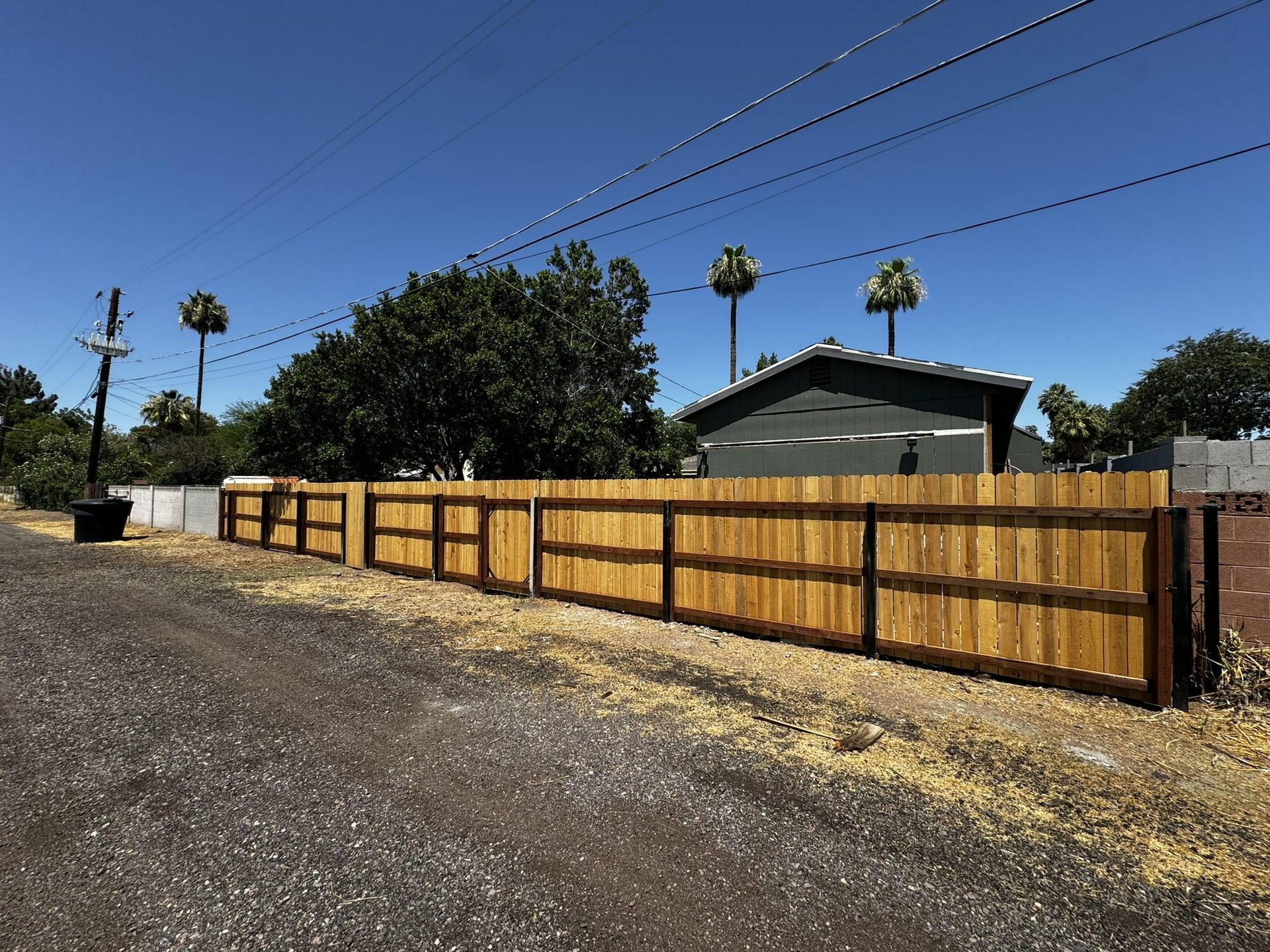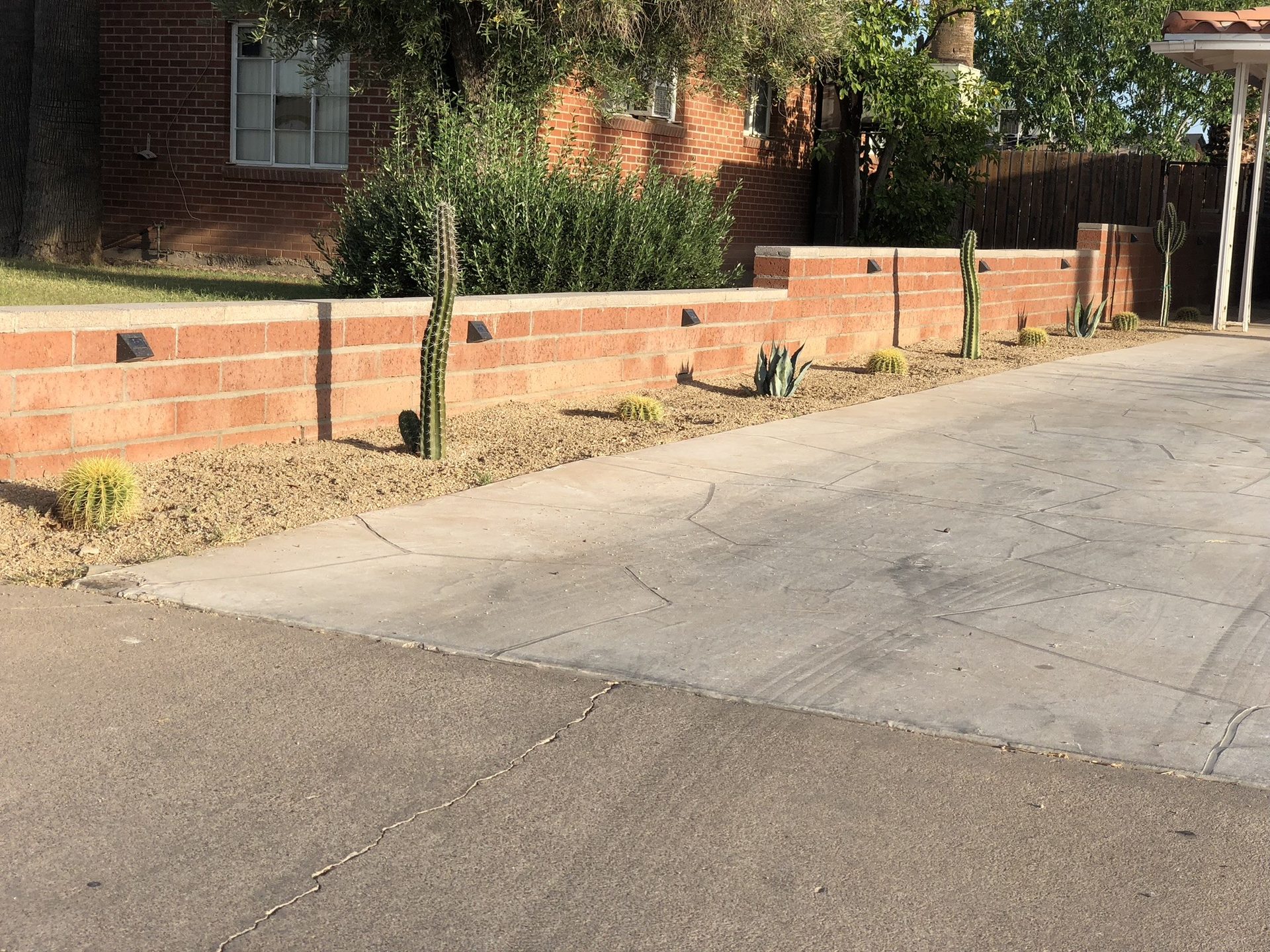
In Arizona, a block wall sitting on the property line is generally treated as shared: both households own it and both are responsible for keeping it standing. Unless your CC&Rs say otherwise or one neighbor clearly caused the damage, the usual outcome is a 50/50 split of the repair. That is the short answer. The rest of this article covers the exceptions, what to do when a neighbor will not cooperate, and what the repair itself actually involves — because the wall does not care whose name is on the check.
Who Owns the Wall Between Two Phoenix Yards?
Almost every lot in the Valley is separated from its neighbors by a grey or tan CMU wall, and almost nobody knows who owns theirs. The practical rule Arizona real-estate attorneys describe is this: a wall built on the boundary line is a common wall, jointly owned, with both owners sharing the duty to maintain and repair it. A wall built entirely on one side of the line belongs to that owner alone.
Three documents can settle it before anyone argues:
- Your CC&Rs. Many Valley HOAs assign wall responsibility explicitly — sometimes to the homeowner, sometimes to the association for perimeter walls that face a street or wash. Read this first, because it overrides the general rule.
- Your survey or plat map. It shows where the boundary actually runs. Walls in older neighborhoods are not always centered on it.
- Any recorded party-wall agreement. Rare in tract neighborhoods, but they exist, and they control when they do.
One thing worth saying plainly: none of this is legal advice, and a genuinely contested wall is a question for an attorney, not a contractor. What we can tell you is how these situations usually resolve, because we are often the ones standing between two neighbors holding one estimate.
The Usual Answers, Situation by Situation
| Situation | Who usually pays | The practical first step |
|---|---|---|
| Wall failed from age or normal wear | Split between the neighbors | One written, itemized bid both households can read |
| Monsoon wind or storm knocked it down | Usually split; check both insurance policies first | Photograph everything before cleanup |
| Neighbor’s tree pushed it over | Typically the tree’s owner | Photos showing roots or trunk contact, then a calm conversation |
| A car hit it | The driver’s auto insurance | Police report and claim number before any repair |
| Damage from one side’s dig, pool, or irrigation | The side that caused it | Document the cause while it is still visible |
| Your CC&Rs assign the wall to someone | Whoever the CC&Rs say | Read them before spending anything |
The pattern in that table: fault moves the bill, and paper decides fault. Whatever happened, take photographs before anything is moved, and get the cause in writing while it is obvious. A leaning wall photographed next to the root ball that pushed it is a five-minute conversation. The same wall three weeks after the tree came out is an argument.
The Monsoon Case, Because It Is September
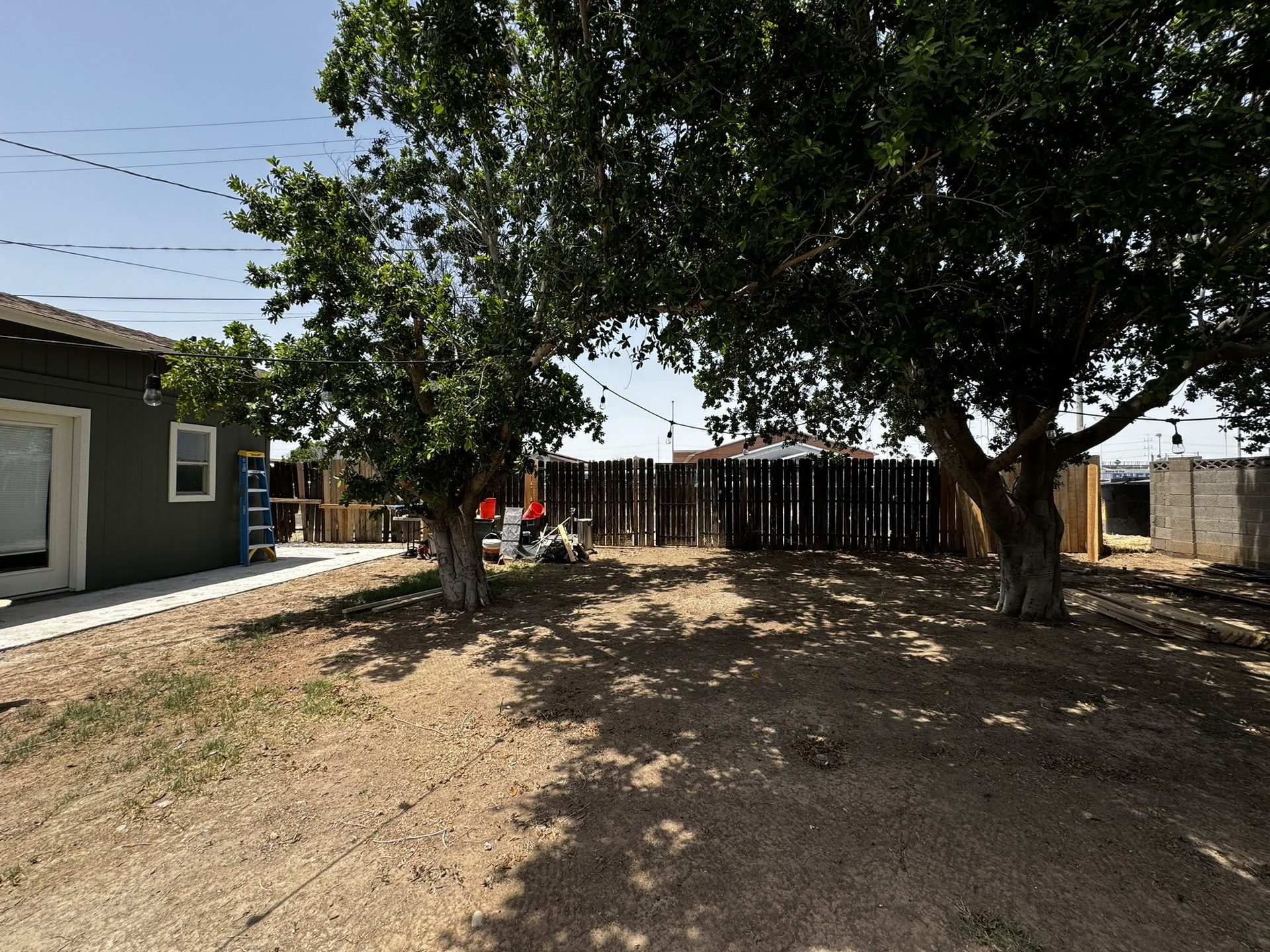
Late-summer storms drop whole runs of block wall across the Valley every year. The walls that go over are almost always the old ones — decades-old unreinforced runs, walls already leaning from tree roots or soil movement, and walls that were built without grouted and reinforced cells. Wind finds the weak wall on the street the way water finds the low spot.
Two things to do before anyone touches the debris:
- Call your insurance agent, and suggest your neighbor call theirs. Policies differ, and we will not tell you what yours covers — but wind damage to structures on the property is a standard conversation to have with an adjuster, and an adjuster wants photos of the wall as it fell, not a cleaned-up yard.
- Be careful with whoever knocks on the door first. After every big storm, crews canvass damaged streets offering cheap same-day wall repairs. In Arizona, an unlicensed handyman is capped at $1,000 per job, labor and materials combined — and almost no block wall repair worth doing fits under that number. A licensed contractor’s bid gives both households, and any insurer involved, a document that stands up.
What the Repair Actually Involves
How the wall failed decides what fixing it means, and it is worth understanding before reading anyone’s estimate.
Cracks through the block or mortar joints
Hairline mortar cracking is often cosmetic — Valley soils are heavy with clay that swells when wet and shrinks when dry, and walls move a little with them. Stair-step cracking that keeps growing, or cracks through the blocks themselves, point at the footing settling, and patching over them without asking why is how you buy the same repair twice.
A leaning run
A lean almost always means trouble at the bottom, not the top: a footing undermined by water, pushed by roots, or undersized from the start. Sometimes a leaning section can be braced and its footing corrected. Past a certain point the honest fix is to take the section down to sound block — sometimes to the footing — and relay it. A contractor who quotes you a straightened wall without talking about the footing is quoting you the photo, not the wall.
A blown-over or collapsed panel
The good news about a collapsed panel is that the decision is made. The section gets rebuilt from the footing or from the first sound course, tied into the standing wall on both sides, with reinforced, grouted cells so it is the strongest run on the block instead of the weakest. Matching the existing block size, color and mortar tone is part of the job — a rebuilt panel should not read as a scar.
What It Costs, Honestly
We are not going to print a per-foot price for block wall repair, because the number that matters is driven by things a stranger on the internet cannot see: whether the footing is involved, how many courses are down, how close a machine can get to the wall, whether the block is a common profile or something discontinued, and how much demolition and haul-off the fallen material needs. Two collapsed walls of identical length can price apart by multiples.
What we will promise instead: a written, line-item estimate, free, addressed so that both households can read exactly what is being done and split it however they agree. That single document settles more neighbor disputes than any statute does.
How to Split the Cost Without Losing a Neighbor
- Get one bid, together if possible. Two neighbors soliciting separate bids from separate contractors is how a repair becomes a standoff. Walk the wall with the estimator at the same time.
- Put the split in writing before work starts. A one-paragraph email both sides answer is enough for most situations: what is being fixed, who is paying what, when.
- If a neighbor refuses, Arizona attorneys generally describe the remedy this way: the willing side pays for the repair and then pursues the other side’s share, in small claims court if it comes to that. A court will not order the wall fixed — it can only move money afterward — which is one more reason the itemized bid matters. Talk to a lawyer before relying on any of that.
- If the wall is a safety issue, do not wait for the argument. A six-foot wall leaning over a play area is not a negotiation topic. Make it safe first.
Shared Wall Questions, Answered
Who pays when a shared block wall just falls apart from age?
When a wall on the property line fails from age or normal wear, the general rule in Arizona is that both owners share the repair, most often 50/50. Check your CC&Rs first, because many Valley HOAs assign wall responsibility differently, and a recorded party-wall agreement overrides the default. This is the general practice, not legal advice for your specific wall.
My neighbor refuses to pay their half. Can I repair the wall anyway?
Practically, yes: the side that wants the wall fixed usually pays for the repair and then pursues the other side for their share afterward. Arizona attorneys describe small claims court as the usual venue when a neighbor will not contribute, and a written itemized estimate is the document that makes that recoverable. Talk to a lawyer before counting on reimbursement, and keep every photo and invoice.
Does homeowners insurance cover a block wall knocked down by a monsoon?
It depends on your policy, so call your agent before assuming either way. Wind damage to structures on the property is a standard claim conversation, and adjusters want photographs of the wall as it fell. If a neighbor’s tree or vehicle caused the damage, their liability or auto coverage may be the right claim instead of yours.
How do I find out if the wall is actually on the property line?
Your survey or the recorded plat map shows where the boundary runs, and your title documents may include a party-wall agreement. Walls in older Phoenix neighborhoods are not always centered on the line, and a wall built entirely on one lot belongs to that owner alone. When real money is at stake, a boundary survey is cheap certainty.
Can a leaning block wall be straightened, or does it have to be rebuilt?
It depends on why it leans. A lean almost always starts at the footing, so the answer comes from digging into the cause: roots, water undermining, or an undersized footing. Some sections can be corrected and braced; past a certain point the sound fix is taking the section down to good block and relaying it with reinforced, grouted cells. Be wary of anyone who quotes a fix without addressing the footing.
One Wall, One Written Estimate, Two Copies
We repair and rebuild block walls across the Phoenix metro, and we are used to working for two households at once. You get a free, line-item estimate clear enough to hand over the wall — and a licensed Arizona contractor (ROC #365090) on the repair, so the paperwork stands up to an HOA, an adjuster, or a skeptical neighbor.
Get a Free Estimate