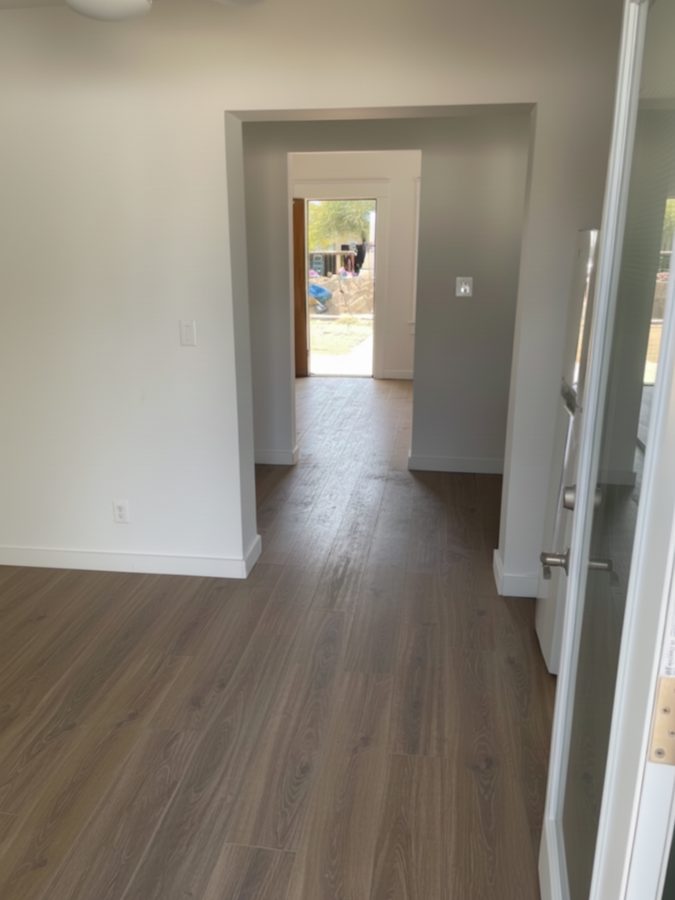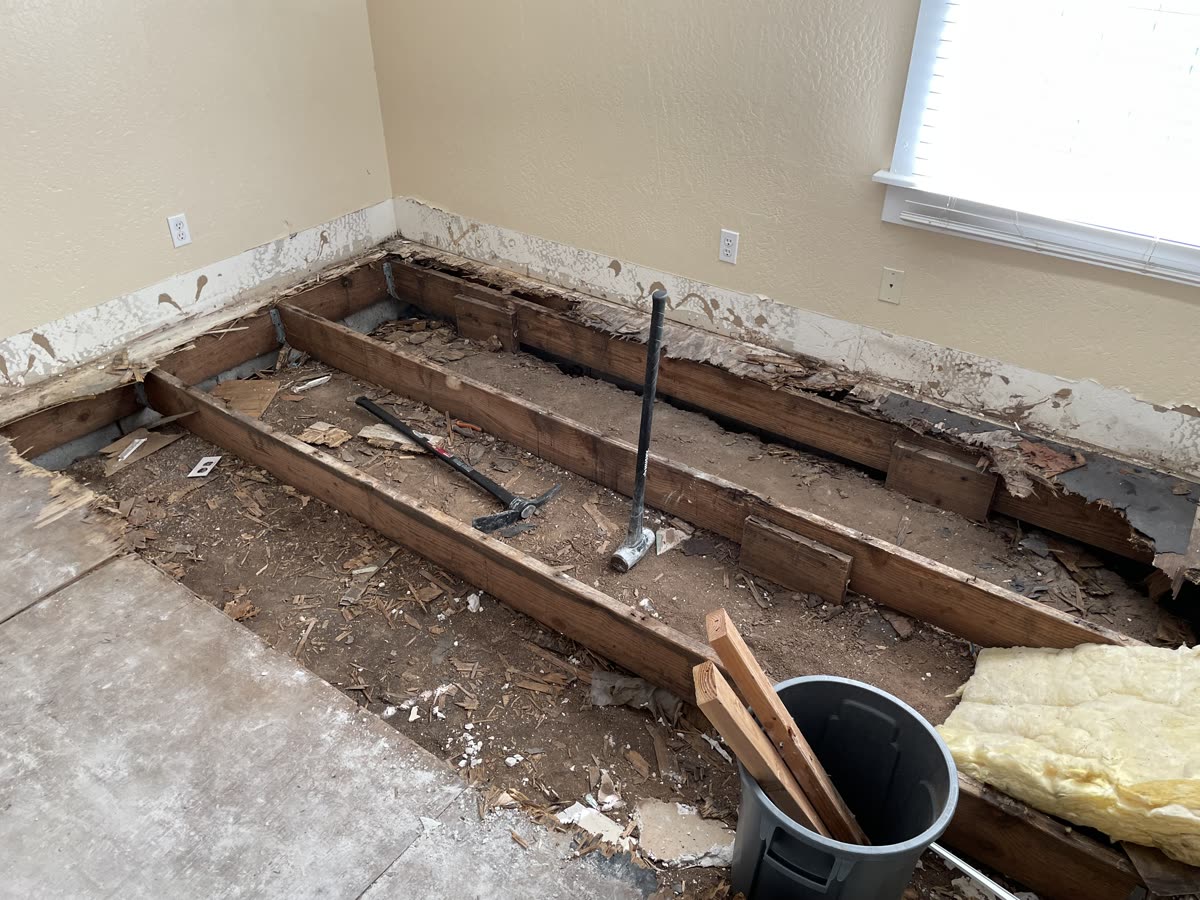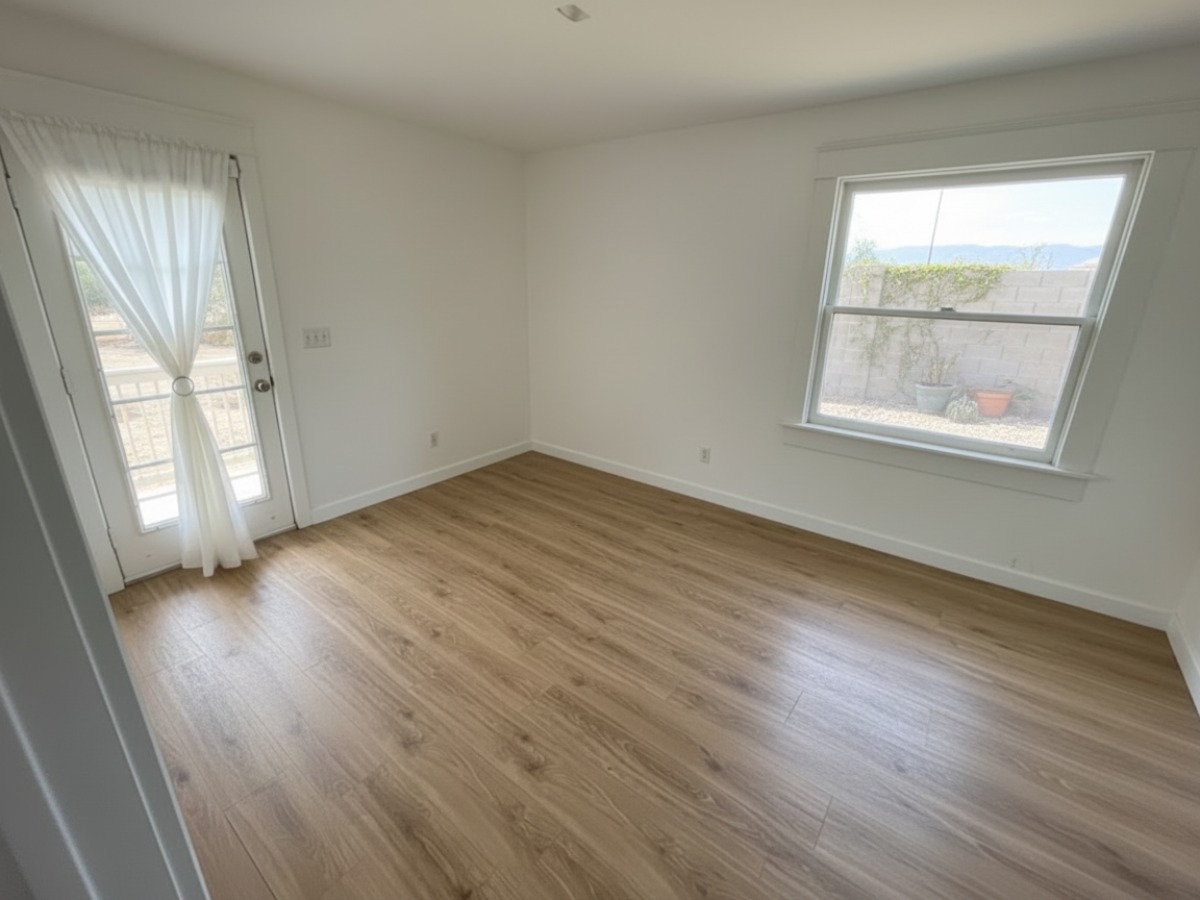
Usually yes. Rigid-core vinyl plank floats over existing ceramic or porcelain tile without a problem, and on a Phoenix slab it is often the smarter call — because the alternative is days of jackhammering thinset off concrete. Whether it works in your house comes down to four things: how deep the grout lines are, whether any tile is loose, how much floor height you can give up at doors and appliances, and whether the slab is dry. Get those four right and it is a durable floor. Skip them and it telegraphs, clicks and gaps within a year.
The Four Conditions
Work through these before anyone quotes you. Each one has a clear pass or fail.
- Grout lines deeper than about 1/8 inch need filling. Rigid core is stiff but it is not a bridge. Left unsupported over a deep grout joint it flexes every time you walk across it, and the joint eventually prints through as a visible line or the plank cracks along it. The fix is a cementitious patch or a skim coat of leveler to bring the surface flat. Check your plank manufacturer’s instructions — the exact tolerance varies and it is written into the warranty.
- No loose or hollow tile. Tap the whole floor with a knuckle or the handle of a screwdriver and listen. Solid tile sounds dull; debonded tile rings hollow. Anything hollow moves under load, and movement under a floating floor is what causes clicking and seams that walk apart. Those tiles come out and get patched flush before anything goes down.
- Height at doors, appliances and transitions. This is the condition that most often kills the idea. Tile plus thinset is commonly half an inch to three quarters, and you are adding another quarter to a third of an inch of plank on top. Check three places: whether the dishwasher can still come out from under the counter, whether the front door and any interior doors still clear, and whether a slider or shower threshold still works. A trapped dishwasher is a genuinely expensive surprise.
- Slab moisture. No basement does not mean no moisture. Slab-on-grade with irrigation running against the foundation moves water, and older slabs frequently have no vapor barrier under them at all. Rigid core tolerates it far better than laminate would, but the underlayment and the adhesive choices change if the slab reads wet.
Why Phoenix Is the Tile-Over-Tile Capital
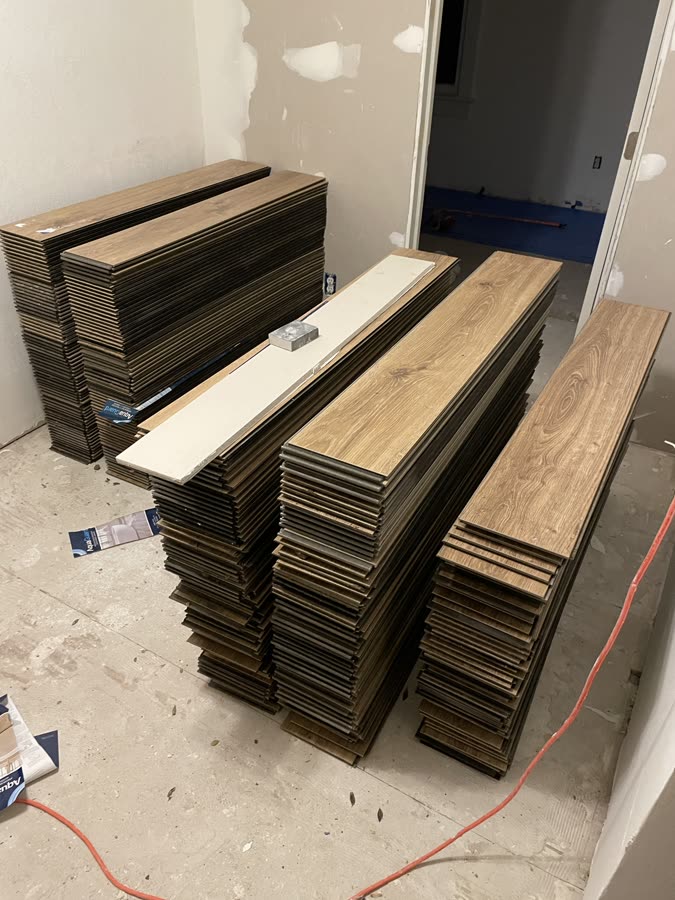
This question matters more here than almost anywhere else in the country, for one reason: Valley housing stock is wall-to-wall tile on concrete. Twelve-inch and eighteen-inch tile was the default floor across Phoenix, Mesa, Chandler, Glendale and Peoria for something like thirty years, in every room including bedrooms.
And removing it is genuinely miserable. There is no subfloor to lift — the thinset is bonded directly to the slab, and getting it off means a jackhammer or a floor scraper, multiple days, a dumpster, and a serious silica dust problem that has to be controlled properly rather than swept up afterward. That asymmetry is why going over the top is the default recommendation in this market and the exception in places with plywood subfloors.
When Removal Is Actually the Cheaper Answer
Sometimes the honest answer is that the tile has to go. Four situations where we say so:
- You fail the height check. If the dishwasher cannot come out or the front door will not clear, no amount of leveling fixes it. Undercutting jambs handles doors; it does nothing for appliances.
- More than roughly ten percent of the tile is hollow. Past that point you are removing and patching so much of the floor that you have done the demolition anyway, in a slower and more expensive order.
- The tile is set on a mud bed. Older installations sometimes sit on a thick mortar bed rather than thinset. That is a lot of height, and it is usually worth reclaiming.
- The leveling bill exceeds the demolition bill. On a badly out-of-flat floor with deep joints, self-leveler and labor can pass what tear-out would have cost. A contractor who has actually measured your floor should tell you when you have crossed that line.
What It Costs
These are 2026 Phoenix-market numbers for licensed, insured work. Going over existing tile adds prep, but it removes tear-out and disposal, and the two usually roughly offset — which is the real reason the option is attractive.
| Item | Cost | Notes |
|---|---|---|
| Labor, standard floating install | $3–$5 / sq ft | Plank supplied by you. The baseline for a clean, flat substrate. |
| Labor + mid-range material | $4.50–$9.50 / sq ft | Everything included. Where most whole-house jobs land. |
| Underlayment | $0.50–$1.50 / sq ft | Only if your plank does not have an attached pad. |
| Grout-line fill / skim over tile | $0.50–$6 / sq ft | The wide range is real: a light skim versus full self-leveling are different jobs. |
| Stairs | $60–$120 / step | Priced per step, not by the foot. Open-sided steps sit at the top of the range. |
| Small-job minimum | about $600 | Applies to anything small enough not to clear it on square footage. |
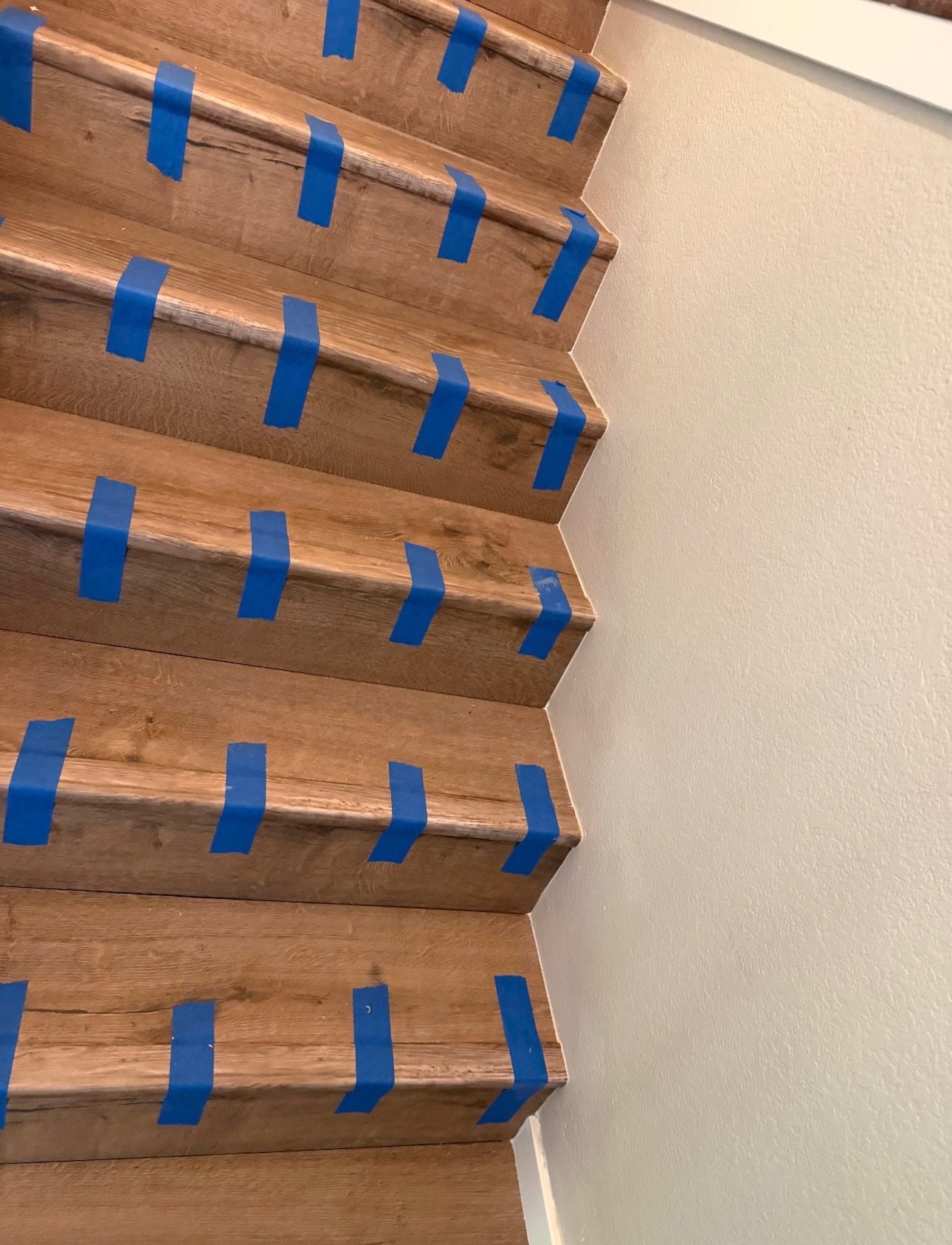
For a real anchor: a recent carpet-to-plank conversion of ours ran $2,750 in labor for 175 square feet plus fifteen stairs and a second-floor landing, including tear-out through to new baseboards. Stairs carry a lot of that — they always do, because every tread is a separate cut, fit and glue-up.
One piece of good news on the paperwork: Phoenix treats floor covering as finish work that is exempt from permits, and the surrounding Valley cities generally follow suit. We confirm for your specific jurisdiction, but flooring is one of the few remodeling categories where the permit question usually goes away.
How the Install Actually Goes
So you can tell whether a bid covers the real work or just the fun part:
- Tap-test and mark. The entire floor, before anything else. Hollow tiles get circled in chalk.
- Pull and patch the bad tile. Out, cleaned back to slab, filled flush.
- Fill the joints or skim the field. Whichever the floor needs. This is the step people skip and the one that determines whether the floor telegraphs.
- Vacuum properly. HEPA, because the previous steps made silica dust.
- Undercut the door jambs and casings so plank slides under rather than being scribed around. Scribed cuts always look like scribed cuts.
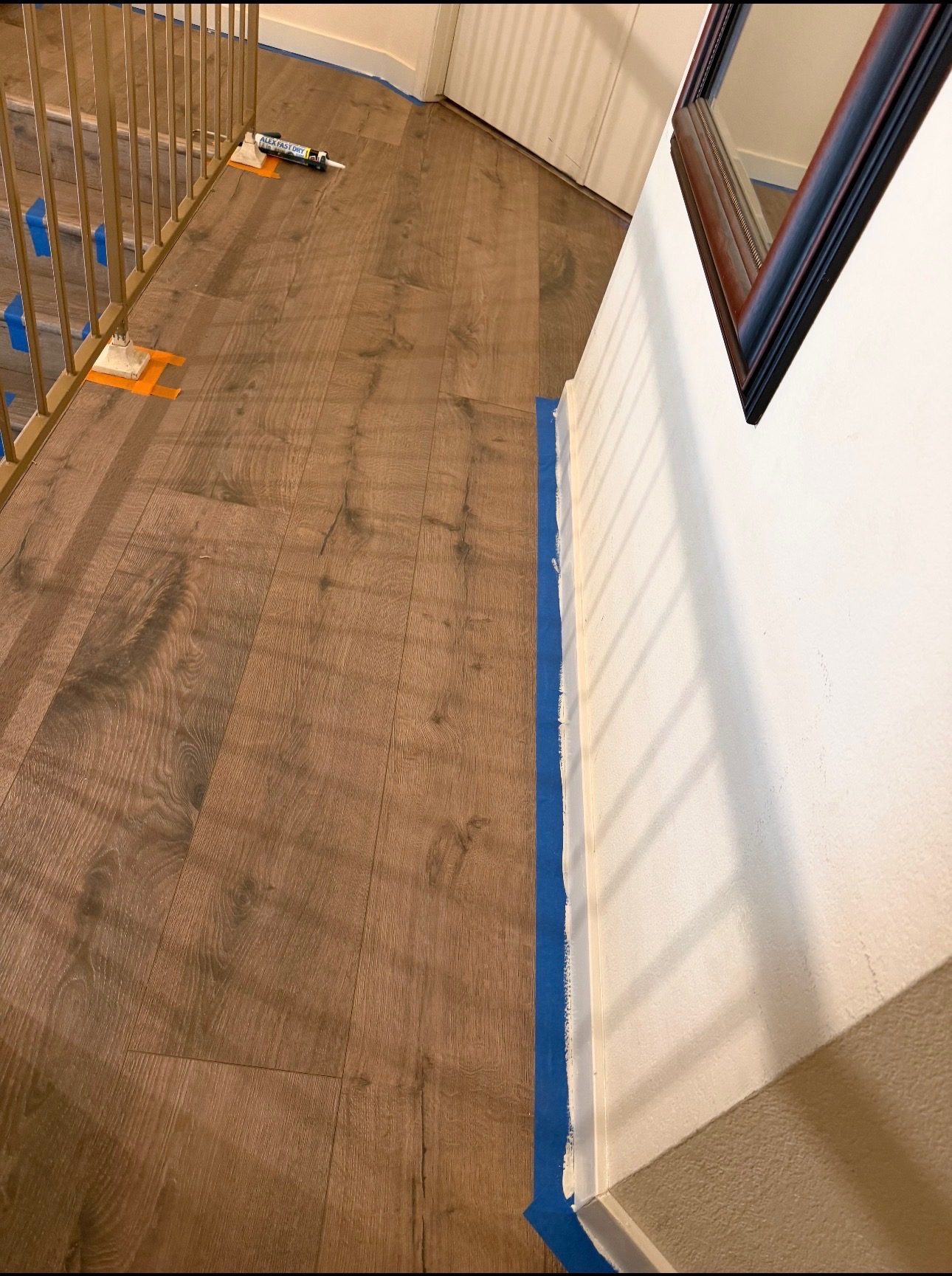
- Take the baseboards off rather than adding quarter round. Removing and reinstalling base gives a clean expansion gap hidden behind the trim. Quarter round nailed over the top is the visible signature of a fast job.
- Leave the expansion gap at every wall and every vertical, and never fasten or trap a floating floor at any point in the field.
- Set transitions and thresholds last, at doorways and anywhere the floor meets a different material.
What Goes Wrong When It Is Done Badly
Four failure modes, all of them predictable and all of them from skipping steps above.
- Grout lines telegraphing through. Visible as a faint grid in raking light within months. Unfixable without pulling the floor.
- Clicking and hollow spots underfoot. Debonded tile that was never dealt with, moving under the plank.
- Buckling and peaked seams. No expansion gap, or a floor pinned at a threshold. This one is worse in Phoenix than almost anywhere: a house that swings from 68 degrees with the AC on to well past 100 inside when the system is off during a summer vacation puts real thermal movement through a floating floor. The gap is not optional here.
- Doors that will not close and appliances that will not come out. The height check, skipped.
Hiring for This in Arizona
Under A.R.S. §32-1121, unlicensed work in Arizona is capped at $1,000 per job including materials, and almost any real flooring job passes that immediately. A licensed contractor also means the substrate prep is on someone with a bond and a license behind it, which matters, because the prep is the part you cannot inspect once the floor is down. We are ROC #365090, a Class B General Residential license.
Common Questions About Vinyl Plank Over Tile
Can you put vinyl plank directly over ceramic tile?
In most cases yes. Rigid-core vinyl plank is designed to float over an existing hard surface, and ceramic or porcelain tile bonded to a slab is a good substrate as long as it is flat, sound and dry. The four things to verify first are grout-line depth, whether any tile is loose or hollow, whether you can afford the added floor height at doors and appliances, and slab moisture. In Phoenix this is usually the better option because tile removal here means jackhammering thinset off concrete.
Do I need to fill the grout lines before installing LVP?
If they are deeper than about an eighth of an inch, yes. Rigid core left unsupported over a deep grout joint flexes each time it is walked on, and the joint eventually prints through as a visible grid or the plank cracks along the line. A cementitious patch or a skim coat of leveler brings the surface flat. Check the specific tolerance in your plank manufacturer instructions, because it is written into the warranty terms.
How much height does vinyl plank over tile add?
The plank itself typically adds a quarter to a third of an inch, more with a separate underlayment. That sits on top of tile and thinset that is already a half inch to three quarters. Check three clearances before committing: whether the dishwasher can still come out from under the countertop, whether exterior and interior doors still swing, and whether slider tracks and shower thresholds still work. Door jambs can be undercut; a trapped dishwasher cannot be fixed after the fact.
Is it cheaper to install over the tile or remove it?
Going over the top is usually cheaper in Phoenix, because tear-out means days of jackhammering bonded thinset off a slab, silica dust control and dumpster fees. Going over adds prep instead, and the two roughly offset. Removal becomes the cheaper answer when you fail the height check, when more than about ten percent of the tile is hollow, when the tile sits on a thick mud bed, or when the leveling required would cost more than the demolition.
Does vinyl plank over tile need underlayment?
Only if your plank does not already have an attached pad, which many rigid-core products do. Where a separate underlayment is needed it runs about $0.50 to $1.50 per square foot. Do not stack a separate pad under a plank that already has one attached, because the extra softness lets the locking joints work loose over time.
If you are weighing going over your tile against tearing it out, we will come tap the floor, measure your height clearances at the doors and the dishwasher, and tell you honestly which way is cheaper in your house. See our vinyl plank installation pricing for the full breakdown, our flooring services, or read about a Chandler job where we replaced water-damaged subfloor before the plank went down.
Go Over the Tile, or Pull It?
We will measure your clearances and tap-test the floor before quoting either way. Free estimates across the Phoenix metro.
Get a Free Estimate