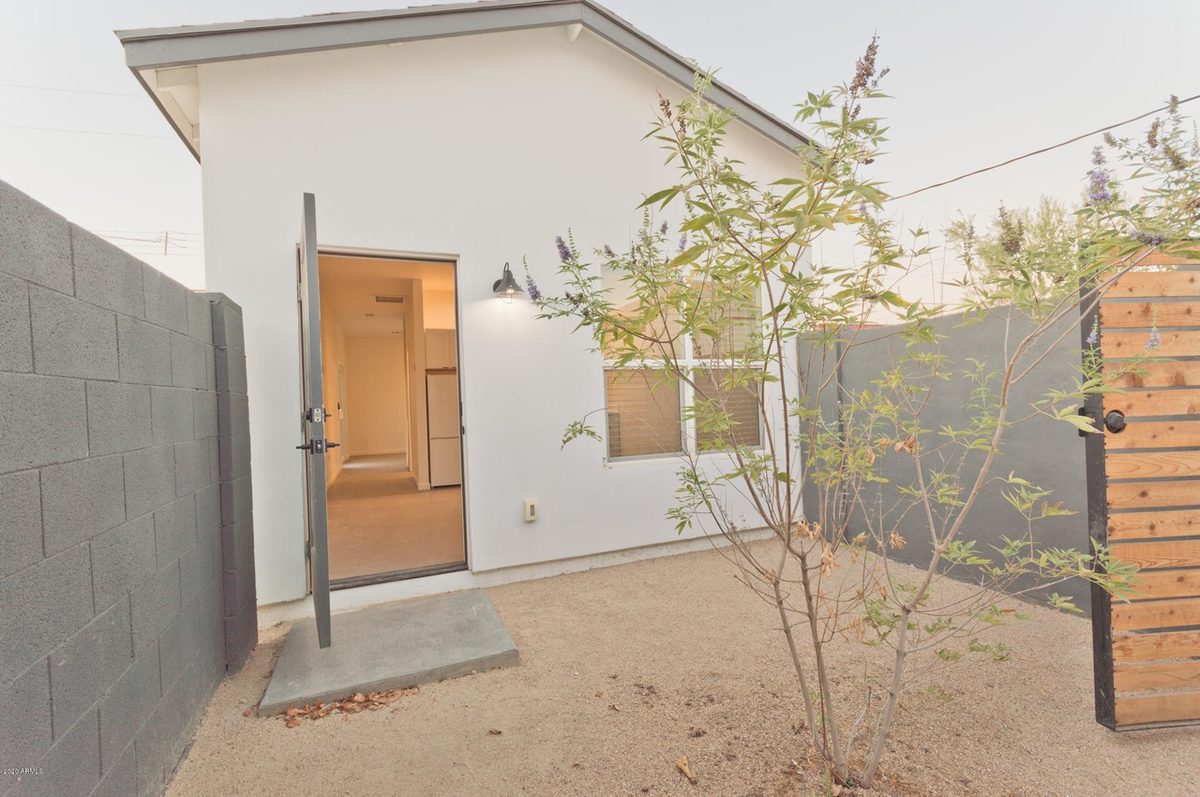
A bathroom you can't get into isn't much of a bathroom. That was the problem facing a homeowner in Mesa: her husband uses a wheelchair, and the doorway into their master bathroom was too narrow for him to roll through without a fight. Every trip meant transferring, squeezing, and risking a knock against the frame. They wanted a fix that worked — not a years-long, tear-the-house-apart remodel. We solved it in two days for $2,500. Here's exactly how.
This is the kind of project we love, because a small, focused remodel made a daily difference in how this couple lives. If you're caring for a family member who uses a wheelchair or walker — or planning ahead so you can stay in your own home as you age — this walkthrough shows what widening a bathroom doorway for wheelchair access actually involves.
Why a Standard Bathroom Doorway Doesn't Work for a Wheelchair
Most interior doorways in Phoenix-area homes are framed for a 24-, 28-, or 30-inch door. After you account for the door slab, the stop, and the hinges, the actual clear opening a wheelchair has to pass through is often only 22 to 28 inches. Standard wheelchairs are roughly 24 to 27 inches wide, which means a user has to line up perfectly and still scrapes their hands and elbows on the way through — if they fit at all.
Accessibility guidelines (the ADA standard that designers use as a baseline) call for a minimum 32 inches of clear width at a doorway, and 36 inches is far more comfortable for daily use. Just as important, the threshold matters: a raised tile lip, a saddle, or a step is a genuine trip-and-tip hazard for someone rolling through. The goal isn't only a wider opening — it's a wider opening that's also flush and curbless, so a wheelchair glides across the floor with nothing to climb over.
For this Mesa home, that meant two things had to happen together: the opening needed to grow, and the floor through that opening needed to become one continuous, level surface.
The Free Consultation: Diagnosing the Real Fix
Every project starts with a free on-site consultation, and this one mattered more than most. A homeowner's first instinct is often "just take the door off" — but that alone doesn't create enough room, and it leaves a narrow framed opening behind. We measured the existing opening, checked what was inside the wall (framing, and as it turned out, electrical), and looked at the tile floor on both sides of the threshold.
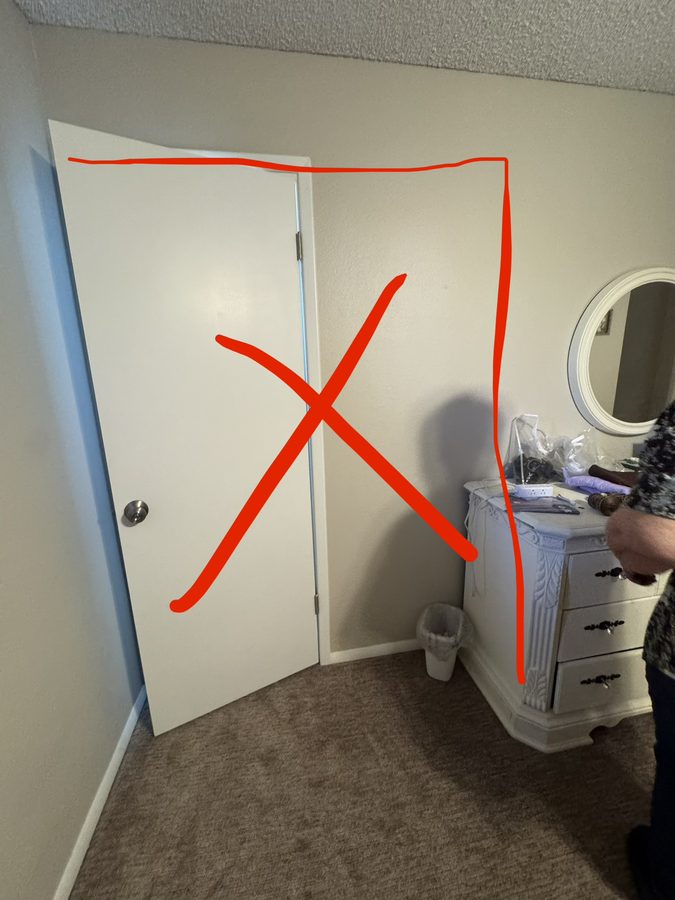
What we recommended was to remove the door and the door framing entirely and turn the entrance into an open, widened walkway — essentially an archway with no door at all. For a private master bathroom shared by a couple, losing the door was a fair trade for an opening a wheelchair can roll straight through. That decision drove the rest of the scope: reframing, electrical relocation, tile repair, stucco, and paint.
Day One: Demolition and Removing the Doorway
The first of two long work days was about taking things apart carefully. We removed the door, the jamb, and the casing, then opened up the wall on either side of the original opening to widen it. This is where a licensed contractor earns their keep — you can't just start swinging a hammer at a wall. We confirmed the wall wasn't load-bearing before widening it, and we mapped out everything living inside it.
In this case, that wall carried several electrical outlets and switches that controlled bathroom lighting and power. Widening the opening meant those devices were now in the path of the new, larger walkway and had to move. We disconnected them, relocated the boxes and wiring to their new homes in the adjacent wall, and kept everything to code. Moving electrical mid-remodel is exactly the kind of thing that turns a "simple" doorway job into a call-three-different-trades headache for a homeowner — handling it under one license is part of why this stayed a two-day job instead of a two-week one.
Reframing the Opening Into an Open Walkway
With demo done, we reframed the enlarged opening into a clean, finished archway. Rather than leaving a raw, ragged hole, we built it back out as an intentional architectural feature — a wide, open walkway with squared, finished returns that looks like it was always meant to be there. The framing established the final width of the opening, sized generously so a wheelchair has room to spare rather than just barely squeaking through.
Reframing an opening like this is also what makes the difference between a remodel that looks deliberate and one that looks like a repair. The new opening had to be plumb, square, and ready to accept finish materials on both the bedroom side and the bathroom side.
The Curbless Tile Transition: The Detail That Makes It Work
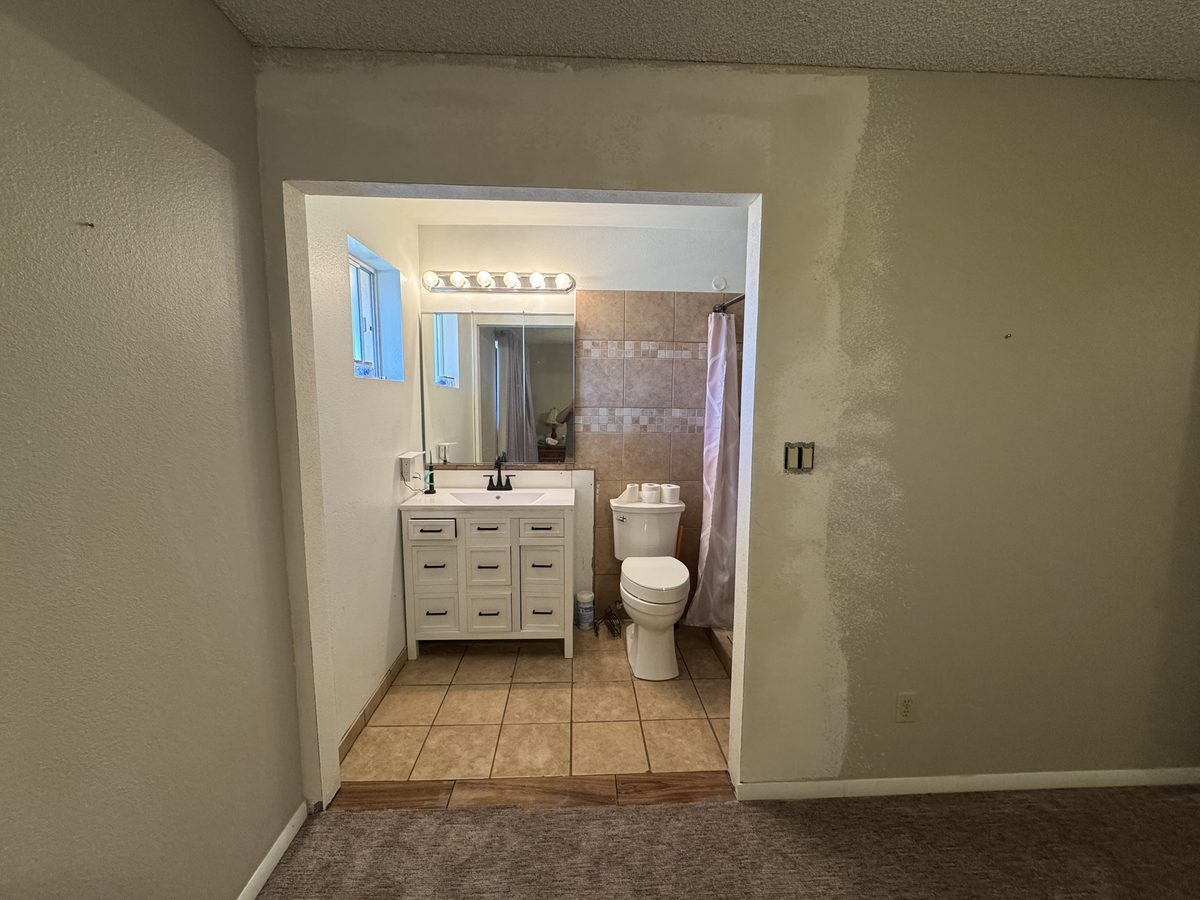
This was the most technically demanding part of the job, and it's the detail most homeowners underestimate. When you remove a doorway and the wall around it, you're left with a gap in the tile floor — the bare spot where the old wall plates and threshold used to sit, often with no tile under it at all, plus broken edges where the demo ended.
To make the entry truly wheelchair-friendly, that floor needed to become one flush, continuous surface with no lip to roll over. We cut the existing tile back to clean lines, then sourced and cut new tile to fill the gap and re-piece the floor across the old threshold. The new pieces were set level with the surrounding tile and grouted so the transition between the bedroom and bathroom is curbless — a wheelchair rolls across it without ever feeling a bump.
Matching into an existing tile floor is fussy work: the cuts have to be precise, the new tile has to sit at the exact same height, and the grout lines have to line up with what's already there. Done right, you stop noticing where the old floor ends and the new floor begins. Done wrong, you've created the exact trip hazard you were trying to remove.
The homeowner picked out the color, style, and shape of the tile she wanted us to use to bridge the gap.
Day Two: Stucco, Patch, Paint, and Finish
The second day was about making everything disappear into the home. We stuccoed and patched the reworked wall surfaces around the new opening, finished the returns of the archway, and brought the texture in line with the surrounding walls so the repair blends seamlessly. Once the patching cured and was sanded smooth, we painted to match the existing walls.
By the end of day two, the relocated outlets and switches were live and tested, the tile was set and grouted, the opening was finished and painted, and the work site was cleaned up. Two long days, start to finish, and the master bathroom went from off-limits to fully accessible.
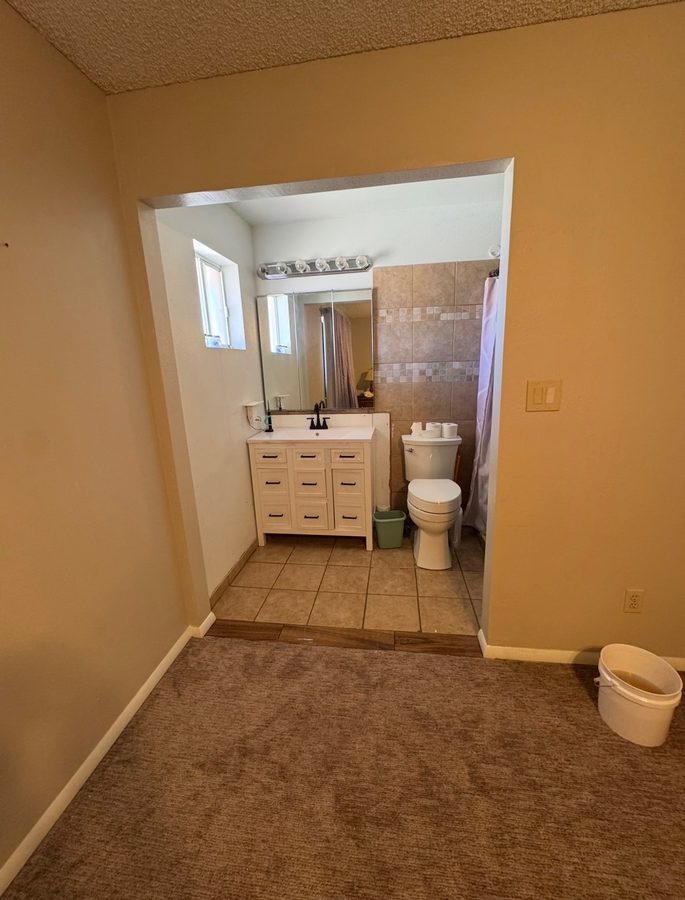
The Result: A Bathroom That Works Again
The payoff was simple and immediate: the homeowner's husband can now slide his wheelchair into the master bathroom easily, every day, without transferring or scraping through a tight frame. That's the entire point of an aging-in-place or accessibility remodel — restoring independence and dignity in the parts of daily life that a narrow doorway quietly takes away.
And the budget stayed reasonable. The complete project — demo, electrical relocation, reframing, curbless tile work, stucco, and paint — came in at $2,500 over two work days. Compared to the cost and disruption of a full bathroom gut, a targeted accessibility remodel like this delivers an enormous quality-of-life return for the money.
“He was right on time, friendly and listened to my ideas. His work was excellent and right on time. Above that he left the area neat and clean.”
— Sherry M., Mesa, AZ · via Thumbtack
What an Accessible Bathroom Remodel Can Include
Widening a doorway is one of the highest-impact accessibility upgrades, but it's rarely the only one worth considering. If you're planning to help a loved one stay in their home — or future-proofing your own — these are the changes we most often recommend for Phoenix and Mesa homeowners:
- Widen the doorway to 32–36 inches of clear width so a wheelchair or walker passes through comfortably
- Curbless, roll-in entries and showers that eliminate thresholds and lips entirely
- Re-piecing tile flush across old walls and doorways for a continuous, no-trip floor
- Relocating outlets, switches, and lighting to reachable heights and out of new traffic paths
- Grab bars anchored to solid blocking near the toilet and shower
- Comfort-height toilets and accessible vanities with knee clearance
- Lever handles and rocker switches that are easier on limited hand strength
Because Norem Contracting is a licensed Arizona general contractor (ROC #365090), we handle the framing, electrical, tile, and finish work for projects like this under one roof — which keeps accessibility remodels faster, cleaner, and more affordable than coordinating three or four separate trades on your own.
Thinking About Wheelchair Access in Your Own Home?
Whether it's a single doorway that's become a daily obstacle or a full aging-in-place bathroom plan, the first step is the same: a free, no-pressure on-site consultation. We'll look at what's actually inside your walls and floor, tell you honestly what the fix involves, and give you a real number. Many of these projects are smaller and more affordable than homeowners expect — this one took two days.
We serve Mesa, Phoenix, Scottsdale, Tempe, Chandler, Gilbert, and the surrounding Valley.
Need a More Accessible Bathroom?
We'll evaluate your doorway, floor, and electrical, then give you an honest estimate. Every project starts with a free consultation.
Request Free Estimate