Artificial turf is not a carpet you roll over a lawn. It is a built surface: the grass comes out roots and all, three to four inches of soil goes with it, and a graded, compacted aggregate base gets built in its place, because that base is the only thing holding the lawn flat once heat, water and foot traffic go to work on it. The roll on top is the smaller half of the job, which is why one turf yard still reads flat in year five while the one next door ripples and shows its seams by the second summer. Installed over a new compacted base, artificial turf runs $8 to $14 per square foot across the Phoenix metro, and most full-yard conversions with demolition land near the middle of that band.
We are a licensed Arizona general contractor, ROC #365090. We carry the contract for your job, and everyone who works on your yard is licensed for the work they are doing. That matters here, because a lawn conversion is never only turf. It is demolition, haul-off, grade, drainage, base, the turf, and capping or re-plumbing the irrigation that used to water the grass. A single-trade turf company sells the roll and its base. We can carry the whole yard, including the block wall, the patio and the shade structure.
A turf bid can hide its base depth, its product spec, its infill rate and the square footage it multiplies against, and each of those gets its own section below. For the whole yard rather than the lawn, start on our Phoenix landscaping and hardscape page. This page is the turf.
What goes under it, layer by layer, and why the base is the whole job
The turf itself is a tufted polyethylene fabric: blades stitched in rows through a primary backing, locked down by a secondary coating, then perforated or built to pass water. It arrives on a roll, usually 15 feet wide, and it is heavy. Everything that decides how it behaves in year five is underneath it, and a bid that names a product but not a base depth is pricing a roll rather than a lawn.
This is the specification to hold any bid to, including ours. It is our spec rather than an industry standard, because the guides in this trade disagree on depth and we would rather tell you what we build than pretend one number is universal.
Excavation, 3.5 to 4.5 inches below finished grade. Deep enough that the base and the turf finish flush with your walkway and your patio instead of standing proud of them. On a lawn conversion this pass also takes out the root mat, which matters more than the depth. The subgrade then gets shaped, not just dug: roughly 2 percent fall across the field, running away from the house. Where gophers are a known problem, galvanized wire mesh goes on the soil here.
Separation fabric on the shaped subgrade. The two installation guides in wide use disagree openly: one puts fabric on top of the compacted base directly under the turf, a Phoenix operator we read puts it on the subgrade beneath the base. We put it on the subgrade, and the reason is dogs, because a second membrane immediately below the turf is one more plane between urine and the drainage rock. Either way, fabric separates rock from soil so your base does not sink into the dirt, and it does not stop weeds for long, because seed germinates in the dust that collects in the infill above it. Black plastic sheeting never belongs in the stack, and Mesa's rebate program disqualifies a conversion that uses it.
Edge restraint framed before the rock goes in. Bender board in 2x4 on straight runs and 1x2 on curves, or steel or aluminum edging set below finish grade. A field with no physical edge creeps, and the first sign is granite migrating into the lawn and the turf edge curling.
2.5 to 3 inches of aggregate base, wetted and compacted with a vibrating plate to 90 percent. In Phoenix everyone calls it ABC; the guides call it Class II road base. Same graded crushed aggregate, and decomposed granite is not a substitute for it. Then 1 to 1.5 inches of quarter-minus decomposed granite, screeded flat, wetted and compacted again to 90 percent. That smoothing course is what makes a finished lawn read flat rather than like rock under a blanket.
This trade has a stricter standard sitting right beside it, and it is worth carrying into a bid conversation. Turf practice compacts to 90 percent. The paver specification for the patio ten feet away, CMHA Tech Note PAV-TEC-002-22, calls for 98 percent standard Proctor density per ASTM D698, placed in 4 to 6 inch lifts, with the finished base holding within three eighths of an inch under a 10 foot straightedge. Same aggregate, same compactor, same crew, eight points of density apart. If the turf and the patio are going in together you can ask for the whole yard to be built to the paver number.
There is a field check that needs no gauge. Walk the finished base before the turf goes down, and your weight should leave no footprint. If your heel prints, the base is not there yet, and the turf over it will telegraph every soft spot inside a couple of years.
Quarter-minus decomposed granite screeded and compacted on a Phoenix job. Under turf this is the top course, not the base: the structural layer is the aggregate beneath it.
How does a turf yard get built, day by day?
Six steps. The first four decide whether the lawn is still flat in year five, and they are the four a cheap bid compresses into one afternoon.
-
Strip and grub the lawn
Bermuda gets grubbed out, not scraped, or it comes back up through the seams for years. Figure 600 to 900 square feet per crew day, all of it hauled away.
Day 1
-
Cap or re-purpose the irrigation
Heads and lateral pipe in the turf area come out and get capped. Anything living off the lawn's water, the citrus, the queen palm, the hedge at the wall, gets its own drip first.
Day 1 to 2
-
Reset the grade
The subgrade is shaped with real fall away from the house, and any corner that has been ponding for ten years gets fixed here or never. Edge restraint goes in on this pass.
Day 2
-
Aggregate base, wet and compacted
2.5 to 3 inches of ABC placed in lifts, watered, run with a vibrating plate to 90 percent. Dry rock does not compact, so each lift gets watered before the plate runs.
Day 2 to 3
-
Granite top course, screeded flat
1 to 1.5 inches of quarter-minus decomposed granite screeded, wetted and compacted. Walk it: no footprint, or it goes back under the plate.
Day 3
-
Turf out, seamed, anchored, infilled
Rolls go out face down in the sun for an hour or two to relax the backing. Cuts three stitch rows in from the factory edge, every panel the same grain direction, seams taped and glued, perimeter nailed, then power broom, infill, power broom again.
Day 3 to 5
On the calendar, a front yard conversion is two to four working days on site, and a back yard with a paver patio alongside the turf runs eight to fifteen. The stage that alarms people is the day or two in the middle, when the lawn is gone and the base is open.
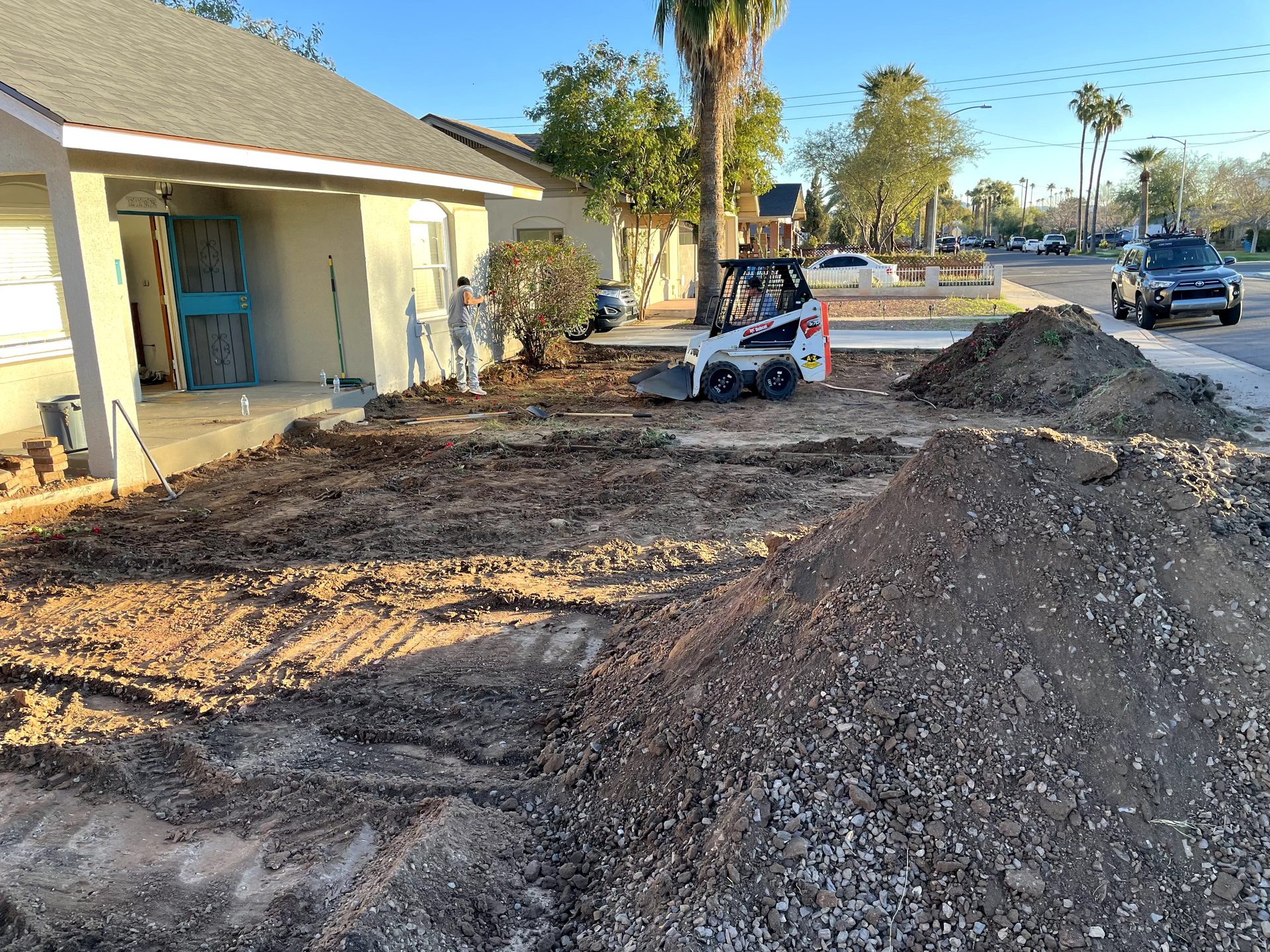
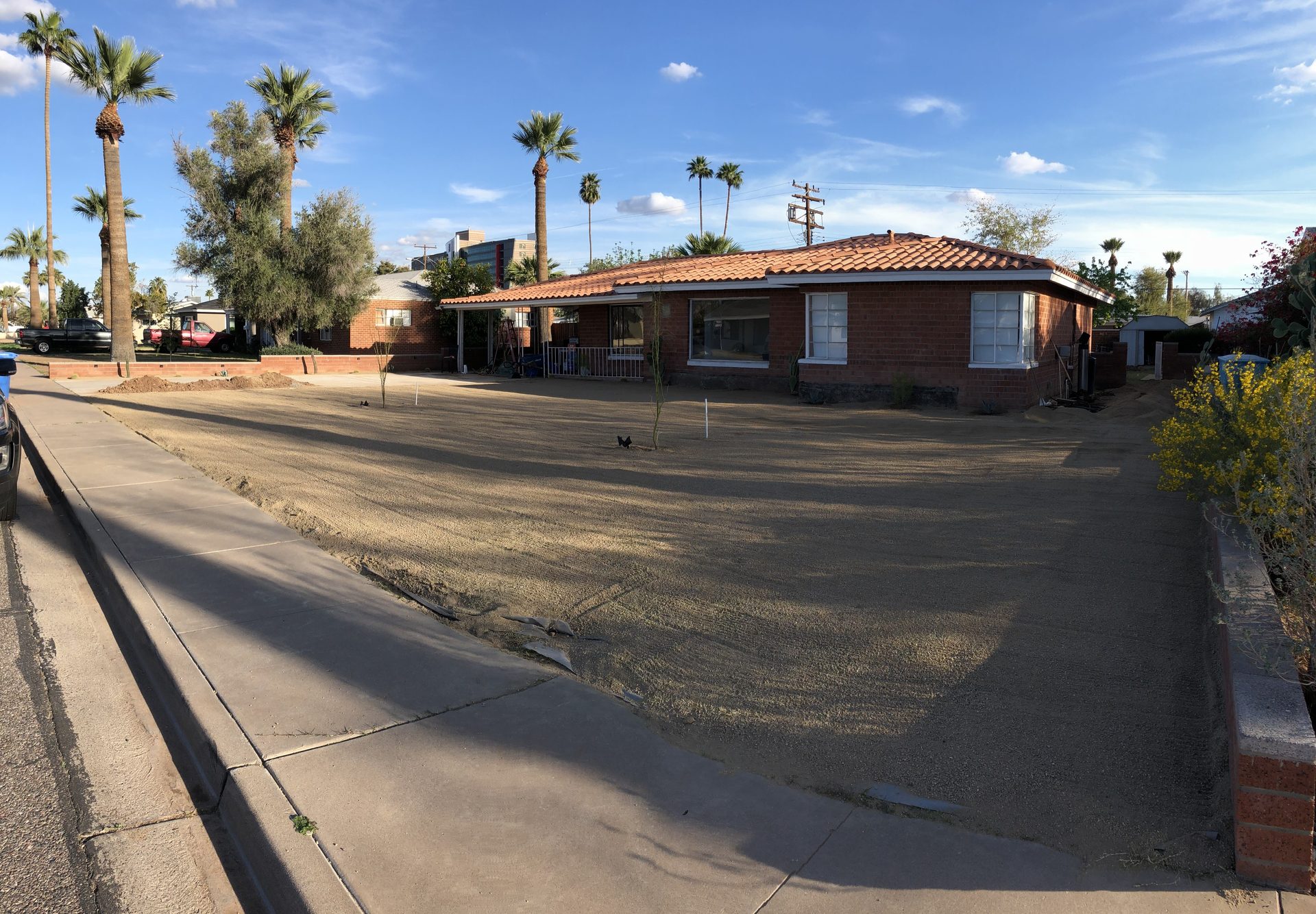
Stripping and regrading a Phoenix front yard. A machine already on site is the cheapest hour of the job, which is why the grade and any other excavation belong in the same scope.
What does caliche do to a turf job in Phoenix?
Caliche changes the drainage more than it changes the digging. Caliche is a soil horizon cemented with calcium carbonate, from under an inch to three feet thick, under a large share of Valley lots. A turf excavation only goes three to four inches, so unlike a tree pit or a footing, a turf job is usually not fighting caliche for depth. We cover the digging side on our landscaping page, including the correction that gypsum does not break it up and that the University of Arizona Cooperative Extension recommends soil sulfur instead.
What caliche does to turf is dam water. The layer is effectively impervious, so rain and hose water pass through the backing, pass through the aggregate, reach the caliche and stop, and your compacted base becomes a shallow bathtub with a lid on it. That shows up as soft spots underfoot, a base that loses compaction and ripples, and standing water in the low corner for a day after a storm or after every dog rinse.
The fix is grade and an outlet, not more rock. Cut fall to a drain, a swale or a point where water can daylight, or break through the layer at the low points, which takes a rock hammer or a jackhammer rather than a bucket.
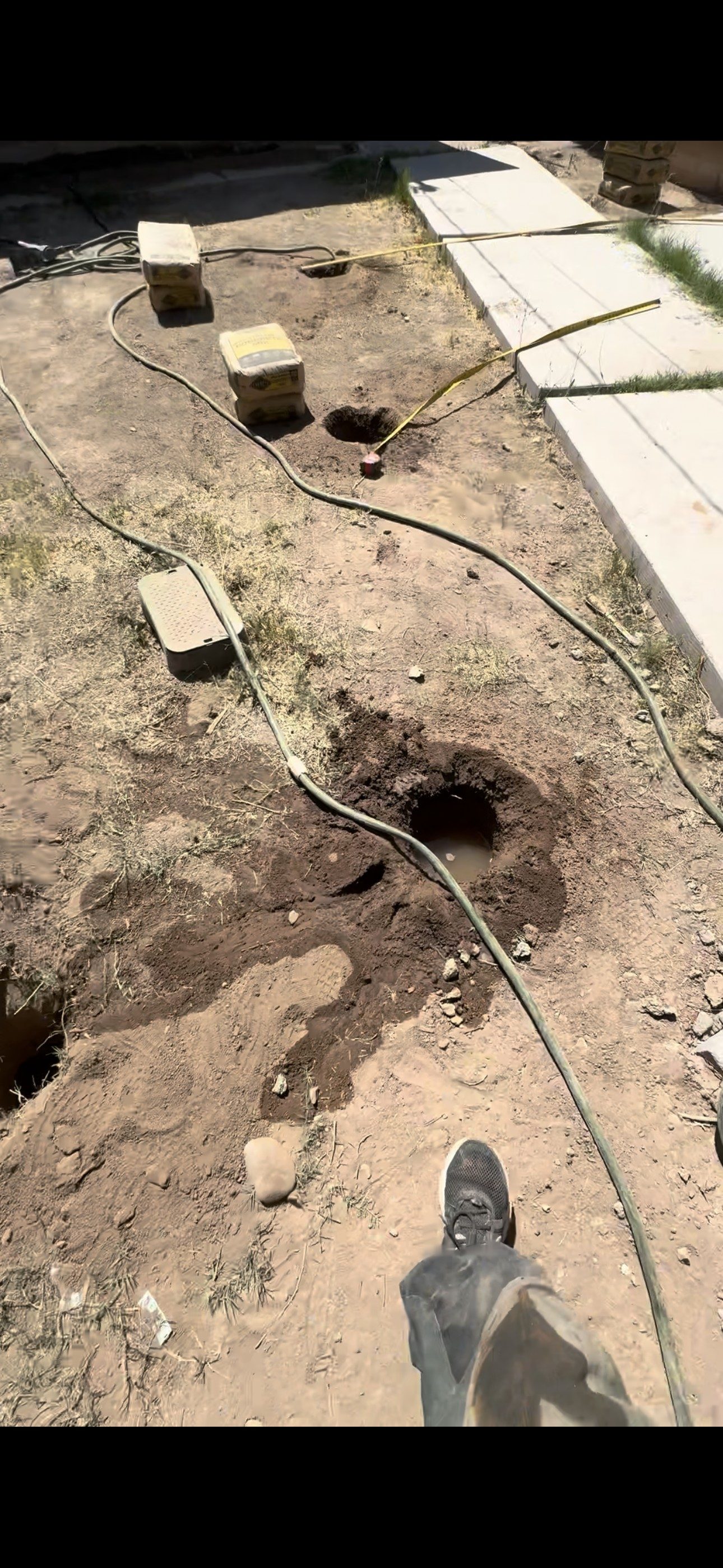
Caliche on a Phoenix job, pre-soaked so it can be broken. Under a turf field you rarely dig through it, but if it sits below the low corner it will hold water there.
How hot does artificial turf get in a Phoenix summer?
Hot enough that it belongs at the front of the conversation rather than in a footnote.
An ASU study by Ariane Middel and Jennifer Vanos measured a Phoenix installation across a day when the air peaked at 114 degrees, and found the turf running hotter than both asphalt and brick at every hour until 5 in the afternoon. Middel's own summary is that synthetic turf can get as hot as or hotter than asphalt and concrete. The comparison people expect is turf against grass. The one that describes a Phoenix back yard in July is turf against your driveway, all afternoon.
On absolute numbers, Brigham Young University's Provo field study recorded infill synthetic turf reaching roughly 200 degrees on a day when the air was 98. Natural grass in the same conditions rarely passes 100, because a living leaf transpires and a polyethylene blade cannot. Solar radiation drives it rather than air temperature, which is why an October morning at 80 degrees can still produce a surface well over 110.
You do not need a thermometer. Press the back of your hand flat to the turf and hold it five seconds; if you cannot, it is too hot for bare feet and too hot for paws. Brigham Young University's safety office set 120 degrees as the maximum surface temperature its fields could reach before use was restricted, and skin injury at 122 degrees takes under ten minutes of contact.
Hosing it down works, briefly. BYU's irrigation trial recorded a watered surface dropping from 174 degrees to 85, then climbing back to 120 within five minutes and 164 within twenty. Anyone selling a lawn on the basis that a hose fixes the heat is describing a twenty minute window.
The City of Chandler's grass removal rebate policy states that research shows artificial turf can reach 180 degrees in the summer and contributes to the urban heat island effect, and that Arizona's intense sun may deteriorate artificial turf more quickly than expected.
Shade changes the answer completely. In BYU's Provo, Utah field study from 2002, on a sports field built with black crumb rubber infill, shaded synthetic turf averaged 75.9 degrees with a high of 99 between 9 in the morning and 2 in the afternoon, against an average air temperature of 81.4. Shaded turf ran below air temperature; in the same study the sunlit surface peaked more than 100 degrees above the air, and Penn State's Center for Sports Surface Research puts sunlit synthetic turf 80 to 100 degrees above air temperature in general.
Where the turf goes decides most of this. Put it on the east side of the house, put it under a patio cover or ramada, or make the turf smaller, cover the rest in granite and desert planting, and spend the difference on shade. A 400 square foot shaded lawn gets used in June. A 1,200 square foot lawn in open sun gets looked at through a window.
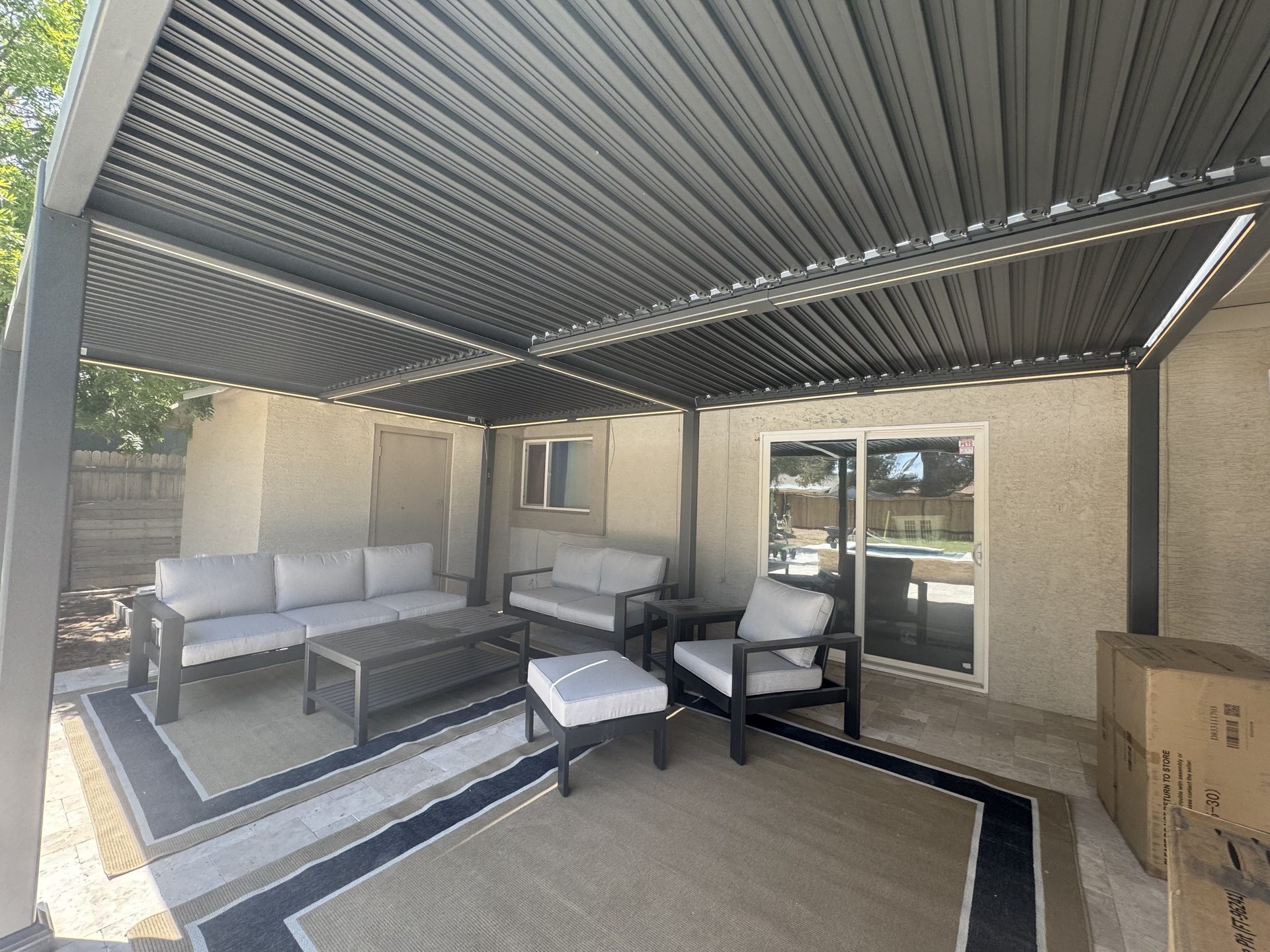
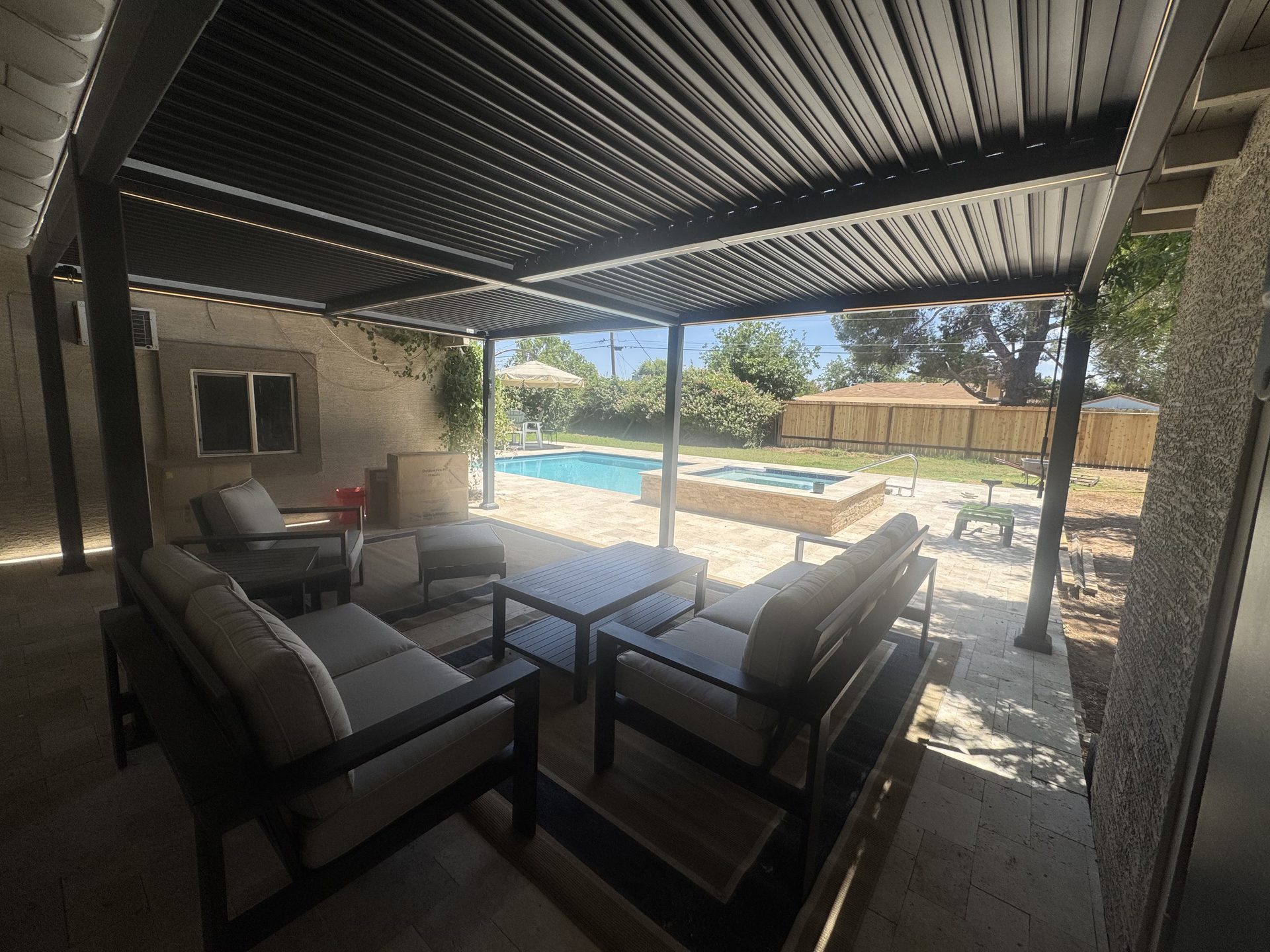
A louvered pergola over a Phoenix patio. Shade is the only intervention with real measured numbers behind it, which makes a cover a turf decision and not just a patio decision.
Does cooling infill work?
Less than it is sold as doing. Penn State's Center for Sports Surface Research tested eleven fiber and infill combinations under a calibrated 250 watt infrared lamp for three hours. The entire spread across every product was 12.2 degrees, from 171.1 down to 158.9. Their conclusion: no product in the test substantially reduced surface temperature compared to the traditional system of green fibers filled with black rubber, and reductions of five or even ten degrees offer little advantage when temperatures still exceed 150 degrees. Silver fibers tested hottest of all the bare fibers, at 149.4 degrees.
The cooling infills sold today are worth stating as claims rather than measurements. T Cool and HydroChill are marketed with reductions of 30 to 50 degrees, and zeolite is marketed by some sellers as cooling by up to 30 percent, which at least one turf industry reference page contradicts outright. We found no independent study behind any of those figures. There is also a physics problem specific to this city: evaporative infill cools by evaporating stored water, and Phoenix goes months without rain, has essentially no dew, and runs single digit humidity on a June afternoon. The mechanism runs dry in exactly the week you wanted it.
What infill goes in, and how much of it?
Infill is the cheapest invisible cut in a turf bid. Under-infill a lawn and nothing looks wrong on handover day; it shows up in year two as blades lying flat that never stand back up. It holds the blades upright, ballasts the carpet against the movement a large sheet makes through a 60 degree daily swing, and buries the base of the fiber to shield it from ultraviolet light.
Rounded silica sand is the default and the cheapest, at 1.5 to 2 pounds per square foot, and a 50 pound bag covers 25 to 35 square feet. It does nothing for odor, which is fine on a lawn and not fine in a dog run.
Coated rounded quartz, sold in this market as Envirofill, is a quartz core with an acrylic coating carrying an antimicrobial, in 12/20, 16/30, 20/40 and 30/50 mesh. Figure 2 to 3.5 pounds per square foot per inch of pile height on a residential lawn, and 2 to 2.5 pounds for playground and pet use.
Zeolite is a natural mineral from volcanic ash, porous, with a cation exchange structure that adsorbs ammonia, at 1 to 2 pounds per square foot. What sellers rarely say plainly is that zeolite is a topper, not a primary infill: it is too lightweight to carry the ballast job alone, so it gets power broomed in over a heavier base infill.
Never plain construction sand. The distributor guide says it flatly, and the reason is shape. Angular sand packs and locks; rounded sand flows back down into the pile where it belongs. On crumb rubber, we are not going to adjudicate the health argument in either direction, because peer-reviewed reviews describe the evidence as mixed. What is not in dispute is that heat drives off-gassing and that black rubber is the hottest thing you can put in a Phoenix yard.
What makes turf a dog yard instead of a lawn?
Four build decisions, none of which is a different-looking roll. A pet install and a lawn install can use the same green and behave completely differently.
The backing. Hole-punched backing has drainage holes every four to six inches and passes water at roughly 20 to 30 inches per hour. Flow-through backing passes water across the entire sheet, in the hundreds of inches per hour. For rain that barely matters in Phoenix. For urine it is everything, because urine arrives at the same square foot repeatedly and has to leave through whatever is directly beneath it rather than migrating sideways to find a hole.
The infill. A zeolite topper at 1 to 2 pounds per square foot over a heavier base infill, or a coated antimicrobial infill at 2 to 2.5 pounds. The smell is ammonia, produced by bacteria converting urea, so there are two levers: adsorb the ammonia, which zeolite does, and suppress the bacteria, which an antimicrobial coating does. Uric acid crystals are not water soluble, which is why hosing alone never clears an old dog spot and why an enzyme cleaner is the actual fix.
Drainage where there is no soil. Over a slab, a balcony or a rooftop, modular drainage tile goes under the turf. It lifts the surface about an inch and creates a continuous air void, so liquid runs laterally to a low point and air moves underneath. Turf glued straight to a slab with no drainage layer is the single most common source of the dog-yard odor complaint, and no infill rescues it.
Maintenance. Solids get picked up like any yard, rinsing is not optional, and nothing sold today makes a dog yard self-cleaning. A Phoenix pet sitter's line in a homeowner thread about Valley turf was that the smell is atrocious and people go noseblind to it. That is a fair description of a dog yard built on hole-punched backing over a slab with plain silica and no rinsing schedule. It is not a description of a flow-through system over a real base with a zeolite topper.
One edge detail belongs in any pet conversation. The perimeter gets sealed tight against block walls with no gapping, because a loose turf edge is the void a pack rat will nest under.
Will it drain when the monsoon hits?
The turf will. Whether the yard will is a grade question rather than a product question. Take the backing figures as a general range rather than a lab result for any named product: hole-punched roughly 20 to 30 inches per hour, flow-through in the hundreds. Phoenix averages under 8 inches of rain in a year, and even the heaviest monsoon cell delivers a few inches per hour in a short burst, so the backing is almost never the bottleneck. The base and the grade are, and a saturated base with nowhere to outlet is what makes a turf lawn ripple.
The International Residential Code, section R401.3, requires the ground surface to fall not less than 6 inches within the first 10 feet from the foundation, and impervious surfaces within 10 feet to slope not less than 2 percent away from the building. Turf guides call for about 2 percent across the field. Those are not the same requirement, and a field flattened to a uniform 2 percent inside the foundation zone can undo fall the house was built with. Our rule: the turf follows the grade the house needs.
Will the seams show?
Only if they are built wrong, and they get built wrong the same way almost every time.
Grain direction is a hard rule. Turf fibers are tufted with a lean, so a panel has a nap the way velvet does. Two panels laid grain-opposed reflect light differently and the seam reads as a stripe of a slightly different shade, in every photograph, forever, even when the joint is perfectly tight. Both major installation guides state it twice, which tells you how often it gets ignored.
Cut three stitch rows in from the factory edge. The manufacturer's selvedge carries a wider gutter between rows than the field does, so two butted factory edges leave a visible gap line down the seam.
Method. Seam tape runs lengthwise on the backside, centered under both edges, with polyurethane turf adhesive. Nails or U-staples hold the seam flat while the adhesive cures; they are not the permanent bond. Seams fail for four reasons, all avoidable: adhesive laid over a base that later settles, a seam run across the direction of foot traffic instead of with it, glue that skinned over before the second panel landed, which in a Phoenix summer happens faster than a crew expects, and a seam left unweighted while curing.
Anchoring. Five to six inch nails every three to four inches along all edges, and every 12 to 24 inches through the field, at roughly 3 to 4 pounds of nails per 100 square feet. Over-driven nails are the source of the faint dimple pattern people notice in raking afternoon light.
What do face weight, pile height and roll width mean?
Face weight is ounces of yarn per square yard, backing excluded, and that exclusion is the whole point of the term. Total weight adds the backing, typically around 26 ounces per square yard, roughly 6 ounces of primary backing plus 20 ounces of secondary coating. A supplier who leads with a big total weight number instead of a face weight is quoting you glue, so ask which number you are looking at.
Pile height is the length of the longest blade from backing to tip. Landscape products run roughly 1 to 2.25 inches. Pet turf is commonly 1 to 1.25 inches, because shorter drains better, cleans better and does not lie over. Athletic turf runs 2 to 3 inches.
The translation a buyer can use: face weight is density, and density resists matting. Pile height is look. Tall pile on a low face weight is the classic cheap product, long blades with nothing holding them up, which lie down in year two and never stand back up. That is the exact failure people describe when they say their turf went flat. We are not going to print a minimum face weight number, because the figures circulating here are sales numbers. Ask for the face weight, confirm it excludes backing, and compare two bids on the same basis.
Backing type is the fourth spec worth naming, polyurethane or latex and perforated or flow-through. Polyurethane is reported to hold dimensional stability better at Phoenix ground temperatures, which is a question to ask rather than a number we will put a year on.
Roll width is where money disappears. Fifteen feet is the mill standard, and you will read that it is the only width made. It is not: 13 foot goods are produced, and 12, 6 and 4 foot rolls exist, with lengths running 30 to 100 feet. On a 12 foot wide side yard that is the whole game, because a 12 foot roll goes in with no seam at all and a 15 foot roll means three feet of waste down the entire run.
What does a backyard putting green take?
A green is built to a different spec than a lawn, and the spec is specific enough to hold a bid against.
The excavation goes deeper, five to six inches, because the surface has to be flatter than a lawn ever needs to be. Sprinklers get capped, native soil gets compacted, then three to four inches of base material goes in, either road base or a 50/50 gravel and sand mix, topped with one to two inches of decomposed granite, hosed down and compacted to 90 percent. Contours are built rather than found, which is the real reason a green costs more per foot than a lawn. The shape gets painted on the base before anything is cut, with one to two feet of fringe allowed for. Cups go in with the sleeve set on the base, left about an inch proud so the turf trims tight around it, and a regulation cup is 4.25 inches across and at least 4 inches deep.
On anchoring the two guides we work from openly disagree, and we would rather show you that than invent a standard. One specifies 3 inch finishing nails around the putting surface perimeter. The other says a green takes no surface or perimeter nails at all and floats, with the fringe holding it. Both are in live use. They agree on the fringe: 60-D five inch nails every three to four inches, seams pinned every two to three inches plus U-staples.
Infill is what makes a green roll. Number 90 fine silica goes on the putting surface at 1 to 2 pounds per square foot, in several thin passes, never dumped in one load. The fringe takes 2 to 3 pounds per square foot of coated quartz or 30-60 silica. A water-filled roller flattens the fibers for a faster roll, and more sand speeds it up while less slows it down. A realistic backyard target is roughly 10 to 12 on a Stimpmeter, and that is a target rather than a promise.
What does artificial turf cost in Phoenix?
These are 2026 Phoenix metro numbers for licensed, insured work, materials and labor together, on a yard that gets a new compacted base. Artificial turf over a new base runs $8 to $14 per square foot installed here. The full Valley range across every operator publishing a rate spans $6 to $22, and where a job lands inside that is decided by how much demolition there is, how deep the base goes, the face weight, the infill, and how many curves and seams the layout forces.
Artificial Turf Price Chart, Phoenix 2026
Installed prices for licensed, insured work over a new compacted base. Demolition and add-ons are their own lines so you can build your own number.
| Scope | Typical installed price | What drives the price |
|---|---|---|
| Artificial turf lawn, over a new compacted base | $8-$14 per sq ft, installed | Demolition volume, base depth, face weight, infill type, and how many curves and seams the layout forces. Grass removal is included; concrete demolition is not. The full Valley range is $6 to $22. |
| Backyard putting green | $9-$20 per sq ft, installed | A flatter base and a tighter tolerance than a lawn. Carries its own minimum, generally around $2,500 per green. Cups, fringe and contouring are the row below. |
| Putting green features: cups, fringe, contouring | add $5-$10 per sq ft | On top of the green rate. The difference between a flat green and one with cups, a fringe and break in it, and every contour is base material shaped by hand. |
| Pet turf system | $12-$21 per sq ft, installed | Flow-through backing and odor-controlling infill are where the extra money goes. |
| Playground turf with an ASTM-rated foam shock pad | $13-$20 per sq ft, installed | The pad is rated to a fall height, which is why it costs what it does. Priced by pad thickness. |
| Grass removal, grubbing and haul-off | $0.75-$1.50 per sq ft | Shown on its own so you can see the removal share of a turf price; it is already inside the lawn rate above. Rooted Bermuda gets grubbed rather than scraped, and one crew day clears 600 to 900 square feet. Access decides the band. |
| Concrete or paver demolition before turf | add $4-$10 per sq ft | Breaking out and hauling a slab so the turf can have a real base. The alternative is a drainage layer over the existing concrete. |
| Complex shapes: curves, cutouts, tree wells, planter returns | add $1-$2 per sq ft | Waste and seams, not markup. A curved layout cut from 15 foot rolls generates offcuts nobody can use. |
| Turf material alone, before base, labor and infill | $2-$7 per sq ft, material only | The most useful row on this chart. Hold it against a $6 per foot installed bid and see how little is left for excavation, base rock, compaction, infill and labor. |
Small yards carry a minimum. Mobilization, machine time, base delivery and the disposal run cost roughly the same on a 300 square foot yard as on a 900 square foot yard, so a small conversion lands at the top of the band.
What It Costs by Yard Size
The $8 to $14 rate from the chart above, applied to four common Phoenix yard footprints.
| Yard | Turf area | Installed range | Note |
|---|---|---|---|
| Side yard or small dog run, 12 x 18 ft | 216 sq ft | $1,700-$3,000 installed | Small enough that the minimum usually sets the price rather than the per-foot rate. A 12 foot roll removes the seam and the waste here. |
| Small front lawn, 20 x 25 ft | 500 sq ft | $4,000-$7,000 installed | The common front yard conversion, two to three working days on site. |
| Typical back lawn, 30 x 30 ft | 900 sq ft | $7,200-$12,600 installed | Big enough to spread the fixed cost, and big enough that the heat conversation matters. |
| Front and back together | 1,500 sq ft | $12,000-$21,000 installed | Still well under the 4,356 square foot dust permit line, unless the same job regrades the rest of the lot. |
Send us your measurement with photos of the lawn and we will price it against this chart, free.
What moves the price of a turf yard?
Four questions, and the gap between two bids usually explains itself inside the answers.
What depth of aggregate base, compacted in how many lifts, and to what percentage? A bid that will not name a depth is not pricing a base. This is the largest hidden variable in the category.
What is the exact product name, its face weight and its backing type, and can I see this year's sample in my own sunlight? Turf lines get revised year over year, so two quotes are almost never pricing the same goods, and a sample under showroom lighting is a different green from the one in your back yard at four in the afternoon.
What infill, and how many pounds per square foot? The cut nobody sees. Ask for the product and the rate, in writing.
Which square footage is your per-foot price built on? The source for asking is a city rather than a contractor. Chandler's rebate policy warns in writing that artificial turf vendor measurements are frequently larger than the grass area, to account for curves and cuts. A larger takeoff is legitimate for ordering material, because you cannot buy a curve. It is a different thing for it to quietly become the number a per-square-foot price is multiplied against.
Will a Valley city pay for any of it?
Six Valley cities run grass removal programs, and the rebate pays for grass removed, not for turf installed. Four of the six will not pay toward artificial turf at all, because what those programs buy is living low-water plants and shade canopy. The full six-city breakdown lives on our landscaping page.
| City | Where turf stands | What that means for your scope |
|---|---|---|
| Phoenix | $2.00 per sq ft of grass removed, 250 sq ft minimum. No artificial turf exclusion is published. | No published exclusion is not the same as the city paying for turf. The grass has to be alive and at least 75 percent dense, bare soil is not allowed afterward, and over 5,000 sq ft is case by case. Confirm your plan at pre-approval. |
| Chandler | Turf does not qualify. The policy says it in as many words: any landscaped area converted to artificial turf will not qualify for the rebate. | $1.50 per sq ft up to $2,000, 500 sq ft minimum, and the qualifying replacement is desert planting at 50 percent canopy at maturity. Scope the turf and the planted area separately and claim only the planted one. |
| Mesa | Turf alone does not qualify. The conversion has to reach 50 percent living low-water plant coverage. | Up to $2,100 by project plus a tree bonus, 500 sq ft of living grass minimum. Mesa's program also rejects black plastic sheeting as an underlay. |
| Tempe | A low-water plant conversion is required, at 30 percent plant coverage of the removal area. | $0.50 per sq ft up to $2,000 per home per fiscal year, with pre-approval required. |
| Gilbert | A low-water-use replacement landscape is required. | Up to $2,000 with up to $1,000 more available, scaling with square footage removed, first come first served. |
| Scottsdale | Low-water replacement required, and a pre-inspection is required by ordinance before any removal. | Up to $5,000 residential. This year's window closes October 31, 2026, and rebated products have to be purchased on or after July 8, 2026. |
The rule identical in all six programs, and the only mistake on this page that cannot be undone: approval comes before any grass comes out. Phoenix requires approval and a Notice to Proceed before you remove a single blade, then gives you six months to finish. Tear the lawn out first and the rebate is gone.
One Phoenix specific that gets missed: grass removed from the public right-of-way cannot be reinstalled under the ADWR Phoenix Active Management Area plan, and the plants replacing it have to come from the low-water-use and drought-tolerant list.
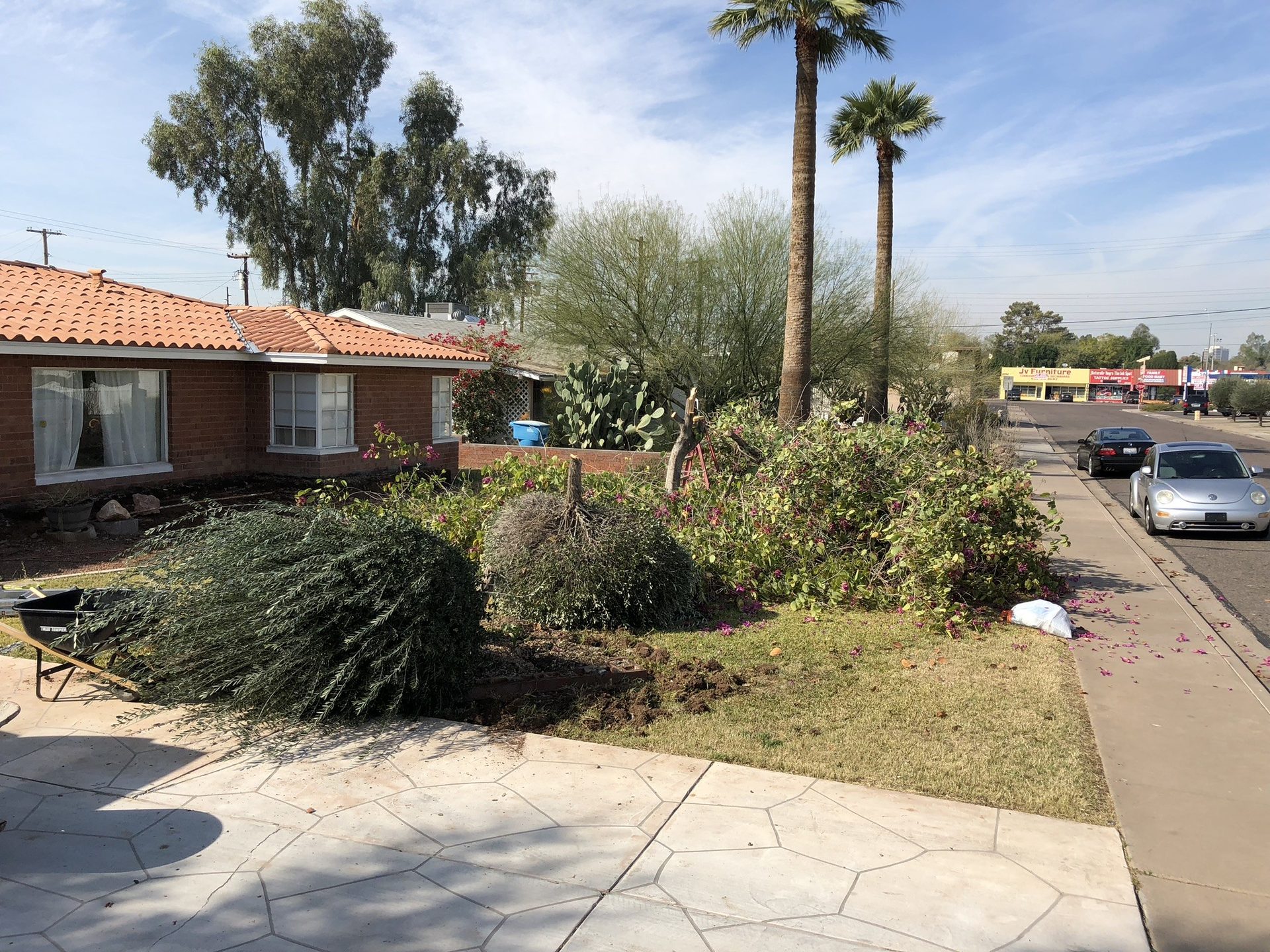
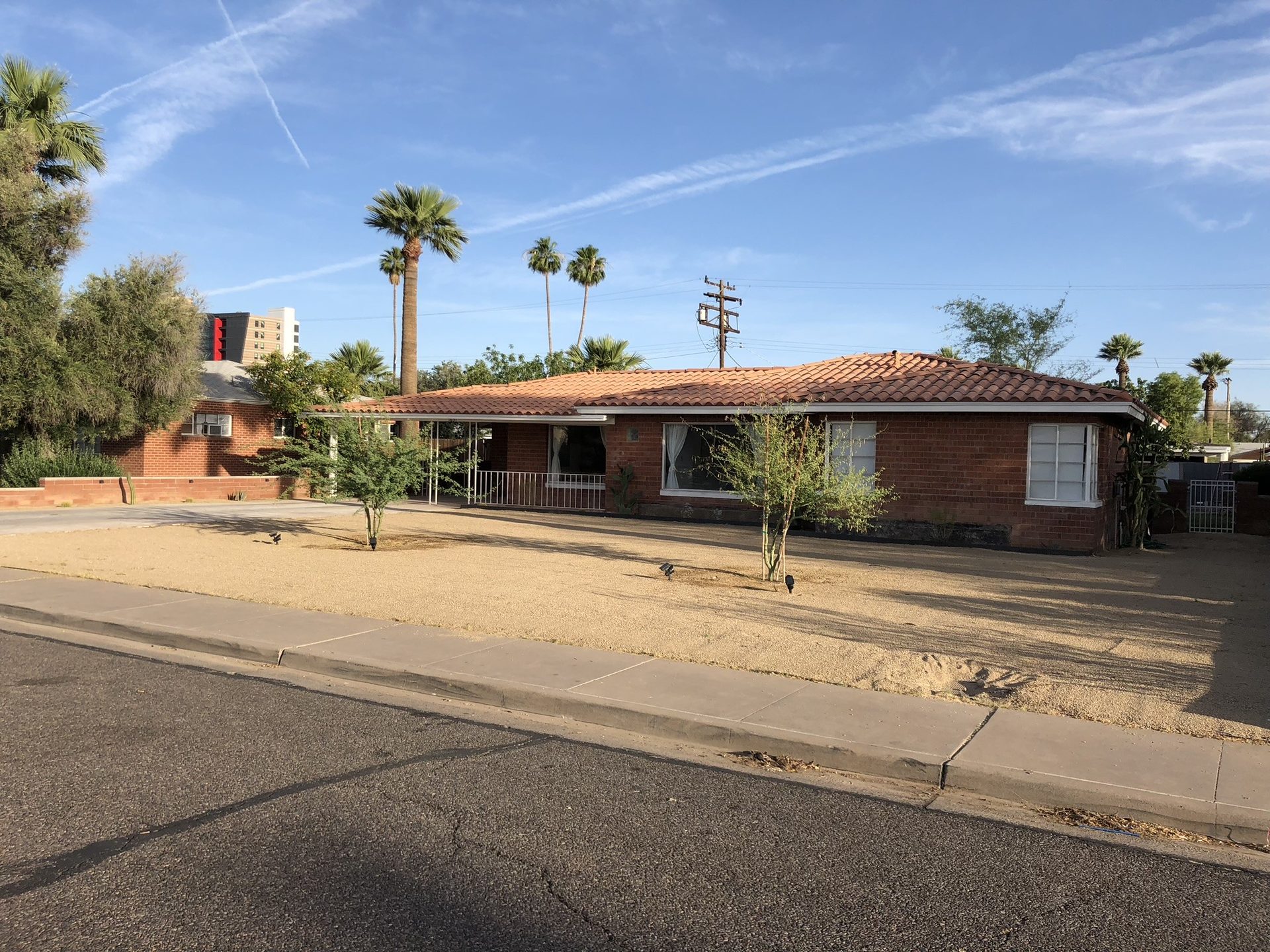
A Phoenix lawn before conversion. This is the condition the rebate programs pay to remove, which is why they inspect first.
Can my HOA stop me from putting turf in?
In a planned community, usually not, and Arizona wrote that down. In a condominium the statute does not reach you at all. And in every case the association keeps more control than the headline suggests.
The law is A.R.S. 33-1819, added by HB 2131, Chapter 101, 55th Legislature, 2nd Regular Session. It sits in Title 33, Chapter 16, the Planned Communities chapter, and it does not amend the Condominium Act. The core: in a planned community that allows natural grass on a member's property, and after the period of declarant control has ended, the association may not prohibit a member from installing or using artificial turf. Then come the carve-outs.
- The association may adopt reasonable rules on installation and appearance, so long as those rules do not prevent installation in the same manner natural grass would be allowed.
- Those rules may regulate the location on the property, the percentage of the property covered, and turf quality, to the same extent they regulate natural grass.
- The association may require removal if the turf creates a health or safety issue the member does not correct, or if it is not maintained to the association's standards.
- The association may prohibit turf in any area the association is required to maintain or irrigate.
- The statute does not apply where the declaration's design standards protect the natural environment, or where the community preserves unique vegetation and geologic characteristics.
- Subsection C awards attorney fees and costs to the prevailing party, which cuts both ways.
Read together: the association cannot ban turf outright, and it can still say a great deal about where it goes and how much of the lot it covers. Submit to the architectural review committee and get approval in writing before material is ordered. A turf order is not returnable.
Do I need a permit for turf in Phoenix?
For the turf itself, generally no. A standard residential turf install over soil is finish hardscape and is not the kind of work Phoenix issues a building permit for. Confirm it against your own scope with the city, because the answer changes the moment the job grows into a retaining wall, a covered structure, new concrete flatwork or anything touching a pool.
The permit that does catch turf jobs is a dust permit. Maricopa County Rule 310 requires a dust control permit for any disturbance of 0.10 acre or more, which is 4,356 square feet, and its landscape maintenance exemption specifically excludes grading, trenching and mechanized surface disturbance done to establish an initial landscape. A lawn-to-turf conversion is exactly that, a front and back conversion can cross the line, and Phoenix requires every project in its grass removal program to comply with Rule 310.01 as well.
What fails on a turf lawn, and how do you look after it?
We are not going to print a flat "artificial turf lasts X years in Phoenix," because we could not find a study behind any of the numbers circulating. What we can tell you is what goes wrong and in what order, which is more useful when you are choosing between bids anyway.
Matting is the failure people get. Blades lie over and stop standing back up, usually in traffic lanes and under furniture. It comes from two places: a low face weight product with tall blades, and infill that was short at install or has since migrated. Both are prevented at purchase, not repaired later. Rippling and low spots come from the base: compacted dry, compacted in one thick lift, or built over a wet subgrade, it settles unevenly and the turf telegraphs it, and fixing that means taking up the lawn. Seam lines come from grain direction, and cannot be corrected without replacing a panel.
Sun reflected off low-emissivity glass melts turf. Slightly concave low-E double-pane windows can focus reflected sunlight into a narrow, intensely hot band, and that band melts polyethylene. It is the same phenomenon that warps vinyl siding and deforms patio furniture in newer Valley subdivisions, and turf manufacturers name it specifically as damage they will not cover. Before turf goes within about 15 to 20 feet of a large west- or south-facing window wall, we look for melted siding, a warped downspout, a scorched stripe across the old lawn. If it is there, the turf line moves or the glass gets screened.
Maintenance is light, but it is a schedule rather than nothing. Cross-brush against the grain with a stiff push broom or power broom, on traffic lanes and under furniture, quarterly at minimum and more often in a dog yard: that stands the fibers back up before matting sets. Check infill depth once a year and top it up, because infill migrates downhill and out through the perimeter, and a thin lane is where matting starts. Blow organic debris off before it composts in the infill and grows the weeds the fabric was never going to stop. Rinse pet areas, and keep barbecues and fire pits off it.
Should you install it yourself?
It depends on the size and shape of the area more than on your skill with tools. Where it works: a small, flat, rectangular area under roughly 150 square feet, a side yard or a dog run, narrow enough to take a 12 foot roll with no seam. Material alone is $2 to $7 per square foot, a plate compactor rents by the day, and a real weekend gets you something good.
Where it stops working is the base, and the base is the job. Compacting three inches of aggregate to 90 percent takes lifts, water and repeated passes, and a rented plate in one dry pass will not get there. Grubbing rooted Bermuda by hand is brutal: our crews clear 600 to 900 square feet a day with machines and a truck for the spoil. Seams and grain direction are where a self-install shows itself, permanently. And a 15 by 30 roll is a two or three person lift before anybody has cut anything.
The test: if your area is small, flat, square and has no seam in it, do it yourself and put the savings into the shade structure. If it has curves, more than one panel, a slope, an old lawn to remove, or anything draining toward the house, the parts that make it fail are the parts a kit cannot sell you.
When we will tell you not to do this
There are yards where selling one would be selling you a problem, and yards where the turf is right but the place we would put it is not where you asked.
| If this is your yard | What we would do instead |
|---|---|
| A full south- or west-facing back yard in open sun, bought because of small kids or dogs | Shade it, shrink it, or put the difference into a ramada. That surface will pass 120 degrees most of the afternoon most of the summer, and no fiber or infill on the market has tested more than about twelve degrees cooler. |
| Water is arriving from somewhere: a downspout, an irrigation break, a neighbor's grade, or ponding against the foundation | Drainage first, turf second. A compacted base over a wet low spot is a bathtub with a lid on it. |
| A dog run on a slab or a rooftop, with no drainage layer in the budget | Budget the drainage tile, or break out the concrete and build a real base. Turf glued to bare slab is the most common odor complaint in this trade. |
| You live in Chandler, Mesa, Tempe or Gilbert and you are counting on the city rebate to pay for the turf | It will not. Those programs pay for living low-water plants. Rescope so the planted area qualifies on its own, or take the rebate out of your budget now. |
| The turf run sits within 15 to 20 feet of a big west- or south-facing low-E window wall, and there is already melted siding or a scorched stripe on the lawn | Move the turf line, screen the glass, or accept that the melting is coming. |
| The turf is going in a frontage strip the HOA maintains or irrigates | A.R.S. 33-1819 lets the association prohibit turf there even where it cannot prohibit turf anywhere else. Get written approval first. |
| Your budget clears the material and the mobilization and nothing else | Do nothing yet. A thin, under-compacted base is worse than the lawn you have, because in three years you own a removal bill on top of the original problem. |
One item is about the property rather than the yard. If the conversion disturbs 0.10 acre or more, which is 4,356 square feet, Maricopa County Rule 310 puts a dust control permit on it. That gets handled before a machine moves.
What else makes sense while the yard is torn up?
A turf job puts a machine in your yard, opens the ground and removes the irrigation, and getting to that state is most of the setup cost of half a dozen other jobs. Excavation, base rock, compaction and a disposal run are the same crew and the same machine whether the scope is turf, a patio or a granite conversion, so buying them separately means paying three mobilizations for one day of setup. It has to be in the scope before the machine arrives, not added on day four.
Grade and drainage. The largest saving here and the one that has to happen first anyway. While the lawn is off and the machine is on site, cut the fall the house needs and fix the corner that has been ponding for a decade. Doing it later means taking the turf back up.
Drip for whatever survives the lawn. The item the turf trade does not think about, because it is not their trade, and it is how a turf job kills a citrus tree two summers later. Capping the lawn irrigation strands every tree and shrub quietly living off the lawn's water. See desert landscaping and drip.
A patio cover or ramada over the turf. The shaded-turf numbers from the BYU study above are the case for it. See patio covers and ramadas.
Pavers, travertine or concrete flatwork next to the turf. Same excavation, base rock, compactor and disposal run, and the point at which you can ask for the whole yard's base to be built to the 98 percent paver standard rather than the turf trade's 90. See concrete, pavers and flatwork.
Block wall, seat wall or planter returns, which give a turf field permanent edge restraint, and low-voltage landscape lighting while the trenching is already open. Running lighting afterward means cutting the turf.
The rest of the yard as a rebate-qualifying conversion, because where a city rebate is in play the plants are what the city is buying. See grass-to-desert conversions. And fencing, gates and exterior paint while there is still machine access and the yard is already staged and masked: once the turf is down, the machine does not go back over it. See fencing and gates and exterior painting. Ask for all of it as priced options on the original quote.
Is your contractor licensed for this in Arizona?
Worth checking, and it takes about a minute. The Arizona Registrar of Contractors publishes a public license search at roc.az.gov, where you can look up any license number and see the classification, the status, the bond and the complaint history.
Norem Contracting holds an Arizona Class B General Residential Contractor license, ROC #365090, licensed, bonded and insured. We carry the contract for your job, and everyone who works on your yard is licensed for the work they are doing. That is what lets one contract cover the demolition, the grade, the drainage, the base, the turf, the irrigation and the wall or cover that goes with it, instead of four companies waiting on each other and none of them owning the low spot.
The threshold that separates a licensed bid from an unlicensed one is A.R.S. 32-1121, which sets Arizona's handyman exemption at $1,000 for the entire job including labor and materials. Every turf yard on this page is above that, so a bidder without a license number is taking work outside what they can legally take, whatever the price says. Ask for the number and look it up; we would rather you did.
Arizona's residential specialty classification for this side of the trade is CR-21, recently renamed from Landscaping and Irrigation Systems to Hardscaping and Irrigation Systems, and it is worth knowing what a specialty classification does not reach, because turf jobs grow. Its published exclusion list names new electrical service panels, gas or plumbing lines, covered outdoor kitchens, gazebos, room additions, swimming pools, pool deck coatings, concrete driveways, load bearing walls and perimeter fencing. A turf project that grows into a covered ramada, a poured driveway or a perimeter block wall has moved past what that specialty license covers. A Class B carries the whole yard.
Two more things you are entitled to know. Arizona gives you two years from the date work was last performed to file a workmanship complaint with the ROC against a licensed residential contractor, under A.R.S. 32-1155. And a general caution: never hand money or property access to somebody who contacted you first, and check that the ROC number on the contract matches the name on it.
Hiring questions homeowners ask us
Can you price my turf yard from photos, or do you need to walk it?
Photos are usually enough for a real range, and there is no charge either way. Send the measurement plus photos of the lawn, the perimeter and the edges it meets, the sprinkler heads, and where water sits after a rain. Photos sent in the early afternoon usually get a number back the same day. We confirm it on site, because base depth and caliche under the low corner do not read reliably in a photograph.
What should I ask the other contractors bidding my turf?
Four questions, and a real installer answers all four without hesitating. What depth of aggregate base, compacted in how many lifts and to what percentage. What is the exact product name, its face weight and its backing type, and can I see this year's sample in my own sunlight. What infill, and how many pounds per square foot. And which square footage your per-foot price is built on, the measured lawn or the material takeoff. Chandler's own rebate policy warns in writing that turf vendor measurements run larger than the grass area to account for curves and cuts.
Are you licensed to install artificial turf in Arizona?
Yes. Norem Contracting is an Arizona Class B General Residential Contractor, ROC #365090, licensed, bonded and insured, and we carry the contract for your job. Everyone who works on your yard is licensed for the work they are doing, which is what lets the demolition, the grade, the drainage, the base, the turf and the irrigation sit on one contract instead of four. Every turf yard on this page costs more than the $1,000 handyman exemption under A.R.S. 32-1121, so anyone bidding yours should have a license number.
How do I know the base under my new turf was built right?
Look before the turf goes down, because after that day you cannot. Walk the finished base: your weight should leave no footprint anywhere on it. Look for a screeded, flat granite top course rather than loose rock. Watch whether the crew wets the material before compacting, because dry rock does not compact. Ask what depth went in and get it in writing on the quote. And pour a bucket of water on the low corner and see where it goes.
Does artificial turf add to my home's value?
It shows well and it is a real quality-of-life change, and we are not going to put a percentage or a dollar figure on the resale. You will see companies in this market advertise a 5 to 7 percent resale bump or a 50 to 70 percent return. There is no appraisal or MLS data behind those numbers that we can find, and every instance traces back to a company selling turf. Buy it because you want a yard you can use in April without a mower.
What happens to my trees and shrubs when the lawn irrigation gets capped?
They need their own water before the valve goes, and this is the most common way a turf job quietly damages a yard. Anything living off the lawn's overspray, the citrus, the queen palm, the oleander hedge along the wall, loses its supply the day the heads come out, and the decline is slow enough that nobody connects it back two summers later. We put emitters at each plant's own root zone, out at the drip line rather than against the trunk, before the lawn valve is capped.
Can you install turf in July, or should we wait until fall?
July is fine for the install itself, with two caveats worth saying out loud. Compaction wants the base wet, which is easy in summer, so summer installs go well. But the surface will be at its hottest the week we hand it over, which is a poor first impression on a yard bought for kids or dogs. And if a city rebate is part of your plan, the Notice to Proceed has to be in hand before a blade of grass comes out, which adds weeks in any season.
Artificial turf across the Phoenix metro
We install artificial turf, pet turf and backyard putting greens in Phoenix, Scottsdale, Tempe, Mesa, Chandler, Gilbert, Glendale, Peoria, Queen Creek, Paradise Valley, Cave Creek and Fountain Hills. Here is the rest of what we do.
Related: Phoenix landscaping and hardscape · grass-to-desert conversions · concrete patios & pavers · patio covers & ramadas · fencing & gates · a Phoenix front yard conversion, start to finish · a pergola over a paver patio · see our completed work
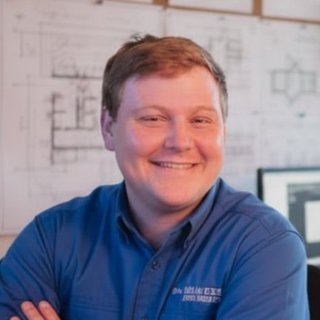
Written by Harrison Norem, Licensed Class B General Contractor, AZ ROC #365090. About Harrison
Get a Real Number for Your Yard
Measure the lawn, take a few photos, and send them over. You get back a per-square-foot number you can hold against any other bid, the base depth we would build, and where we would put the turf so it is usable in June. Free estimate from a licensed Arizona contractor, ROC #365090.
Request Free Estimate