When a home changes hands in Arizona, the repair negotiation runs through a single document. Whether you are preparing to list or working through an inspection as a buyer, the question that matters is not whether to fix everything, but which repairs are worth making, which are worth requesting, and which are better left alone. What follows is a contractor's guide to those decisions: what a seller should address before listing, what to leave untouched, which Phoenix inspection findings are routine, and how a buyer should weigh a repair against a credit.
How repair requests work in Arizona: the BINSR
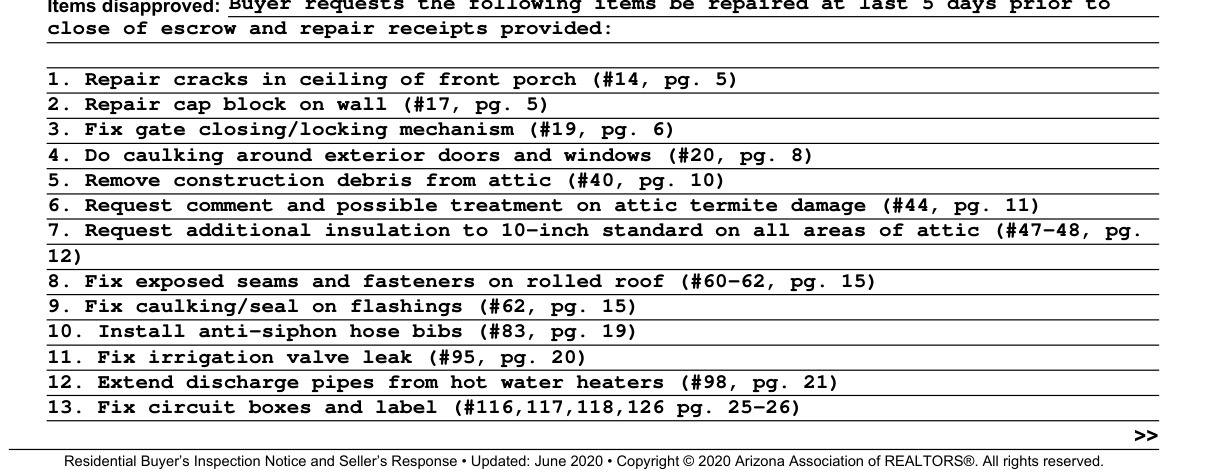
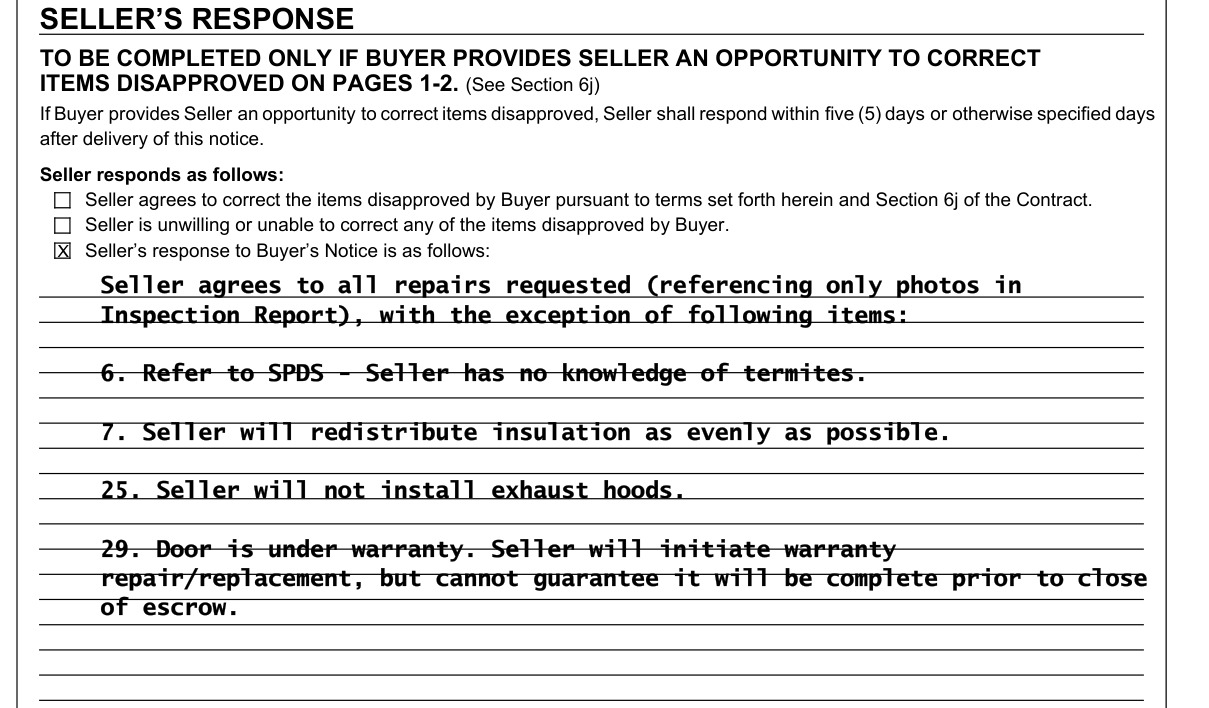
Every repair request during the sale of a home in Arizona moves through the BINSR, the Buyer's Inspection Notice and Seller's Response. It is the standard Arizona Association of REALTORS (AAR) contract form. After the inspection, the buyer uses it to identify the items they want addressed, and the seller uses it to respond. It is the negotiation document, not the inspection report itself.
The form runs on what agents call the 10/5/5 clock, measured in calendar days. The buyer has a ten-day inspection period in which they must both complete the inspection and deliver the BINSR to the seller; missing that deadline waives the right to request repairs. The seller then has five days to respond, and the buyer has five days after that to accept the response or cancel and recover the earnest money. Two points are widely misunderstood. First, if the seller does not respond within the five days, they are deemed to have refused the requested items rather than to have agreed to them. Second, because the BINSR is a contract form rather than a statute, the inspection period itself can be lengthened or shortened by agreement between the parties.

What a seller should repair before listing
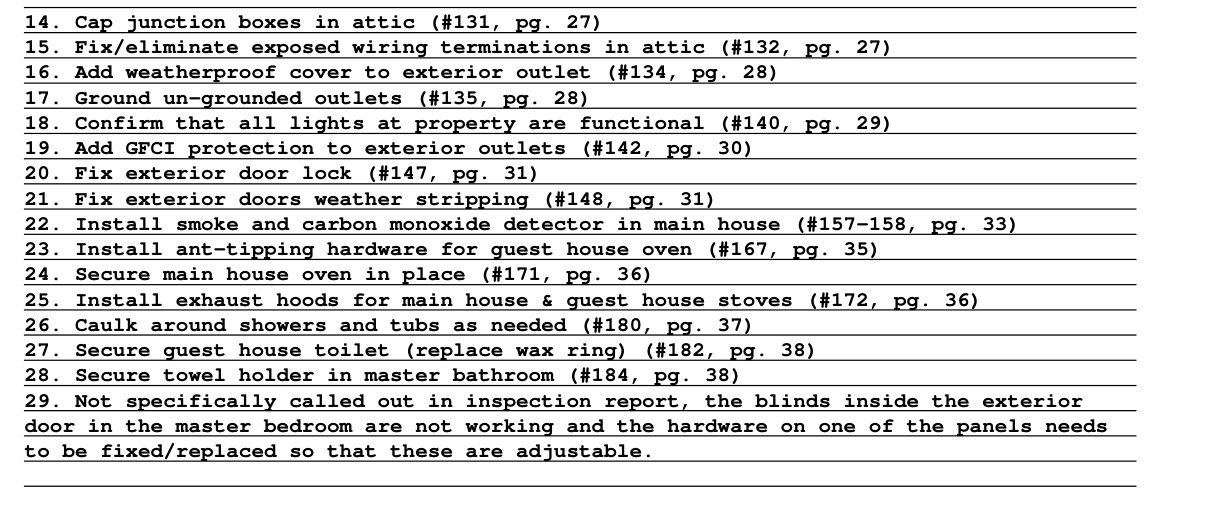
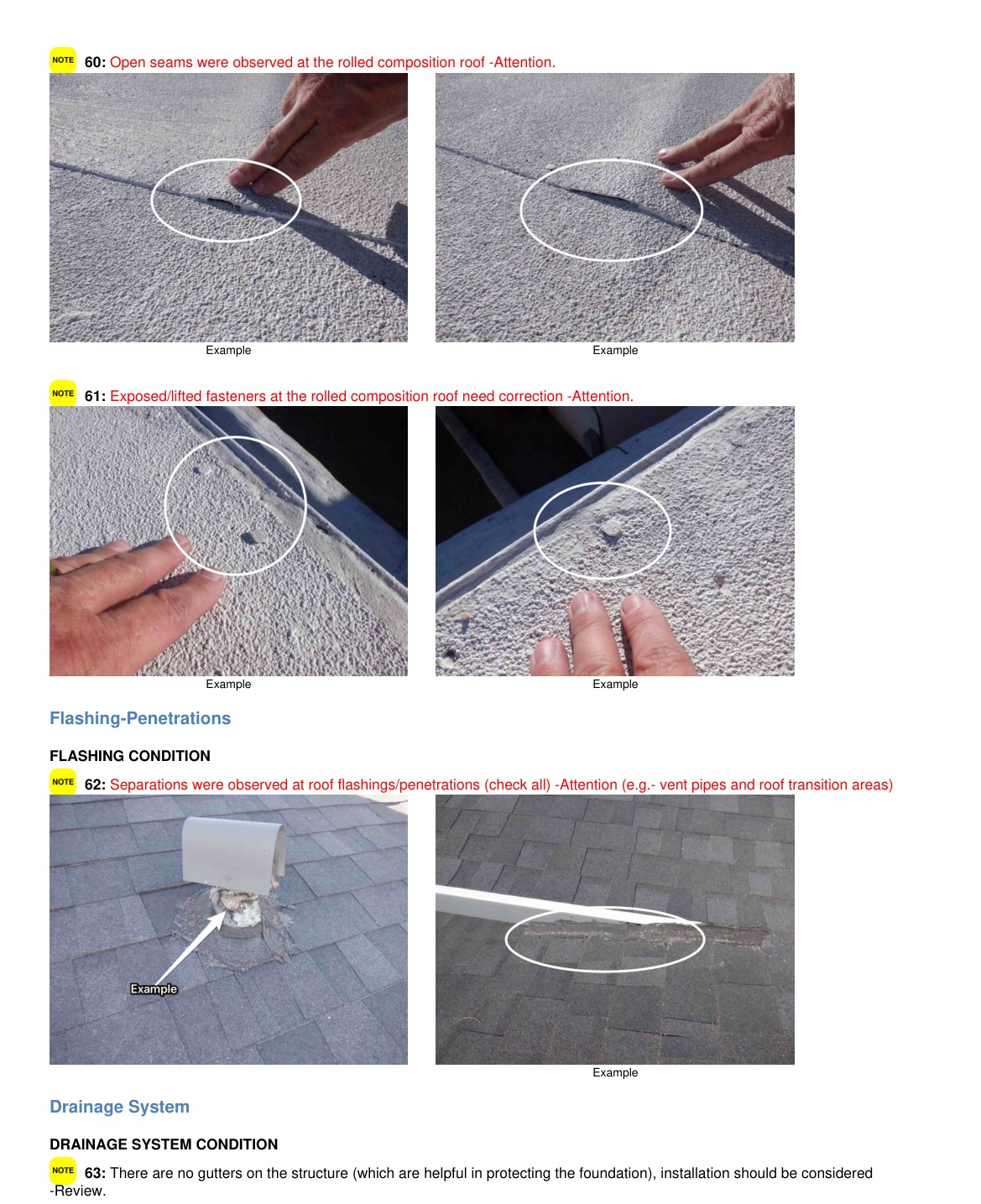
Consider a recent Valley transaction. The buyer's BINSR listed twenty-nine items, among them exterior outlets missing GFCI protection, open junction boxes with exposed wiring, hose bibs without anti-siphon fittings, missing smoke and carbon monoxide detectors, attic insulation below standard, and porch-ceiling cracks. One item on the list carried real weight: the rolled-roof seams were separating. That ratio is typical. Most of an inspection list is minor, and one or two findings determine whether a deal holds together. For that reason, the priorities below matter more than the length of any list.
Address repairs in order of consequence. The first tier is the set of items that can derail financing: unpermitted work, bedrooms that do not meet code, and roof conditions. In Arizona, insurers increasingly require a roof with documented remaining life, and without insurance there is no loan. The second tier is the inexpensive work that changes a buyer's impression, foremost a house-wide neutral repaint over bold personal colors, which returns more per dollar than anything else on a typical list. The third tier is the visible problems a buyer registers in the first minute of a showing. One practical note on that repaint: over a saturated red or a deep navy, budget for a stain-blocking primer coat plus two topcoats. A single coat over a bold color bleeds through and reads worse than no repaint at all.
What a seller should leave alone
The instinct to correct every flaw before listing usually works against a seller. An inspector will always find another crack, so repairing all of them only invites the buyer to request the next set. The appropriate number of repairs depends on the market. In a strong seller's market, buyers are reluctant to make demands during closing, and fewer repairs are required to stay competitive. Direct the repair budget toward the items that threaten financing or a first impression, and allow the small cosmetic findings to stand. A flawless inspection report is neither achievable nor necessary.
Which Phoenix inspection findings are routine
Several findings appear on nearly every Valley inspection report and do not indicate that a home has fallen behind its competition:
- A note that the air conditioner will likely need replacement soon. Phoenix systems run five to six months a year in temperatures above 110 degrees, and Valley inspectors and HVAC technicians commonly cite an eight-to-twelve-year service life as a result. A working unit near that age is normal for this market, not a defect.
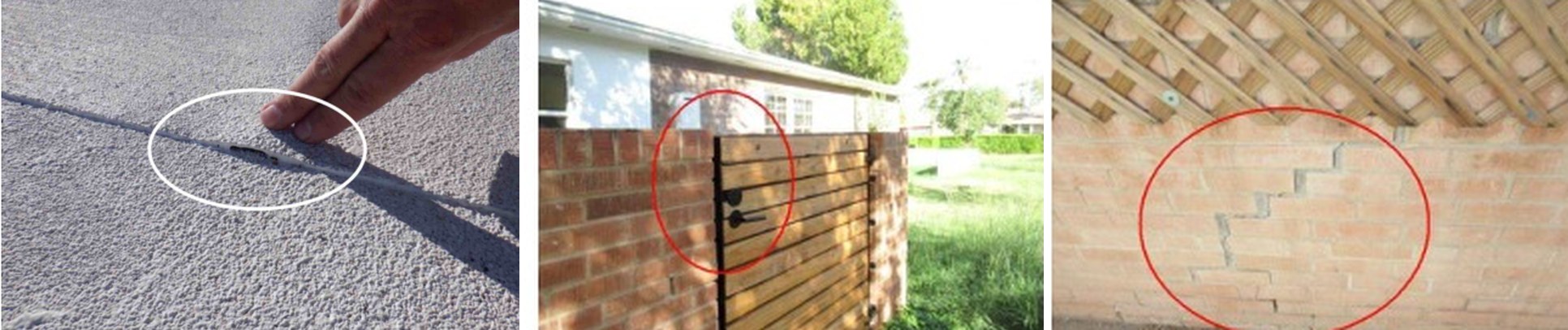
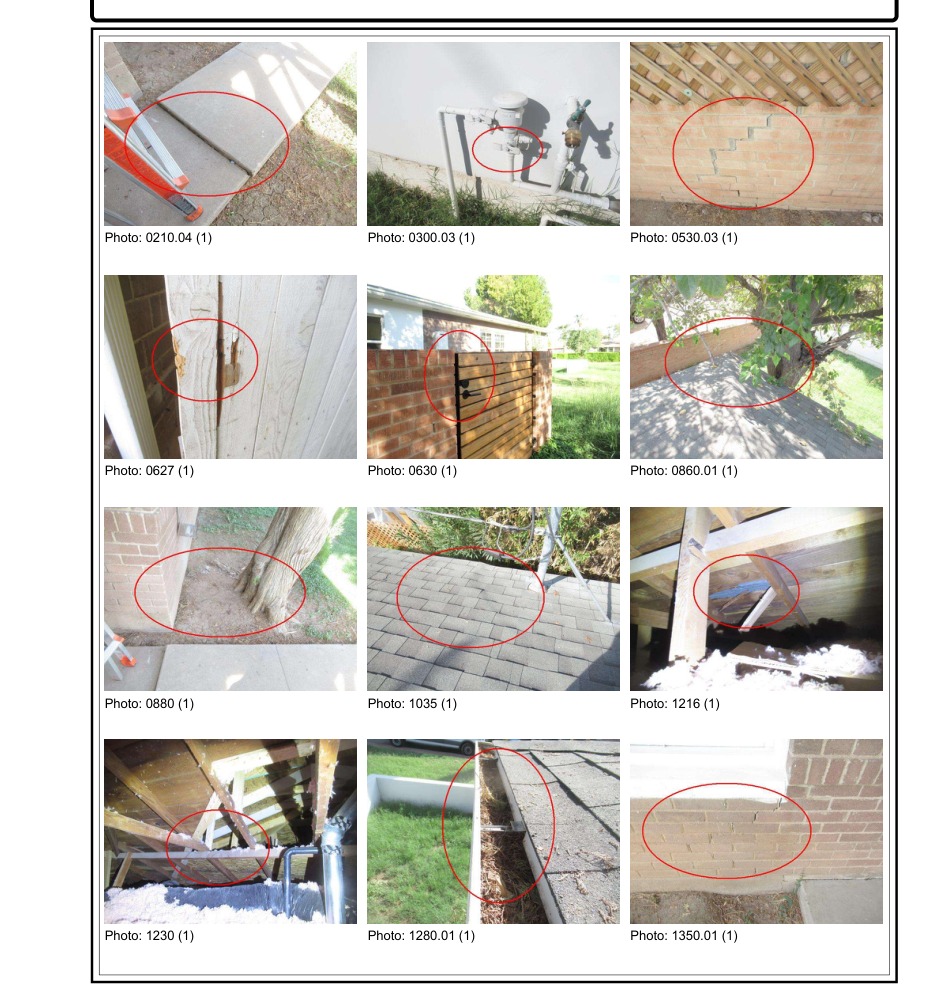
- Slab foundation cracks in post-war neighborhoods. Hairline shrinkage cracks are cosmetic and nearly universal. The crack that warrants a structural review is one with vertical displacement, or one that telegraphs up through the flooring, either of which can indicate soil movement.
- Signs of prior termite activity. Subterranean termite pressure is high across the Valley, so evidence of past treatment appears on a large share of homes. It ceases to matter once the seller produces a termite clearance, formally the Wood-Destroying Insect Inspection Report, along with a transferable treatment warranty from a licensed pest-control company.
Roofs deserve a specific note. In Arizona, the common finding is failed or brittle underlayment, the felt beneath the tile, rather than a problem with the tile itself. The accurate description is that the tiles are sound while the underlayment has reached the end of its service life, and the underlayment is the component insurers care about.
Buyer's choice: a repair or a credit
When you are the buyer, the more useful question than what to request is how to request it. Most items fall into one of three categories:
- Clear, fixed-scope work such as painting. Take a credit and hire your own contractor. A seller has every incentive to choose the least expensive, most cosmetic option, and a credit lets you control the quality of the result.
- Open-ended work with potential scope creep, such as opening a wall to trace a leak. Have the seller complete the repair, but require photographs of the process so the remediation can be verified.
- Work you would prefer to defer and save toward. Take a credit.
One caveat belongs here. Seller-paid credits are limited by your loan program. Conventional, FHA, and VA loans each set caps, and both the lender and the appraiser must approve them, so in some cases a straight price reduction is cleaner than a repair credit. Confirm what fits your financing with your lender or agent.
What common BINSR repairs cost in Phoenix
The following ranges are meant to calibrate a negotiation. Every figure is scope-dependent and should be confirmed with an actual quote.
| Common BINSR item | Typical Phoenix range | Notes |
|---|---|---|
| House-wide neutral repaint (pre-listing) | $4,000–$8,000+ | Roughly 1,800 sq ft, two coats; saturated colors add a primer coat |
| Drywall crack or hole repair with texture match | $150–$400 | Per typical patch. See live drywall pricing |
| GFCI outlets, junction boxes, smoke and CO detectors | Low hundreds | A classic punch-list batch, priced as a single visit |
| Tile-roof underlayment repair | Quote after photos | Licensed-roofer scope; usually the underlayment, not the tile |
| AC replacement (if you take on the end-of-life flag) | $6,000–$12,000+ | Licensed HVAC scope; like-for-like swaps land lower |
Using a contractor's quote in the negotiation
A step many buyers overlook is bringing a written contractor's quote to the negotiation. A quote from a contractor you trust lets the work be completed to a known standard before you move in, using the weeks while the lender processes the loan. A seller may ask for several quotes and negotiate toward the lowest, which is a normal part of the process, so bring the company you most trust to do the work. It is also worth requesting the transfer of any existing warranties on the roof, air conditioning, termite treatment, and appliances. This is the point at which a general contractor is most useful. As a licensed Class B contractor, we can take an entire BINSR list, handle the paint, drywall, doors, and general repairs directly, and coordinate our licensed HVAC, plumbing, and roofing partners for the items that require them. Send photographs of your inspection findings and we will prepare a quote you can bring to the table.
How to prioritize repair requests
Leverage is finite, so spend it deliberately. A buyer who requests twenty repairs often finds the seller agreeing to every small, inexpensive item while quietly declining the two that carry real cost, which means the small victories amount to very little. Concentrate the request on the items that matter: the roof, the mechanical systems, and anything structural. Plan to handle the minor cosmetic work yourself after closing, and include the warranty transfers in the request. In most negotiations, a small number of well-chosen requests will serve a buyer better than a long list of easy ones.
What else is worth doing while the trades are on site?
Both sides of a BINSR create the same opportunity. A seller assembling a pre-listing repair crew, and a buyer scheduling work in the weeks before move-in, each has the expensive part already arranged: a licensed contractor mobilized and on the property. That is the least costly moment to address a home's remaining smaller needs, because the setup, the trip, and the coordination are already paid for. Work added this way is commonly priced twenty-five to fifty percent below what it would cost as a separate visit, provided it is negotiated at the outset.
For a seller preparing to list, the natural additions are the improvements that lift a first impression: extending the neutral repaint to the remaining rooms while the painter is already on site, and clearing the accumulated small repairs a buyer's inspector would otherwise catalog, which a single handyman and repair visit can absorb. For a buyer taking possession, the same window is the efficient time to complete the work you were already planning, whether that is a bathroom remodel or a kitchen update, before furniture arrives and the house is occupied. In either case, group the work into one scope and ask for the combined price before the first item is approved. A contractor already committed to the property is at their most willing to take on more.
Working through a repair list?
Whether you are a seller preparing to list or a buyer negotiating repairs, send photographs of the inspection items and we will prepare a clear, honest quote you can use, then complete the punch list before move-in. Free estimate, licensed Arizona contractor, ROC #365090.
Get a Repair Quote