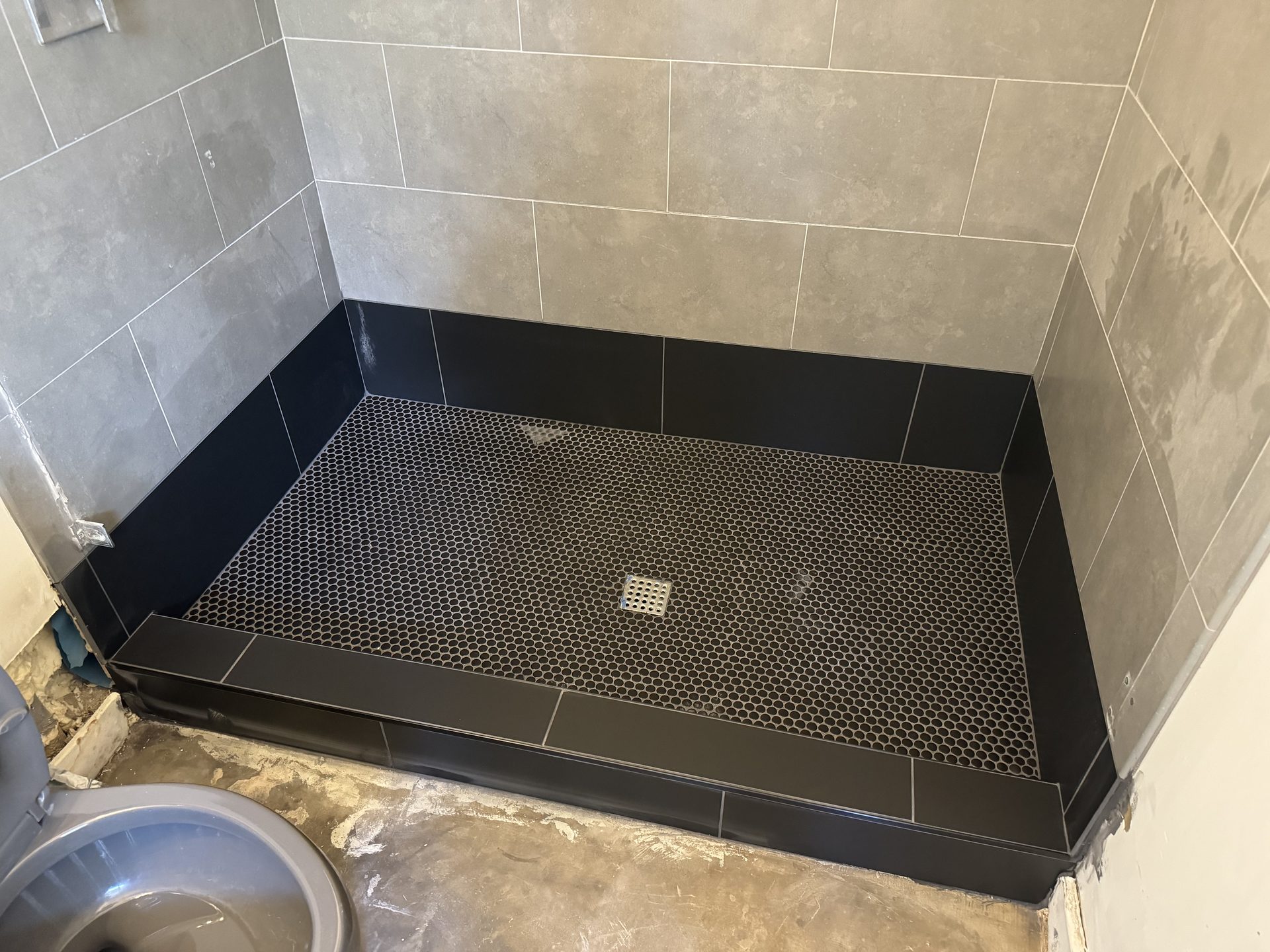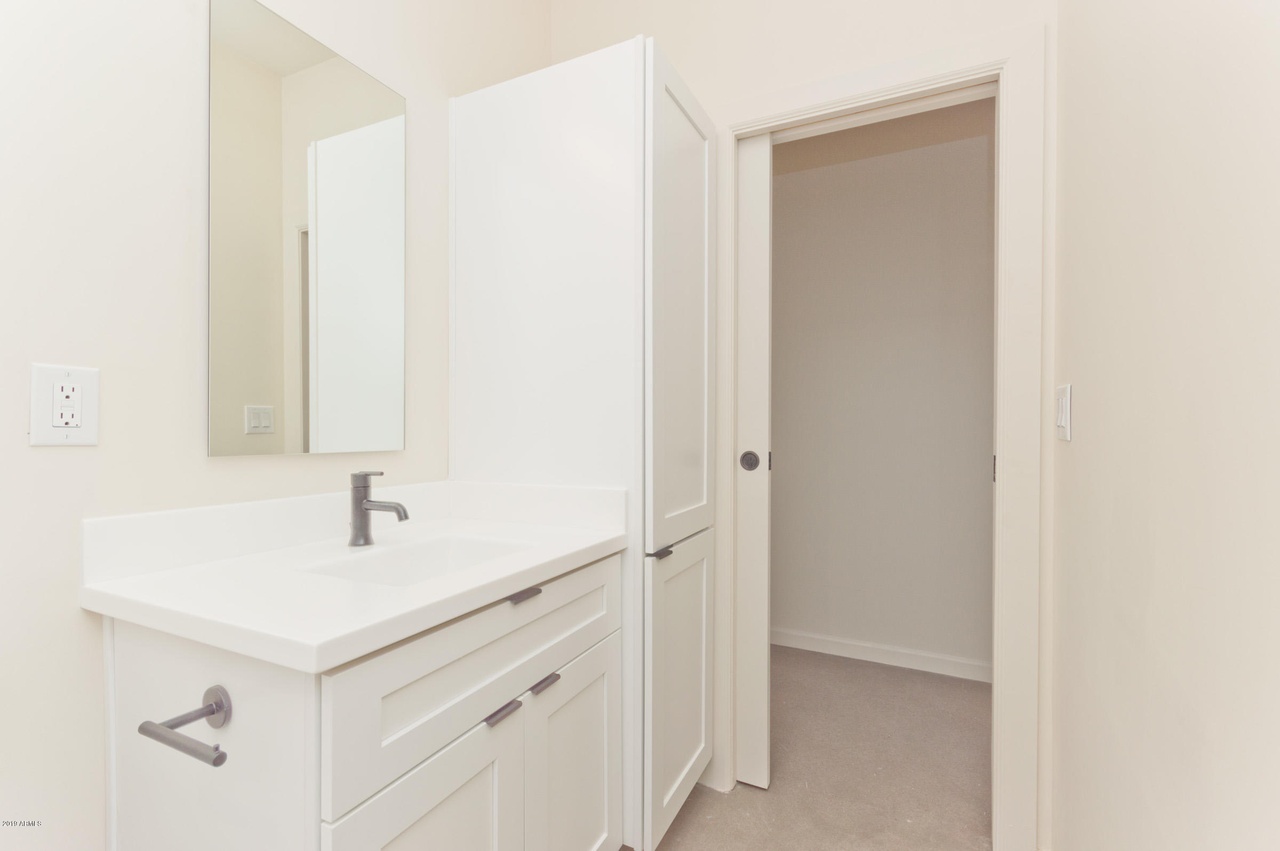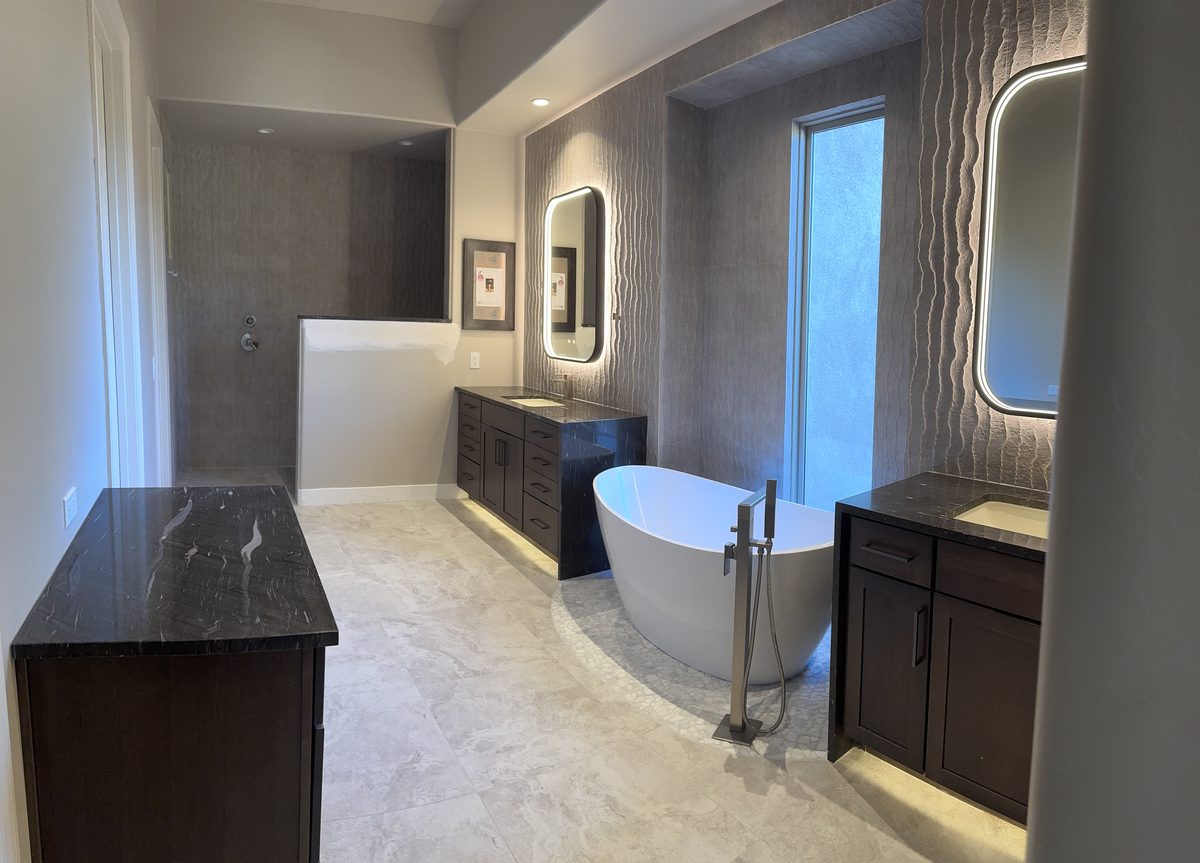
Most bathroom remodels in the Phoenix metro land between $8,000 and $20,000. A cosmetic refresh that keeps the existing layout can come in under $8,000. A full primary suite with relocated plumbing, custom cabinetry and tile to the ceiling runs $25,000 to $60,000 and up. The single biggest thing that moves your number in a Phoenix home is whether the drain has to move — because here, that means cutting concrete.
Bathroom Remodel Cost by Scope
These are 2026 Phoenix-market ranges for licensed, insured work, materials and labor combined. They assume a standard 5′×8′ hall bath unless noted.
| Scope | Typical cost | What that buys |
|---|---|---|
| Cosmetic refresh | $4,000–$8,000 | Paint, new vanity top or vanity, mirror, light fixture, toilet, faucets and hardware. Existing tile, tub and layout all stay. |
| Standard hall bath | $8,000–$20,000 | New tub or shower with new tile and waterproofing, new vanity and top, new floor, new fixtures and lighting, drywall and paint. Same footprint, same drain locations. |
| Primary suite remodel | $25,000–$45,000 | Walk-in or curbless shower, double vanity, tile to the ceiling, frameless glass, dedicated lighting and exhaust, upgraded valves. |
| Full gut with layout change | $45,000–$60,000+ | Everything above plus relocated plumbing, framing changes, drawings, permit and inspections. This is the tier where the slab gets opened. |
A Real Phoenix Bathroom, Line by Line
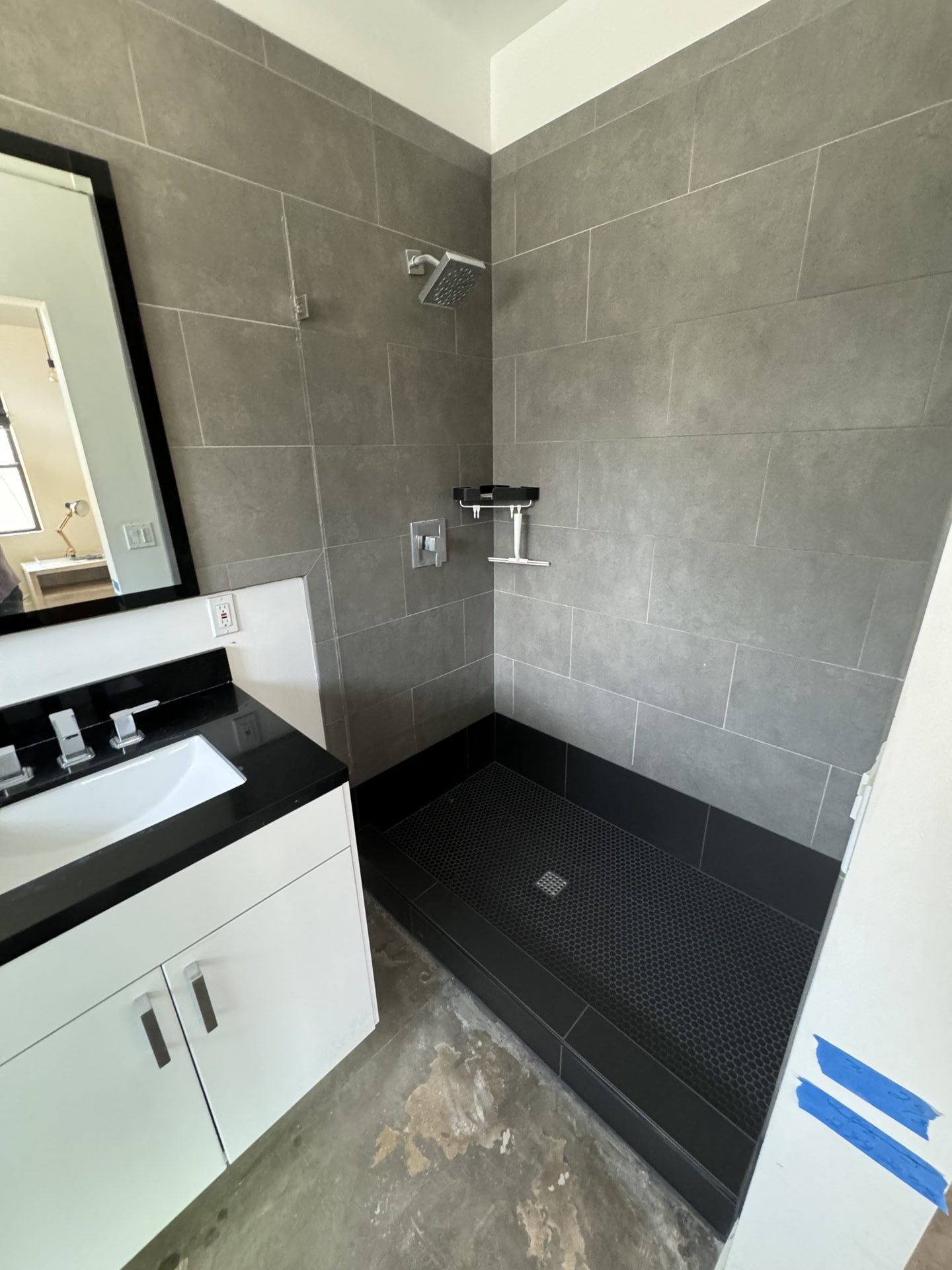
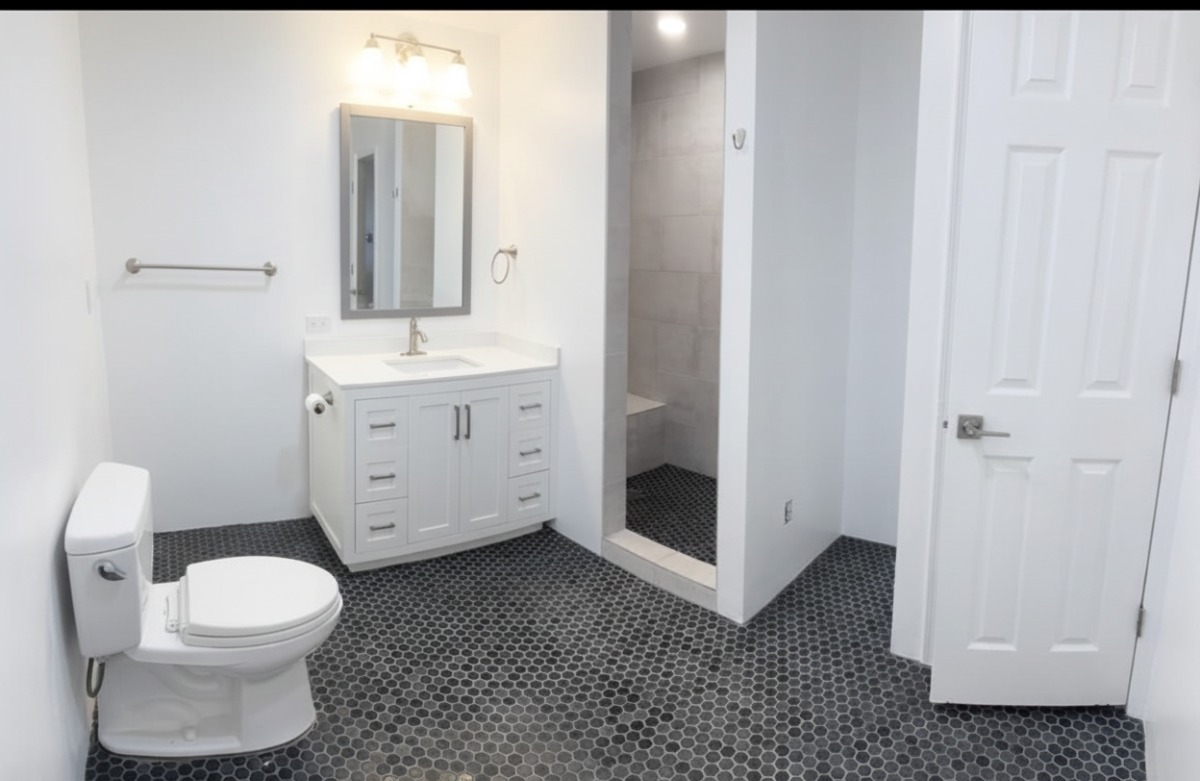
Scope ranges are useful for budgeting and useless for understanding where money actually goes. Below is the real line-item breakdown from one of our accessibility bathroom builds in Phoenix. It is a large, fully accessible primary bath with a roll-in curbless shower, so the total is well above a typical remodel — but the shape of the estimate is the same one you should expect on any job, and the individual line items are our real numbers.
| Line item | Cost | Notes |
|---|---|---|
| Site protection, demolition & disposal | $1,850 | Floor and door protection, tear-out, dumpster and haul-off. |
| Framing modifications + structural blocking | $2,750 | Wall changes plus plywood backing behind every future grab bar. |
| Plumbing rough-in + relocation | $5,500 | Licensed CR-37 sub. This is the line that grows when fixtures move. |
| Electrical | $2,200 | Licensed sub: circuits, lighting, exhaust, GFCI. |
| Drywall + cement board | $2,600 | DensShield in wet areas, texture matched to the rest of the house. |
| Tile installation labor | $6,800 | Floor, shower walls and a linear drain. Labor only. |
| Shower system + frameless glass enclosure | $4,100 | Curbless pan assembly and glass. |
| Door widening + new door | $1,000 | Framing, door, casing and hardware. |
| Fixtures supplied by Norem | $9,750 | Twelve items at cost ($8,478) plus 15% materials markup. |
| Fixture installation | $2,400 | Setting all twelve. |
| Paint | $800 | Primer plus two coats. |
| Final clean + walk-through | $400 | |
| Stamped construction drawings | $3,000 | Residential designer. |
| City of Phoenix permit + plan review | $1,200 | |
| Norem-supplied build materials | $5,500 | Drywall, cement board, paint, tile at $8/sf, fasteners, hardware. |
| Contingency reserve | $7,000 | About 11.5% of contract, held against what we find once walls are open. |
Two things worth pulling out of that table. Plumbing and tile labor together were $12,300 — roughly a fifth of the job, and both are trades where cutting the price means cutting the quality of something you cannot see once it is closed up. And the contingency was a named line, not a hidden cushion. If a bid you receive has no contingency anywhere, it is not that there are no surprises; it is that the surprises will arrive later as change orders.
Why the Slab Decides Your Budget
Almost every Phoenix-area home is slab-on-grade. There is no basement and no crawlspace, so your drain lines are cast into the concrete under your feet. That one fact drives more of your bathroom budget than any finish selection.
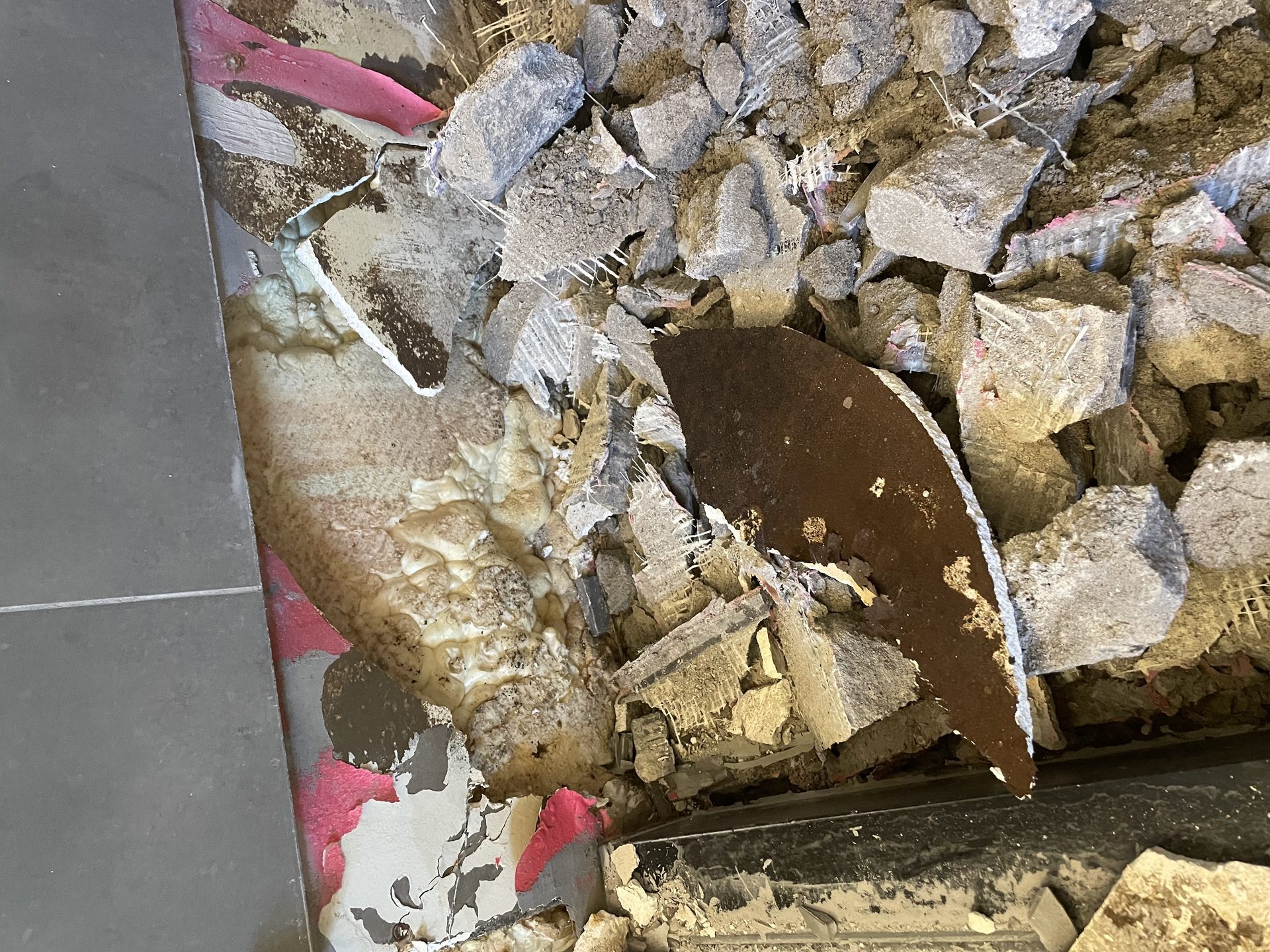
- Keeping fixtures where they are is the biggest single cost lever you have. A new tub, new tile and a new vanity in the existing footprint is a straightforward job. Moving the toilet three feet means saw-cutting the slab, jackhammering a trench, re-running drain with correct fall, inspection, then patching the concrete back.
- Post-tension slabs change the answer. Common in Valley construction from roughly the 1980s on, they carry steel cables under tension. You cannot cut one without locating cables first, and hitting one is a serious, expensive failure. This is a scan-first situation, not a rent-a-saw situation.
- Older homes hide their own surprises. Central Phoenix housing from the 1950s through the 1970s often still has galvanized supply and cast iron drain. While the wall is already open, replacing a run is cheap. Two years later it is a demolition project. Ask your contractor to look and to tell you what they found.
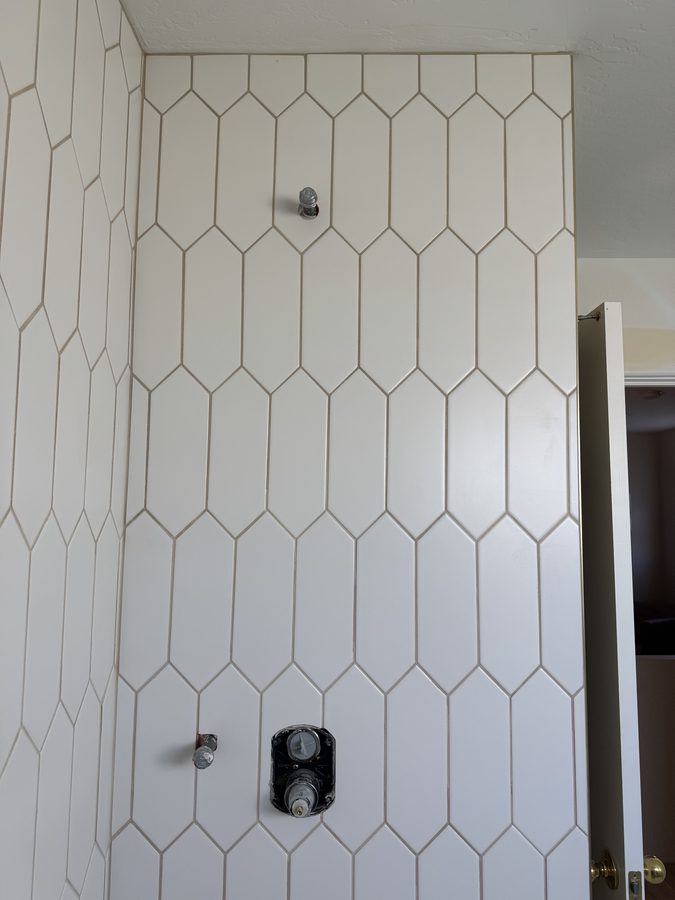
- Hard water is not a cosmetic issue here. Valley water destroys cheap cartridges and etches glass. Spending up on the valve body — the part buried in the wall — is one of the few upgrades that is genuinely cheaper now than later.
The Costs People Forget to Budget
These are the items that turn an $12,000 estimate into a $16,000 invoice, and none of them are anyone behaving badly. They are just easy to leave off a first pass.
- Frameless glass, $1,200–$1,800. Measured and ordered after the tile is set, so it lands late in the job and often after the budget conversation is over.
- Texture matching. Phoenix is knockdown country. Blending new drywall into existing texture across a whole wall is skill work, and a bad match is the thing guests notice first.
- Exhaust. Many older Valley baths vent into the attic or nowhere at all. Correcting it while the ceiling is open is inexpensive and prevents a mold problem.
- Demolition of what is already there. On our recent Peoria vanity project, removing two vanities, two mirrors, a medicine cabinet and two light fixtures — and hauling it — was $2,000 on its own before a single new thing went in.
- Exploratory work. On that same job we quoted $300 to cut and patch one exploratory hole behind the vanity, specifically to find out whether a recessed medicine cabinet was even possible before anyone ordered one. Cheap answer, expensive assumption.
What Should Be in a Written Quote
You cannot compare two bathroom bids that are each a single number. Ask for the estimate broken out the way the table above is broken out, and specifically ask for these five things.
- A line per trade, not one lump sum. Demo, framing, plumbing, electrical, drywall, tile, paint, fixtures, cleanup.
- Who supplies the fixtures and at what markup. We supply at cost plus 15% and show you the cost. If you would rather buy your own, that is fine — but then the warranty and the replacement trip when something arrives damaged are yours.
- Allowance versus fixed price on every material line. An allowance is a placeholder. If your tile allowance is $4/sf and you fall in love with $12/sf tile, that difference is real and it is yours.
- A draw schedule tied to milestones, not to dates. Ours run 25% at rough-in complete, 30% at drywall and tile, 30% at fixtures set, 15% retained until final inspection and walk-through.
- Who pulls the permit. It should say a name.
When a Permit Is Required in Phoenix
Replacing a fixture in the same location is generally a like-for-like swap and does not require a permit. You cross into permit territory once you move plumbing or electrical, change framing, or alter the room’s footprint. On the accessibility build above, the City of Phoenix permit and plan review came to $1,200, and the stamped drawings the city wanted to see were another $3,000. Neither is optional once the work triggers them, and both take calendar time — plan review is usually the longest single wait in the whole project.
How Long It Takes
- Cosmetic refresh: three to five working days.
- Standard hall bath, same layout: two to three weeks, most of which is waiting on tile, waterproofing cure and glass.
- Primary suite: three to five weeks.
- Full gut with a permit: six to ten weeks door to door, and plan review is the variable, not the construction.
Where to Save Without Cutting Corners
There is a real difference between saving money and deferring a failure. These four save money.
- Keep the layout. Worth thousands, costs you nothing you can see.
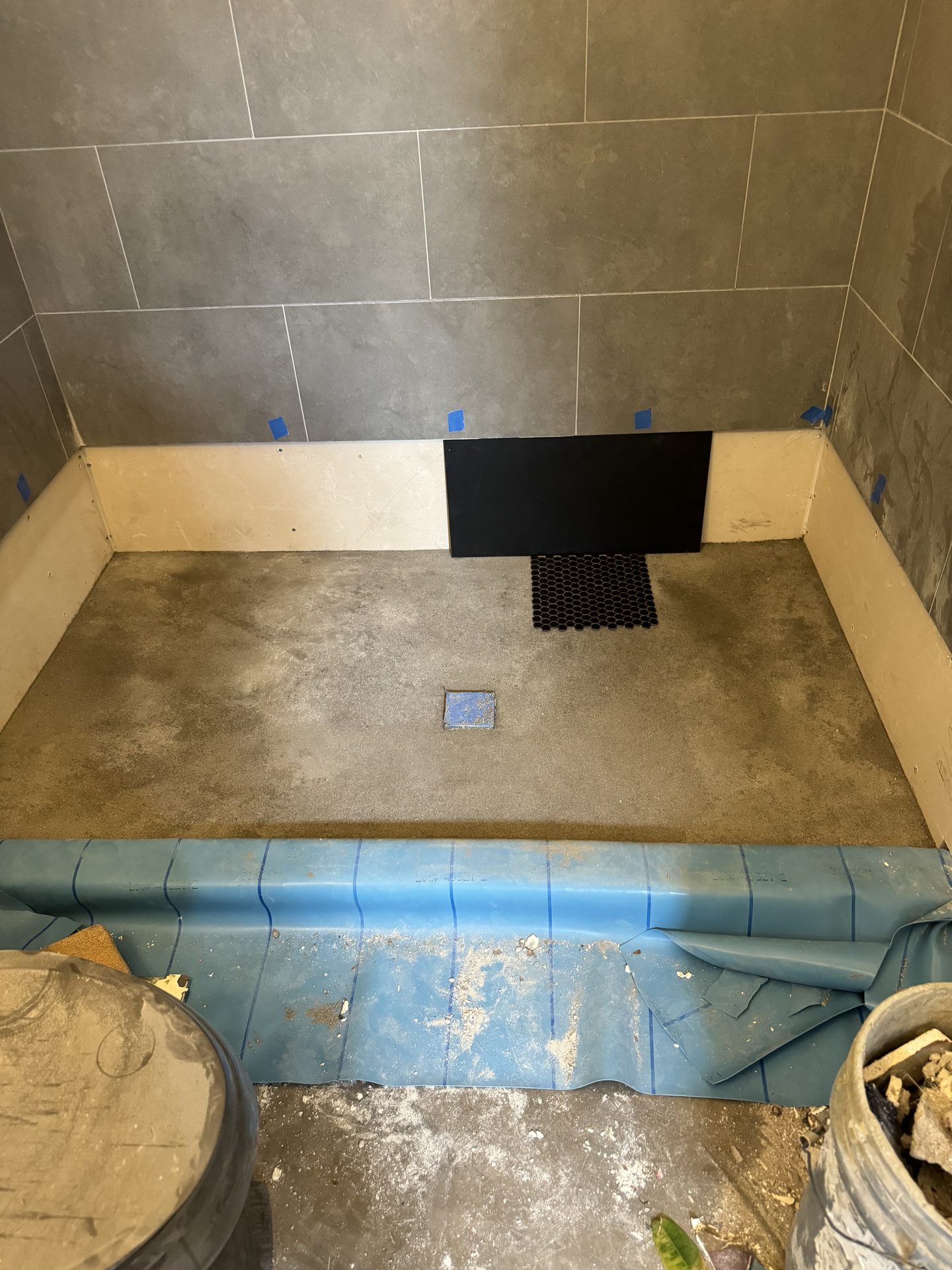
- Rebuild the pan instead of gutting the shower. If your wall tile is sound and the problem is at the floor, a pan and bottom-row rebuild runs $2,500–$4,500 against $6,000–$12,000+ for a full tear-out and re-tile. We can often cut a clean line and save the upper tile — see how we did exactly that on a Phoenix shower.
- Stay with stock sizes. A 60″ vanity off the shelf and a custom 60″ vanity do the same job. Custom cabinetry on our Peoria project was $9,500 for two vanities, and it was the right call there because the space demanded it — but it is the line to examine first.
- Phase it. Do the wet work now and the cabinetry next year. Doing it in the other order means tearing out new cabinets.
And four places not to save: waterproofing, the valve body, the exhaust fan, and the subfloor or substrate prep. All four are buried, all four are cheap now and expensive later, and all four are where a low bid usually found its savings.
Hiring a Licensed Contractor in Arizona
Under A.R.S. §32-1121, an unlicensed handyman cannot legally take any job over $1,000 in combined labor and materials. Essentially every real bathroom remodel clears that in the first afternoon. If someone is bidding your bathroom without a license, you have no ROC recourse, no bond and no recovery fund if it goes wrong — and a homeowner-pulled permit puts the liability on you, not on them. We are ROC #365090, a Class B General Residential license, and we pull permits in our own name.
Common Questions About Bathroom Remodel Cost in Phoenix
How much does a small bathroom remodel cost in Phoenix?
A small hall or guest bath that keeps its existing layout typically runs $8,000 to $14,000 for licensed work in the 2026 Phoenix market, covering a new tub or shower with new tile and waterproofing, a new vanity and top, flooring, fixtures and paint. A purely cosmetic refresh that reuses the tub and tile can come in between $4,000 and $8,000. The number climbs once any fixture moves, because the drain lines are cast into the slab.
Why does moving the toilet or shower drain cost so much?
Phoenix homes are slab-on-grade, so there is no basement or crawlspace to run new drain through. Relocating a fixture means saw-cutting the concrete floor, jackhammering a trench, re-running drain at the correct fall, passing inspection, then patching the slab and re-doing the finish floor over it. On post-tension slabs, common in Valley homes built after about 1980, the cables have to be located before anything is cut. Keeping fixtures in place is the single largest cost lever a homeowner controls.
Is it cheaper to rebuild the shower pan or gut the whole shower?
Rebuilding the pan is substantially cheaper when the wall tile is still sound. Pan and bottom-row rebuilds run about $2,500 to $4,500, against $6,000 to $12,000 and up for a full gut and re-tile. We can often cut a clean horizontal line, rebuild the pan with modern bonded waterproofing, and lap the new membrane behind the existing upper tile. The honest risk is cracking the course just above the cut and matching the bottom row.
Do I need a licensed contractor for a bathroom remodel in Arizona?
For practical purposes, yes. Under A.R.S. 32-1121 an unlicensed handyman cannot legally take work over $1,000 in combined labor and materials, and virtually every bathroom remodel passes that immediately. Using a licensed contractor also means the permit is pulled in their name rather than yours, and you have ROC recourse, bonding and the recovery fund behind you if something goes wrong.
How much should I hold back for surprises?
Ten to fifteen percent of the contract is a realistic contingency on a bathroom, and more on a house built before 1980. On a recent Phoenix build we carried a named $7,000 contingency on a $60,850 contract, about 11.5%. Bathrooms are where hidden water damage, failed galvanized supply lines and out-of-code wiring turn up, and none of it is visible when the estimate is written.
If you want a real number for your bathroom rather than a range, we will come look at it, tell you what we would keep and what we would replace, and put it in writing line by line. You can also read more about our bathroom remodeling work or the specific shower pan and leak repair we do most often.
Get a Real Number for Your Bathroom
Free, no-pressure estimate anywhere in the Phoenix metro, itemized by trade so you can compare it against anyone else’s.
Get a Free Estimate