Cove lighting is the upgrade people notice without being able to name. They walk into a room, say it feels finished, and could not tell you why. It is also the one lighting job where the light itself is the cheap part. What separates a cove that looks original to the house from a strip of tape light stuck on a shelf is carpentry, drywall and a wall switch.
Why a Room Lit From Above Has Dark Corners
Recessed cans point straight down. That is what they are for, and for a countertop or a walkway it is exactly right. The trouble is what they do not light. A downlight puts a pool on the floor and leaves the ceiling plane above it dark, and it leaves the line where the wall meets the ceiling darker still.
Stand in a room lit only by cans at night and you can see it. The floor is bright, the middle of the room is fine, and the upper corners fall away into gloom. Lighting designers call it the cave effect, because that is what the eye reads: a bright floor under a dark lid. It makes a ceiling feel lower than it is and a room feel smaller than it measures.
Cove lighting solves it from the other direction. Hide a source in a ledge, aim it up, and the ceiling itself becomes the fixture. The whole plane lifts to an even brightness, the corner where the wall dies into the ceiling is lit rather than lost, and the shadows that were stacked in the upper corners stop being there. The room reads taller. Nothing was moved and no wall came out.
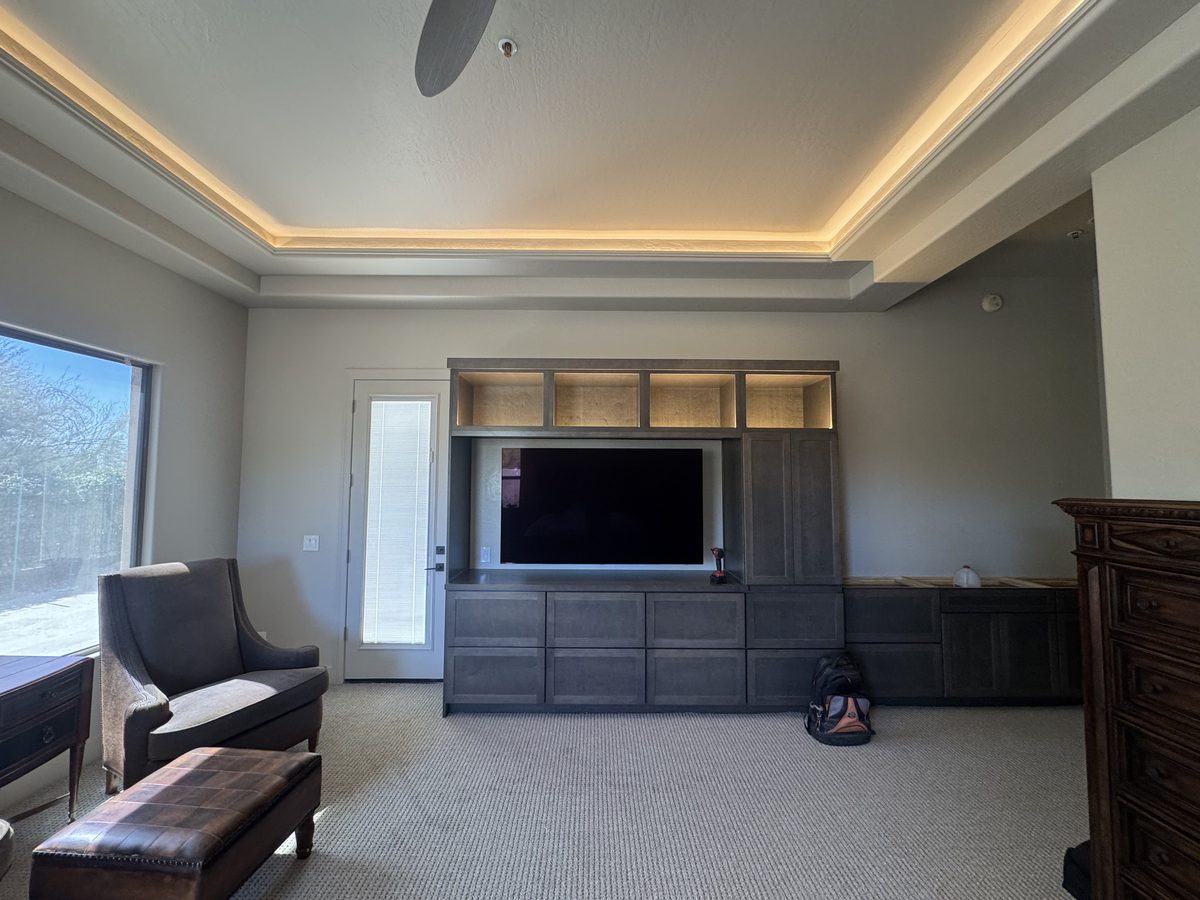
It works best as a layer rather than a replacement. Cans still do the task lighting. The cove does the ambient fill and takes the hard edge off the room in the evening. Both on dimmers, and one room covers everything from cleaning up to sitting down. There is more of that work in the North Scottsdale lighting job and in our project gallery.
Two Rooms Where It Earns Its Keep
Cove lighting reads as a luxury detail, so it usually gets proposed for great rooms and primary suites. Two smaller rooms benefit more, and for reasons that have nothing to do with looking expensive.
A nursery
An infant on their back spends a great deal of time looking straight up. A recessed can over the crib puts a bright source directly in that line of sight, which is a strange thing to build on purpose once you think about it. Cove lighting has no point source to look into. It bounces off the ceiling and arrives soft from every direction.
The practical win is the night feed. Dimmed to the bottom of its range, a cove gives you enough light to see what you are doing at two in the morning without flooding the room the way an overhead does, and without the phone-torch routine. Nothing hangs above the crib either, which is worth something on its own.
A bathroom
Bathrooms are the worst-lit rooms in most houses, and the reason is that the light nearly always comes from above and slightly in front. That angle drops shadows into your eye sockets and under your chin, which is why people think they look tired in their own bathroom and fine everywhere else.
A cove fills those shadows. Light coming off the whole ceiling arrives from a wide enough spread that nothing on a face gets left dark, and it lets you keep the vanity light doing its job instead of asking one fixture to do everything. Dimmed down it also gives you a bathroom you can walk into at night without being blinded.
One rule specific to bathrooms: the strip, and more importantly the driver, have to be rated for the location they end up in. A bathroom is a damp location, and a cove inside a wet area is a different conversation again. That is a specification question, not a shopping question, and it is part of why the room matters as much as the product.
Why Tape Light on a Shelf Never Looks Built In
Anyone can buy an LED strip, peel the backing and stick it above a cabinet. It costs very little and it never once looks like part of the house. Three things give it away, and all three are construction problems rather than product problems.
You can see the source. The whole idea of a cove is that the light appears and the fixture does not. That only happens if the lip in front of the strip is tall enough to hide it from every place a person actually stands or sits. Get that wrong by an inch and someone on the sofa is looking straight at a row of diodes.
You can see the dots. Set a strip too close to the ceiling and it does not wash anything. It throws a hard bright stripe a few inches wide with scallops in it, and you can count the individual diodes in the pattern. The strip has to stand off the ceiling far enough for the beams to overlap and even out before they land. That distance is a dimension in a detail somebody drew, not a thing you fix afterward.
You can see the cord. A wall wart in an outlet, a white cable down the wall, a little inline switch. Everything above it can be perfect and the cord still announces that this was added.
Solving all three means building something: a ledge or a shallow soffit, framed, drywalled, taped, textured to match what is already on the ceiling, primed and painted. At that point it has stopped being an accessory and become part of the room, which is why it reads as one.
The Switch Is the Tell
If you want one detail that separates integrated lighting from stuck-on lighting, it is how the thing turns on.
A strip that came with a remote is telling on itself. So is one that needs a phone. It means the strip is plugged into a receptacle, because no switch leg was ever run to it, and everyone in the house has to learn a second way to turn on a light. The remote goes missing. The app wants an update. Guests stand in the doorway hitting the wall switch and nothing happens.
Hardwired, the cove is fed from a switched circuit like any other fixture. It comes on with the wall switch, it sits on the same dimmer as the rest of the room, and it lands in the same gang box so there is one place to control the light. Nobody has to be told how it works. That is the whole difference, and it is invisible in a photograph, which is exactly why it gets skipped.
Two things have to line up for it to behave. The driver has to be a dimmable one, and the dimmer has to be compatible with it. Mismatch them and the low end of the range flickers, buzzes, or drops out completely, which is the failure people blame on LED in general when it is really a pairing problem. We set the dimming up room by room and check it at the bottom of the range rather than only at full, since that is where the problems show. Where a job needs a new switch leg or a new circuit to make that work, that goes through our licensed electrical subcontractor on the same contract, permitted and inspected where required.
Four Trades, and the Order They Have to Go In
A cove is a small job that touches a surprising number of trades. That is the real argument for putting one contractor over it rather than assembling it yourself.
- Carpentry and framing. The ledge or soffit gets built, level and straight, sized so the strip is hidden and set off the ceiling correctly. This is where the finished look is decided.
- Electrical. Switch leg, driver location, low-voltage feed to the strip. The driver has to end up somewhere it can be reached later, because it is the part most likely to need replacing.
- Drywall. Hanging and finishing the new detail, then matching the existing texture. Knockdown is the Phoenix default and it has to blend, or you get a clean new band of something slightly different running around the room.
- Paint. Prime and paint, including inside the cove. Ceiling color and sheen change the result more than people expect, since the ceiling is now doing the work of a lampshade.
The sequence is the part that goes wrong when trades are hired separately. Rough electrical has to be in before the drywall closes the cove. Build it, finish it, paint it, and then discover the feed was never run, and the only way in is back through the work you just paid to finish. On one contract that ordering is somebody's job. On four separate hires it is nobody's.
There is a legal line here too. In Arizona an unlicensed handyman cannot take a job over $1,000, or anything requiring a permit. A cove that involves framing, drywall and new electrical is past that. Norem is a licensed Class B contractor, ROC #365090, and the fixture and drywall work is self-performed with the licensed electrical sub folded into the same contract.
Thinking About a Cove in One Room?
Send us photos of the ceiling, tell us what the room is used for and whether it already has a tray or a soffit. We will tell you what the detail needs to be, whether a switch leg can reach it, and what the texture match involves. Free estimate, licensed Arizona contractor, ROC #365090.
Get a Free EstimateFrequently Asked Questions
What is cove lighting?
A light source hidden inside a ledge, tray or soffit that throws light up onto the ceiling instead of down into the room. You see the glow on the ceiling and never see the source. Almost all of it now is LED strip on a dimmable driver. The point is indirect light: the ceiling becomes the fixture, which is why a room with cove lighting reads softer and taller than the same room lit by cans alone.
Does cove lighting need a dropped ceiling or a soffit?
It needs something to hide the strip behind, but that does not have to be a whole dropped ceiling. A tray ceiling already has the ledge built into it. A flat ceiling needs a detail added, which is usually a shallow soffit or a ledge built around the perimeter of the room, framed and drywalled in. The size of that detail is what decides whether the finished cove looks original to the house or looks added on later.
Can cove lighting be wired to a regular wall switch?
Yes, and it should be. LED strip runs on low voltage through a driver, and that driver can be fed from a switched circuit like any other fixture, so the cove comes on with the wall switch and dims on the same dimmer as the rest of the room. A remote or a phone app is what you get when the strip is plugged into a wall outlet because no switch leg was run. The pairing matters: the driver has to be a dimmable one matched to the dimmer, or the low end of the range flickers, buzzes or drops out entirely.
Is cove lighting a good idea in a nursery?
It is one of the better rooms for it. An infant on their back is looking straight up, so a recessed can over the crib puts a bright source directly in their line of sight. Cove lighting bounces off the ceiling instead, so there is no bright point to look into. Dimmed low it gives you enough light for a night feed or a change without waking the room up the way an overhead does, and nothing is mounted above the crib.
Why does cove lighting cost more than installing a light fixture?
Because it is construction rather than a fixture swap. A fixture goes on an existing box on existing wiring. A cove usually means framing a ledge or soffit, running a switch leg and low-voltage feed before the drywall closes, hanging and finishing that drywall, matching the existing texture, then priming and painting. The strip itself is one of the cheaper parts. What moves the number is whether the ledge already exists, how far the switch leg has to travel, and how hard the existing ceiling texture is to match. We look at the room and give a firm figure rather than guessing over the phone.
Do the Rest of the Ceiling While It Is Open
Building a cove puts an electrician, a drywall finisher, a painter and a ladder in one room for a set number of days. Every one of those is a mobilization you have already paid for. Anything else on that ceiling done in the same window comes in far under what it costs as its own visit, commonly 25 to 50 percent below standalone pricing, and the moment to ask is while the cove is being quoted rather than after the paint dries.
- Recessed cans, added or replaced. A cove is the ambient layer and cans are the task layer, so the room wants both anyway. Cutting them in while the ceiling is already being opened, patched and painted is the cheapest that work will ever be, and old cans can be swapped to LED retrofits at the same time.
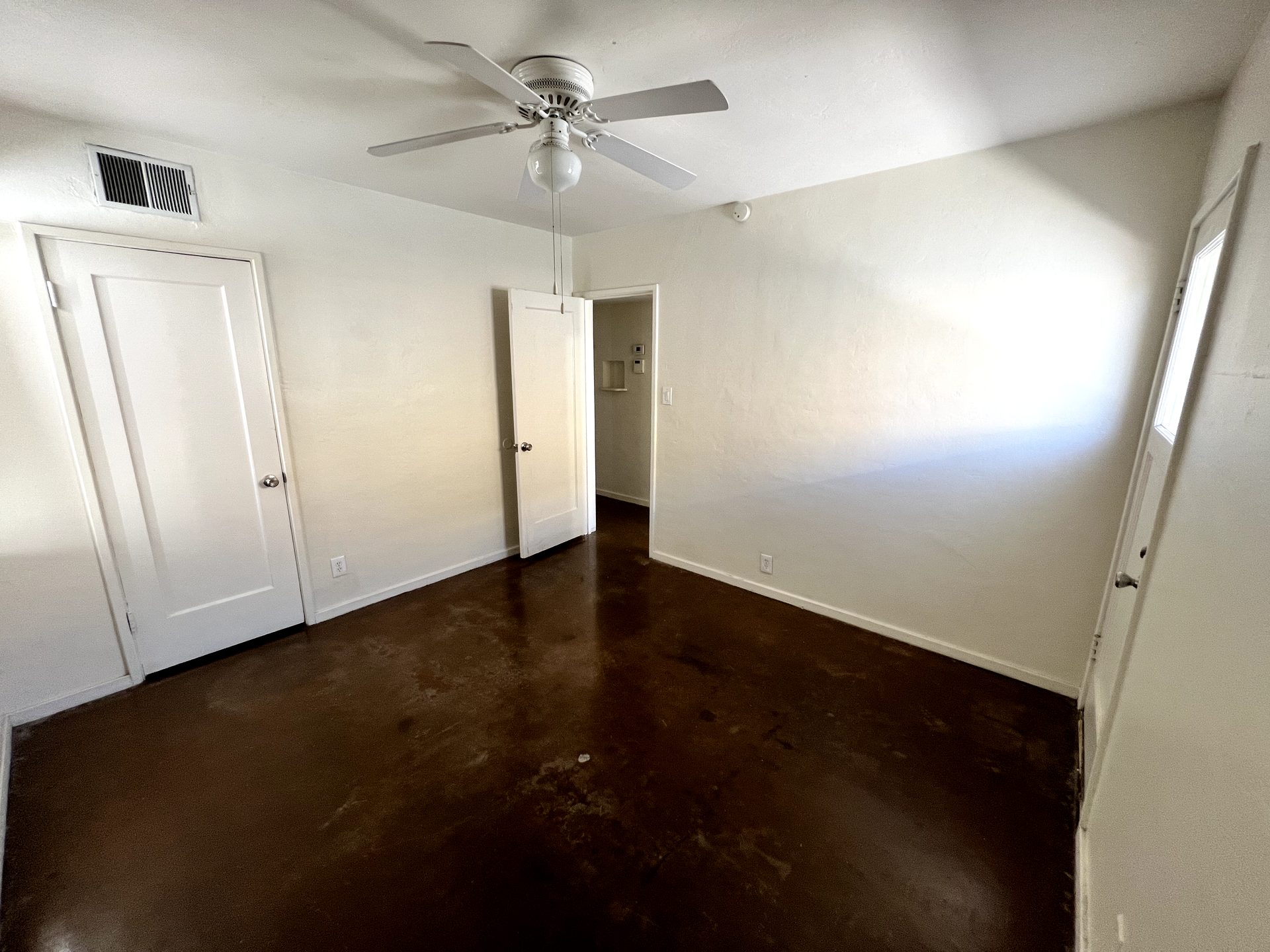
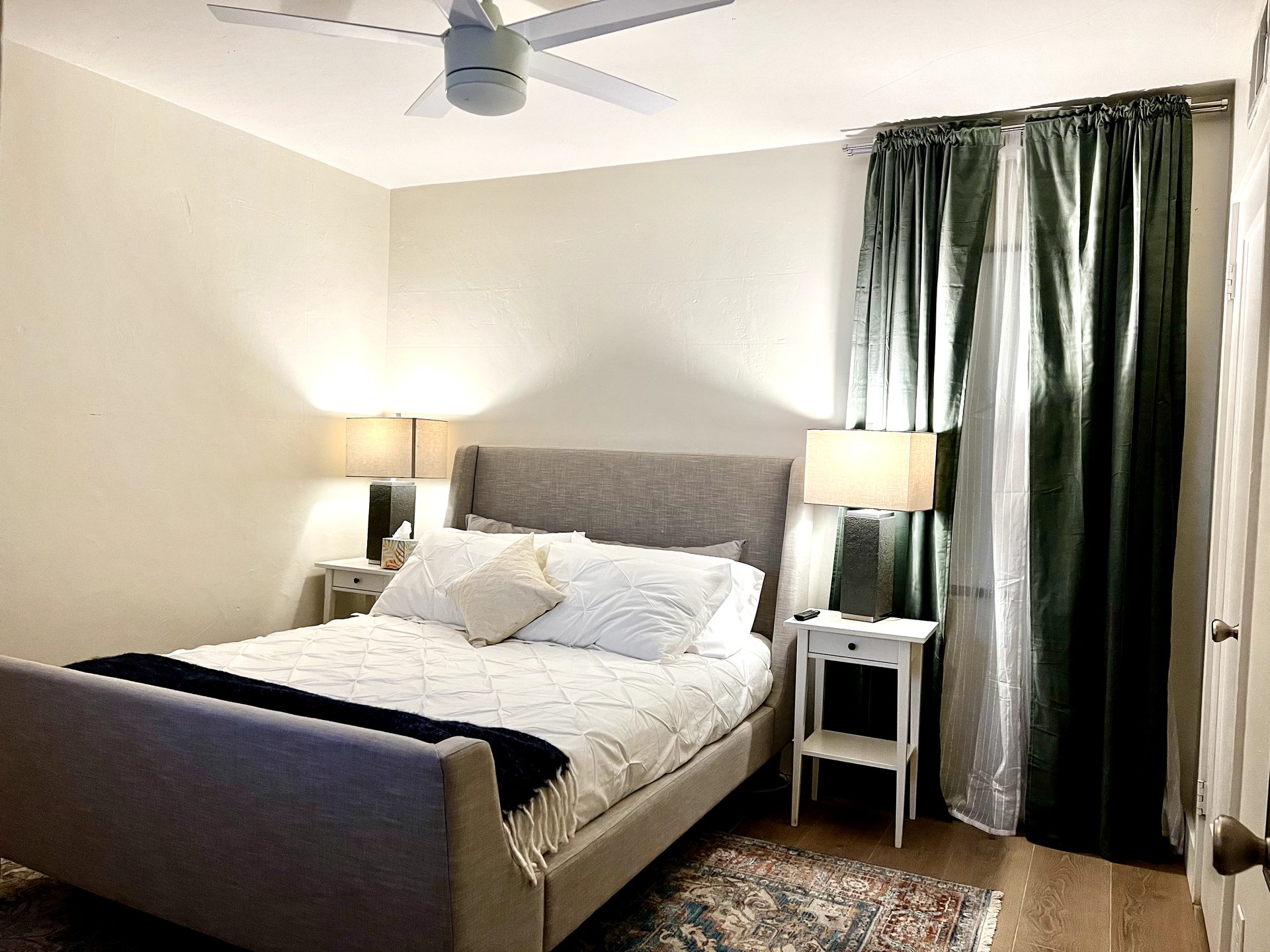
- The dated ceiling fan. Almost every Phoenix house has one, and it is usually the oldest-looking thing in the room. The ladder and the electrician are both already there. Details on our ceiling fan installation page.
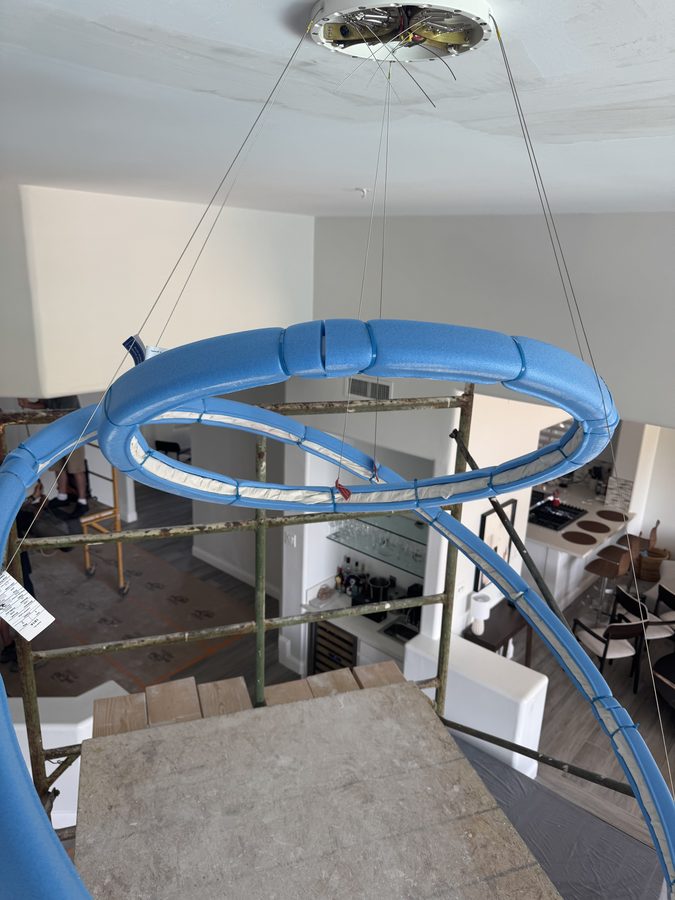
- The rest of the fixtures in the room. Flush mounts, sconces, a pendant over a reading chair. Same trades, same trip. See our light fixture installation work, and the chandelier we hung on rebuilt blocking for what a heavy one involves.
- Dimmers on everything in the room. A cove on a dimmer next to cans that are not is a half-finished control scheme. Doing the whole gang at once is minutes of extra work while the wall is open.
- Ceiling cracks, old anchor holes and past leak stains. They draw on the same mud, tape and sanding already in the house. See our drywall repair page.
- Repainting the room. The ceiling is getting painted regardless. Walls and baseboards in the same visit are mostly just material.
Ask for the bundled number before the work starts. Once the drywall is finished and the paint is dry, each of these turns back into its own trip with its own setup.