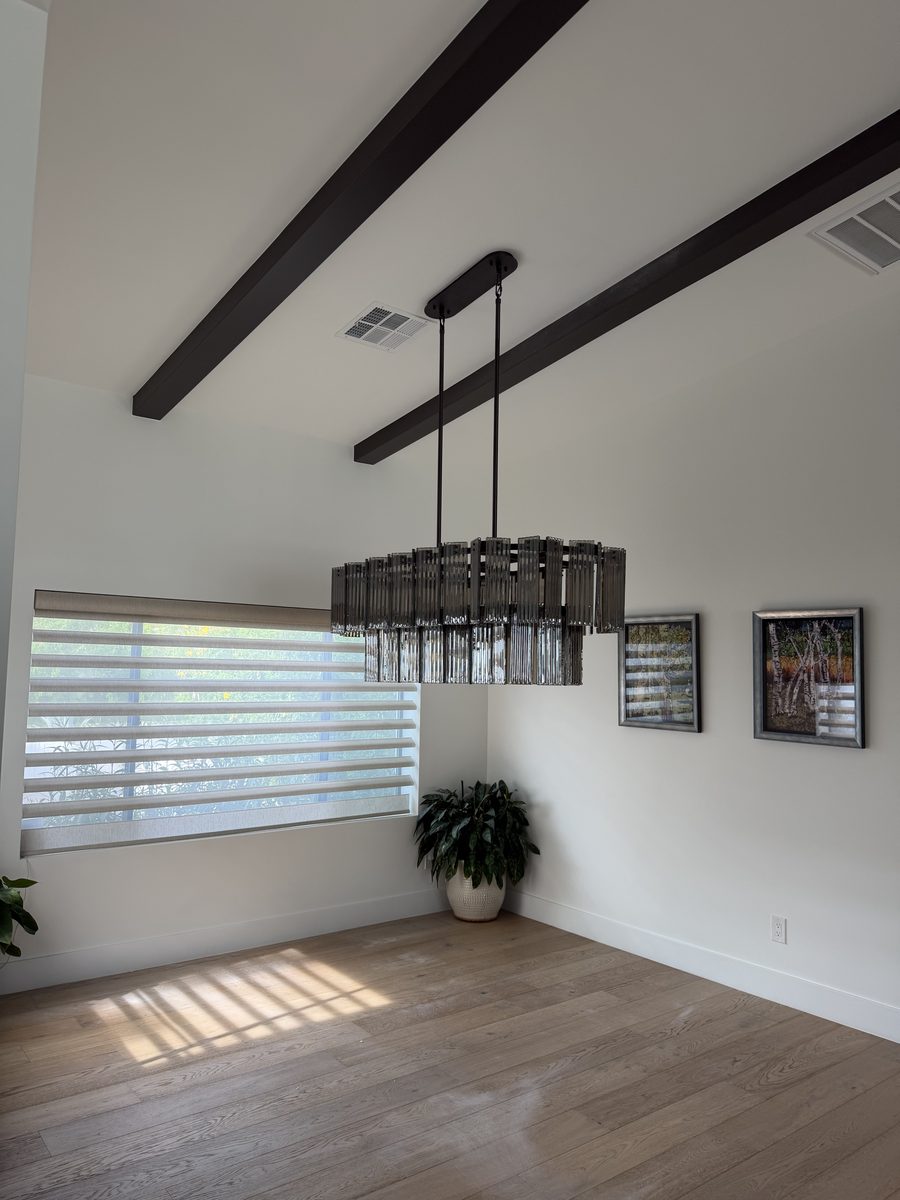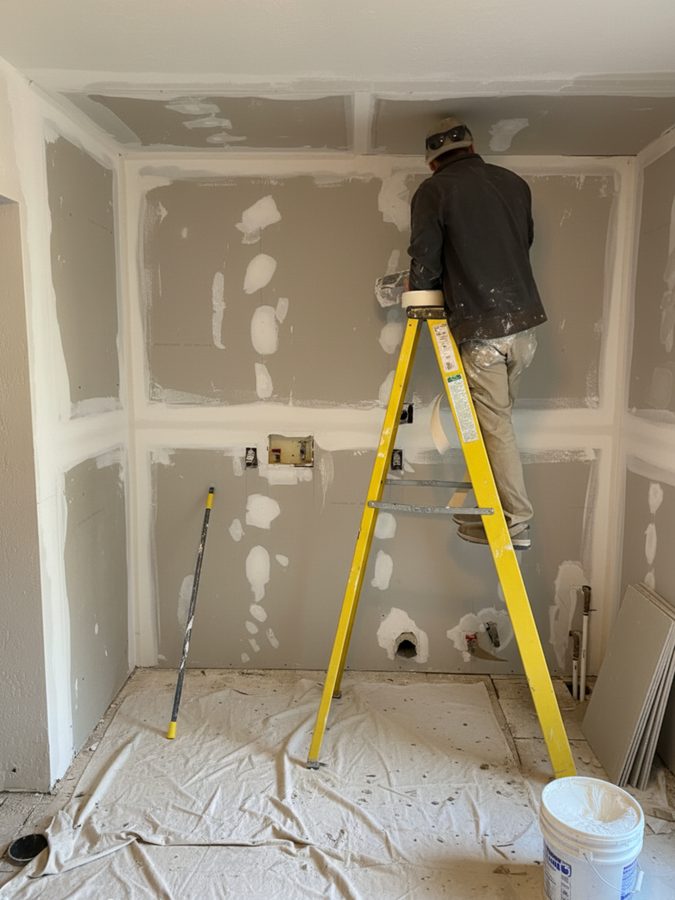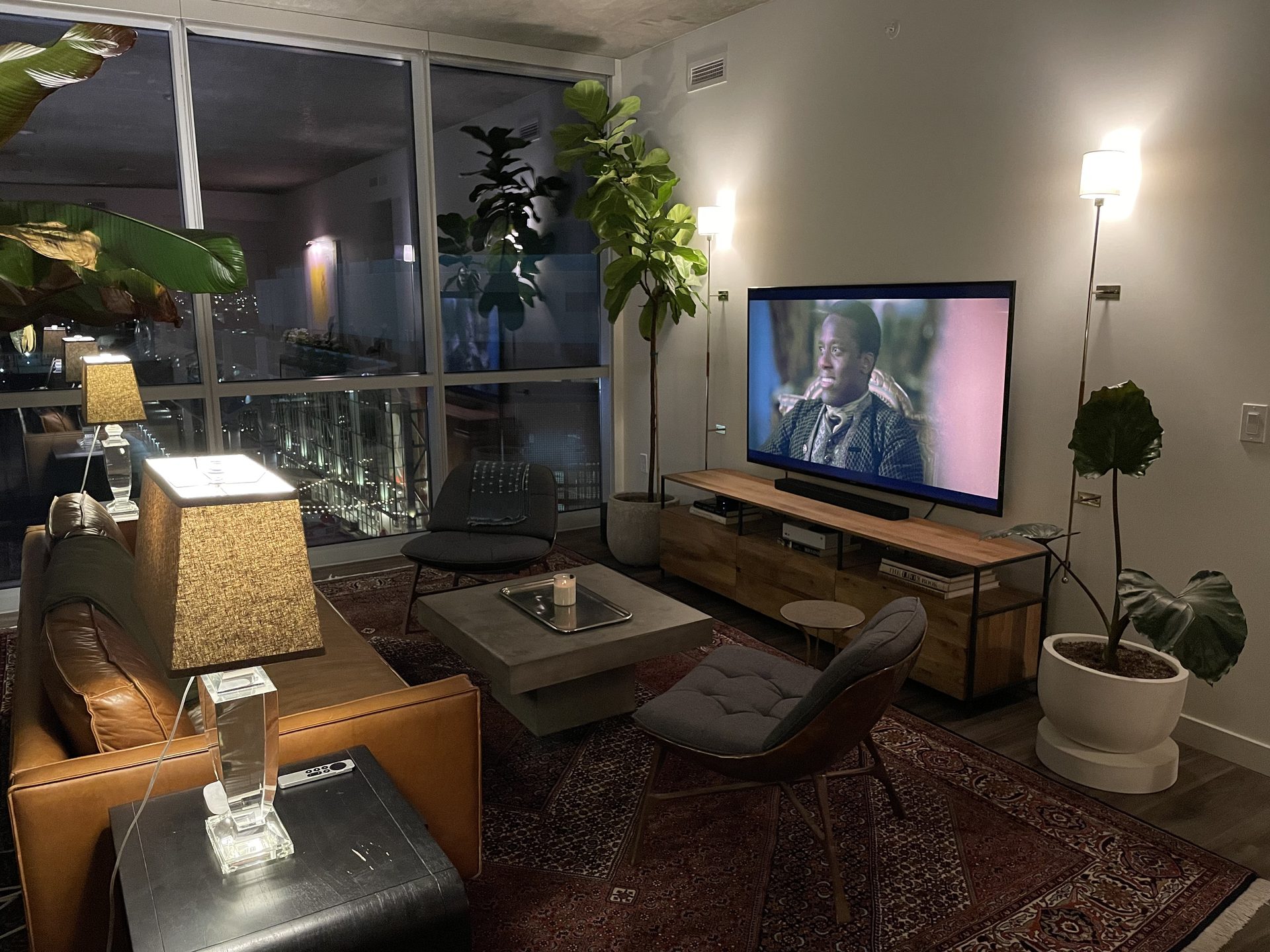
The homeowner in this downtown Phoenix condo already owned everything in these photographs. The TV, the canvas, the furniture sitting underneath all of it. Nothing was bought for the job. What we changed was where things landed on the wall, and that turned out to be most of the difference between a well furnished condo and one that looks finished.
Project at a Glance
- Area: downtown Phoenix
- Property: high-rise condo, exposed concrete ceilings, floor-to-ceiling glass
- Living room: TV wall-mounted over a long, low media console
- Kitchen and dining: large square canvas hung over a narrow console table
- Bedroom: art and lamps set against an existing mural wall
- Powder room: framed art hung on an existing papered wall
- Supplied by the homeowner: the TV, the art, the furniture
- What we brought: the layout, the heights and the installation
Height Is the Cheapest Decision Left in a Furnished Room
By the time we walk into a room like this one, every expensive decision has already been made. Somebody chose the sofa, paid for the television, picked the paper and had the rug delivered. The money is spent. The one variable still open is position, and position costs nothing to get right.
It costs a great deal to get wrong, though, because a room reads as a set of relationships rather than a set of objects. A frame six inches too high stops belonging to the console under it and starts floating on its own. A television at picture height turns an evening on the sofa into a neck exercise. Neither failure looks like a mounting problem to the person living with it. It just looks like the room never quite came together, and most people blame the furniture.
How high should you hang art?
The number people repeat is 57 inches, sometimes 60, measured from the floor to the center of the piece. It comes out of galleries and museums, where it approximates average standing eye level, and on a bare wall it works.
Living rooms are not galleries. The moment there is a console, a sofa or a headboard under the art, the floor stops being the reference and the furniture takes over. What the eye actually reads is the gap between the top of the furniture and the bottom of the frame. Six to eight inches is the range that looks intentional. Much more and the two objects come apart. Much less and the frame looks like it slipped.
The two rules collide often, and when they do the furniture wins. A tall console with a large canvas over it will put the center of that canvas well above 57 inches, and it will still be right. Nobody in the room is measuring off the floor.
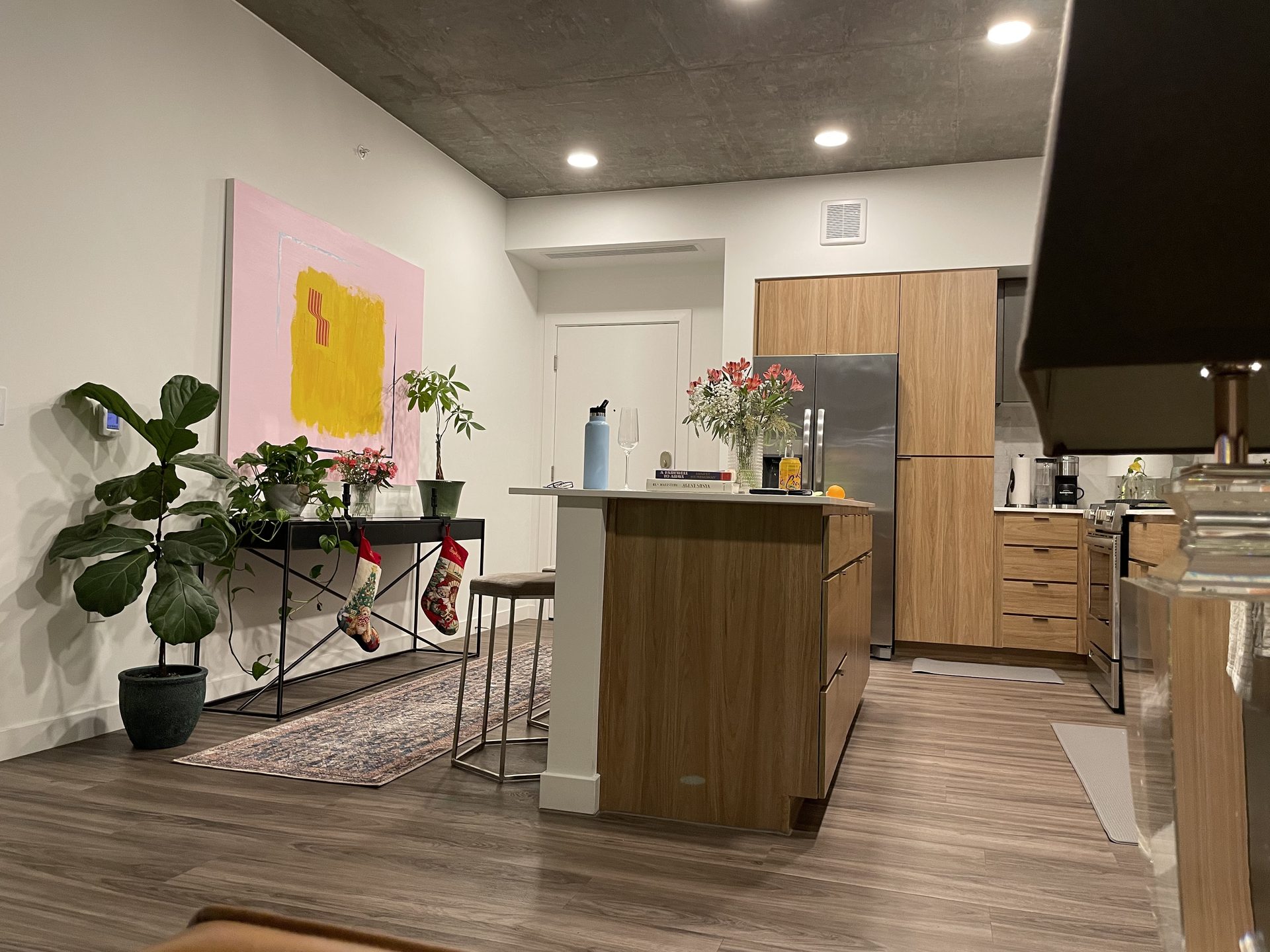
Scale is the other half of it. A piece should occupy somewhere around two thirds to three quarters of the furniture it sits over. Narrower than that and the wall swallows it. We would rather move a piece to a wall that suits it than hang something undersized in the spot the homeowner first pictured, and that conversation is worth having before anything is drilled.
How high should a TV be mounted?
Lower than almost anybody expects. The center of the screen wants to sit near seated eye level, which for a normal sofa lands somewhere around 40 to 45 inches off the floor. Measure it from the seat people actually use, because sofa heights vary and so does the distance back to the wall.
Then compare that to the 57 inches the art rule asks for. A 65-inch television is a little over 32 inches tall, so centering it at gallery height puts the top of the screen above 73 inches and the bottom around 41. You spend the evening with your chin up. That single confusion, treating a television as though it were a picture, is behind most of the badly mounted TVs we see, and the over-the-fireplace installation is its most common form.
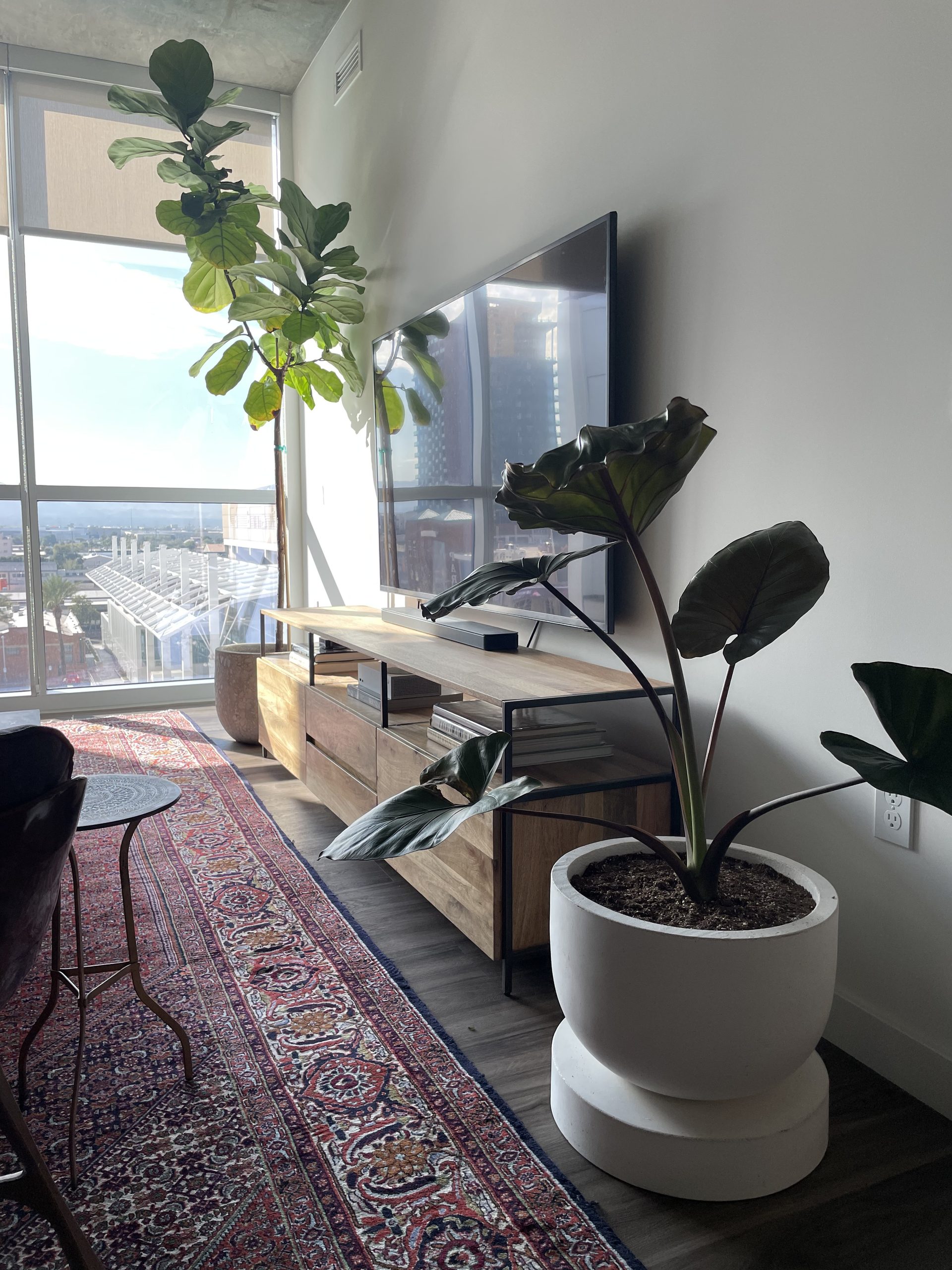
In this living room the screen sits low and close over the console, with the soundbar on the console top underneath it and nothing hanging down the wall between them. Two floor lamps flank it at a matched height, which keeps that wall reading as one composition rather than three separate objects.
Weight and wall are the part nobody sees. A downtown high-rise is not a tract house, and what is behind the drywall varies by building: metal studs in one, a concrete shear wall in the next, a shaft wall with very little in it after that. Each takes different anchors and holds a different load, and the hardware in the TV box assumes none of them. Identifying the wall comes before the drill, and it is worth knowing that many buildings put the demising walls between units off limits in their own rules whatever they are built from.
Hanging Art on a Papered Wall
Two rooms in this condo were already papered when we got there, a botanical mural behind the bed and a dark repeating pattern wrapping the powder room. Paper changes the mounting job in one specific way: it removes the second attempt. A hole in painted drywall fills, sands and disappears. A hole in the wrong place on a papered wall stays there, and on a mural there is no spare length to patch from.
So the measuring happens before anything is loaded. We lay it out, mark it, check it against the furniture and the room, and only then commit. On paper this thin the difference between careful and quick is permanent.

The powder room shows the other half of the problem. Hanging a frame over a busy repeat needs a decision about what the piece lines up with, and the answer is almost always the room rather than the pattern. Chase the diamonds and the picture ends up off center in a space far too small to absorb it. The gold frame here is centered on the wall and set at a height that works for someone standing at the sink, not at gallery height borrowed from a larger room.
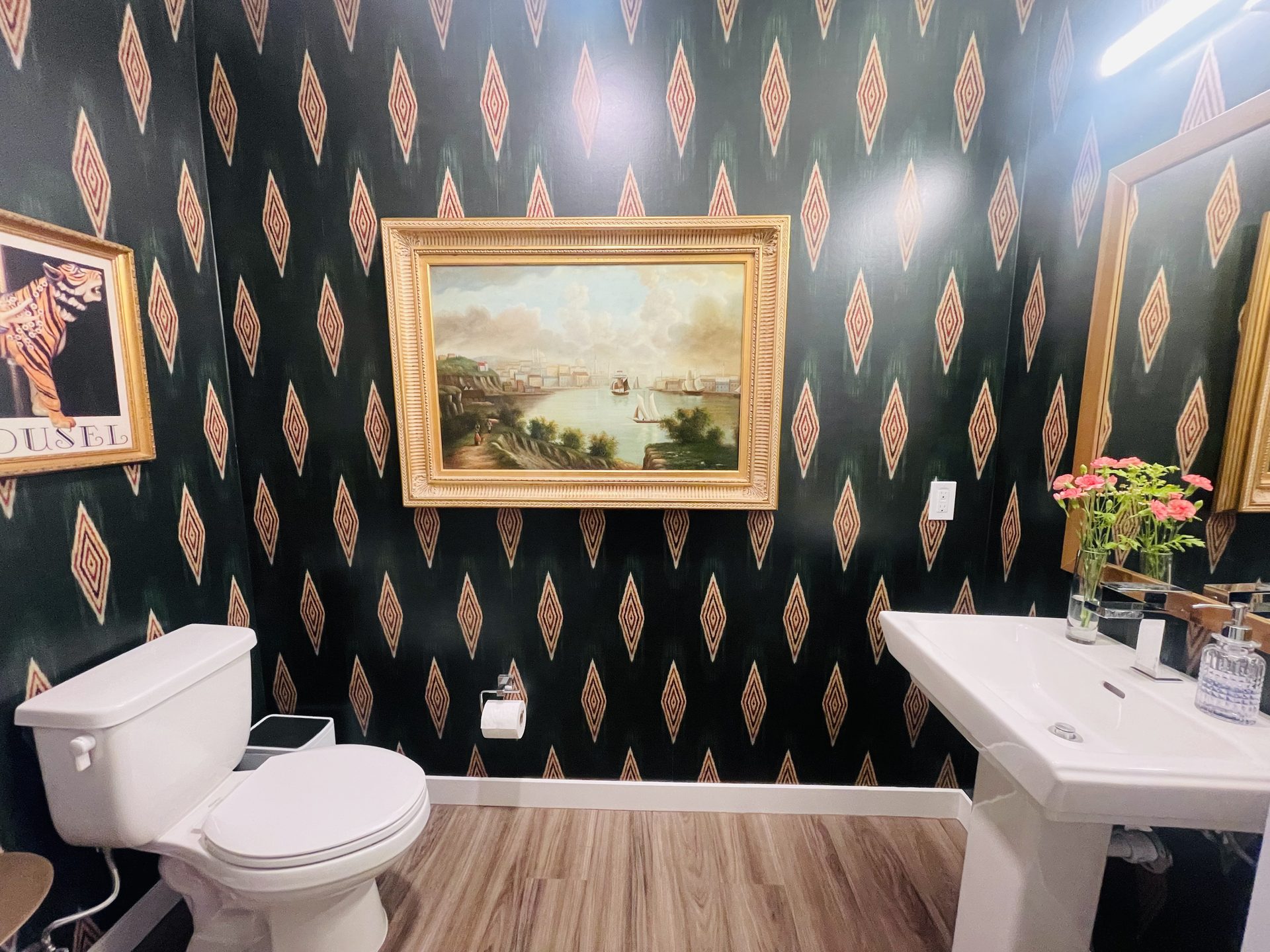
Small rooms are the unforgiving case generally. Every fixing is within arm's reach of somebody standing still with nothing else to look at, and anything crooked has a tiled edge or a door casing nearby to be crooked against. If a wall needs work before anything goes on it, that is drywall work and it belongs in the quote up front rather than discovered on the day.
Why Paying a Little Extra to Mount Things Properly Is a Smart Buy
Set the installation against what it is installing. The television and the art in this condo represent a serious spend, and the mounting is a small fraction on top of it. It is the fraction that decides whether the rest of it looks considered or looks like things ended up wherever the first anchor went in.
Compare it to the alternatives people reach for when a room feels unresolved. New furniture is thousands. Paint is a weekend and a mess. Reworking the layout means moving everything that is already paid for. Rehanging what is already on the wall, at the right height and in the right relationship to what sits under it, is the smallest intervention available, and in a furnished room it is usually the one that changes the most.
Bad mounting also fails in ways that cost money. A television that comes off a wall takes the drywall with it and lands on whatever is below. A dozen exploratory holes in a papered wall cannot be filled invisibly, and a frame set crooked over a repeat is obvious from the doorway. The cheap version of this work is only cheap while it holds.
The honest summary is that we do not price this off a chart. The wall construction, the weight, the number of pieces and whether anything needs patching first all move the number, so we look at the room and give a firm figure rather than guessing over the phone. More finish work is in our project gallery.
Have Things Leaning Against the Wall Waiting to Go Up?
Send us photos of the pieces and the walls they are going on, and tell us roughly what the furniture underneath measures. We will tell you what it takes to mount properly and what the wall is likely to need first. Free estimate, licensed Arizona contractor, ROC #365090.
Get a Free EstimateFrequently Asked Questions
How high should a TV be mounted on the wall?
Lower than most people mount it. Aim for the center of the screen to land near seated eye level, which for a standard sofa puts it somewhere around 40 to 45 inches off the floor. Measure from the seat you actually watch from rather than working off a rule, because sofa heights vary and so does the distance back to the wall. The common mistake is treating a TV like a picture and centering it at gallery height, which leaves you looking up all evening.
How high should you hang art above a couch or console?
On an empty wall the gallery convention is 57 to 60 inches from the floor to the center of the piece, which is roughly average standing eye level. Over furniture that rule stops being the one that matters. The art belongs to whatever sits under it, so leave six to eight inches between the top of the console or sofa back and the bottom of the frame. If the two rules disagree, follow the furniture. A frame floating high above a console reads as a mistake even to people who could not say why.
Can you mount a TV on any wall in a Phoenix high-rise condo?
Not on any wall, and not with the hardware that came in the box. Mid-rise and high-rise interiors are built differently from a tract house. Depending on the building you may be into metal studs, a concrete shear wall, or a shaft wall with almost nothing behind the board. Each one takes different anchors and carries a different load. The wall has to be identified before anything is drilled, and demising walls between units are often off limits in the building rules regardless of what they are made of.
Do I need a contractor to mount a TV, or can a handyman do it?
For a single TV on a wall that is already understood, a handyman is usually the right call and the cheaper one. The limit is legal rather than technical. In Arizona an unlicensed handyman cannot take any job over $1,000, or anything that needs a permit. A room full of mounting, or mounting bundled into patching and paint, passes that line quickly. Norem is a licensed Class B contractor, ROC #365090, so the whole list can sit on one contract.
Can you hang art on a wallpapered wall?
Yes, and it is worth having somebody careful do it. The difference from a painted wall is that there is no second attempt. A misplaced hole in drywall fills and disappears under touch-up paint. The same hole in wallpaper is permanent, and on a mural there is no spare length to patch from. So the measuring and the layout happen before anything is drilled, and the piece is centered on the room rather than on the pattern behind it.
What We'd Add on the Same Visit
A mounting day puts a level, a stud finder, patching materials and a person who is willing to move furniture into your home for a set number of hours. Almost none of that is specific to the piece you called about. Anything else on the same walls rides along for far less than it would cost as its own trip, commonly 25 to 50 percent under standalone pricing, and the time to ask is while we are quoting rather than on the day.
- The rest of the art, in every room. Most homes have pieces still leaning behind a door. Doing them in one pass means one set of heights, one consistent eye line through the house, and one round of patching. That falls under our handyman work.
- Curtain rods, blinds and shelving. Same walls, same tools, same anchors. Window treatments in particular tend to get hung too low and too narrow, and getting them up while somebody is already measuring heights costs almost nothing extra.
- Old anchor holes and the marks left by what used to hang there. Filling those is quick when the mud is already open and slow when it is a trip of its own. See our drywall repair page.
- The fixtures on the same walls. If a sconce, a pendant or a bathroom light is going to be swapped eventually, doing it while the room is already apart saves a second visit. Details on our light fixture installation page.
- Everything on the list you have been ignoring. Doors that stick, a loose towel bar, the cabinet that will not sit flush. That is exactly what our punch list service is for, and it is cheapest bundled into a visit that is already happening.
Ask for the bundled price before the work starts. Once the tools are back in the van each of these turns into its own morning.