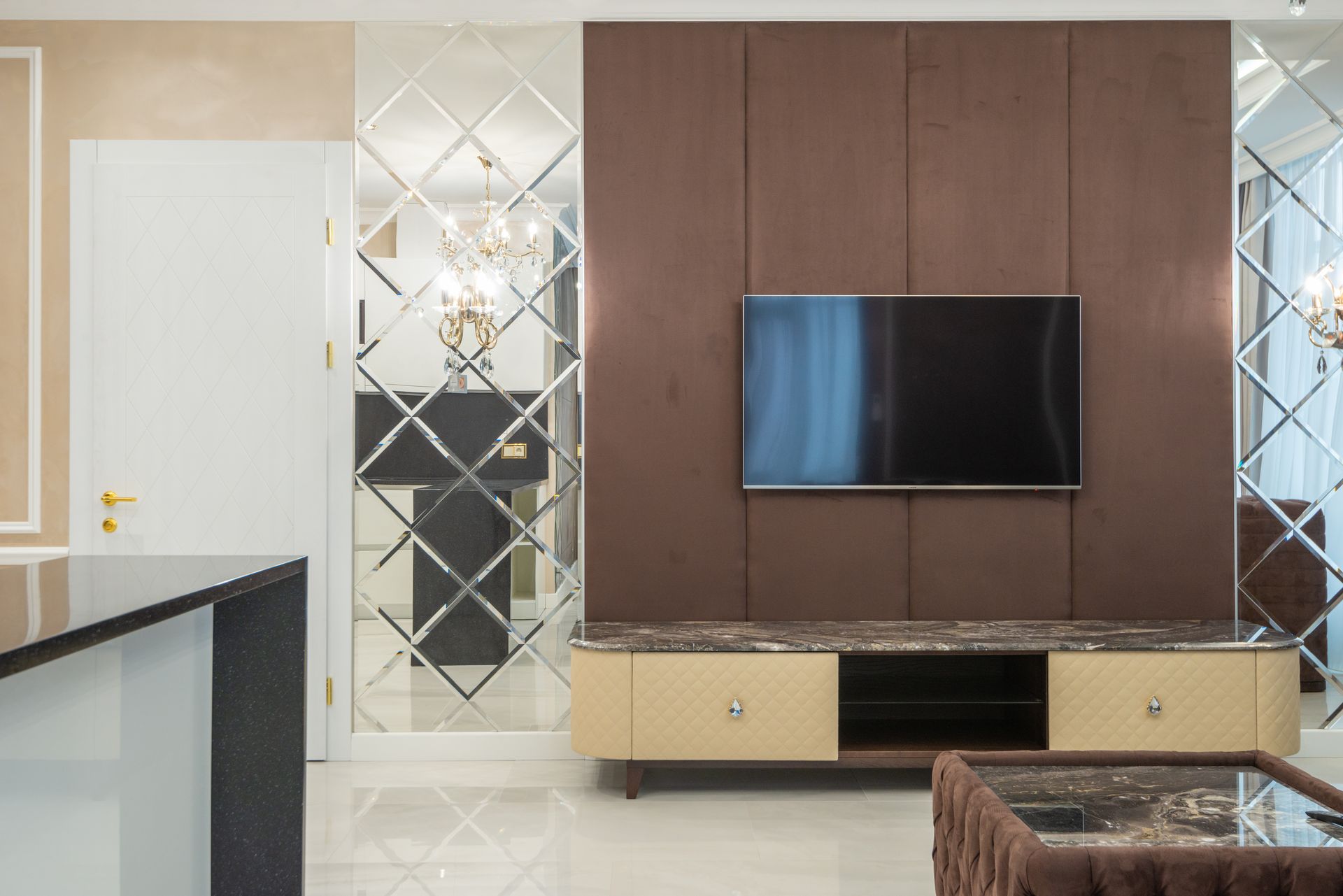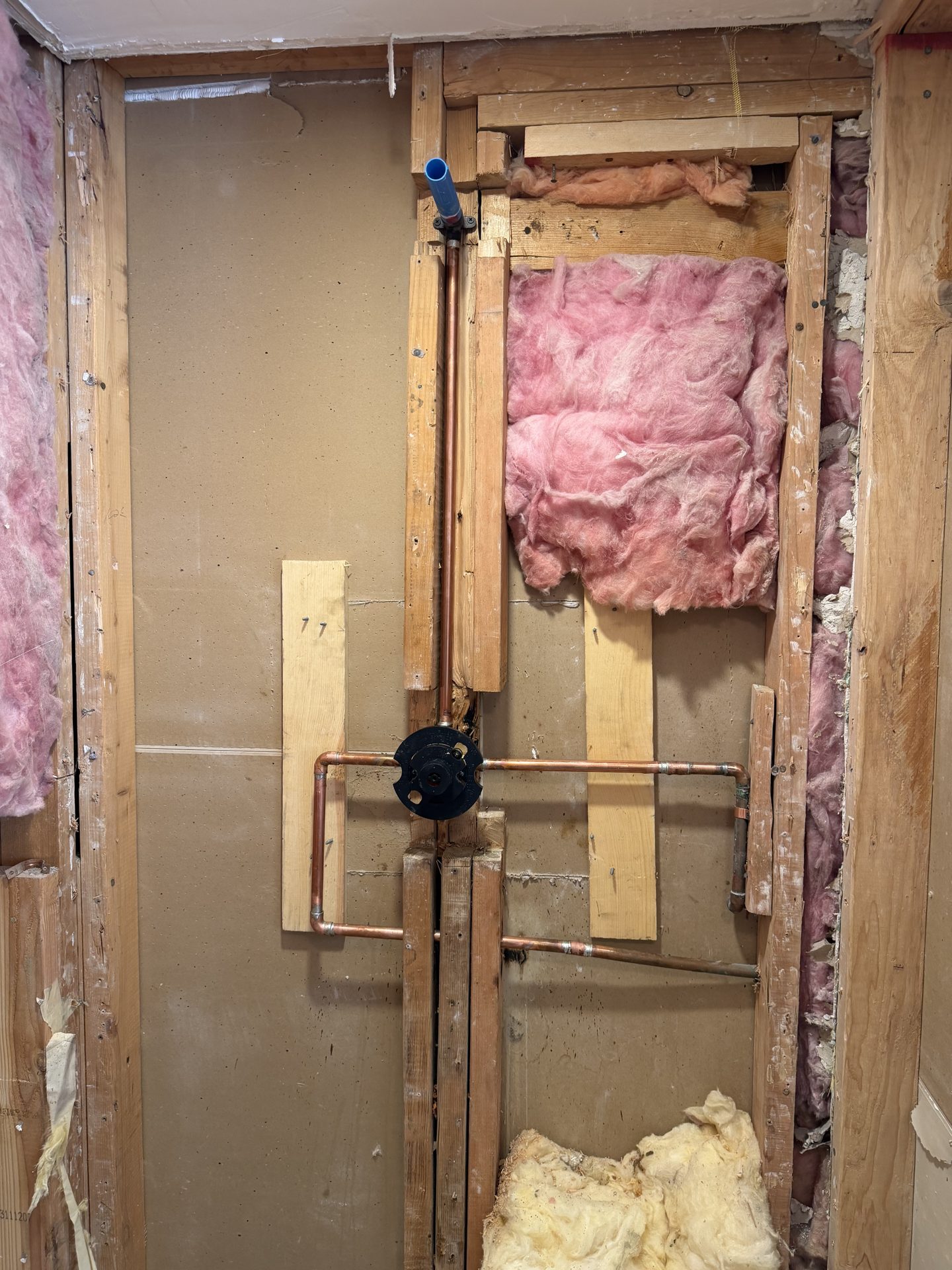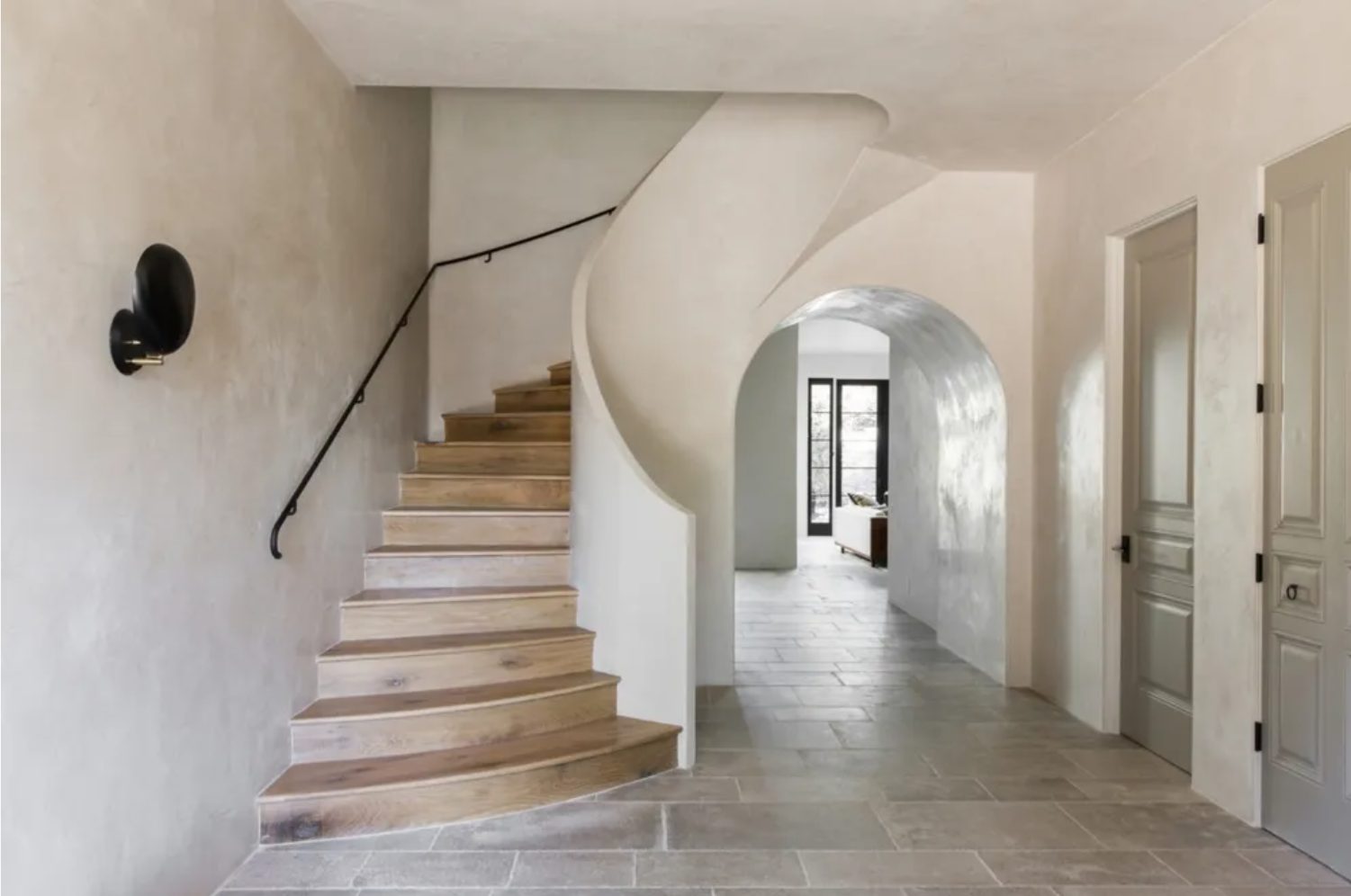
Roman clay and Venetian plaster are the two finishes Phoenix homeowners keep holding side by side on their phones, and they are different materials with different jobs. Portola Roman Clay is a clay-based, knife-applied coating that dries to a soft matte and runs about $20 to $30 per square foot installed in the Valley. Venetian plaster is lime putty and marble dust, troweled thin and burnished to a stone-like sheen, and runs about $18 to $30 per square foot installed. Both want a smooth Level 5 wall under them, which is a separate line. Roman clay belongs on whole rooms and quiet walls. Venetian belongs on entries, stair volumes, curves, and the few walls a house is built to show off. The rest of this guide is how to tell which one your wall is asking for, and what Arizona heat does to each.
We install both, and we install the lime wash and tadelakt that sit on either side of them, so we have no stake in which one you pick. This is the same conversation we have on a walkthrough, written down. For the full catalog of finishes and the hiring questions, our interior plaster finishes in Phoenix page is the place to start; this post is the comparison.
What's the Difference Between Roman Clay and Venetian Plaster?
Roman clay dries. Venetian plaster sets. That one difference drives everything else on this page. Portola calls Roman Clay a paint and plaster hybrid, a clay-based coating with natural ingredients that you spread with a knife and that simply dries as the water leaves it. It never chemically sets. Venetian plaster is slaked lime putty carrying marble dust, and it carbonates: the lime pulls carbon dioxide out of the air and turns back into calcium carbonate, which is limestone. The wall keeps hardening for weeks after the crew leaves.
Because Roman clay dries, it stays a soft surface coating, it re-wets, and a patch blends. Because Venetian sets, it becomes a hard mineral skin that can be polished like stone and that resists a patch the way stone would. Roman clay is matte by design and cannot be burnished to a shine. Venetian's sheen is in the wall, not on it, because compressing lime and marble dust with a steel trowel polishes them the same way a marble floor polishes.
At a glance: three mineral finishes
| Roman clay | Venetian plaster | Lime wash | |
|---|---|---|---|
| The look | Suede matte, soft cloudy movement | Polished, marble-like depth, or a low sheen if lightly burnished | Chalky, brushed, mottled |
| What it is | Clay-based knife-applied coating; dries | Lime putty and marble dust; carbonates and hardens | Lime and pigment in water; brushed |
| How it goes on | Putty knife, two coats, sanded between | Steel trowel, 2 to 3 thin coats, burnished, waxed or sealed | 4 to 6 inch brush, cross-hatched, 2 to 3 coats |
| Cost, relative | Middle | Highest, mostly labor | Lowest; per-square-foot figures in the cost section below |
| Refresh interval, interior | 8 to 12 years | 15 to 20 years and up | 5 to 8 years |
| Best room | Bedrooms, offices, whole rooms, powder rooms | Entries, stairs, curves, columns, range hoods | Fireplace faces, feature walls, exterior masonry |
Installed prices are Phoenix market ranges for 2026 and exclude Level 5 prep and texture removal. Anything wet, meaning a shower, is tadelakt territory and a separate category. Refresh intervals are from our own jobs, not a manufacturer figure.
How Roman Clay Goes On the Wall
Roman clay goes on with a putty knife in thin overlapping passes, two coats, with a light sand between them, and it's supposed to look wrong after the first coat. Portola's base coat is meant to land only 60 to 70 percent opaque, so the second coat carries the evenness and the movement. That is the whole technique, and it's where a bad job goes bad: the passes don't tie into each other and the wall reads patchy.
The sequence Portola publishes, and the one we follow: a smooth interior wall, Level 5 anywhere the light rakes across it. A water-based stain-blocking drywall primer on new drywall, which can be skipped over sound paint in the same color family. A base coat with the knife, dried two to four hours; Portola's own FAQ prefers overnight between coats and calls three to four hours the minimum, and in a dry Phoenix room it's touch-ready at the short end. A sand at 320 to 400 grit. A final coat, dried about half as long as the base. Then, if the wall is getting the topcoat for a hallway or a powder room, another 400-grit sand and a wait of four to six hours or overnight before it goes on.
The knife matters more than people expect. Light colors want a plastic knife. Darker colors take a flexible stainless blade. A steel edge dragged across a light clay leaves gray burnish marks, metal off the blade ground into the surface, and they never come out of a matte wall. That mistake shows from across the room. Roman clay is sold by weight, not by the gallon, which surprises people the first time: a 20-kilogram bucket covers roughly 400 to 500 square feet at two coats and the material works out to under a dollar a square foot. The price you pay for the finish is the hands, not the bucket.
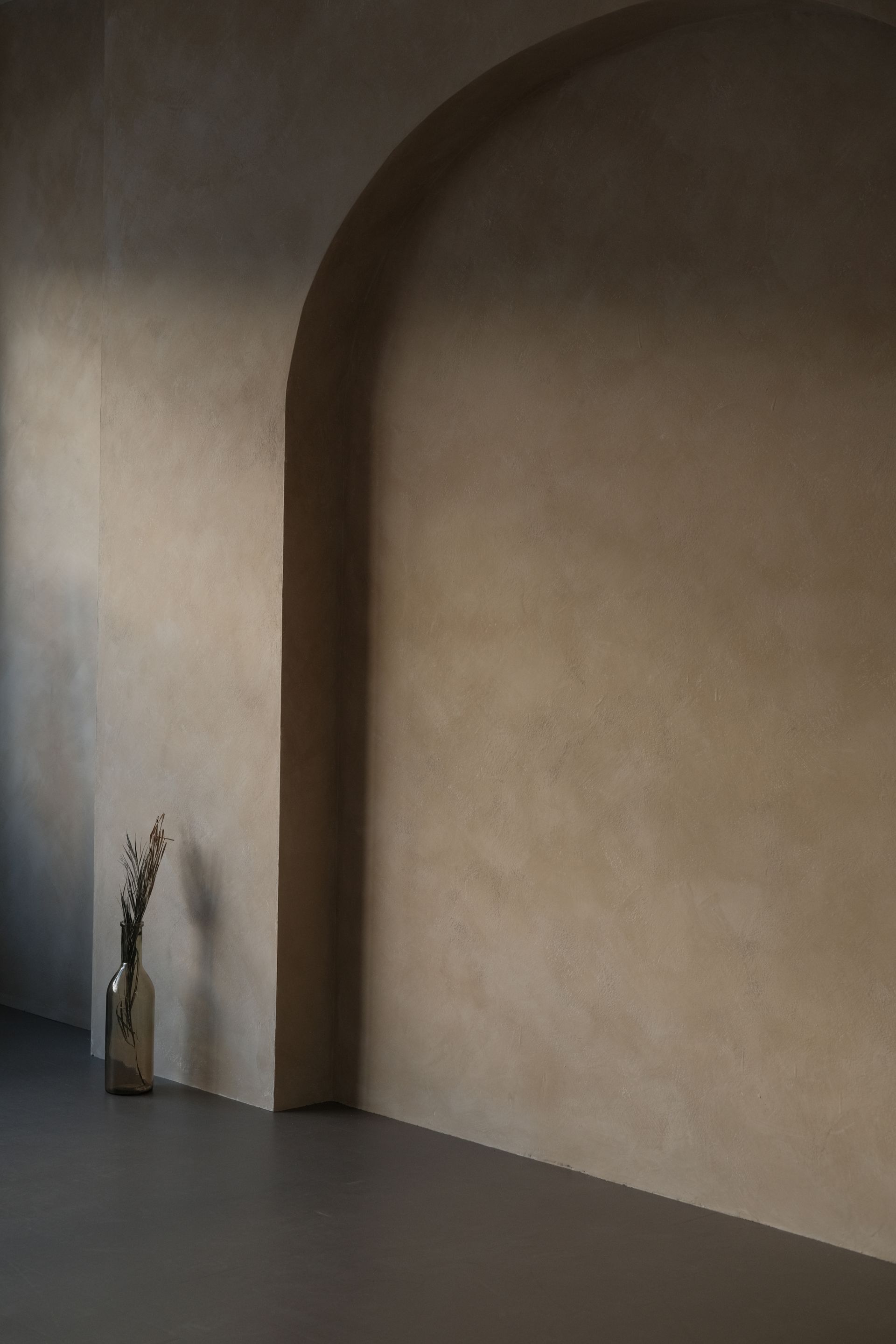
How Venetian Plaster Goes On the Wall
Venetian plaster goes on with a flat steel trowel in two to three coats thin enough to see the primer through the first one, and then it gets burnished: the trowel is dragged flat and hard across the firming plaster, compressing it until it shines. The burnish window is short, on the order of 20 to 40 minutes on a section in normal conditions, and it is the reason Venetian costs what it costs. On our Venetian jobs the hours split roughly 20 to 30 percent prep, 40 to 50 percent application, and 20 to 30 percent burnishing, and the burnishing is where the applicator's whole career shows.
Sheen is a technique, not a product. Lightly burnished Venetian reads as a soft suede with depth. Heavily burnished Venetian reads like polished stone with light moving inside it. Homeowners assume they're choosing between a matte bucket and a gloss bucket. They're choosing how hard the trowel is pressed at the right minute. The finish is then waxed or sealed, which makes it water resistant. Not waterproof, water resistant. Only tadelakt over a properly built waterproof assembly belongs in a working shower, and we hold that line on every job.
One more distinction worth knowing before you compare bids. Sold next to true lime Venetian, under nearly the same name, is a canned acrylic product marketed as Venetian plaster. It's polymer-modified, it doesn't carbonate, it never gets harder after the day it goes on, and it's not breathable, which matters on an older block wall in Phoenix where a sealed film can trap moisture. A $7 per square foot "Venetian" bid and a $22 bid are usually two different materials wearing one name.
Which Rooms Does Each Finish Belong In?
Roman clay belongs on walls you live with every day: bedrooms, home offices, a whole living room, a powder room. It's calm, it takes a whole room without shouting, and it forgives a nail hole. Venetian belongs on walls the house is built to show: the entry, the stair volume, a curved wall, a barrel ceiling, the range hood. Its real argument is geometry. On a flat rectangular wall Venetian is a luxury preference. On a curve it's often the only way to get that surface at all, because you cannot fit stone to a radius without a fabrication bill that makes plaster look free.
Where each does not go is as useful. Roman clay does not go behind a range, and that's Portola's own warning, not ours: the topcoat is not designed to stop grease or oils from staining, and the manufacturer names the kitchen backsplash as the place to avoid. It does not go in a shower. It does not go outside, even though Portola's lime wash does, which is a distinction the two get blurred on constantly. Venetian does not go where a patch will be needed every year, like a hallway that gets hit by bikes, because a patch on burnished plaster is a wall redone corner to corner.
Where Each One Belongs in a Phoenix House Specifically
In the Valley the pattern is consistent. The 1950s through 1970s ranch remodels in Arcadia and central Phoenix run Roman clay or lime wash at the fireplace, because that wall is already the focal point and the budget is a room rather than a house. The newer builds in Paradise Valley and north Scottsdale spec Venetian in the entry and up the stair, because those volumes are tall, lit from above, and built to be looked at. The powder room wins everywhere, with either finish: small enough to afford a premium, visible enough that every guest sees it.
The fireplace wall is where these two finishes get chosen most often in Phoenix homes. If the wall is getting a recessed linear electric unit, the finish choice is made at framing, because the plaster has to return cleanly into the fireplace trim and the substrate has to be dead flat before the unit is set. We wrote up that build in how a recessed linear fireplace wall gets built. The one warning that carries over: a plaster face that ends in a ragged line at the hearth, or in a fat bead of caulk, is the most common complaint we hear on a walkthrough of someone else's fireplace, and the fix is a plaster stop bead set before the finish coat, not after.
How Does Each One Hold Up in Arizona Heat and Dry Air?
Both finishes hold up well here. Both are breathable mineral surfaces, so they patina instead of peeling, which is a real advantage over a sealed paint film in a house that swings sixty degrees between a July afternoon and a January night. What Phoenix changes is the application, not the lifespan. Dry air pulls water out of a coat faster than a hand can finish it, and every published dry time on a bucket was written for a humid market.
The number worth knowing is humidity, and it swings hard inside a single day. In June it peaks around 31 percent before dawn and drops to about 11 percent by late afternoon, with single digits on some days, and the afternoon number is the one that governs a plaster coat. Roman clay's published base-coat window of two to four hours gets noticeably shorter at 11 percent. Venetian's 20 to 40 minute burnish window opens sooner and closes faster, and on a hot afternoon a 30-minute window can shrink to 10 or 15. The crew burnishes on the wall's clock, not the bucket's. Phoenix averages a high above 85 from April through October, seven months of the year.
Lap marks: the desert failure
A lap mark is a hard edge where one pass set before the next pass was worked into it. In a dry room that happens in minutes. The controls are non-negotiable on our jobs. Finish a wall in one session, never stopping mid-wall. Break only at inside corners where an edge can hide. Put more hands on the wall and work smaller sections instead of asking one person to move faster. Run the AC, shut the exterior doors, and never let a fan blow across a fresh wall. The last one is the one homeowners break with the best intentions. A box fan pointed at a wet wall to "help it dry" is the fastest way to a wall full of lap marks. In summer we schedule finish passes for the cool end of the day.
West walls and raking light
Late afternoon light through a west window is the harshest reveal in the Valley. It finds every seam, every fastener dimple, every place the knife stopped. Two consequences: any west-facing or raking-light wall gets Level 5 prep, not Level 4, and the sample goes on the actual wall, looked at at four in the afternoon, not on a board in a showroom. Portola's topcoat is formulated with UV screening, which is a real point in Roman clay's favor, but pigment behind unshaded west glass still fades over years. The fix for that is the glass, not the plaster: low-E glazing, shades, or a sun screen.
Cracks at drywall joints
Phoenix framing moves with the daily thermal swing, and attached garages, west walls, and second floors move the most. A rigid mineral finish telegraphs a moving drywall joint straight through. Joints get taped and reinforced before the skim, and a wall that has cracked before will crack again through plaster, which we say before the bid, not after the crack. Roman clay tolerates minor movement better because it's softer. Burnished Venetian is brittle and shows a hairline crisply.
Dust
Valley dust and monsoon haboob infiltration settle into a wet finish and into an unsealed matte one. No finish coats go on with windows open on a blowing day, the HVAC filter gets changed after the sanding phase, and an unsealed lime wash or clay wall gets a dry brush and nothing else. No scrubbing, no vinegar on lime.
Where Does Lime Wash Fit Between the Two?
Lime wash is the third option a lot of people arriving at this comparison are choosing among. It's a true lime finish, brushed on with a wide stain brush in a cross-hatch rather than troweled, two to three coats over a mineral bonding primer on painted drywall, and it reads chalky and mottled. Interior lime wash runs about $6 to $18 per square foot installed in Phoenix, with most interior work in the upper half of that. It's Portola's other headline product, and unlike Roman clay it is rated for exterior masonry, which is why the brick outside a lime-washed fireplace can take the same material.
One correction that most articles repeat wrong: "lime wash lasts 30 years" describes porous exterior brick that drinks the material with almost no prep. Interior lime wash over painted drywall needs the bonding primer and a third coat, and it wants a refresh coat in five to eight years. Same material, different substrate, and a different life on the wall. Also note the coverage math: Portola lists 150 to 200 square feet per gallon at two coats, which is the number people misread as per-coat when they estimate material.
What Does Each One Cost Installed in Phoenix?
Installed, Roman clay runs about $20 to $30 per square foot of wall in the Phoenix metro, Venetian plaster about $18 to $30, and lime wash $6 to $18. A Level 5 skim coat under any of them is $1.50 to $2.00 per square foot and billed separately, and knocking down existing texture first is another line on top of that. Those are the numbers a fair bid is built from, and the reason two bids on the same wall can differ by fifteen dollars a foot is almost always that one of them left the prep out.
| Line item | Installed, per sq ft (Phoenix 2026) | What drives the number |
|---|---|---|
| Roman clay, two coats | $20 to $30 | Curves, arches, tall volumes, and cut-in around fixtures push it up. Material is under $1 of that. |
| Roman clay topcoat, where wanted | $1 to $2 | Hallways and powder rooms; one coat, sanded first |
| Venetian, true lime, burnished | $18 to $30 | Burnish level, number of coats, curves; a flat feature wall lands $20 to $25 |
| Lime wash, interior | $6 to $18 | Primer over paint, third coat, Phoenix interiors sit $12 to $18 |
| Level 5 skim coat | $1.50 to $2.00 | Billed separately under every finish above |
| Texture removal (knockdown, orange peel) | separate line | Most Valley walls need it; the line most low bids omit |
| "Venetian plaster" from a can (acrylic) | $6 to $8 | A different material under the same name; no carbonation, no depth, not breathable |
Small scopes price higher per foot than whole houses: a 200 square foot room lands near the top of each band, a 3,000 square foot house near the bottom. Bathrooms price above flat feature walls because of corners, niches, and the mirror wall.
Three common Phoenix scopes, before prep
| Scope | Wall area | Roman clay | Venetian | Lime wash |
|---|---|---|---|---|
| Feature wall, 12 by 9 feet | 108 sq ft | $1,300 to $2,150 | $1,950 to $3,250 | $650 to $1,950 |
| Fireplace wall, floor to ceiling | 150 to 200 sq ft | $1,800 to $4,000 | $2,700 to $6,000 | $900 to $3,600 |
| Powder room, four walls | 200 to 250 sq ft | $2,400 to $5,000 | $3,600 to $7,500 | $1,200 to $4,500 |
Add Level 5 prep and any texture removal to each of these. The areas are typical; the real wall gets measured.
For most rooms in most houses, the honest answer is still paint, and we'll say so on a walkthrough. Plaster earns its money on the walls people look at. If the whole house needs a refresh and one wall needs to sing, our interior painting crew handles the house and the plaster crew handles the wall, and both come under one contract.
Send Us the Wall
A photo of the wall, one of the room from the doorway, and a note about which way it faces. We'll tell you whether it wants Roman clay, Venetian, or lime wash, what the prep involves, and what the installed number lands at.
Get a Free Finish ConsultWhy a Bad Roman Clay Job Looks Patchy and a Bad Venetian Job Looks Muddy
Roman clay fails where the knife stops. The base coat is deliberately thin, so the second coat carries the evenness, and if the passes don't tie in you see hard lap lines, density blotches where the knife loaded unevenly, and gray burnish marks from a steel blade on a light color. Matte hides no transitions. Patchy.
Venetian fails when the trowel moves at the wrong minute. Burnish too early, while the plaster still moves, and you drag material instead of compressing it, smearing the tonal layers into a flat gray-brown with no depth. Too much material in a coat does the same thing. The stone-like translucency depends on thin coats staying distinct; blend them and the wall goes dull. Muddy. A coverage error anyone can see. A timing error only shows up later, when the light hits it.
How to Choose Between Them: Five Questions to Ask Yourself
- Is the wall curved or flat?Curved, arched, or a column: Venetian, because nothing else fits a radius. Flat: either, and the next questions decide.
- Do you want the room to glow or to whisper?Glow, with light moving inside the surface: Venetian. Whisper, a soft matte that reads as texture rather than shine: Roman clay.
- How much traffic hits that wall?Kids, bikes, a hallway: Roman clay with the topcoat, because it repairs. A wall nobody touches: either.
- Is the wall smooth already, or textured?Textured, like most Valley walls: budget the knockdown and the Level 5 skim for either finish. The prep line does not change the answer, but it changes the bid.
- Is this one wall or a whole floor?One wall: whichever the wall wants. A whole floor of rooms: Roman clay, because Venetian across an entire level is a different budget and a different schedule.
Questions Phoenix Homeowners Ask About Roman Clay and Venetian Plaster
Can Roman clay go in a bathroom?
Yes on vanity walls and in a powder room, no inside a shower. Portola's topcoat adds an eggshell sheen and makes the wall wipeable, but the manufacturer says plainly that it is not waterproof and should not go where water or grease hit it. The only plaster that belongs in a working shower is tadelakt over a correctly built waterproof assembly.
Do you have to remove texture before Roman clay or Venetian plaster?
Yes. Both finishes want a smooth Level 5 wall, and most Valley walls carry sprayed orange peel or knockdown. Skimming a wall that is already smooth runs about $1.50 to $2.00 per square foot. Knocking down existing texture first is a separate labor line on top of that, and it is the line missing from most low bids.
Which one is easier to repair if the wall gets damaged?
Roman clay. It dries rather than sets, so a patch re-wets into the wall and disappears on a matte surface. A patch on burnished Venetian has to match sheen as well as color, and sheen depends on trowel pressure and timing that a different hand on a different day cannot repeat. Venetian repairs usually mean reworking corner to corner.
How long does the room stay out of use?
Recoat windows run 2 to 12 hours depending on the product and the room, a topcoat or wax sits overnight, and furniture goes back about 24 to 48 hours after the last pass. In site days, a single accent wall is one to two days plus cure, a full room two to four, and a two-story stair volume a week and up.
Keep a labeled sample and the product name after any plaster job. Color lots shift, and the repair that disappears is the one made with the same bucket.
What Else Is Worth Doing While the Room Is Masked Off
Once the finish is chosen, the next decisions are about light and edges, and they're cheapest to make now, while the room is masked and a crew that skims walls for a living is standing in it. Work folded into the same setup commonly prices a quarter to a half below what it costs as its own trip, as long as it's agreed before the first coat goes on.
- Level 5 the rest of the room. The crew is already skimming one wall. Skimming the other three leaves them ready for paint or a later finish without starting over, and it's the cheapest time to buy that prep.
- Aim the light. A plaster wall lives or dies on how light rakes across it. Wall-wash and grazing fixtures belong in this conversation, not after it. Our light fixture installation crew handles it on the same trip.
- The fireplace surround. The highest-impact small square footage in most Phoenix houses, and it uses material already mixed. If a new unit is going in, read the recessed linear fireplace build first, because the substrate decision happens at framing.
- The range hood. A curved hood is the case where plaster beats stone outright. Spec burnished Venetian or Marmorino there, never Roman clay, per Portola's grease warning.
- Repaint the adjoining rooms and the ceiling. A fresh plaster wall makes a nine-year-old ceiling look worse than it did yesterday. Masking is already up. See interior painting.
- The powder room. Small enough to afford a premium finish, visible enough to matter, and the same crew is in the house.
Flooring goes in after plaster, so the finish is protected and the base sets cleanly against it. That's a sequencing note rather than an add-on, and it's the one that gets missed on remodels where the floor was scheduled first.

Written by Harrison Norem, owner of Norem Contracting and a licensed Class B general contractor, Arizona ROC #365090. Fifteen years across the trades, including plaster, drywall, and interior finish work, across the Phoenix metro. More about Harrison.