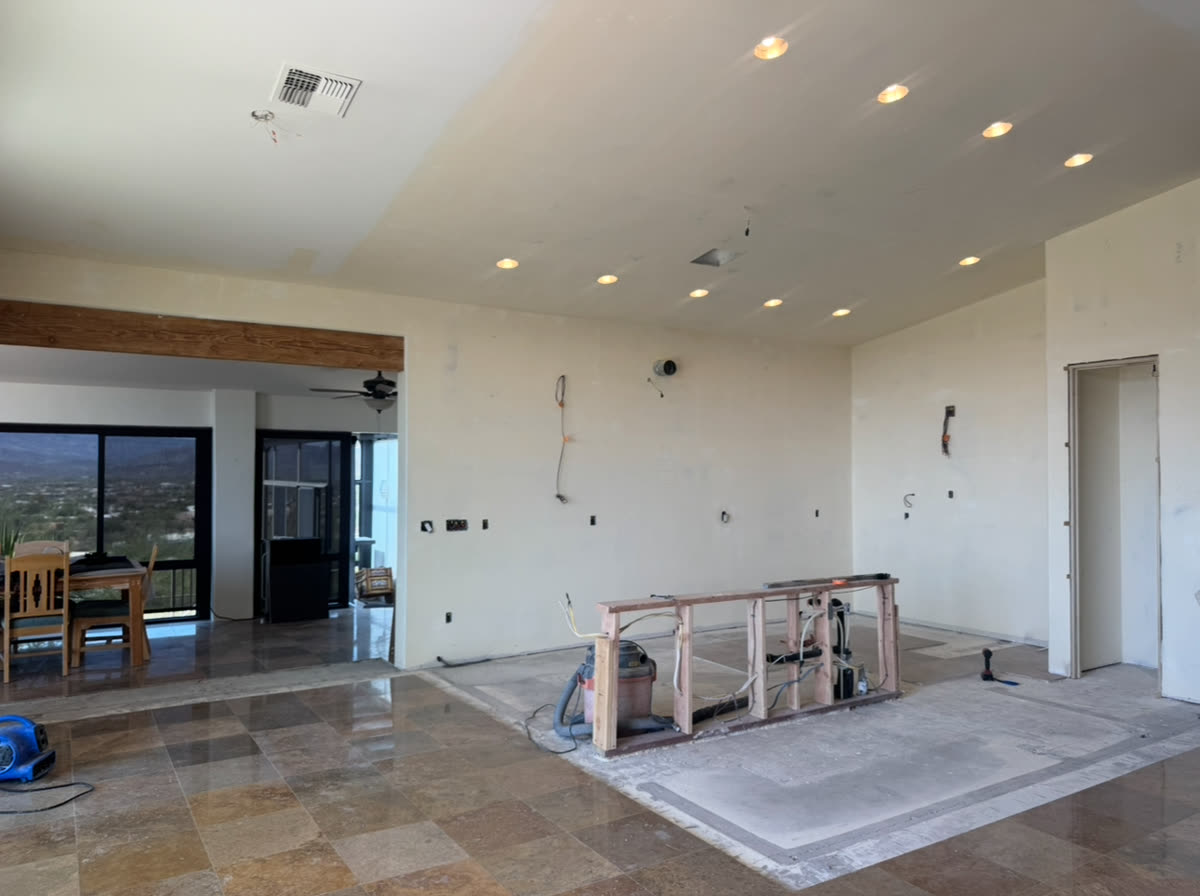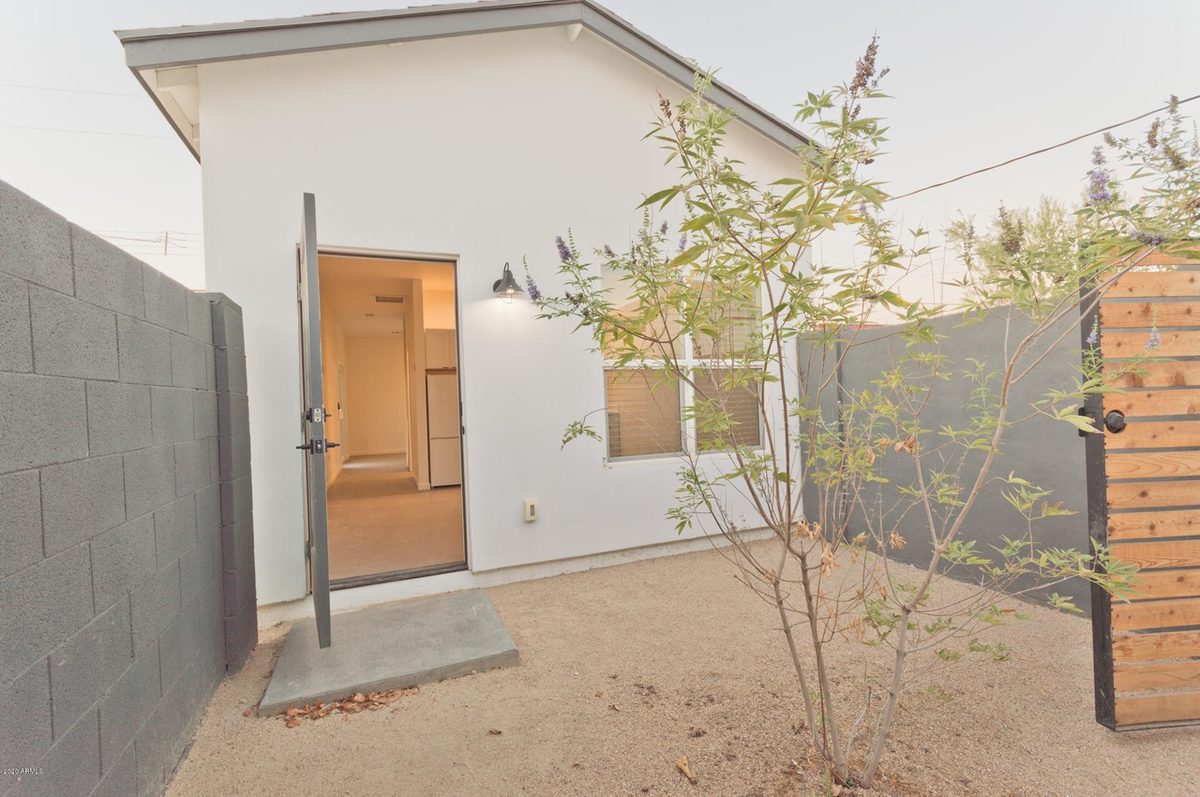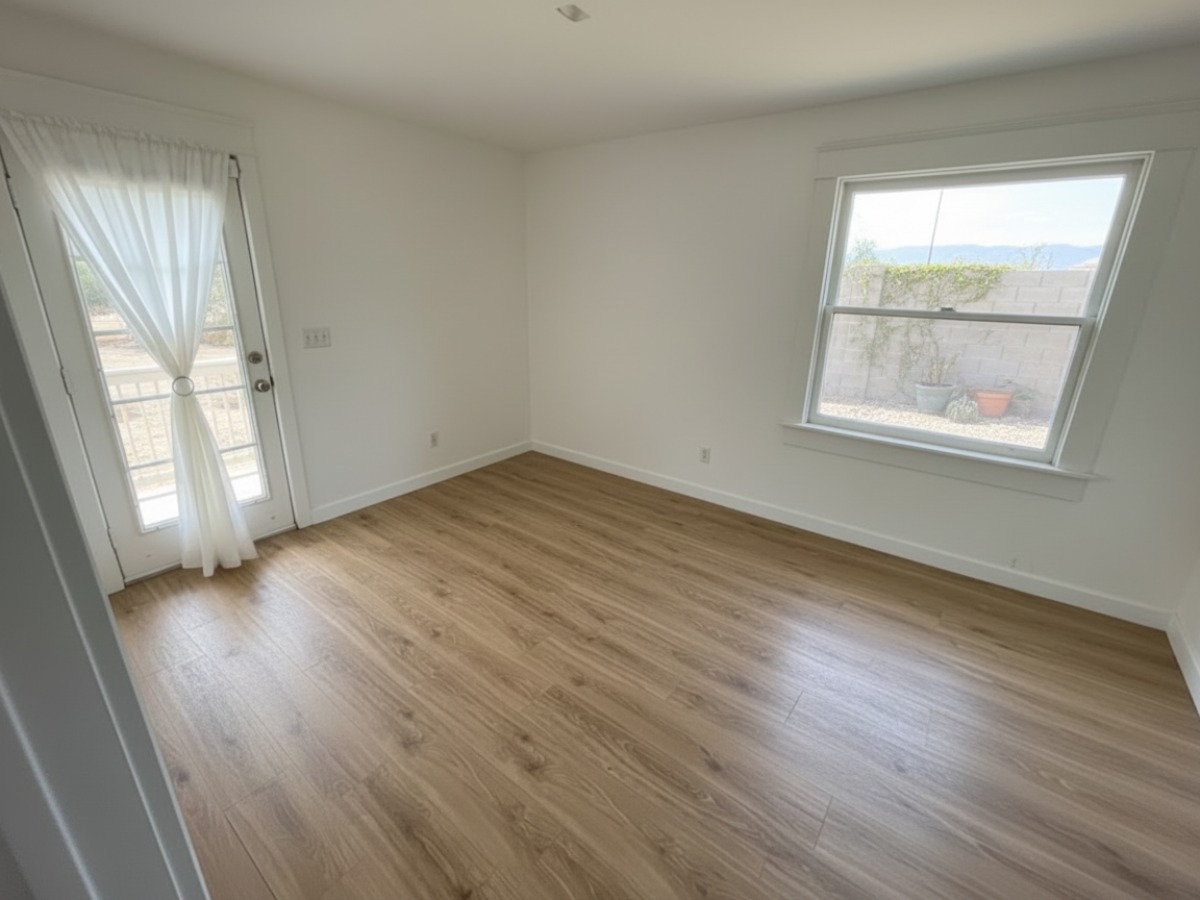
The old flooring in this Chandler house looked tired, but the real problem was under it: a section of subfloor had taken on water and gone soft. We cut out the bad wood, rebuilt and leveled the base, and installed waterproof rigid-core vinyl plank that can take spills and Arizona heat. If you're feeling soft spots underfoot or pricing new floors, this job is a good picture of what the work involves.
Bad subfloor under old flooring is common in older Chandler and Valley homes, usually around kitchens, bathrooms, and exterior doors where water has been getting at the wood for years. It's fixable, and fixed right, the new floor sits flat and stays that way.
Project at a Glance
- Location: A single-family home in Chandler, AZ
- The problem: Water-damaged subfloor hiding under worn-out flooring, with soft, spongy spots underfoot
- The scope: Demo the old flooring, remove and replace the rotted subfloor, level the surface, then install new rigid-core waterproof plank
- Materials: Waterproof rigid-core luxury vinyl plank (LVP), the kind built for spills and temperature swings
- Why plank in Arizona: Waterproof, comfortable underfoot, easy to clean, and stable through the heat where some products telegraph problems
- Timeline: A few days per area, depending on how much subfloor has to come out and how big the space is
Spotting a Failing Subfloor
The subfloor is the structural layer your finished floor sits on. When it stays dry it lasts for decades. When it gets wet and stays wet, it swells, delaminates, or rots, and the floor on top starts to give you warning signs. On this job the homeowner noticed give underfoot in one area, which is usually the first thing people feel.
These are the signs of water-damaged subfloor we look for, and the same ones you can check yourself before calling anyone:
- Soft or spongy spots that flex when you step on them
- Water stains, dark discoloration, or buckling near tubs, toilets, dishwashers, and exterior doors
- Movement, bounce, or squeaks in the floor that were not there before
- Gaps, cupping, or lifting edges in the flooring above
- A damp or musty smell that lingers
Water-damaged subfloor repair is a problem Phoenix-area homeowners run into more than they expect, because a slow leak under a dishwasher or a worn door seal can soak the wood for a long time before anything shows on the surface. You only know the full story once the finished flooring comes up. We ran into the same thing on a framing and drywall remodel in Glendale: the real fix was behind the finished surface.
Tearing Out and Replacing the Subfloor
This is the part homeowners are tempted to skip to save money. Laying new floor over a soft subfloor hides the problem for a while, then the planks flex, the seams separate, and within a year or two you're paying to do the job twice.
We started by pulling up the old flooring to see what was underneath. With the subfloor open, we could tell how far the water damage ran and where the sound wood started. We cut the rotted and stained material back to solid framing, checked the joists for damage, and installed new subfloor cut to fit and fastened down tight.
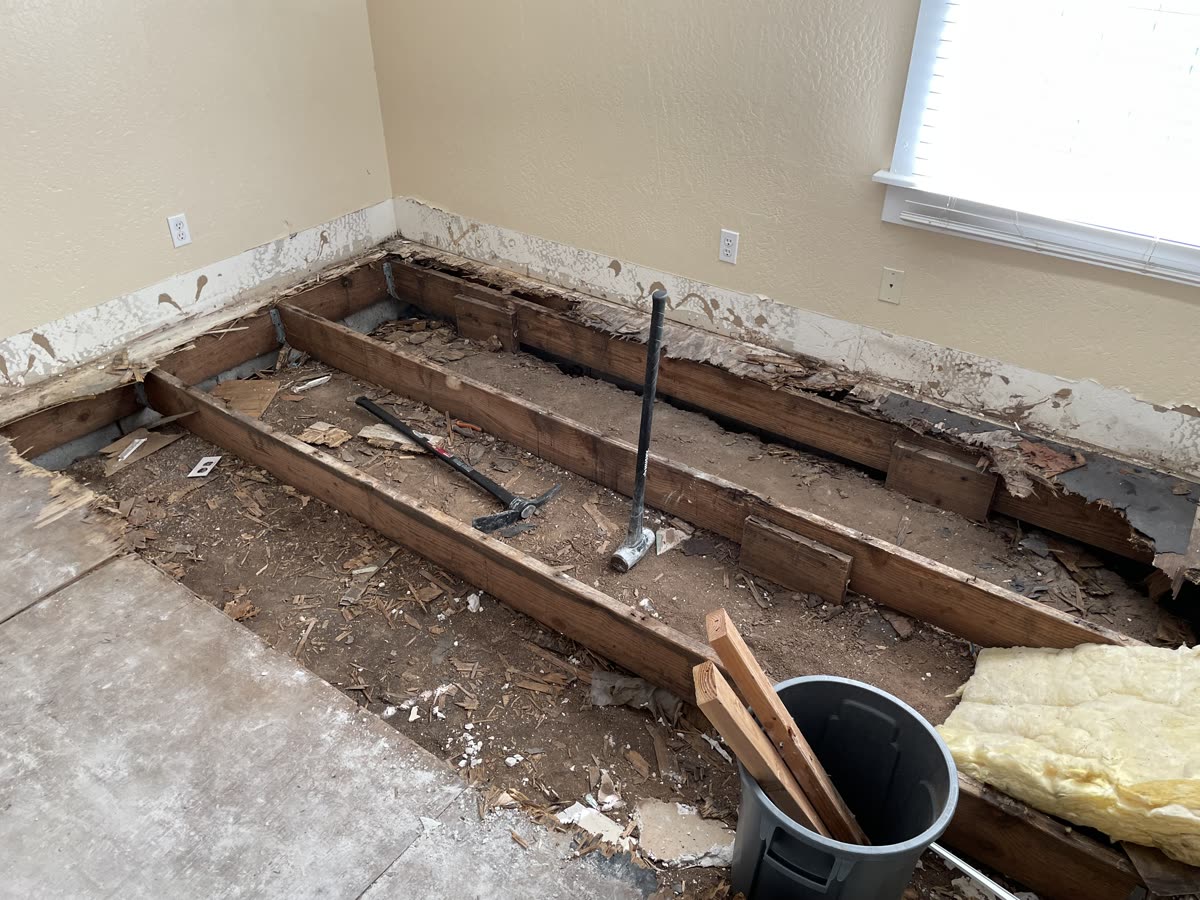
Once the new subfloor was down, we leveled the surface. Even a small dip or high spot will show through a finished floor and put stress on the seams, so flattening the base isn't optional.
Why Vinyl Plank Flooring Works for Chandler and Phoenix Homes
For the finished floor we used waterproof rigid-core LVP. Rigid-core plank has a dense, stable center layer, so it holds its shape better than thin floating vinyl and doesn't telegraph minor imperfections underneath.
The waterproof part matters most after a subfloor repair: spills, mop water, and the occasional appliance leak wipe up instead of soaking in and starting the rot all over again. A quality rigid-core product also handles the temperature swings Valley homes see, including rooms that get hot when the AC is off.
The rest is day-to-day livability. Plank is warmer and softer underfoot than tile, which homeowners notice right away. Cleaning is a sweep and a damp mop, with none of the dust and dander carpet traps. And it gives you the look of hardwood without the water worry, which is most of the reason luxury vinyl plank has taken off across Arizona.
Install Temperature and a Level Install
Rigid-core plank doesn't need days of acclimation the way older flooring did, but manufacturers do require the house to hold roughly 55 to 85 degrees while the floor goes in. Plank installed in a hot house shrinks once the AC comes on, the end joints open up, and the manufacturer calls that an installation error instead of a warranty claim. So the cooling runs before the first box opens, and the boxes get staged in the room they're going into, not brought in off a hot truck and cut the same hour.
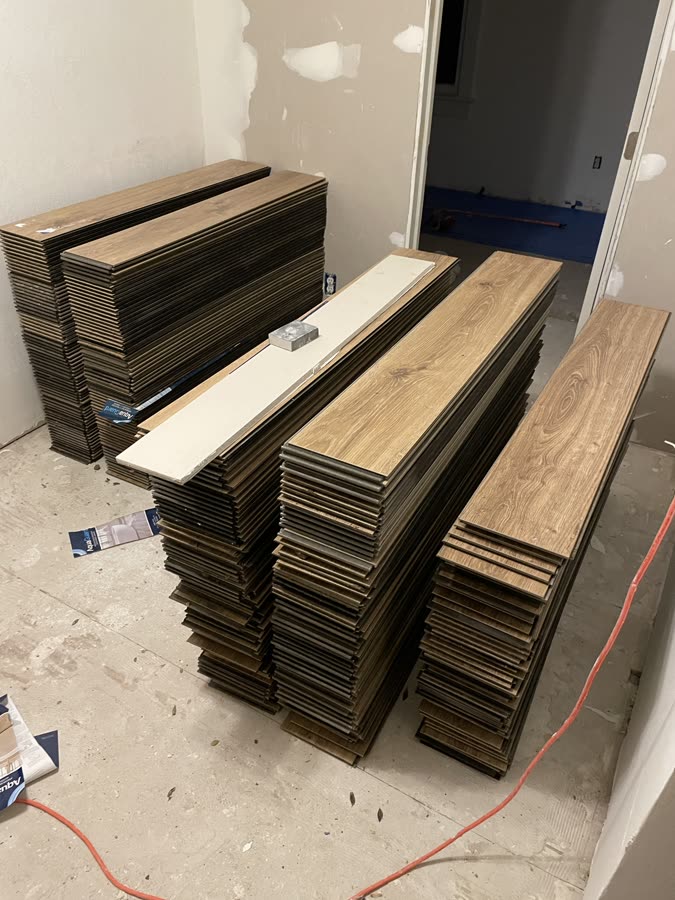
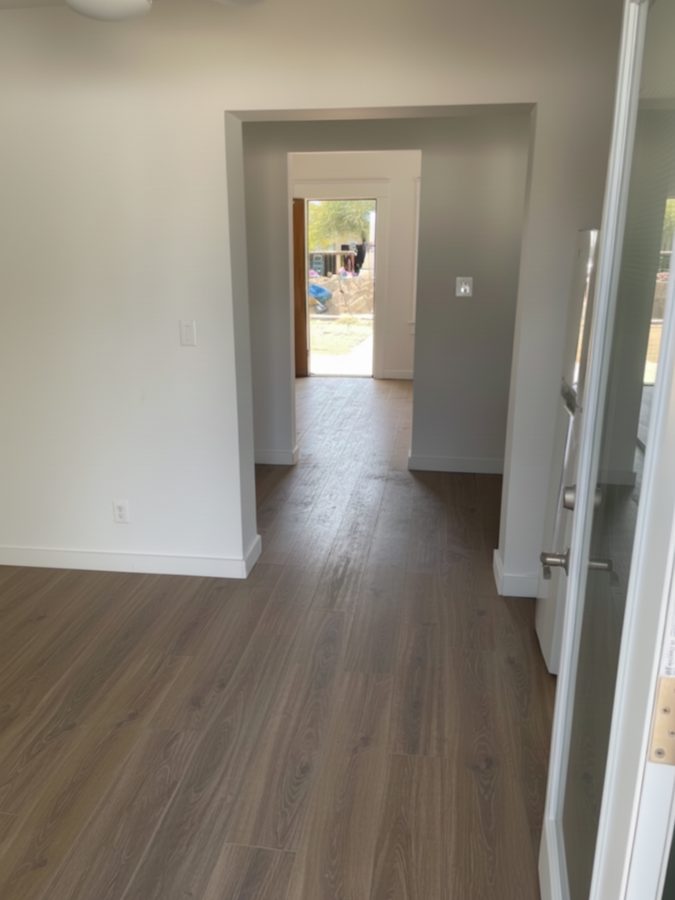
With the subfloor sound and level and the house holding temperature, the install itself moves fast. We dry-laid the first rows to plan the layout, kept the expansion gap at the walls, and worked the click-lock seams tight. We ran the plank through the archway in one continuous stretch, so the hallway and living area feel like one floor.
The Finished Floors
The finished floor is flat and quiet, with no soft spots left and nothing rotting underneath it. The plank runs unbroken through the hallway and living area and out through the archway, and that continuous run makes the whole space feel bigger.
Norem Contracting is a licensed Arizona general contractor (ROC #365090), so the demo, the structural subfloor repair, the leveling, and the finish floor all happened under one license, with one person standing behind the result. That matters on a job like this, where half the work is carpentry and half is flooring. You can read more about our flooring installation services, or browse finished jobs in the project gallery.
Frequently Asked Questions
How much does vinyl plank flooring cost in Chandler?
Installation labor for vinyl plank flooring in Chandler usually runs about $3 to $5 per square foot, with materials on top of that depending on the plank you choose. Smaller jobs carry a minimum visit charge of roughly $600. Subfloor repair, if any rotted material has to come out and be replaced, is quoted separately based on how much area is affected.
How can I tell if my subfloor is bad?
Watch for soft or spongy spots that flex under your weight, water stains or discoloration around tubs, toilets, dishwashers, and exterior doors, visible movement or a bounce when you walk, and gaps or cupping in the flooring above. A damp, musty smell is another red flag. The only way to know for sure is to pull a section of the finished floor and look at the subfloor underneath.
Is vinyl plank a good choice for Phoenix homes compared to tile or carpet?
Waterproof rigid-core vinyl plank handles spills and Arizona heat well, it is warmer and softer underfoot than tile, and it wipes clean far more easily than carpet, which traps dust and dander. Tile is still tough to beat for pure durability, but plank gives you a comfortable, low-maintenance, water-resistant floor at a friendlier price, which is why a lot of Phoenix-area homeowners pick it.
While the Floors Are Out: What Else Is Worth Doing
A flooring job empties the rooms and puts a carpentry-capable crew, saws, and fasteners in your house. That setup gets paid for once, so work that shares it costs far less now than as its own project later, commonly 25 to 50% below standalone pricing when you ask for it up front. On a job like this one, these add-ons earn their spot:
- New baseboards or quarter-round. Old trim rarely sits clean against a new floor, and the crew is already cutting and nailing trim the day the plank goes down. It's part of our construction and remodeling work.
- Carrying plank into adjoining rooms. The material order, delivery, and staging are already happening, so adding a bedroom or hallway to the same run is the cheapest that room will ever be. Our vinyl plank cost page has the per-square-foot and per-stair numbers.
- Trimming interior doors to fit. Rigid-core plank can sit higher than the floor it replaces, and a door that drags needs shaving and re-hanging. Quick work while the tools are out.
- A soft-spot check through the rest of the house. If one area had water damage, it costs almost nothing to walk the other wet zones, like bathrooms, the laundry, and exterior doors, while we're on site.
If a repaint is anywhere on your list, empty rooms with the baseboards off are the cheapest painting conditions a house ever offers. Ask about add-ons before the job starts and they ride on the trip you're already paying for instead of a second one later.
Soft Spots in Your Floor or Ready for New Plank?
We'll check what's going on under your flooring, tell you straight whether the subfloor needs work, and give you a clear estimate on new waterproof plank. We serve Chandler, Gilbert, Tempe, Mesa, and Phoenix, and every project starts with a free on-site consultation.
Request Free Estimate