In the Phoenix metro, luxury vinyl plank (LVP) installation runs $3–$5 per square foot for labor, with stairs priced per step instead of by the foot and a minimum of about $600 on small jobs. As of July 2026, the number comes down to three things: how much carpet and tack strip has to come out first, whether the slab or subfloor needs leveling or repair, and how many stairs, doorways, and transitions are in the run. The full price chart is below, along with the two things that decide whether a plank floor stays tight through a Phoenix summer: the temperature it was installed at, and how the stairs were done. Plank is one part of our flooring installation services.
Vinyl Plank Flooring Price Chart — Phoenix, 2026
Labor rates and the job minimum are our real numbers. Stair, tear-out, and prep ranges reflect the 2026 Phoenix market for licensed, insured work. The free estimate confirms your number after we see the floor and the stairs.
| Scenario | Typical Phoenix Price (2026) | What Drives the Price |
|---|---|---|
| Vinyl plank install, open floor area | $3–$5 per sq ft, labor | Floating vs glue-down, room shape and cut count, closets and doorways. Glue-down, diagonal, and herringbone layouts run above the range. |
| Plank installed, labor + material | $4.50–$9.50 per sq ft, installed | The plank itself: wear layer (12 vs 20 mil), rigid core vs flexible, plank width, attached pad. Budget plank at the low end, premium wide plank at the top. |
| Stairs: tread, riser & stair nose | $60–$120 per step, glued | All hand work: cuts on every tread and riser, nosing glued and pinned, cure time. Open-sided steps with mitered returns and mid-flight landings push the top of the range. |
| Carpet demo, tack strip & haul-off | $0.50–$1.50 per sq ft | Stapled vs glued pad, staple density, carpeted stairs coming off one step at a time, disposal fees. |
| Floor prep & leveling | $0.50–$6 per sq ft, by condition | How far the slab sits out of flat (the standard is 3/16 inch over 10 feet), old adhesive, high spots at joints. Spot patching is cheap. A full self-leveling pour is not. |
| New baseboards | $3–$6 per linear ft, installed | Height and profile, MDF vs pine, corner count, and whether caulk and paint are in the scope. |
Real job, Phoenix, July 2026: $2,750 labor for a 175 sq ft carpet-to-plank conversion: 15 stairs plus the second-floor landing, tear-out through new baseboards, with the homeowner supplying the plank. The $3–$5 labor rate and the $600 small-job minimum are the same real numbers on our flooring page. Subfloor repair is quoted separately once we see what's under the old floor. Text us a photo of the room or the stairs and we'll confirm your number, free.
How much does vinyl plank flooring cost per square foot in Phoenix?
Labor runs $3–$5 per square foot for a standard floating install, and $4.50–$9.50 per square foot with mid-range material included. What moves a job inside that range is mostly geometry: a big open great room installs faster per foot than a hallway with six doorways and two closets, because every doorway means cuts and a transition. Glue-down installs cost more than floating because of adhesive and prep time, and patterned layouts add cutting waste and layout time. At those rates, the 1,000-square-foot LVP install people ask about runs about $3,000–$5,000 in labor before material. If you're comparing a big-box store's install quote, those jobs run through third-party installer crews and the price is tied to buying their material; ask for the labor line on its own and compare it to the chart above. Small jobs carry the roughly $600 minimum, because a single bedroom takes the same travel, setup, and haul-off as a bigger day.
How much does it cost to put vinyl plank on stairs?
In the 2026 Phoenix market, plank on stairs runs about $60–$120 per step, installed and glued. A 14-step flight lands somewhere around $850–$1,700 depending on the details: open-sided steps that need mitered returns, a mid-flight landing, winder steps, and how much old carpet bullnose has to be cut back.
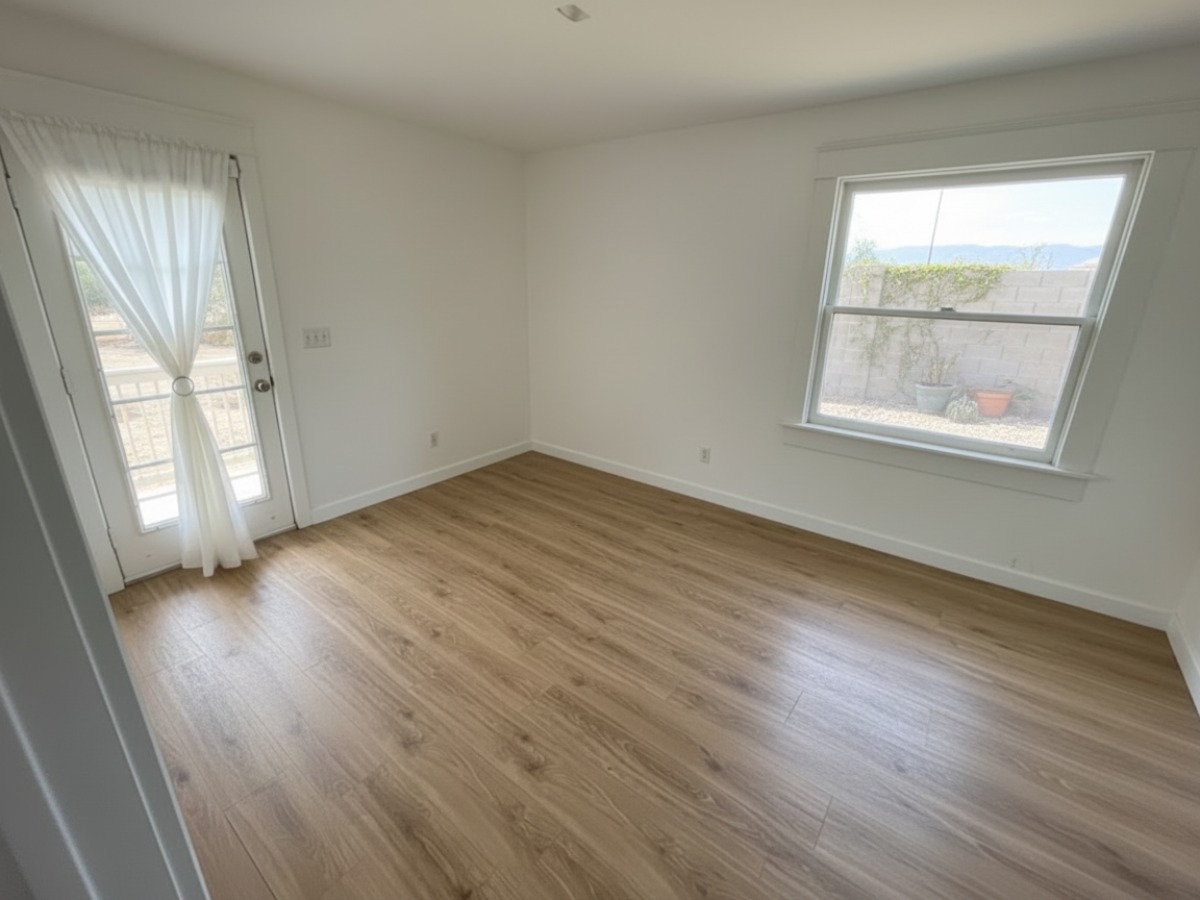
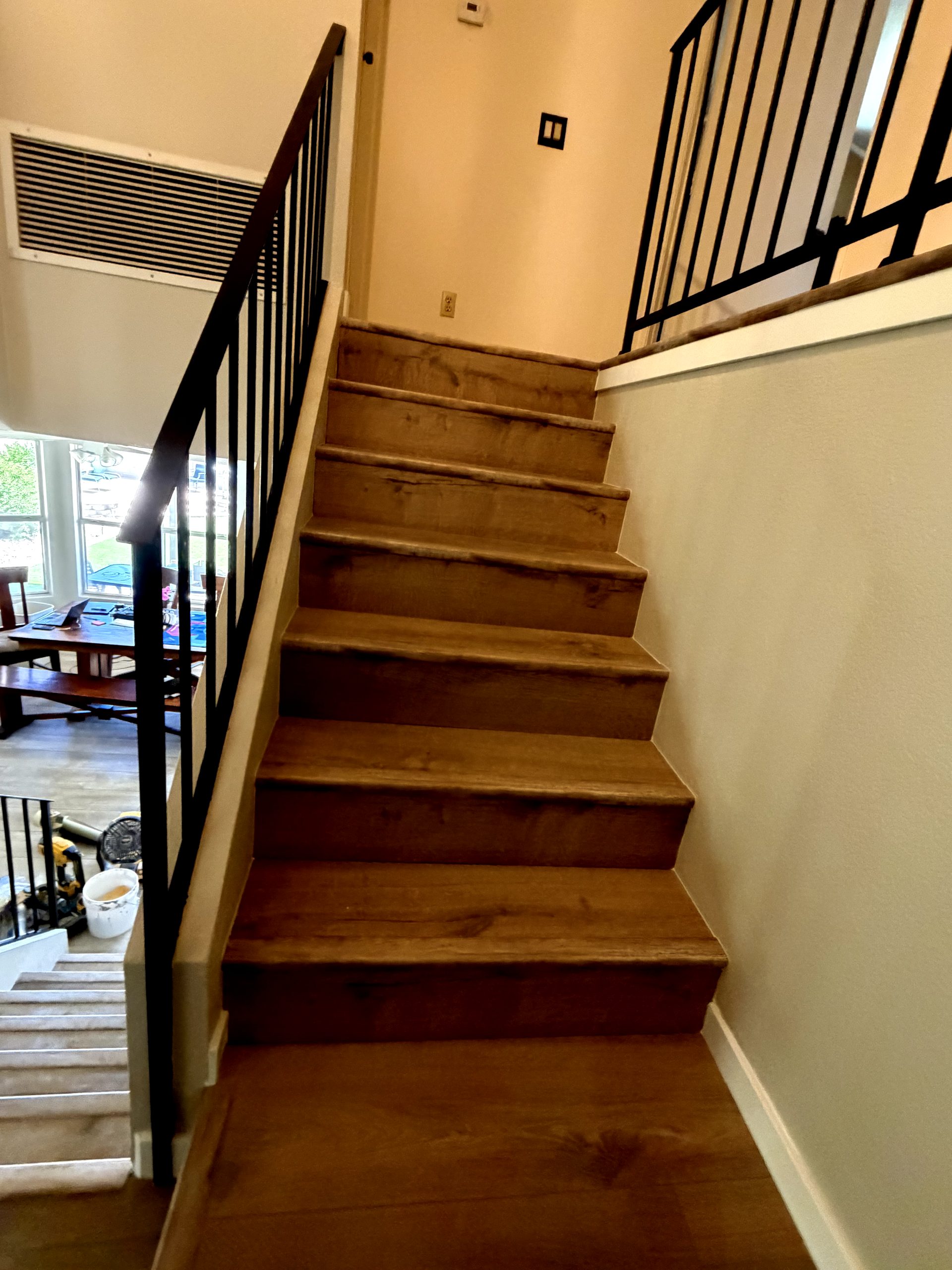
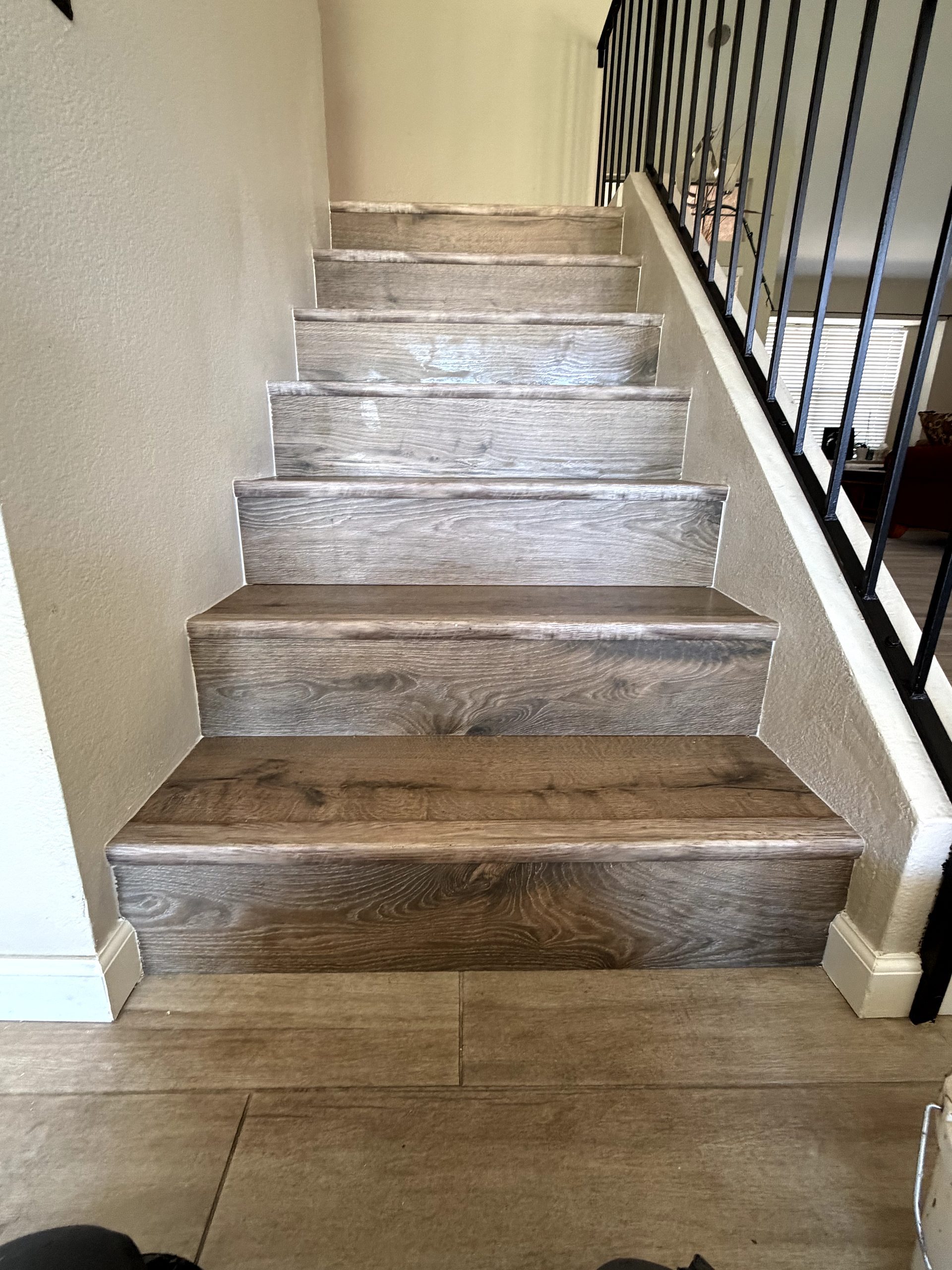
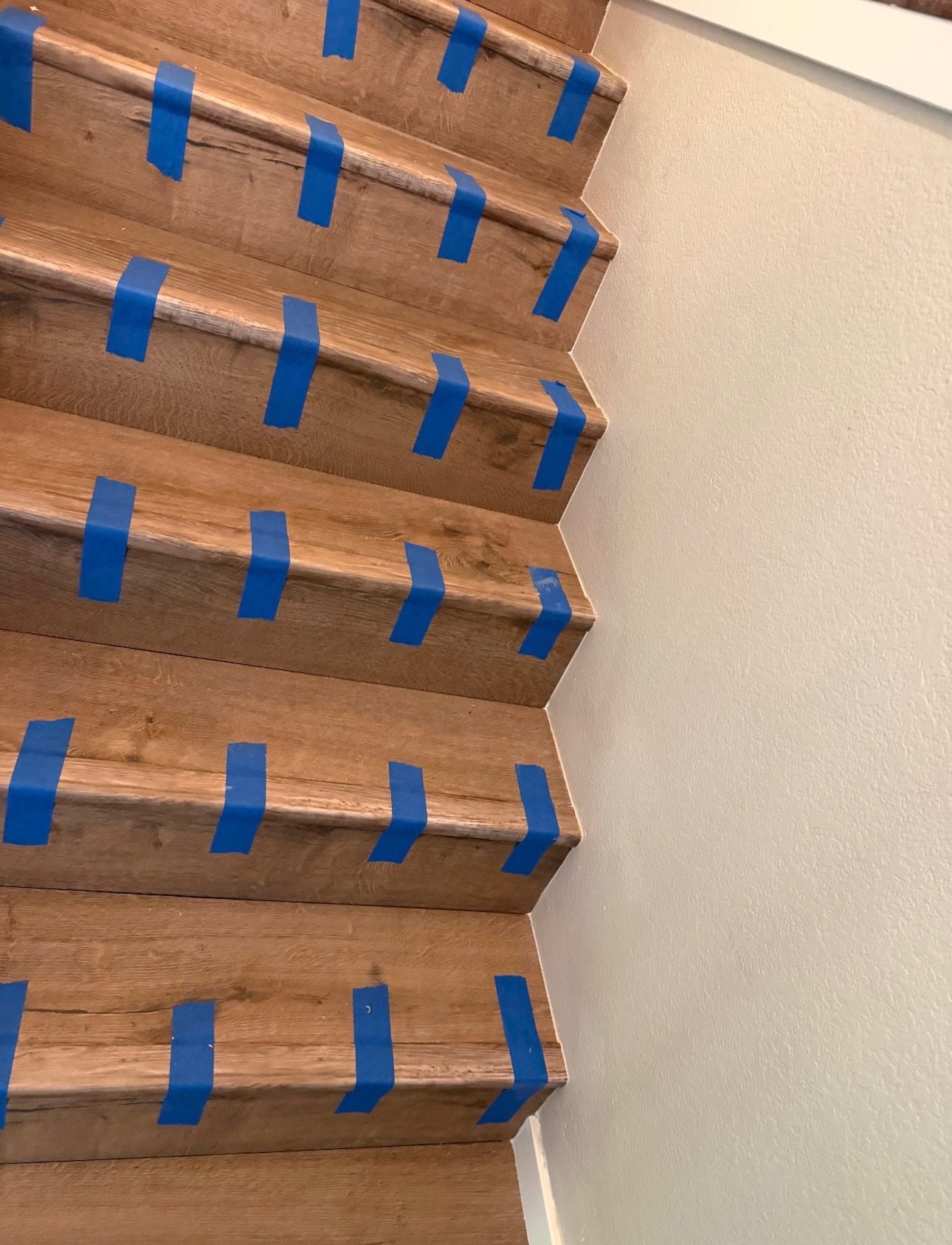
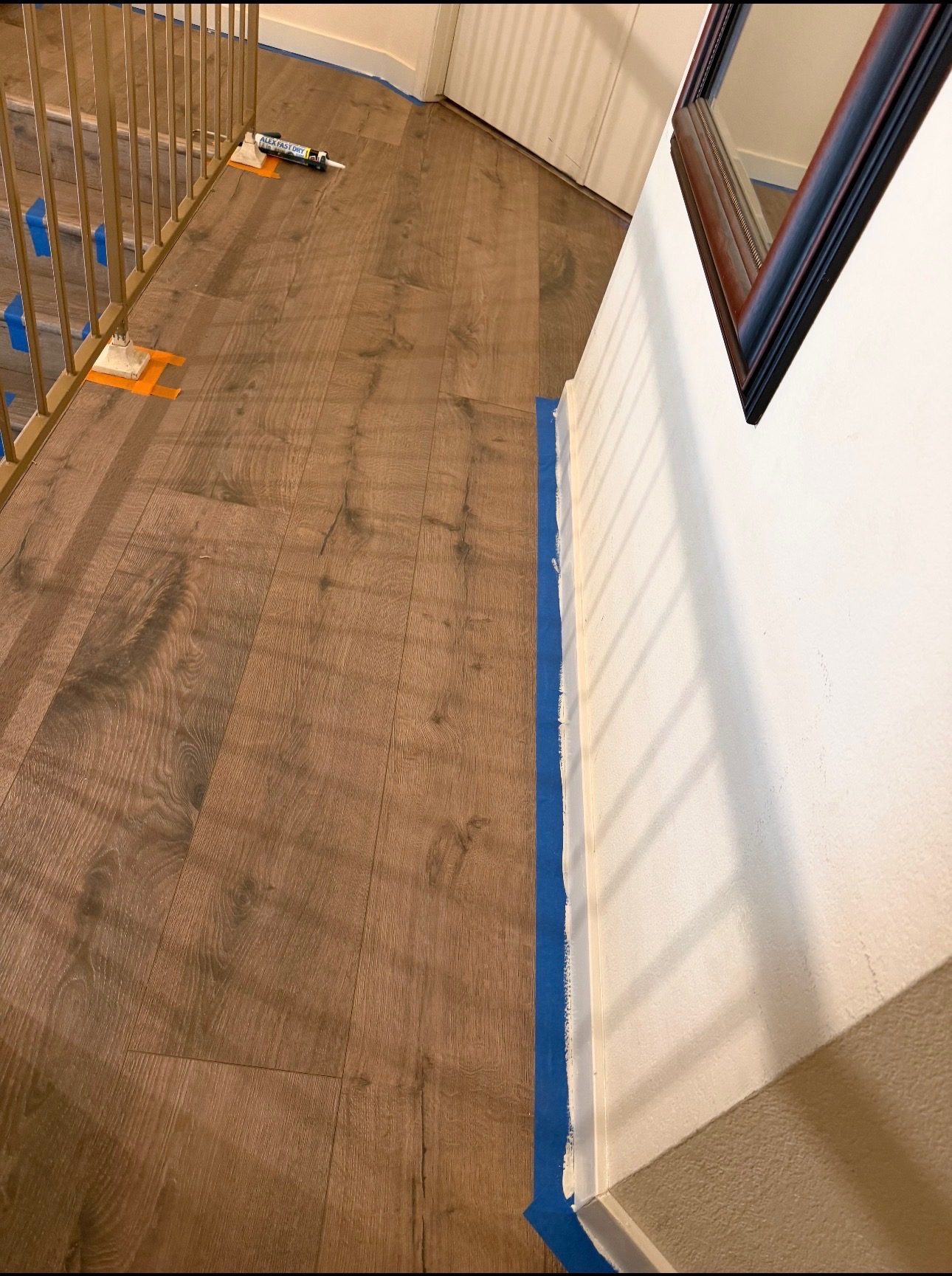
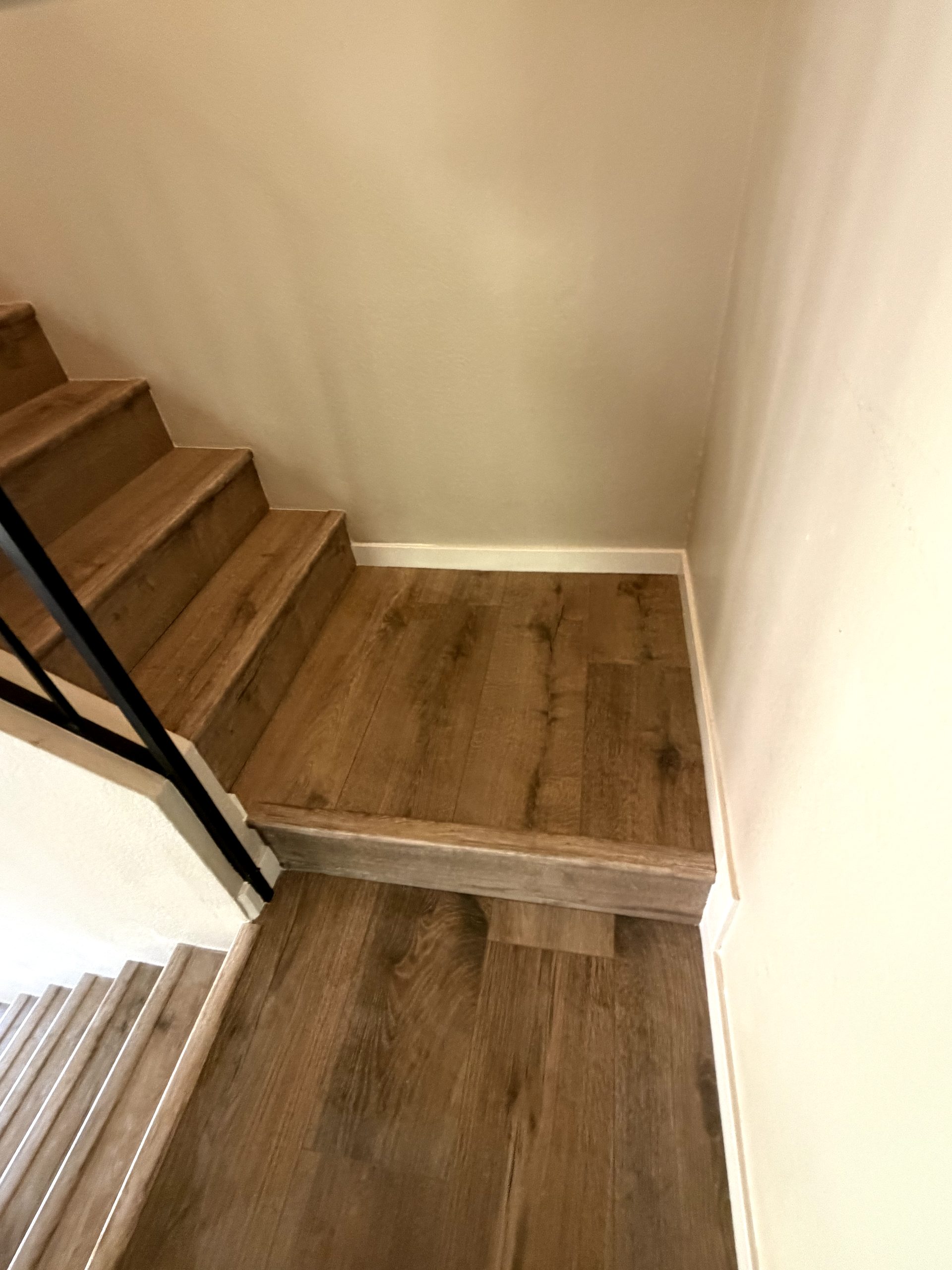
For a real reference, the job in the photos on this page, 15 stairs plus the second-floor landing, 175 square feet in all, ran $2,750 in labor from tear-out through new baseboards, with the homeowner supplying the plank. The landing was the cheap part of that number. The stairs were most of it.
Stairs cost several times the per-foot rate of an open floor. A step is only a few square feet, but it carries cuts for the tread, the riser, and the stair nose, plus adhesive, fasteners, and cure time. None of it gangs together, and all of it is hand work. A flight of stairs can absorb a full day of labor on a job where the entire landing went down in an afternoon.
Can you put vinyl plank on stairs?
Yes, and done right it's one of the best-wearing surfaces you can put on a staircase. One rule decides it: stairs are never floated. Floor planks in a room float free and expand under a baseboard. On a stair there is no perimeter to hide movement, so every tread and riser is fully glued, and the front edge gets a stair nose molding that is glued and pinned. Manufacturer instructions, Pergo's among them, require glue-down on stairs, and the nosing carries the hardest hits in the whole house. Then the stairs rest about 24 hours before traffic.
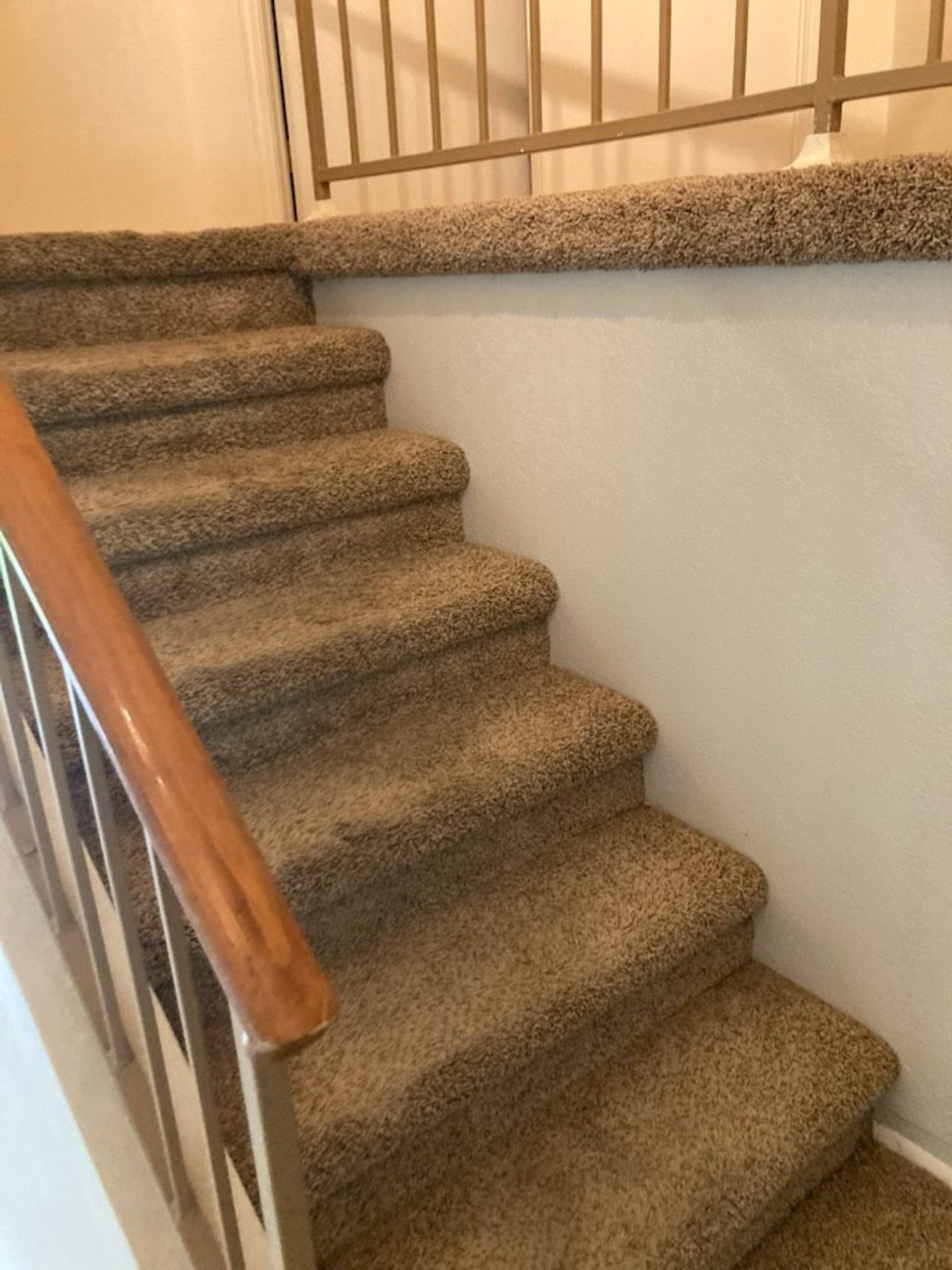
There's a second check most flooring crews never make. Carpet with pad and vinyl plank are different thicknesses, so changing the covering changes the height of the top and bottom risers, and the residential code (IRC R311.7.5) allows no more than 3/8 inch of variation between the tallest and shortest riser in a flight. We measure that before the first tread goes down. Miss it and you catch your toe on the top step every trip up.
What does a carpet-to-plank conversion actually involve?
We finished a carpet-to-plank conversion in Phoenix in July 2026, a full staircase plus the second-floor landing. The scope Harrison called out on the walk-through is the scope most of these jobs need: carpet and pad out, tack strips and staples pulled, transition strips where the new floor meets the doorways, new baseboards on the landings, and stair nose edging on the front face of every step and along the open edge of the landing. The railing got repainted black while the floor was open, which is the cheapest time to do it.
On a first floor the same job runs over the slab instead: the surface gets checked against the flatness standard for resilient flooring (ASTM F710, 3/16 inch over 10 feet), high spots ground, low spots patched, and a 6-mil vapor barrier goes down under a floating floor. The Phoenix-specific part: many Valley homes built since the 1980s sit on post-tension slabs, marked by a stamp in the garage, and cutting or drilling one is dangerous. Transition tracks that would normally be screwed to the slab get glued on those homes. We check for the stamp before anyone drills.
Do the baseboards have to come off, and do I need new ones?
They come off, or the expansion gap ends up covered by something that looks worse. A floating plank floor needs a small expansion gap at every wall, and the baseboard is what covers it. On carpet conversions we usually install new base rather than salvage the old: carpet-height base sits too high once the thinner plank goes in, and pry marks rarely paint out. New baseboards run about $3–$6 per linear foot installed. One rule tells you whether a crew knows floating floors: base and shoe get nailed into the wall, never through the flooring. A single nail through a floating floor pins it, and the floor buckles somewhere else months later.
How long does vinyl plank last, and what should you ask for in Phoenix?
A well-installed rigid-core plank floor is a 10-to-20-year floor in a Phoenix home, and the spec that decides its lifespan is the wear layer, measured in mils (thousandths of an inch, not millimeters). Flooring manufacturer MSI's guidance matches what we see in the field: 12 mil is fine for a quieter adult household, 20 mil is the right ask for a family home with kids or dogs, and 20–22 mil earns its keep in rentals. The wear layer resists scratching and dulling, but it won't stop a gouge from a dragged appliance. And while the plank itself is waterproof, the assembly isn't: water still finds seams and edges.
One question to ask any installer here: what temperature was the house when the floor went in? Rigid-core plank does not need days of acclimation, but manufacturers require the home to be held roughly between 55°F and 85°F during the install. A floor laid in a vacant house sitting at 105°F shrinks once the AC comes on, the end joints open up, and the manufacturer calls it an installation error rather than a warranty claim. We get the cooling running before the first box opens. Long-term, plank in a west-facing room with big glass needs blinds through summer afternoons. Direct sun is the one thing that ages it fast, and the warranties say so.
Does plank on the stairs and landing hurt resale?
In mid-market Valley homes, no. Buyers read fresh plank as move-in ready, and it photographs far better than worn carpet. Matching the stairs to the landing, with real stair nosing instead of raw plank edges, keeps it looking deliberate. The only tier where plank on stairs draws a shrug is the luxury market, where buyers expect hardwood. For most Phoenix homes, replacing tired carpet with plank costs less than hardwood and holds up better to dogs and kids.
Can I install vinyl plank on my own stairs?
A single rectangular room of floating click-lock plank is a fair weekend project for a patient DIYer with a flat floor. Stairs are a different job. Every step is three glued pieces. The nosing has to be cut, mitered on open ends, glued, and pinned. One sloppy nosing is a trip hazard on the one surface in the house that hurts you when it fails, and the stairs are out of service for a day while the adhesive cures. Riser math is the other trap: get the top step 1/2 inch off and you'll feel it every trip upstairs.
The licensing line matters when you compare bids. Under Arizona's handyman exemption, A.R.S. §32-1121, unlicensed work is capped at $1,000 per job including materials, and almost any real flooring job passes that immediately. A licensed contractor is also accountable to a written standard: Arizona's workmanship rule (A.A.C. R4-9-108) measures the work against the manufacturer's instructions and industry standards, with the ROC behind it. Phoenix treats floor covering itself as permit-exempt finish work; structural subfloor repair or changes to the stairs or railing can need a permit, and we confirm for your city either way.
Vinyl Plank Installation Across the Phoenix Metro
We install vinyl plank flooring, stairs included, in Phoenix, Scottsdale, Tempe, Mesa, Chandler, Gilbert, Glendale, and Peoria. Flooring is one service of many; see everything we do.
What else makes sense while the rooms are empty?
A plank job clears the rooms down to bare floor and puts a licensed crew in the house with the saws already set up. Anything that touches the floor line is cheapest right then. Work added to the same visit usually prices 25–50 percent under what it costs as its own job later. The add-ons that share the setup are the ones this job already touches: new baseboards and door trim go in faster while the floor edge is exposed, and a dated oak handrail is never cheaper to refinish than while it's already masked off for floor work. The black railing in the photos above came out of that same visit; painting the three railings added $600 to the job. Bare floors also make wall dings obvious, so any drywall patching and texture belongs in the same window, before baseboards and paint.
If the house has been collecting a list, the flooring visit is the moment to clear it: a punch list of small repairs rides along with the same mobilization. Ask for one combined price on the whole list before the first box of plank is opened.
Vinyl Plank Flooring FAQ
Do you price stairs per step or by the square foot? Per step. A staircase is a small area with a lot of hand work in it, so square-foot pricing understates it badly. Each step is priced to cover the tread, the riser, and the glued-and-pinned stair nose, and the quote states the step count so you can check it against your own stairs.
Can you do just the stairs, or do you have to do the whole upstairs? We can do just the stairs. The small-job minimum of about $600 applies, and most stair-only jobs clear it on their own. If the landing carpet is worn too, doing the landing in the same visit is cheaper than doing it later, because the setup and haul-off are already paid for.
Do I buy the plank, or do you supply it, and how much should I order? Either works. If you are buying, order about 10 percent over the measured area for cuts and waste, count one stair nose piece per step plus the open edges, and keep a spare box in a closet for future repairs, because plank lines get discontinued. If we supply it, we spec the wear layer and core for how the room gets used, and it arrives with us on install day.
Can you match new plank to flooring that is already down somewhere else in the house? Sometimes. If the existing line is still made, yes. If it has been discontinued, an exact match is unlikely, and we will say so rather than lay something close-but-off next to it. The clean fallback is a deliberate break at a doorway with a transition piece, so the two floors read as separate rooms instead of a failed match.
Can we stay in the house, and can we use the stairs while you work? You can stay in the house for the floor work. The stairs are the one constraint: glued treads and nosing need about 24 hours before traffic, and the stairs are usually the only way upstairs. We schedule the stair day around your household, and you get the no-traffic window before it starts, not after.
Do I need a permit, and are you licensed if a step or the landing needs real repair? Phoenix treats floor covering as finish work that is exempt from permits, and other Valley cities generally follow suit; we confirm for your city. Structural subfloor repair or any change to the stairs or railing can require one. Norem Contracting is a licensed Arizona Class B general contractor, ROC #365090, so the carpentry side is our standard licensed work. Under A.R.S. §32-1121, unlicensed work is capped at $1,000 per job including materials, which a real flooring job passes almost immediately.
Related: flooring installation · baseboards, trim & handyman work · drywall repair · see our completed work

Written by Harrison Norem — Licensed Class B General Contractor, AZ ROC #365090. About Harrison
Get a Firm Vinyl Plank Price
Text or send photos of the room and the stairs, with a rough square footage if you have it, and we'll send back a clear, honest number, usually the same day. Free estimate from a licensed Arizona contractor, ROC #365090.
Request Free Estimate