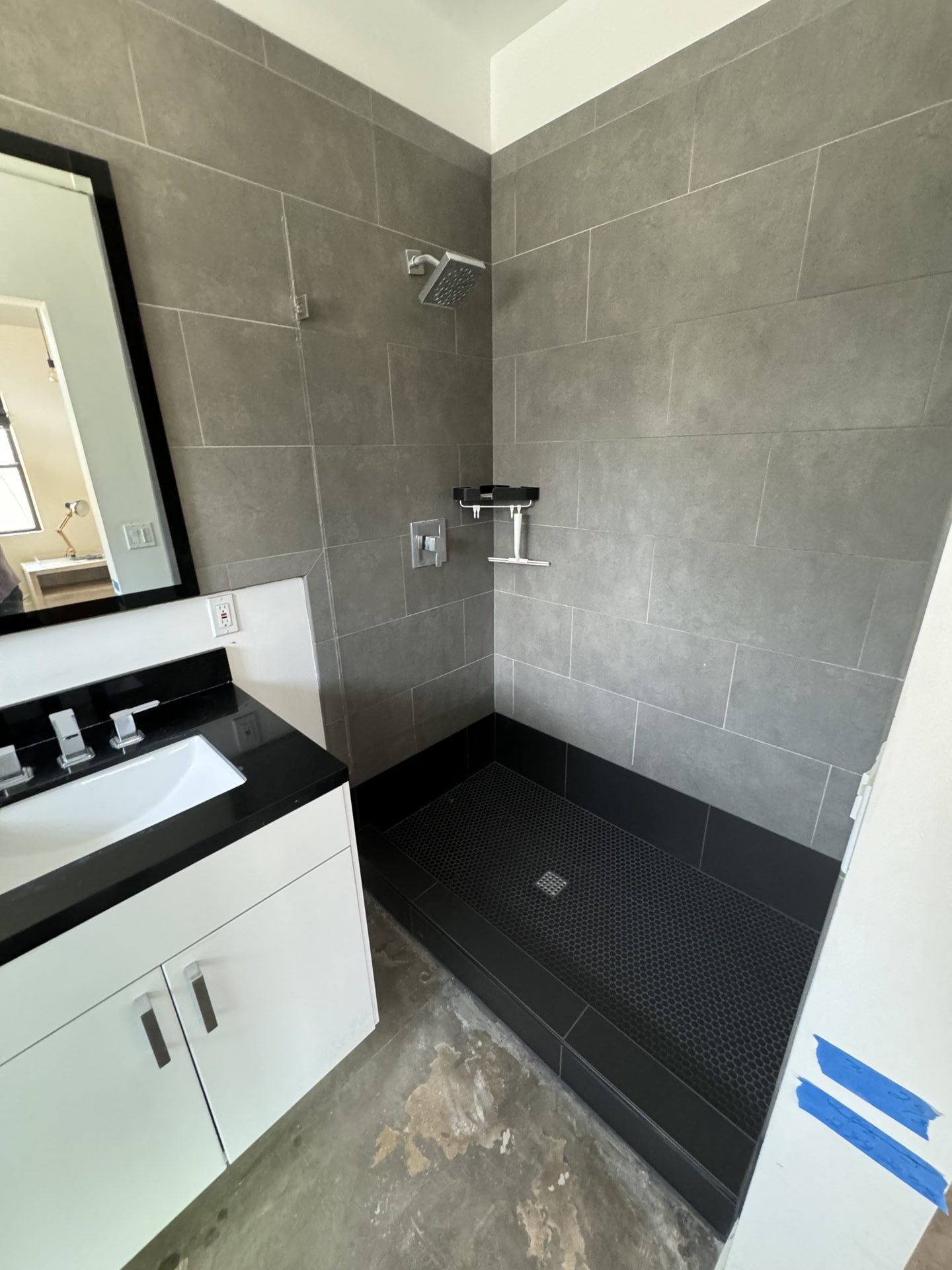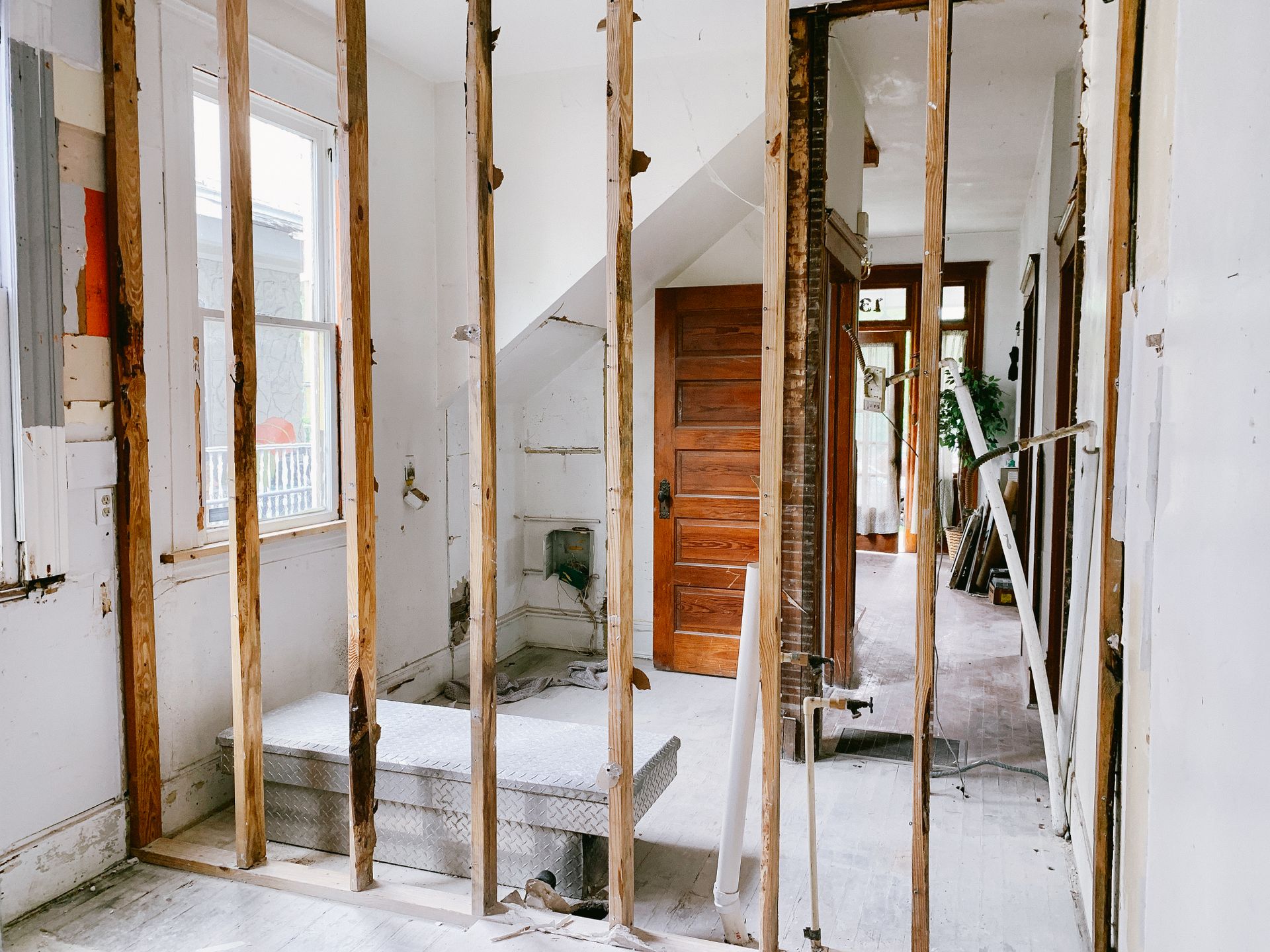
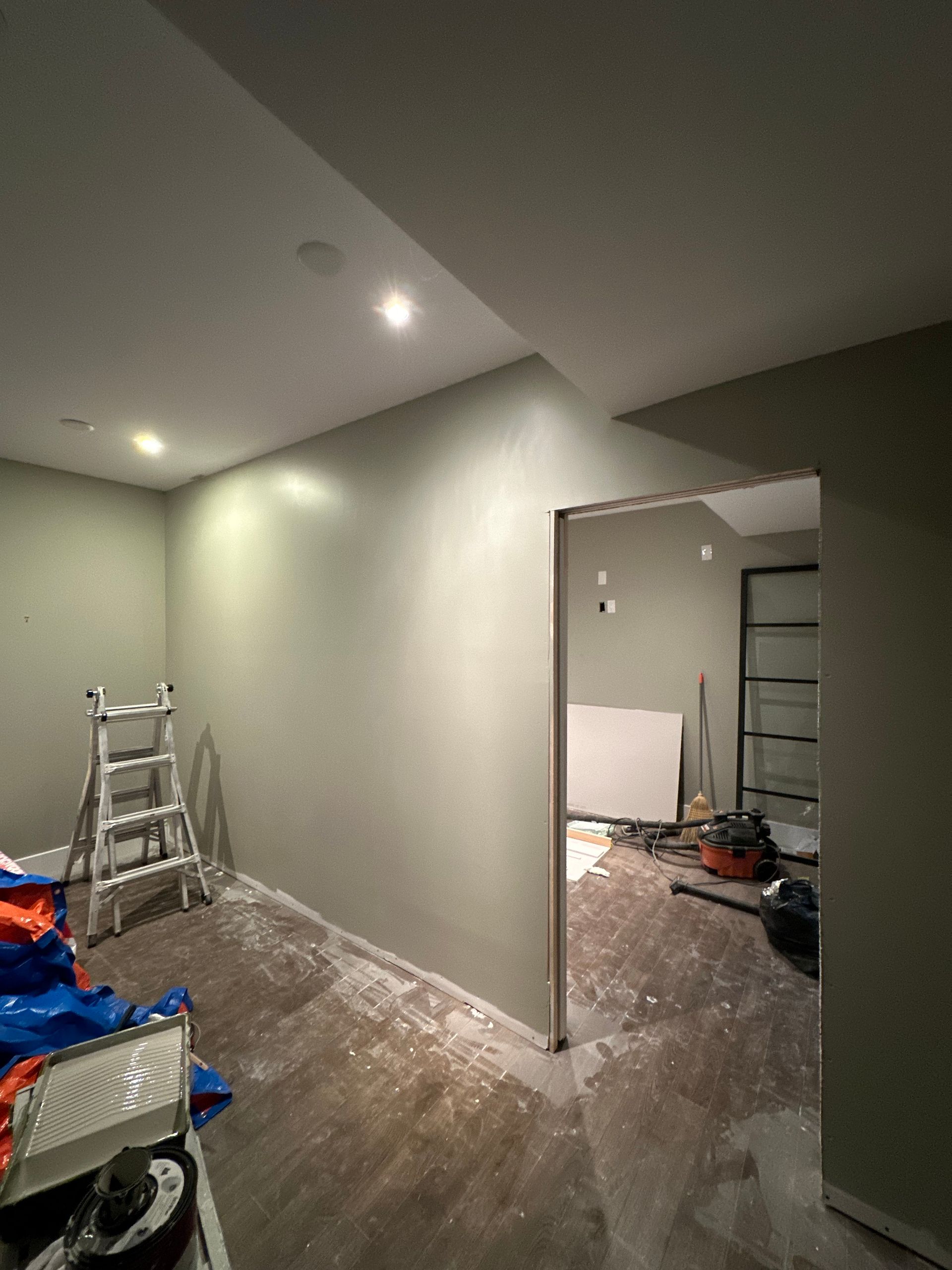
When a contractor abandons a Phoenix remodel, document the job before anyone touches it, file a written complaint with the Arizona Registrar of Contractors (the ROC), which for a remodel is due within two years from the date work was last performed, and have a licensed contractor assess and finish the work. Expect the remaining work to cost more than it would have on the original contract, because the new contractor has to open up, verify and sometimes redo what was left. If the first contractor was licensed, the house is your primary residence, and either the ROC suspends or revokes the license after the contractor fails to fix the violation or you win a court judgment, the Residential Contractors' Recovery Fund can pay up to $30,000 of your actual damages under A.R.S. 32-1132.01(D).
The usual starting point is a half-finished kitchen, or a shower that has sat open for weeks, and a contractor who stopped answering. What you do first decides how much money comes back and what the finish costs. For the finish work itself, our Norem Punch List and full remodeling services cover the trades a stalled job usually leaves behind.
Has My Contractor Abandoned the Job, or Just Gone Quiet?
Arizona law draws the line for you. A.R.S. 32-1154(A)(1) lists "abandonment of a contract or refusal to perform after submitting a bid on work without legal excuse for the abandonment or refusal" as grounds to suspend or revoke a license. Paragraph (A)(8) adds the quieter version homeowners run into more often: "failure in a material respect by the licensee to complete a construction project or operation for the price stated in the contract, or in any modification of the contract." That second one is the crew that still answers the phone, but only to say the job needs more money to finish.
Before you call it abandonment, get the contract out. Any contract over $1,000 between a contractor and an owner has to state an estimated completion date, the deposit, and the progress payments tied to stages of construction, and it has to tell you in at least ten-point bold type that you can file a written complaint with the Registrar (A.R.S. 32-1158). Those dates and stages are your yardstick. Read the termination and notice clauses, then send a dated written notice that lists the work left, asks the contractor to return by a specific date, and goes to the address on the contract. If it goes unanswered, the letter and its date go in the file. This page is general information, not legal advice, and a construction attorney can read your contract and tell you where you stand before you terminate it.
What Should I Document Before Anyone Else Touches the Job?
Everything, dated, before the first new worker walks in. The record you make now is the evidence for the ROC complaint, the basis for any Recovery Fund claim, and the scope a new contractor bids from. It also protects the complaint itself. A.R.S. 32-1155(D) says the Registrar may not issue a workmanship citation if the contractor's work "has been subject to neglect, modification or abnormal use." Once someone else changes the work, the condition it was left in exists only in your photos.
The takeover file: what to collect and why
| What to collect | Why it matters later |
|---|---|
| Photos and video of every room, wide and close, every open wall and ceiling | Shows what was installed, what was left open, and what got damaged while it sat. |
| A list of materials on site, with receipts | Receipts show what you already paid for, which is the starting point for any argument over the cabinets stacked in the garage. |
| Every payment, matched to the contract's stages | The Recovery Fund measures damages as the cost to complete minus the contract price still unpaid. |
| The permit number and its inspection history | Tells the next contractor which work passed inspection and which got covered before anyone looked. |
| Texts, emails and your dated notice letter | Shows when the work stopped and that the contractor was asked to come back. |
| Lien waivers and any preliminary twenty-day notices you received | Shows who else furnished labor or materials and who has already been paid. |
Make a copy of the whole file before you hand any of it to a new contractor or an investigator.
That last row is the one people skip. Under A.R.S. 33-992.01, anyone other than a wage laborer who furnishes labor, materials, machinery, fixtures or tools to a job has to serve the owner with a preliminary twenty-day notice, no later than twenty days after first furnishing to the jobsite, as a condition of any valid lien claim. If one of those landed in your mailbox during the job, it names a supply house or trade company that was working through your contractor, and it tells you who might still be owed.
How Does an ROC Complaint Work, and How Long Do I Have to File?
You have two years. A.R.S. 32-1162(A) requires a complaint to be filed "for all other projects, within two years after the completion of the specific project," while new home builds run from the earlier of close of escrow or occupancy. The ROC's own complaint page puts the remodel rule in plainer terms: "within two years from the date work was last performed." On a job that stopped halfway, count from the last day anyone worked, and file well inside that.
You file online through the ROC's portal, and the ROC says an investigator reaches out within a couple of days. It first confirms whether the contractor holds a license, then notifies the contractor. For workmanship, the contractor gets a chance to look: A.R.S. 32-1155(D)(1) bars a citation if "the contractor is not provided an opportunity to inspect the work within fifteen days after receiving a written notice from the registrar." That fifteen-day rule governs workmanship citations. Abandonment under (A)(1) and failure to finish for the price under (A)(8) are separate grounds. An ROC inspector can then schedule a jobsite inspection with you and the contractor. If the inspector finds work below minimum industry standards, the ROC can issue a written directive, often called a corrective work order, and the corrective work period must be at least fifteen days (A.R.S. 32-1154(A)(22)). A compliance inspection then checks whether the work got fixed.
If the contractor doesn't comply, the case moves to a citation, which the licensee has ten days after service to answer in writing (A.R.S. 32-1155(A)). Under subsection (C), failure to answer may be deemed an admission. A contested case goes to a hearing before an administrative law judge at the Office of Administrative Hearings, and the Registrar's final decision can be appealed to superior court (A.R.S. 32-1157). One detail that matters on abandoned jobs: a contractor who lets the license lapse or surrenders it doesn't end the case. A.R.S. 32-1154(D) keeps the Registrar's jurisdiction alive after expiration, suspension, revocation or voluntary surrender.
If the contractor was never licensed, the ROC still takes the complaint, but it leads somewhere else. The Registrar can order an unlicensed person to cease and desist under A.R.S. 32-1166, and acting as a contractor without a license is a class 1 misdemeanor under A.R.S. 32-1164, with a fine of at least $1,000 on a first offense.
Can the First Contractor's Suppliers and Trade Crews Put a Lien on My House?
If you owned the home before the work began and live in it or plan to, generally no. A.R.S. 33-1002(B) says no lien "shall be allowed or recorded by the person claiming a lien against the dwelling of a person who became an owner-occupant prior to the construction, alteration, repair or improvement, except by a person having executed in writing a contract directly with the owner-occupant." The tile setter, the electrician's company and the supply house that worked through your contractor didn't sign with you, so on an owner-occupied home their lien route is closed. The contractor who signed a written contract with you is the one who keeps it.
An owner-occupant is a natural person who held recorded title before the work started and who lives in or intends to live in the house at least thirty days during the twelve months after completion, without intending to sell or lease it. Subsection (C) makes any contract clause waiving that protection void. A flip, a rental, a house you plan to sell, or a house held in an LLC rather than in your own name sits outside it, and every company that furnished labor or materials keeps its lien rights there.
That is where lien waivers earn their keep. A.R.S. 33-1008 prints four statutory forms: conditional and unconditional waivers, each for a progress payment and for a final payment. A conditional waiver releases lien rights only once the payment clears the bank. An unconditional one says the money was already received. The statutory preliminary notice itself tells owners to collect the conditional form before paying and the unconditional form after.
What Happens to the Permit That's Still Open?
It stays in the first contractor's name until someone changes the record. In Phoenix, that is the Change of Record Affidavit, form TRT/DOC/00025. The owner of record lists the address and permit number and checks that there is a new contractor, and the new contractor signs that it "has read the original permit application and does hereby assume all of the obligations that would have been theirs had they signed the original permit application." The form calls this "a formal transfer of obligations and substitution of original record as required by Section 105.8 of the Phoenix Building Construction Code." Only the owner and the new contractor sign it, both notarized, so a first contractor who disappeared can't hold it up.
For the new contractor, "all of the obligations" means any rough inspection that never happened still has to happen, and work that got covered before it was inspected may have to be opened so an inspector can see it.
Unincorporated Maricopa County runs it through Directive DD-2007-05: a revised permit application plus "written authorization from the prior contractor giving the current owner or new contractor total rights and ownership of the permit and plans and any previously paid permit or plan review fees." A contractor who walked off the job rarely signs that, and the directive allows for it: "Other written documentation may be accepted by a manager." Every other Valley city runs its own counter, so ask yours before work resumes. Our Phoenix remodel permit guide covers who pulls what in the first place.
Check the permit's date while you're at it. Phoenix's handout TRT/DOC/00021P says a building permit expires 24 months from issue unless it's extended. One that expired less than a year ago can be reinstated, on a written request, for 50 percent of the current permit fee, provided the plans haven't changed. Past a year, the city issues a new permit to complete the previous project, and the residential fee is based on which inspections the original permit passed.
How Does a New Contractor Take Over a Half-Finished Remodel?
By verifying before building. A takeover starts with a walk through the job with your file in hand, and the inspection history decides how much has to be opened. The order we run it in:
- Read the record first. Which inspections passed, which were scheduled and missed, which work was covered with no inspection at all, and whether the permit itself is still active.
- Open what can't be verified. Wiring and plumbing closed up before a rough inspection, supply lines nobody pressure tested and drains nobody water tested, headers where a wall came out, and the blocking that grab bars, cabinets and a shower door will hang from.
- Test what can be tested. A shower pan that isn't tiled yet can be flood tested. A pan already under tile can be flood tested for an active leak, but its slope, membrane laps and drain connection can't be seen without a passed inspection or photos taken during the build.
- Sort every item into keep, repair or redo. Keep what can be seen or tested and passes. Repair what can be reached and fixed in place. Redo anything that can't be verified or fails a test.
- Write a new contract from current conditions. Kept items are listed and photographed, prior work is excluded, and the scope starts from what is on site today rather than from the old contract.
The shower is the clearest example of why step three matters. Liquid membranes like Custom Building Products' RedGard go on in two coats, and the manufacturer's data sheet ties its ANSI A118.10 waterproofing rating to 80 square feet per gallon per coat. It goes on pink and dries dark red. Sheet membranes like Schluter's Kerdi depend on seams overlapped two inches or covered with Kerdi-Band. Both disappear under tile, and neither can be checked from a finished wall. On a slab-on-grade Valley house, the same logic applies to an open plumbing trench in the floor: what's in it gets inspected before the concrete patch, never after.
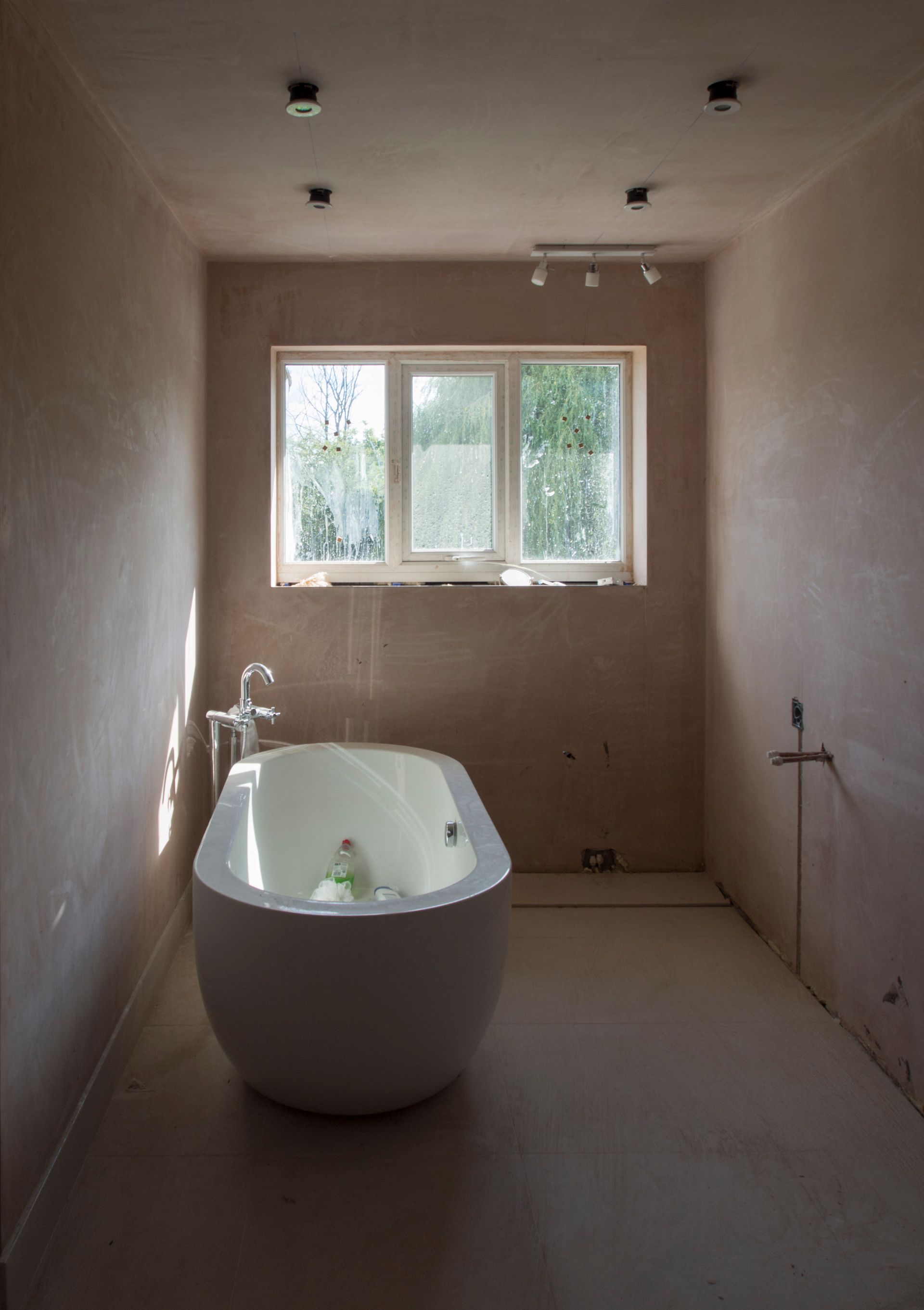
Timing in Phoenix adds two pressures. A job left with an open roof penetration or an unsealed exterior wall has to be dried in before the monsoon, which the National Weather Service defines as June 15 through September 30. And an abandoned exterior job in a planned community can draw an HOA violation letter, so tell the association in writing that a new contractor is taking over and when.
How Much Does It Cost to Finish Another Contractor's Job?
The remaining work costs what the same work costs new in Phoenix, plus the cost of finding out what you have. A same-footprint kitchen still runs $25,000 to $40,000 as a whole project, a full shower rebuild still runs $6,000 to $12,000 and up, and an interior repaint still runs $3.25 to $4.50 per square foot of floor area. The difference on a takeover is the verification layer on top: inspection fees, access cuts in finished drywall, and the work that has to be redone because nobody can prove what's under it.
Finishing a stalled remodel: Phoenix 2026 line items
| Line item | Typical Phoenix range | Note |
|---|---|---|
| Independent home inspection, 1,500 to 2,000 sq ft house | $375-$450 per inspection | A dated third-party record of the condition the job was left in. Larger houses run higher. |
| Access cut to see concealed work, patched and textured | $350-$650 per patch | Six inches to about two square feet. One per suspect spot: a valve, a junction, a header. |
| New drywall hung, taped and finished | $1.50-$3.50 per sq ft | For walls left open. Texture and paint sit on top. |
| Corner leak or bottom-row pan rebuild, wall tile saved | $2,500-$4,500 per shower | When the walls are sound and the pan is the question. |
| Full pan rebuild with new bonded membrane | $3,500-$6,000 per shower | Re-tiled floor and bottom row. |
| Full shower gut and rebuild | $6,000-$12,000+ per shower | The answer when nobody can prove what's behind the tile. |
| Kitchen refresh, cabinet boxes kept | $15,000-$25,000 per kitchen | Whole-project range. A stalled job buys the part that's left. |
| Full kitchen remodel, same footprint | $25,000-$40,000 per kitchen | Same as above. Cabinets already on site come off the number if they're usable. |
| Interior repaint, walls, ceilings and trim | $3.25-$4.50 per sq ft of floor area | Usually the last trade on a stalled job, and the one that hides the patches. |
| Luxury vinyl plank, installed | $4.50-$9.50 per sq ft | Material grade and slab flatness move it. |
| Interior door, installed | $400-$900 per door | Prehung or slab, with or without new casing. |
Phoenix metro rates for licensed, insured work, 2026. Inspection figure from a Phoenix-area inspector's 2026 rate card. The rest match our service pages.
There is no reliable published percentage for a "takeover premium," and anyone quoting you a flat markup is guessing. What moves the number is visible on the job. The big one is how much got covered without an inspection. Then comes whether the materials on site are usable or the wrong size, color or grade, and whether a crew can pick up mid-sequence or has to back up a step, which is common when drywall went up before a rough inspection. Last is whether the first contractor's work is plumb, level and to code, or has to come out before anything new goes next to it.
Send Us Photos of Where It Stopped
Photos of every open wall, the contract, and the permit number if there is one. We'll tell you what can be kept, what has to be opened, and what finishing it costs.
Free Takeover EstimateCan the Recovery Fund Pay for the Finish Work?
Yes, if three things line up: the contractor was licensed, the home is your primary residence, and the ROC suspends or revokes the license over the violation, or a court enters a judgment against the contractor. Under A.R.S. 32-1132(B), an individual qualifies when they own the damaged residential property and occupy or intend to occupy it as their primary residence. An LLC or a revocable living trust that owns the house can also qualify, under occupancy rules of its own. Under 32-1132(C), the contractor has to have been appropriately licensed on the date the contract was signed, the date of the first payment, or the date work first started.
The damages definition reads like a takeover estimate. A.R.S. 32-1132.01(H) defines actual damages as "the reasonable cost of completing the contract and repairing the contractor's defective performance, minus the part of the contract price still unpaid." Subsection (B)(2) requires those damages to be established by bids from, or the value of work performed by, a licensed contractor. So the new contractor's written bid is part of your claim, which is one more reason the takeover has to go to a licensed company.
Three ways to recover money from a contractor who walked away
| Route | Who can use it | What it can produce | Clock |
|---|---|---|---|
| ROC complaint | An owner or contractor party to the construction contract, or someone who suffered a material loss from the work | Corrective work order, citation, license suspension or revocation. No money by itself. | Within two years after the project's completion (32-1162). The ROC counts a remodel from the date work was last performed. |
| Recovery Fund, administrative | A primary-residence owner, qualifying LLC, trust or lessee, against a contractor licensed at signing, first payment or start of work | Actual damages up to $30,000 per claimant, and $200,000 per license, then pro rata | Within two years after the Registrar's proceedings, reviews and appeals end (32-1133.01) |
| Civil suit and judgment | Anyone with a claim under the contract | A judgment. Against a licensed residential contractor, it can also support a Fund payment. | A Fund-related action within two years of the act or occupancy (32-1133) |
The Fund doesn't pay attorney fees or costs except in contested cases appealed to superior court (32-1132.01(E)), and both Fund routes require proceeding against the contractor's bond first.
Know the limits before you count on it. The maximum individual award is $30,000 (32-1132.01(D)). Total payouts on any one license stop at $200,000, and past that, claims are paid as a pro rata share (A.R.S. 32-1139(A)), which matters with a contractor who left a string of jobs. ROC Executive Director Tom Cole told ABC15 in June 2026 that because of that cap the Fund was prorating a lot of awards at 50 to 60 cents on the dollar. It is slow, because the claim waits for the complaint or lawsuit to finish, and it isn't automatic: the ROC says a claim, separate from the complaint, must be filed, after a claim against the contractor's license bond has reached a final determination. And it only covers licensed work. Cole put it plainly: "If you were dealing with an unlicensed entity in construction in Arizona, you will not qualify for the Residential Contractors' Recovery Fund."
Why Do Some Contractors Turn Down Takeovers, and How Do You Make Yours Easy to Take?
Because a takeover hands the new contractor someone else's risk. In Phoenix, signing the change of record means assuming every obligation on the original permit. Every concealed item is an unknown, and a homeowner who just got burned is understandably wary of the next contract. Plenty of good contractors would rather start a clean job than inherit a disputed one.
You can change that math. Hand over the file you built. File the ROC complaint before the walkthrough, so the dispute is with the Registrar and not something the new contractor has to referee. Settle who owns the materials on site. Bring the original plans and any engineering. And set a budget that includes the verification work, because a bid that assumes everything left behind is good is a bid that will grow.
How Do You Keep It From Happening on the Next Job?
Tie every payment to work you can see. Hold the contractor to the payment stages A.R.S. 32-1158 makes the contract list, and pay against work in place, not dates on a calendar. Arizona sets no cap on a remodel deposit, and the statute only requires the contract to state it, so negotiate a small one. Collect a conditional lien waiver with each payment and an unconditional one once it clears. Put every change in a written change order with its price before the work happens.
Check the license before you sign, and check its complaint history. Our guide to choosing a remodel contractor in Phoenix walks through the lookup and the questions worth asking, and our kitchen remodeling page shows what an itemized quote should break out. If you're a snowbird splitting the year between the Valley and somewhere cooler, a job that runs while you're away has nobody walking it. Arrange for someone to check the house and the progress weekly.
Questions Phoenix Homeowners Ask When a Contractor Walks Off the Job
Can I hire someone to finish the job before the ROC complaint is resolved?
Usually yes, because a gutted kitchen can't sit for months. The order matters. A.R.S. 32-1155(D) bars a workmanship citation if the first contractor never got the chance to inspect within fifteen days of the Registrar's written notice, or if the work has been modified. So file first, document everything, ask the investigator when the inspection will happen, and start the new contractor on the parts that are not in dispute.
Will the new contractor warranty the first contractor's work?
No. A takeover warranty covers the work the new contractor performs. The work it keeps from the first contractor should be listed in the new contract and photographed before anything starts, with failures caused by those kept items written out of the warranty. That list is also what protects you, because it shows exactly what was inherited.
What if the contractor took a deposit and never started?
Arizona treats that case specifically. Under A.R.S. 32-1132.01(C), when a deposit was paid and no work was performed or materials delivered, actual damages for a Recovery Fund claim are the exact deposit plus interest at ten percent a year from the date it was paid, capped at $30,000. The contractor must have been licensed and the home must be your primary residence.
How long does an ROC complaint take?
Simple complaints often end at the inspection and corrective order, and RSN Law puts many of them at a few weeks to a few months. The statute adds fixed waits: at least fifteen days to comply with a corrective directive, ten days to answer a citation, then a hearing if the contractor contests it. A Recovery Fund claim comes after all of that ends.
Can I file an ROC complaint against an unlicensed contractor?
Yes, but it leads somewhere different. The ROC can issue a cease and desist order under A.R.S. 32-1166, and contracting without a license is a class 1 misdemeanor under A.R.S. 32-1164. What it cannot lead to is the Recovery Fund, which exists only for damage caused by a licensed residential contractor. The narrow exception for hired work is the handyman exemption in A.R.S. 32-1121(A)(14): casual or minor work under $1,000 total, labor and materials included, that needs no building permit, isn't part of a larger job or split up to get under the cap, and, if advertised, says "not a licensed contractor."
Do I have to let the first contractor come back to fix it?
The statute builds the contractor's chance in. A workmanship citation cannot issue unless the contractor was given the opportunity to inspect within fifteen days of the Registrar's notice, and a corrective work order directs that contractor to fix the listed items by a deadline. Ask the investigator how refusing access would affect your complaint before you refuse it.
Keep the whole file for at least as long as the complaint and any Fund claim are open. The Recovery Fund claim window doesn't start until the proceedings end.
What Else Is Worth Fixing While a Crew Is Already Finishing the Job?
A stalled remodel usually leaves damage outside its own footprint: a hallway wall dinged by a cabinet delivery, a floor scratched by a ladder, a ceiling stained from a test run that leaked. With a licensed crew mobilized, the drywall mud mixed and the masking already up, folding those repairs into the takeover contract commonly prices them 25 to 50 percent below what each costs as its own visit, as long as they're on the scope before the work starts.
- The small-repair list. Sticking doors, loose hardware, a dead outlet cover, the caulk line that never got finished. Send the whole list through the Norem Punch List and it gets priced as one visit.
- Drywall damage elsewhere in the house. Patches with the texture matched, while the finisher is already on site. See drywall repair.
- The rooms next to the work. A finished kitchen makes the family room's paint look tired. See interior painting.
- The floor the first crew scratched. Running new flooring through the adjoining rooms puts the transition where you want it. See flooring installation.
- The other shower. If the stalled remodel started with a leaking pan, the hall bath built the same year often has the same failure coming. See shower pan rebuild and leak repair, and how pans fail in why a shower pan leaks into the wall.
- Framing that was left half done. Headers, blocking and a wall that came out without a plan. See framing and structural work.
- Someone to watch it if you leave for the summer. A finished house still needs eyes on it while it sits. See home watch services.
Photos of past work are on our project gallery.

Written by Harrison Norem, owner of Norem Contracting and a licensed Class B general contractor, Arizona ROC #365090. Fifteen years across the trades, including framing, drywall, tile, finish work and remodeling across the Phoenix metro. More about Harrison.