You stop SRP flood irrigation with one call to SRP's Water Contact Center at (602) 236-3333, but the water right doesn't go anywhere: SRP ties it to the land, says the allotment cannot be transferred, bought or sold, and leaves it with the parcel for the next owner. What you can't do on your own is take out the shared pipe, standbox or ditch that carries your neighbors' water, because SRP's notice of water rights says those parts may not be removed or changed without written permission from every owner of the private system. On cost, SRP's 2027 residential irrigation bill is $166.00 for a 0.20-acre lot and $440.65 for a full acre, and the drip that replaces the flood runs on City of Phoenix water at $5.55 to $6.75 for each 748 gallons beyond what the monthly service charge includes.
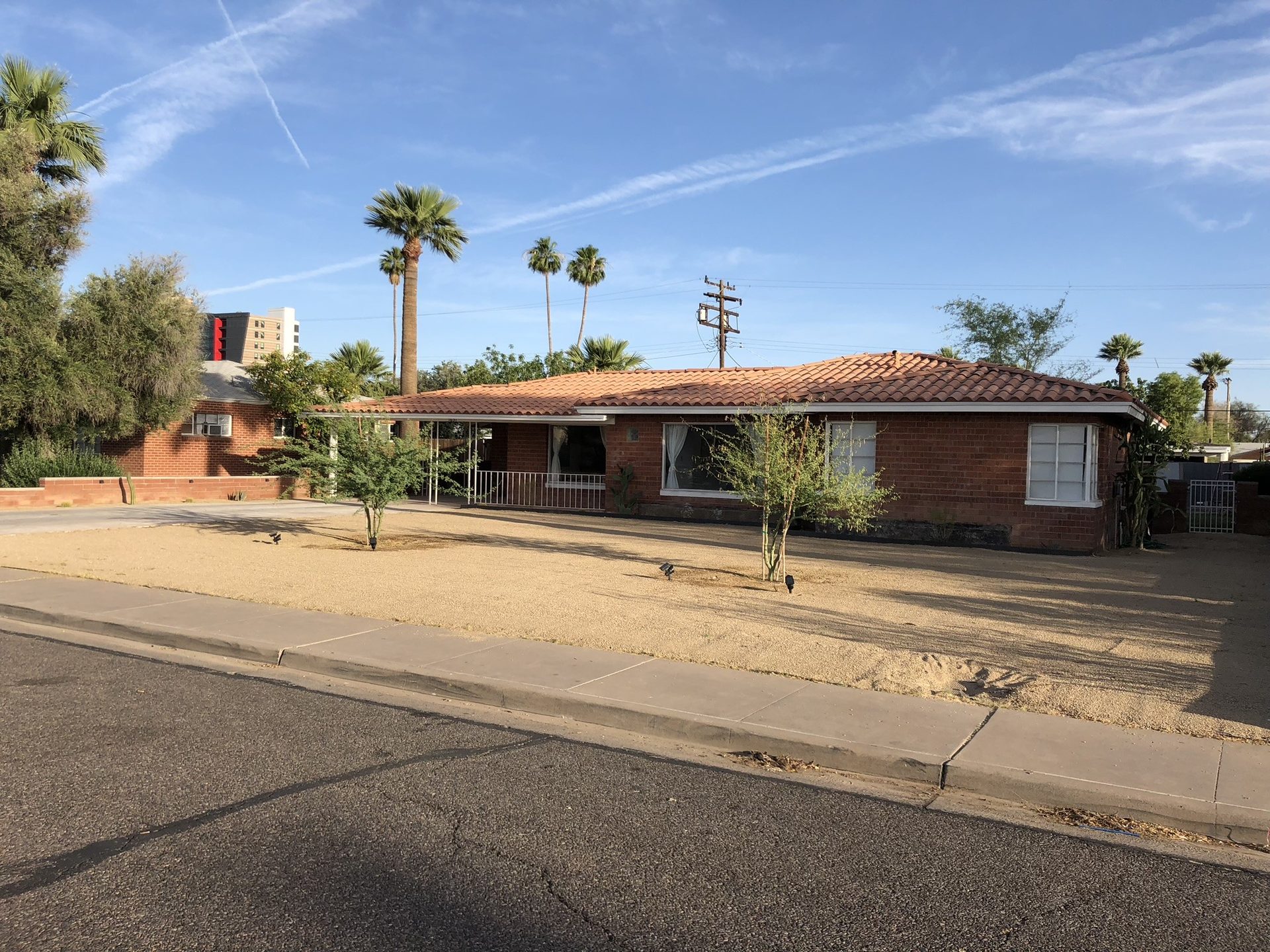
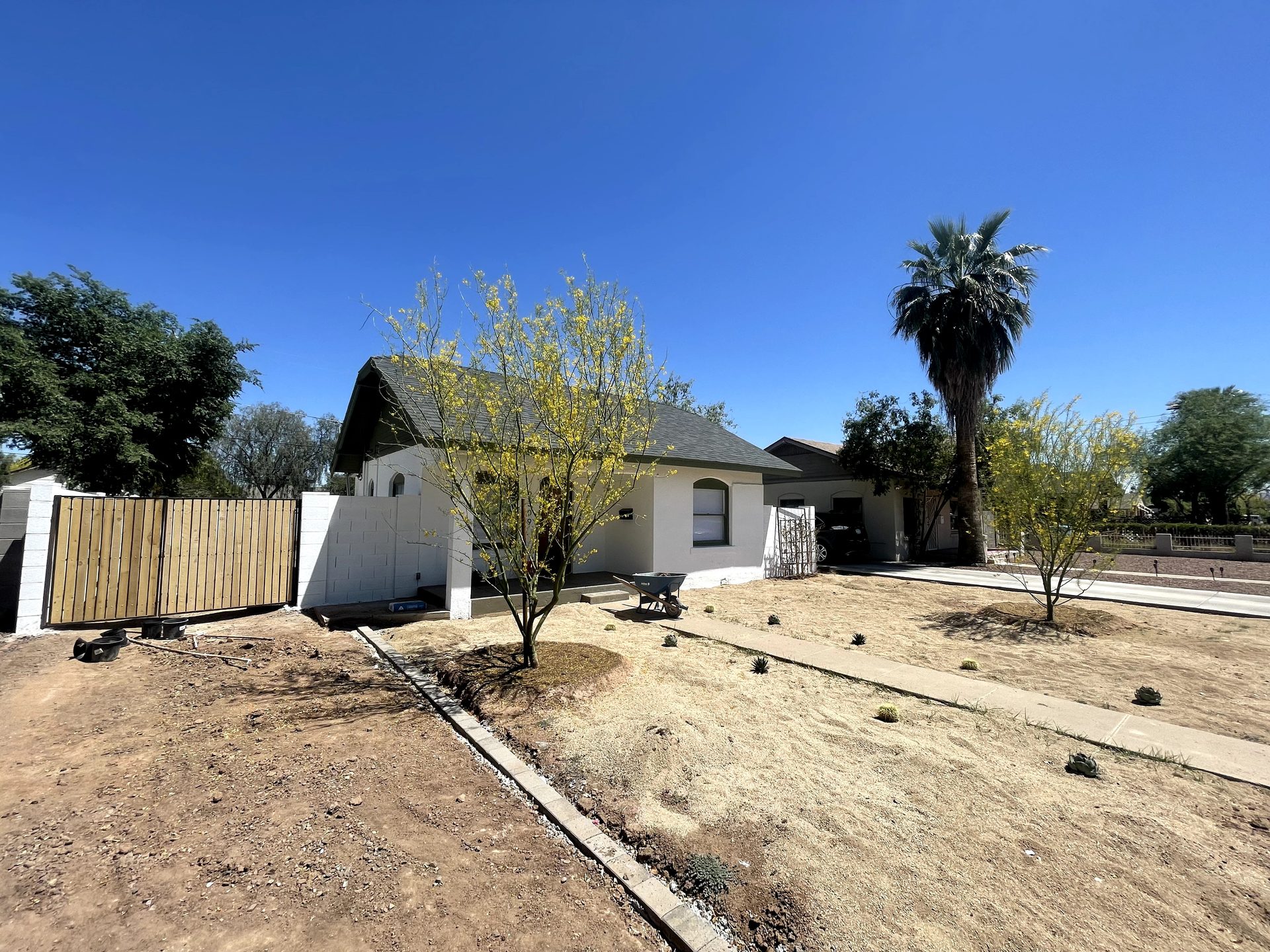
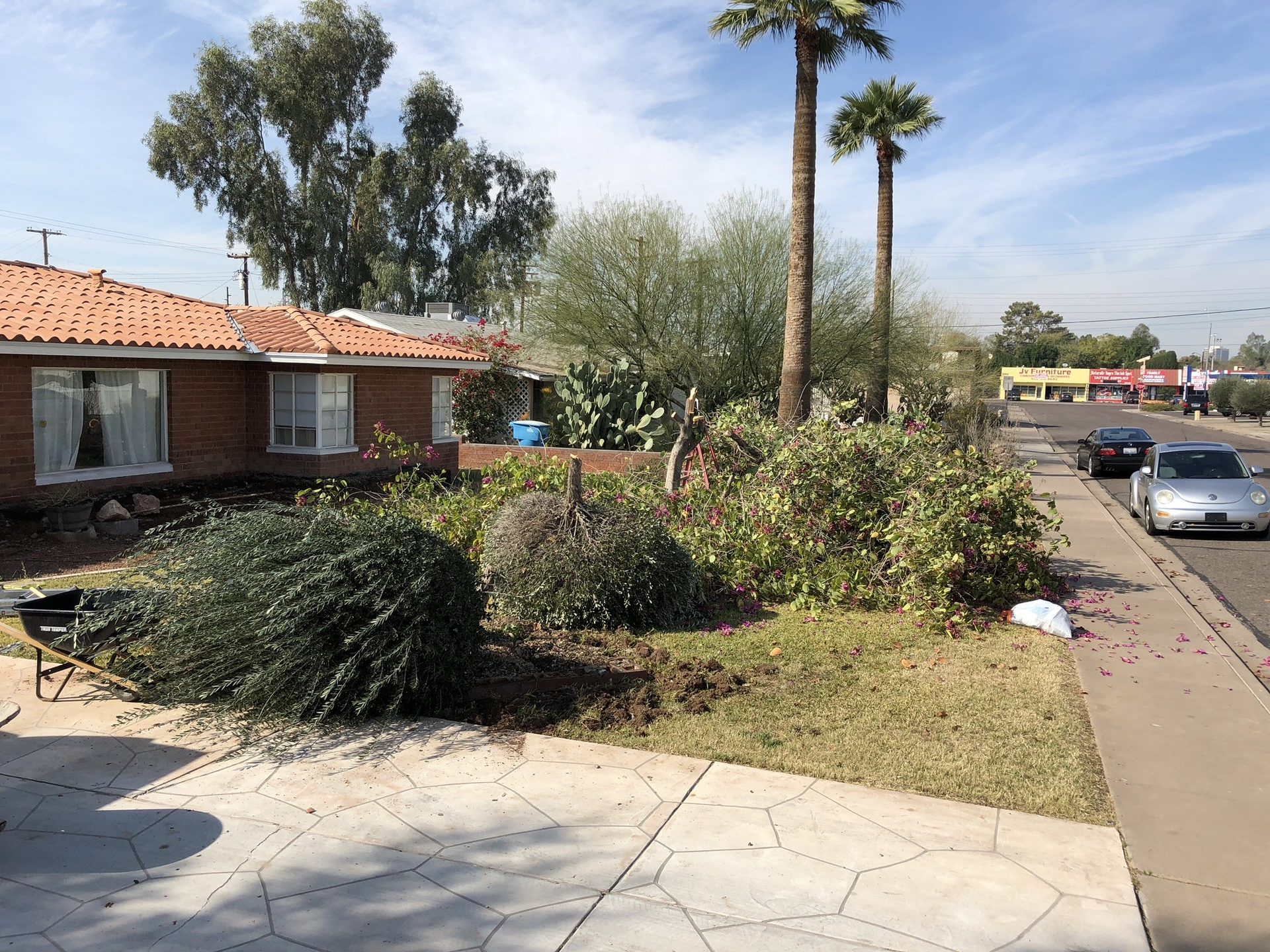
Our post on converting a flood-irrigated yard to desert landscaping covers where flood irrigation survives and how to wean big trees off it, and the conversion itself is on our desert landscaping in Phoenix page. What's left is the account, the shared system that crosses lot lines, the billing calendar, the berms, the 811 call, and what the water costs once it comes through the meter.
Can You Stop SRP Flood Irrigation, and What Happens to Your Water Shares?
Yes, and it's a phone call. SRP's irrigation account page says it in one line: "To permanently cancel your irrigation service, call SRP at (602) 236-3333." What ends is the delivery. The water right itself was never yours to cancel, because in Arizona it belongs to the parcel.
That goes back to 1903, when Valley landowners formed the Salt River Valley Water Users' Association and pledged their land as collateral for the federal loans that built the dams. In SRP's own telling, the pledged land "secured rights to shares" of water, and today "the parcels of land may have been split, but the rights to water shares remain with the land." SRP's residential charge schedule is still issued under the Association's name. SRP's notice of water rights says a property owner who is an irrigation water customer becomes an SRP shareholder, and its water shareholder page adds the rest: "In Arizona, water is tied to the land, not to individuals or SRP," land eligible for SRP irrigation "is entitled to a predetermined allotment of water," and that allotment "cannot be transferred, bought or sold." The same page notes that most water shareholders in the Salt River Reservoir District now receive treated water from a city, and only some still take deliveries directly from SRP.
So you can't sell your shares to a neighbor or move them to another lot, and a buyer of your house inherits the same right you have now. SRP's 2027 fee schedule also lists a $7.00 account reactivation fee "to activate an account previously cut over to the city domestic contract account," so a stopped account can be turned back on later. When you call, ask how your account will be recorded once you cancel, and get that answer in writing for the file you'll hand a buyer someday.
Have two numbers ready before the call: your SRP irrigation account number and your Canal-Lateral-Gate number. The SRP Residential Irrigation Owner's Manual explains the C-L-G as the delivery path of your water: canal, lateral, delivery gate. SRP's north-side canals through central and west Phoenix include the Arizona Canal and the Grand Canal. In Tempe, the city's flood irrigation service serves about 850 residential customers and coordinates the SRP water itself. Tempe Customer Services at (480) 350-8361 handles cancelled runs and billing for those customers.
Who Owns the Pipe, the Standbox and the Ditch That Cross Your Yard?
You and your neighbors do, together. SRP delivers water only as far as the SRP delivery gate at the high point of the quarter section, about 160 acres, and its responsibility ends there. Everything downstream of that gate, the ditches, the buried pipe, the standboxes, the valves and the berms, is a private neighborhood system that SRP doesn't own, operate or maintain.
SRP's notice is blunt about what that means when one owner wants out: "Underground pipes, open ditches, gates, stand boxes, ditch checks, valves, and all other parts of private irrigation delivery systems may not be removed or changed without express written permission from all private system owners." The same notice says the easements the system uses "are owned by the active irrigation customers within the area," that it is SRP's position "all private systems remain in place," and that removing them conflicts with A.R.S. 45-112. That statute makes it a class 2 misdemeanor to knowingly and without authority interfere "with a lawfully established headgate, measuring device or water box," or to obstruct the works where someone holds the right of way to carry the water.
So if the pipe across your back yard feeds three lots downstream, stopping your own deliveries doesn't let you dig it out, pour a patio over a standbox, or bury a valve under granite. You can close your own yard valve and stop ordering water. In Tempe, the city asks that only its staff operate the valves, so that starts with a call. Before any granite goes down, watch the closed valve through the neighbors' next run, because an old valve can seep on every delivery and fixing it is a repair to the shared system. Keep the valve and the standbox reachable after the yard is finished, too: the manual says property owners must provide reasonable access to all irrigation control structures. Abandoning a line is possible, but only the way SRP describes it: by written permission, with SRP checking that the shareholder understands the consequences and that every owner of that private system was notified and took part in the permission.
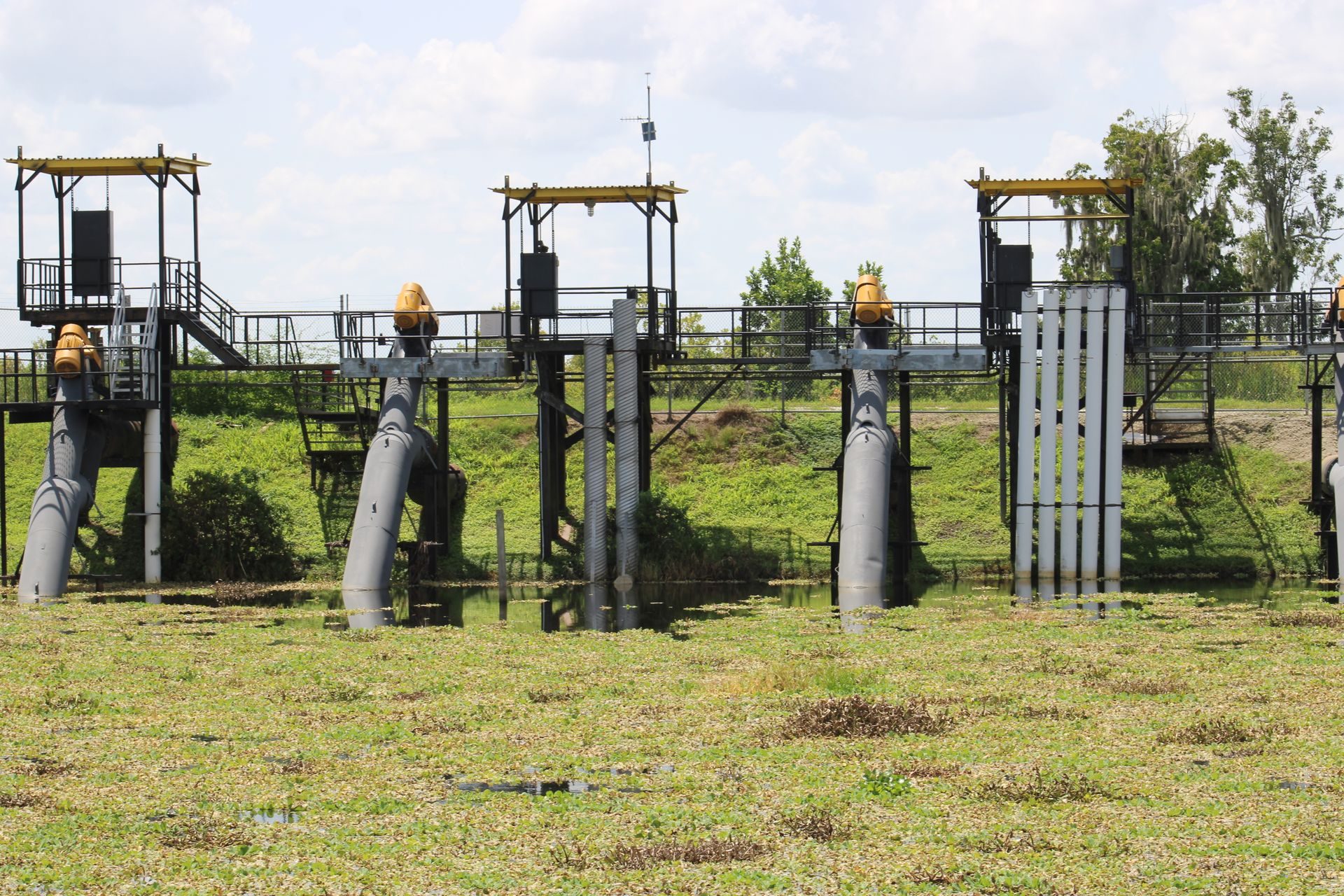
To see what crosses your lot, open the private system map in SRP My Account, under the My subdivision tab, or call SRP and ask for a walkthrough with a Field Services Liaison, which the manual offers at no cost. Treat the map as a starting point: SRP's note on it says what it shows "may be inaccurate, out-of-date or non-existent," and the neighbors may know more. Some blocks have a key homeowner, a volunteer SRP calls when water runs early or a line breaks, and some have formed an Irrigation Water Delivery District, a county special taxing district that pays for repairs to the neighborhood system.
When in the Year Should the Deliveries Stop?
Between billing years, before you order the first water of the next one. SRP bills irrigation once a year: the bill goes out in mid-November for the coming calendar year and is due the first week of December, which puts the 2027 bill due December 6, 2026. SRP's residential refund guidelines explain why the timing matters. Water delivery fees and basic charges "are nonrefundable if any water was ordered/delivered during the calendar year." With no water ordered or delivered, the guidelines show the delivery fee, the basic charge and the subdivision water fee as refundable. Stop partway through and only part of the subdivision water fee comes back, scaled to how many deliveries you took.
Letting the bill go unpaid isn't cancelling: SRP stops water to unpaid accounts after December 31, and penalties of 1 percent a month accrue on an unpaid basic charge.
The billing calendar has to fit two other clocks. One is the trees. A tree that grew up on flood water needs deep drip running before the deliveries end, which is the weaning method in our flood-to-desert post, so plan on a season of overlap with the drip in while the flood water is still coming. The other is SRP's own schedule: deliveries come about every 14 days from April through September and every 28 days from October through March. SRP also dries up parts of its major canals every fall and winter for repairs, and the manual says SRP does not typically deliver water during that time. Its canal maintenance page lists the 2026-27 south-side dry-ups for Nov. 20 to Dec. 24, 2026, and the north-side dry-ups, the side the Arizona and Grand canals run on, for Jan. 3 to Feb. 7, 2027. SRP's system repair page calls that annual dry-up "the best time of the year to also plan annual private system repairs."
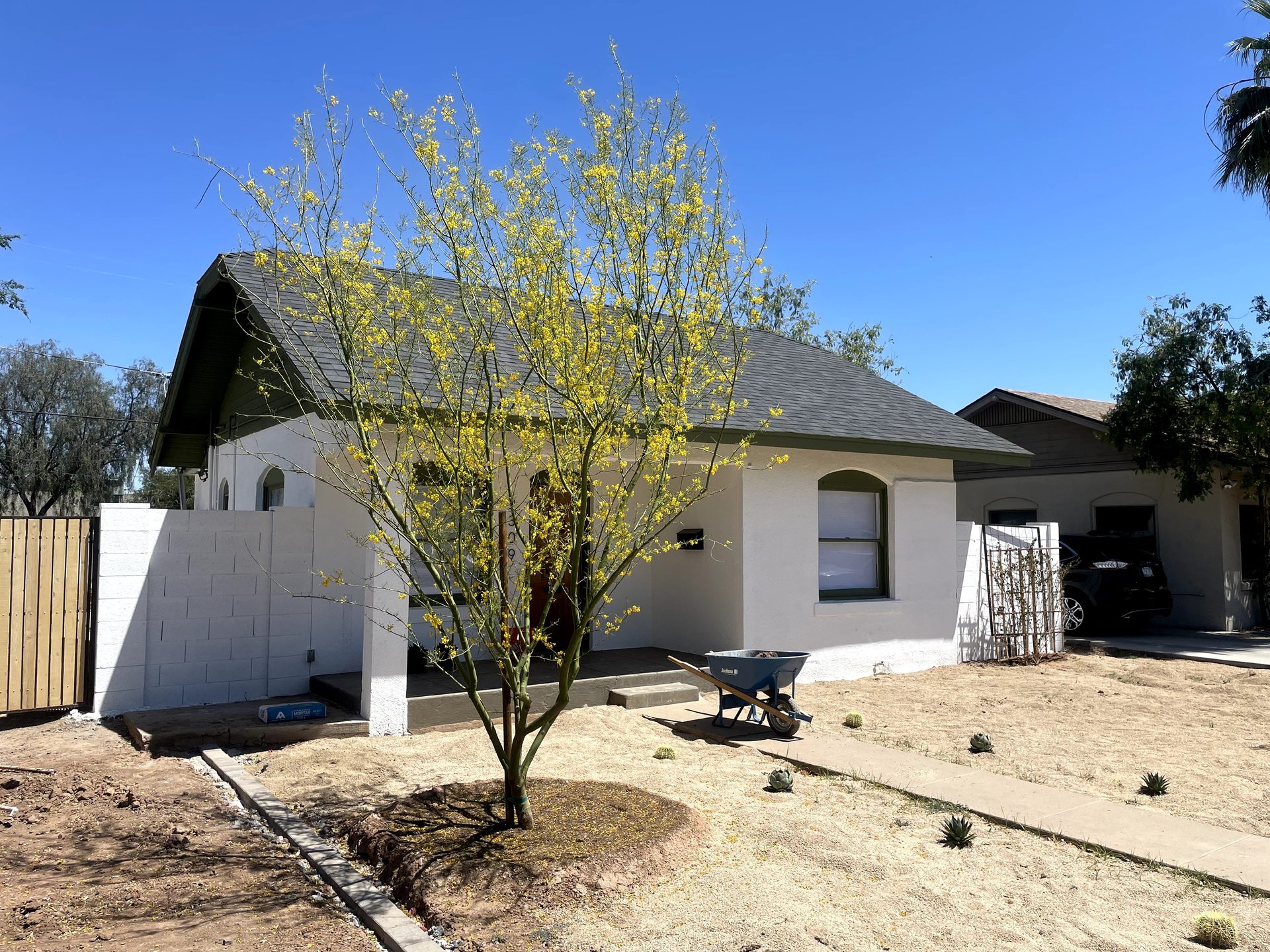
- Spring or summer.Temporary drip goes on the trees you're keeping, surface tubing out at the canopy edge and outside the areas that will be regraded, and runs alongside the last flood deliveries. Permanent laterals go in after final grade, and cuts and fill stay out from under the kept canopies. If a lawn is coming out for the city's grass incentive, apply first, because trenching through the grass waits for the Notice to Proceed.
- Early fall.Call SRP about how your account will be recorded, and talk to the neighbors on your line about what crosses your lot.
- Mid-November.The next year's bill arrives. Decide before you order water for the new year, because one delivery makes the base charges nonrefundable.
- Winter dry-up.The canals are down and the private line is dry, which is the window SRP points to for work near the system. Grading and berm work can start.
What Happens to the Berms Once the Water Stops?
A berm that only ever held your own water loses its job when your deliveries stop. One that does something for the lots around you doesn't. SRP's manual counts berms among the structures of the private system, along with the ditches, pipelines, standpipes and valves, and says berms "should be 12 to 18 inches wide and 3 inches higher than the maximum amount of water that the property will hold." Before any berm comes out, look at what it borders.
- A berm along a shared block wall.SRP's manual says block walls are porous and should be sealed or have a berm beside them to keep irrigation water from flowing through. If the neighbor keeps flooding, their water still stands against that wall every couple of weeks in summer. Don't cut your side down below the neighbor's grade along the wall, and don't pile the berm soil against it: a wall built as a garden wall wasn't built to retain soil, and our block wall post names a footing undermined by water among the reasons a wall leans. Who pays when water or digging damages a shared wall is its own question, covered in our shared block wall repair post.
- A berm beside a ditch, a standbox or a valve.It's part of how water gets past your lot to the next one. Leave it until the system's owners agree in writing.
- A berm that holds the low corner.A flood lot is graded to hold water, so a yard with its berms pulled and no regrade puddles in the next monsoon exactly where the flood water used to sit. The 2024 IRC's drainage section wants grade that falls at least 6 inches in the first 10 feet away from the foundation, and 2 percent on paved surfaces within 10 feet, and the water goes to the street or a planted basin, never onto the lot next door. Spread berm soil and 2 inches of granite raise the grade, and the stucco weep screed has to stay at least four inches above earth or two inches above paving. Our landscaping in the Phoenix metro page covers grading.
- A low spot that stays wet.Maricopa County Vector Control lists irrigation or rainwater that "ponds and stands for more than three days," and over-irrigated or poorly leveled yards, among mosquito breeding sites, and the eggs wait in the soil for the next flood.
Talk to the neighbors before the first shovel. The manual's FAQ asks irrigators to take a little extra water when a delivery runs early, and to open their yard valves to relieve the pressure when a line breaks. A lot with its berms gone can't safely do either, so the neighbors on your line should know you're out before your valve closes for good. SRP's shareholder page states the stakes: water theft, flooding and the resulting property damage "may be punishable as felonies or misdemeanors or could result in a civil lawsuit."
Do You Call Arizona 811 Before Digging Out Berms, and Does It Find the Irrigation Line?
Call 811, and plan on it not finding the flood pipe. Arizona's one-call law, A.R.S. 40-360.22, gives the utilities two working days after a locate request to mark their lines, and digging waits until the marks are in or you're told none are needed. The Arizona Corporation Commission's pipeline safety office sums up the homeowner's side: call 811 or go to Arizona811.com at least two working days before digging, and the locate is free. APS's Blue Stake laws sheet adds the hand-tool rule within 24 inches of a mark. That covers what the utilities and the city own and operate, typically up to the meter. Past it, the lines are yours to find: the house water line, wiring to a detached garage, a casita or landscape lights, front-yard sprinkler lines, gas to a grill or fire pit. Under the same statute the marks are valid for fifteen working days, so call once the dig date is set.
The flood pipe is another matter. SRP says private irrigation systems "are not marked by Blue Stake and are often buried under streets, in alleyways, sidewalks, and parking lots," and that when anyone excavates, it's the property owner's or the hired contractor's responsibility "to locate and protect all private irrigation systems prior to performing work." So the locate is on you: SRP's map as a guide, the standboxes and valves you can see on the surface, and a careful exposure by hand where the line should run. SRP's guidelines for new private systems call for a standbox at each bend of 30 degrees or more and at least one in each block, and for at least 15 inches of cover over the pipe in yards and 24 inches under streets, alleys and driveways. Those are depths for new systems. An older line can sit shallower, and cutting a berm down or lowering the grade takes cover off whatever pipe is under it, so the depth to the pipe gets found by hand anywhere the grade comes down. SRP asks for more cover where vehicles drive than in yards, which is also why the skid steer and the dump truck go around a yard line, or cross it on plates or mats.
If a pipe does get exposed, SRP's notice says it needs to be supported, because exposed pipe is prone to cracking. SRP offers a test run after a repair and asks that the repair stay open until the test is done, since a bad repair can leave a sinkhole. Work near a shared line in service belongs between the neighborhood's runs, which the SRP Water app shows on its neighborhood schedule, or during a dry-up. The manual says to let SRP know about repairs in advance "so that a dry-up can be scheduled," which "ensures that no water will be in the system."
What Does Watering the Yard on City of Phoenix Water Cost Instead?
For a desert palette on a 0.40-acre lot, about what the SRP bill was. For a yard that keeps its citrus, more. Once the flood stops, everything you keep alive runs through the house meter at the City of Phoenix water rates effective March 1, 2025. A 5/8-inch meter carries a $4.64 monthly service charge that includes 5 units of water from October through May and 8 units from June through September, and a unit is 748 gallons. Each unit after that costs $4.93 from December through March, $5.65 in April, May, October and November, and $6.13 from June through September, plus a $0.62 environmental charge on every unit metered, before sales tax and surcharges.
Set that against what a flood delivery is. SRP's table for residential lots gives a 0.20-acre lot a maximum of 45 minutes at a 50 miner's inch head per run, 0.08 acre-feet, which is about 26,000 gallons, and SRP says subdivision accounts get 18 runs a year. Drip puts a measured amount at each plant. The City of Mesa's watering table puts the soak for a tree with a 20-foot canopy at 235 gallons and a 4-foot shrub at 12. Multiply by how often the plant needs it on the schedule in our sprinkler and irrigation repair guide, price each month at its season's rate, and the yearly cost per plant comes out like this:
The SRP bill against city water for what you keep
| Item | Cost | How it's figured |
|---|---|---|
| SRP residential irrigation, 0.20 acre | $166.00 per year, 2027 | Water delivery fee, basic charge and subdivision water fee, due Dec. 6, 2026, before credits |
| SRP residential irrigation, 0.40 acre | $234.66 per year, 2027 | Same three charges, scaled by acreage |
| SRP residential irrigation, 0.60 acre | $303.33 per year, 2027 | Same three charges, scaled by acreage |
| SRP residential irrigation, 1.00 acre | $440.65 per year, 2027 | Same three charges, scaled by acreage |
| Phoenix water beyond the units in the service charge | $5.55 to $6.75 per 748-gallon unit | Low to high season user charge plus the $0.62 environmental charge, before tax |
| Desert tree, 20 ft canopy, on drip | About $39 per tree per year | About 20 soaks of 235 gallons, roughly 4,600 gallons a year |
| Desert tree, 12 ft canopy, on drip | About $14 per tree per year | About 20 soaks of 85 gallons, roughly 1,700 gallons a year |
| Citrus, 16 ft canopy, on drip | About $51 per tree per year | About 40 soaks of 150 gallons, roughly 6,100 gallons a year |
| Desert shrub, 4 ft, on drip | About $3 per shrub per year | About 28 soaks of 12 gallons, roughly 340 gallons a year |
SRP figures are the Salt River Valley Water Users' Association's published 2027 residential charges. Phoenix figures use the rate schedule effective March 1, 2025. Plant estimates use Mesa's gallons-per-soak table and the more frequent end of each seasonal range, and assume the house already uses the units included in its service charge.
Run that on one yard. Four large desert trees and twenty shrubs come to about $214 a year on city water, close to the $234.66 that SRP charges a 0.40-acre lot for 2027. Add six mature citrus to the same yard and the total passes $520. The citrus is what tips it, so on a lot with a grove, run the numbers before the SRP account closes. Soaks that size also take real emitter capacity: 235 gallons through four 4-gallon-an-hour emitters is about 15 hours, so a big canopy gets a ring of many emitters or inline drip at and past the canopy edge, on its own valve.
Two more lines belong in the math. Phoenix bases the sewer charge on a percentage of average water use in the January through March billing cycle, and advises cutting use in those months. Established desert plants need little in winter, about monthly for desert trees and normally nothing for cactus, so a controller set to that schedule keeps the sewer charge low. The other line is the neighborhood's: an Irrigation Water Delivery District's tax is levied with county taxes on the land within the district, apportioned by acreage under A.R.S. 48-3473. Ask the district's trustees how your parcel is treated before counting it as a savings.
What Does It Cost to Set the Yard Up to Run Without Flood Water?
The one-time bill is drip for everything you keep, a backflow device and a controller where the house supply feeds it, and grading so the lot drains instead of holding water. On a lot starting with no system, the drip alone is $900 to $2,500 for three to five zones with trenching, and a real regrade runs $2,000 to $5,000. The tie-in to the house supply is plumbing work, and we handle it on our contract with the backflow device included. The house supply never ties into the flood pipe or the standpipe: SRP's manual says its irrigation water is not treated and "is not suitable for human consumption." The backflow device sits at least 6 inches above the highest emitter for an anti-siphon valve or 12 for a pressure vacuum breaker, with a filter and a 25 to 30 psi regulator at the head of each drip run. Maricopa County's Rule 310 dust rules apply "regardless of the size of the site," with a permit at 4,356 square feet of disturbed ground. At Phoenix-area prices for 2026:
| Scope | Phoenix 2026 installed | What drives it on a flood lot |
|---|---|---|
| Drip irrigation | $250-$900 per zone | A two to four zone bed retrofit is $600 to $1,800. A full property on three to five zones with trenching is $900 to $2,500, the row for a flood lot starting with no system |
| Backflow preventer | $225 to $500 per device | Protects the house supply where the drip ties in |
| Smart controller | $250 to $600 per controller | Phoenix's $75 controller incentive wants a photo of the old non-smart controller, which a flood lot may not have |
| Caliche in the trench line | Adds $150 to $400 | We probe before we price, so what we found is already in the number |
| Site prep and regrading | $0.40-$2.00 per sq ft | A real regrade runs $2,000 to $5,000. A lot built to hold water needs fall away from the house instead, at least 6 inches in the first 10 feet, to the street where the front yard reaches it or to a shallow planted basin where it doesn't, and never onto the lot next door |
| Grass removal, grubbing and haul-off | $0.75-$1.50 per sq ft | Includes disposal. Rooted Bermuda has to be grubbed out rather than scraped, or it comes back through the granite |
| Full conversion to desert landscaping | $5 to $15 per sq ft | Flood lots tend toward the upper half: berms, regrading, mature trees to protect and drip for all of them |
Researched Phoenix market rates for 2026, as published on our landscaping page and in our flood-to-desert post.
If a live lawn is coming out, read the City of Phoenix residential grass removal incentive before anything is dug. It pays $2 per square foot for removing at least 250 square feet of live grass, and its published rules don't exclude a lawn watered by flood irrigation, while Chandler's and Mesa's do. The catch is order: the grass has to be at least 75 percent alive in the application photos and nothing comes out before the Notice to Proceed, so the flood water keeps coming until then. Our landscaping in the Phoenix metro page compares the six Valley city programs. If the lawn has already died back, there's no incentive to protect, and the job runs like our dead-lawn front yard xeriscape with a block planter and slat screen.
Send Us the Lot
Photos of the yard, the valve at your lot line, any berm on a shared wall, and your SRP acreage. We'll tell you what the switch costs.
Free Yard EstimateWhat Do Flood-Lot Owners Ask Before They Call SRP?
Can I sell my SRP water shares or move them to another property?
No. SRP ties the water to the land, not to the owner, and says the land's allotment cannot be transferred, bought or sold. The right stays with the parcel when you stop taking deliveries and passes to whoever buys the house.
If I stop, can a later owner start flood irrigation again?
The right is still attached to the parcel, and SRP's fee schedule lists a $7.00 account reactivation fee for an account previously cut over to the city domestic contract account. Ask SRP how your account will be recorded when you cancel, and keep the answer in writing for the next owner.
Do I still owe the SRP bill if I stop partway through the year?
For that year, yes. SRP's refund guidelines say water delivery fees and basic charges are nonrefundable once any water was ordered or delivered during the calendar year, and only part of the subdivision water fee comes back, depending on how many deliveries you took. With no water ordered or delivered, the guidelines show all three charges as refundable. Refunds go through the deeded owner and are reviewed case by case.
Will my neighbors' irrigation water still run through my yard after I stop?
If a shared line crosses your lot, yes. SRP says the easements the private system uses belong to the active irrigation customers in the area, and that its parts may not be removed or changed without written permission from all the system's owners. Closing your own yard valve stops your water, and in Tempe city staff operate the valves. It does not stop theirs.
Who finds the irrigation pipe if Arizona 811 doesn't mark it?
You or your contractor. SRP says private irrigation systems are not marked by Blue Stake and that the property owner or hired contractor has to locate and protect them before digging. Start with SRP's map of your neighborhood system and a free walkthrough with an SRP Field Services Liaison, then expose the line by hand.
While the Flood Lot Is Torn Up, What Else Belongs on the Plan?
Coming off flood irrigation puts a trencher, a grading machine and a plumbing tie-in on the lot inside the same few weeks. Work that shares those setups usually runs 25 to 50 percent below its own-trip price when it's in the plan from the start.
- Convert the lawn while the grade is open. The berms and the regrade are already part of a desert conversion. See desert landscaping in Phoenix and the grass-to-desert front yard we converted in Phoenix.
- Lay lighting wire in the drip trench. One trench, wire on one side and tubing on the other. See landscape lighting for a xeriscape, solar or wired.
- Pour the walk where the old ditch ran. Once the system owners have agreed in writing that the ditch is out of service, its lining and silt come out, the trench is backfilled in compacted lifts, and any abandoned pipe under the new slab is filled or removed, since SRP ties sinkholes to failed pipe work. Then a walkway or a slab takes its place in the same pass. See concrete patios and walkways.
- Fix the wall the flood water sat against. SRP's manual calls block walls porous, and a wall that had irrigation water against it may need sealing or repair. It gets looked at while the berm is off, before any soil goes back against it. See shared block wall repair.
- Replace the fence along the back line. The equipment and the access are already there. If the shared line runs along the back of the lot, 811 won't mark it, so it gets located first and the post holes near it are dug by hand. See fencing.
- Give the kids or the dog a green patch. Turf takes that area's water off the drip entirely. See artificial turf installation in Phoenix.
- Set the controller to the season. The schedule that keeps both the water bill and the winter sewer average down is in our sprinkler and irrigation repair guide.
Text us photos of the yard and the valve at your lot line, or call (602) 492-1815, and we'll get you a quick quote.

Written by Harrison Norem, owner of Norem Contracting and a licensed Class B general contractor, Arizona ROC #365090. Fifteen years across the trades, including desert landscape conversions, grading, drip irrigation and hardscape, across the Phoenix metro. More about Harrison.