Norem Contracting installs tile and flooring bought at any Valley store: the eight Floor & Decor warehouses around Phoenix, the Arizona Tile showrooms in Tempe and Scottsdale, Bedrosians, Daltile, Emser, The Tile Shop, MSI, Home Depot, Lowe's and online sellers. Setting labor for a straight-lay tile floor on a prepared slab runs about $7.25 to $9.25 per square foot in the Phoenix metro, with tear-out and leveling priced as their own lines. We are a licensed Arizona general contractor, ROC #365090, and we are not affiliated with any of these stores.
- Any store, any box. A warehouse store, a showroom, a big-box aisle, an online order, or the leftover boxes the builder left in the garage.
- One licensed contract. Tear-out, slab prep, the tile or plank, then baseboard and paint, under ROC #365090 with one schedule and one number to call.
- Floors, showers and backsplashes. Floor tile, shower walls and pans built to a published TCNA method, kitchen backsplashes, and vinyl plank, laminate and engineered wood.
- The floor gets read before anything goes down. A straightedge across the room in both directions and a moisture screen on the slab come before the price, so leveling never shows up as a surprise.
- Quick quotes by text or phone. Send the room size, a photo of the floor that is there now and the label off one box to (602) 492-1815, or call and talk it through.
Get a Quick Quote by Text
Send the room size, a photo of the floor coming out and the product name or box label. We'll tell you what the install takes and what it costs. Free in-person estimates for full floors and showers.
Text Us Photos Call for a QuoteWhich Valley Tile and Flooring Stores Do You Install From?
All of them. These are the stores Phoenix-area homeowners buy tile, plank and stone from, with the Valley locations each company lists on its own website as of October 2026. We are not affiliated with any of them, nobody pays us to send you there, and we install what you buy.
Tile and flooring warehouse stores
- Floor & Decor, eight Valley stores: Camelback in Phoenix, North Scottsdale, Tempe, Chandler, Mesa, Glendale, Surprise and Tolleson
- The Tile Shop, showrooms in Phoenix, Scottsdale, Tempe and Glendale
Tile, stone and slab showrooms
- Arizona Tile, the Tempe and Scottsdale showrooms, each with a slab and tile warehouse
- Daltile, a Showroom & Design Studio in Tempe, Sales Service Centers in Scottsdale by the airport and in Avondale, and a Stone & Slab Center in Tempe
- Bedrosians Tile & Stone and Emser Tile, tile and stone lines sold through their own showrooms and through dealers
- MSI, the Phoenix showroom and distribution center on West Roosevelt Street
Big-box and online
Home Depot and Lowe's stores across the Valley, plus Wayfair, Amazon and the independent dealers that carry MSI and Daltile lines. An online order has nobody at a counter checking it, so the box count, the product name and the lot codes are the first things we look at when it arrives. Tile bought for a project that stalled counts too, as long as there is enough of one lot to finish the room.
Will the Store Install Your Tile?
A few will arrange it, through someone else. Floor & Decor's installation page points customers to an outside company it partners with, Installation Made Easy. Lowe's tile floor installation starts with a free in-home measurement by a professional independent installer, quotes the product and the labor together, and says its installers are licensed where applicable, insured and background-checked, with the labor backed by a one-year warranty. Its FAQ adds the limits: the flooring must be bought from Lowe's as part of an installation package, surface prep is light scraping and sweeping with up to a 1/4-inch adjustment, and Lowe's does not install tile in wet areas such as showers, tub surrounds or steam rooms.
The Tile Shop keeps a vetted list of local pros at each store, and its pros page disclaims any liability for installation or for the installer information it hands out. Arizona Tile, Daltile and MSI describe design consultants, samples and slab selection on their Valley location pages, and none of those pages describes an installation service.
So the install is usually a separate hire. The work that falls outside the store programs is most of what makes a tile job go right or wrong: a slab that needs grinding or a self-leveling pour, a shower built to a published waterproofing method, old tile or saltillo to break out, a toilet to pull and reset, and baseboard and paint to close it out. We price each of those as its own line.
Can a Homeowner Buy at MSI, Daltile or Arizona Tile?
You can shop at all three. What differs is where the order gets placed. MSI's Phoenix showroom page says MSI is a wholesale distributor and does not sell directly to the general public. Its Phoenix showroom welcomes walk-in homeowners, designers and contractors, and the purchase goes through one of its authorized local dealers or fabricators. Daltile's Sales Service Centers in Scottsdale and Avondale describe themselves as a resource for contractors, designers and custom builders, while its Tempe Showroom & Design Studio offers free samples and complimentary design services. Arizona Tile's Tempe and Scottsdale pages say you do not need an appointment and that design consultants will help with the selection.
Floor & Decor, The Tile Shop, Home Depot and Lowe's sell at the register to anyone, and for those orders the product name and the box count are enough for us to price the labor.
If a showroom sends you to a dealer, nothing about the install changes. Ask the dealer to put the exact product name, size, finish, lot number and quantity on the order, and send that to us with the room size. We can give a firm labor price from it before the tile is delivered.
What Should You Check Before You Leave the Store?
Quantity, lot and rating, mostly. A few minutes at the counter saves a stalled job, because a room tiled two-thirds of the way with a lot that has sold out is the one outcome nobody can fix with labor.
- How much to buy.Most straight-lay floors need 10 to 15 percent more than the measured area to cover cuts and breakage. A diagonal lay runs about 15 percent and a herringbone 18 to 20 percent, and large-format tile wants about 5 percent more on top. Round up to full boxes and buy it all at once. Keep a few spares sealed for repairs years from now.
- One dye lot.Floor & Decor defines a dye lot as the slight color difference from one production run to the next of the same tile, which comes from kiln temperatures, and advises checking that all of your tile shares one lot. The lot code is printed on each box, and we check every code before the first box is opened.
- Shade variation.MSI's selection guide rates tile from V1, uniform, through V4, where random color differences can make one tile look nothing like the next. A V3 or V4 stone-look or wood-look tile is meant to vary, so we set from several open boxes at once and the color spreads across the room instead of collecting in patches.
- Whether it is rated for a floor.MSI's PEI scale puts PEI 1 on walls only, PEI 3 as the most common residential grade for light to moderate traffic, and PEI 4 on residential floors and countertops. A wall tile that looks right on the display board is not always rated to walk on. Check the slip-resistance class on the spec sheet too: under the ANSI A326.3 categories, Interior, Wet means at least 0.42 wet DCOF, and Exterior, Wet is a class the manufacturer declares.
- Tile size.Any tile with an edge 15 inches or longer, which covers 12 by 24 tile and wood-look plank tile, needs the slab flat to 1/8 inch in 10 feet. That is twice as flat as small tile needs, and it can put a leveling line on the estimate.
- Setting materials and trim.Large-format tile goes in a large and heavy tile mortar, the class once called medium bed, and that mortar sets tile rather than flattening a floor. Grout, any membrane, edge trim and transitions sit on the same shelves. Buy them with the tile or leave them to us, and decide which before install day.
- Plank specs, if it is plank.Read the wear layer in mils (20 mil is the usual ask in a family home with kids or dogs), whether the pad is attached (if it is, skip the extra underlayment), and the longest run the manufacturer allows before a transition.
- The return window.Ask how long unopened boxes can go back. Leave the extras sealed until the floor is grouted and walked on.

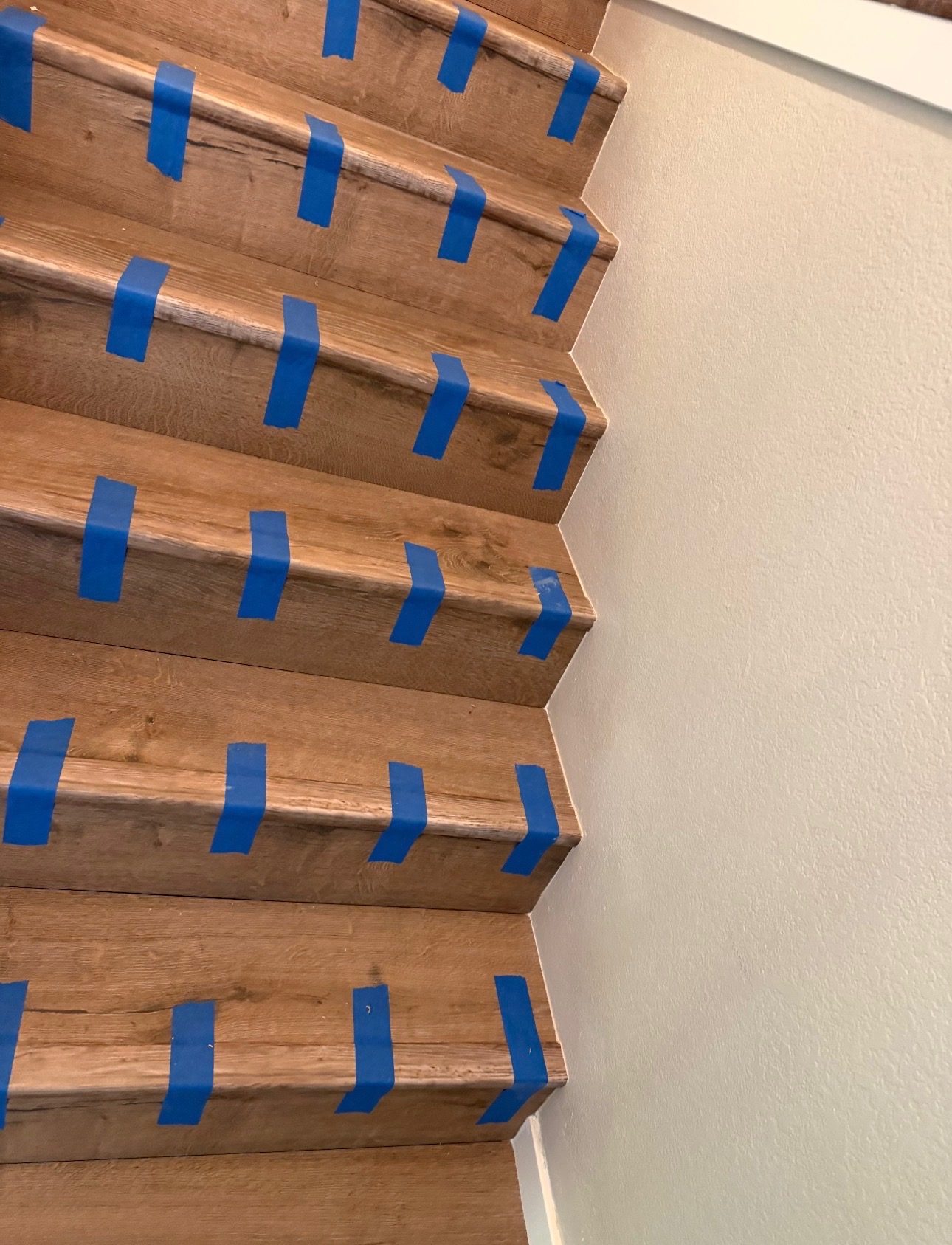
Plank works the same way at the counter. The stair job on our vinyl plank installation page, fifteen stairs and the landing in a Phoenix house, ran on plank the homeowner supplied, and the same questions decide whether a supplied floor goes in cleanly.
Where Should the Boxes Sit Until Install Day?
Inside the house, in or next to the room they are going into, with the labels facing out. Porcelain and ceramic tile don't mind heat, but plank does. Rigid-core manufacturers set a window of roughly 55 to 85 degrees held before, during and after the install, with 80 degrees as the install ceiling, and a closed-up Phoenix garage runs well past 120 on a summer afternoon. Plank that sits in that garage and goes down in a cooled house moves after it is installed. A day or two in the conditioned room does more good than any amount of acclimation time somewhere hot.
Bagged mortar and grout want to stay dry and off a damp slab, and the setting materials should be in the house before demo starts, so nobody is making a store run with the old floor already up. If the order arrives in more than one delivery, check the lot codes on the second batch against the first before it gets signed for. A short or mixed delivery is simplest to sort out the day it arrives. Three weeks later, with half the room set, the same lot may be gone.
Clearance and closeout tile needs the most care. A closeout may be the last of a run, and once it sells through, more of the same product name from a later run may not match the boxes already in the house. Buy the full overage on day one and keep the spares sealed and labeled in a closet, where the lot code stays readable for the repair years from now.
Does the Tile You Picked Change the Prep?
Yes, through its size, its shape and what it replaces. The bigger the tile, the flatter the floor has to be, and the line sits at 15 inches: once any edge reaches it, the flatness standard tightens from 1/4 inch in 10 feet to 1/8 inch in 10 feet. Natural stone falls on the strict side too.
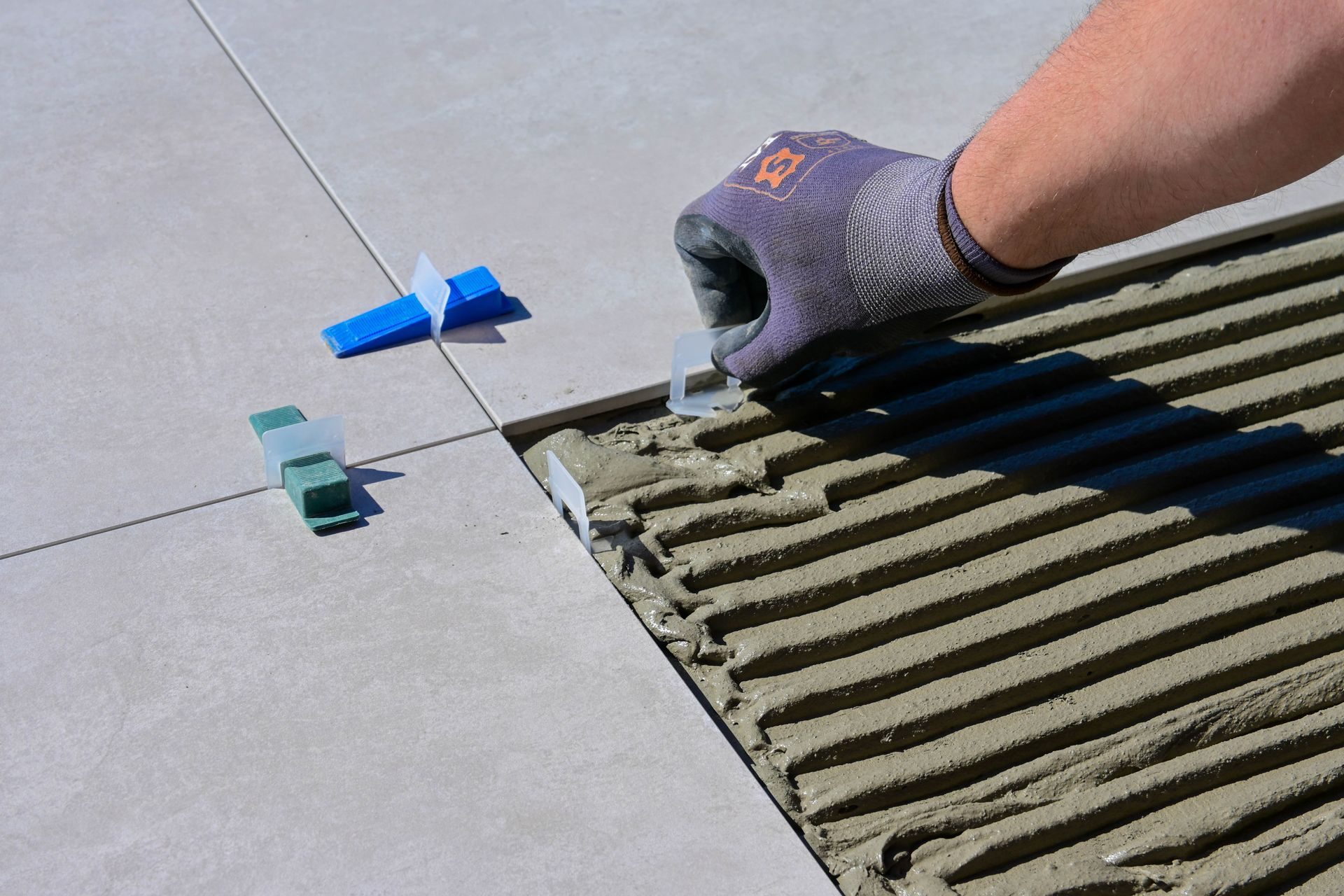
Plank-shaped tile adds an offset rule. On tile with a side over 15 inches the standard caps a running-bond offset at 33 percent unless the tile manufacturer specifies otherwise, and anything larger means the specifier and the owner approve a mock-up and its lippage first. The reason is warpage: kiln warpage leaves each tile highest in the middle of its long side and lowest at its ends, and a half offset sets that high middle right against the low ends of the tiles beside it. If the store display shows 12 by 24 tile at a half offset, plan your floor at a third unless the tile's own instructions say otherwise.
Sun changes the joint layout. Tile movement joints indoors go no more than 25 feet apart, and an interior exposed to direct sunlight gets them no more than 12 feet apart, which by that definition includes a Valley great room with a west-facing slider wall.
The old floor changes the prep too. Ceramic or porcelain bonded to a slab comes up as a silica job, with water or a shrouded vacuum at the chipper and containment at the doorways. Saltillo, travertine and old mortar beds are thicker and softer, and they cost more per foot to break out and haul. If the existing tile is sound and flat, plank can sometimes go over it instead, and whether vinyl plank can go over your tile walks the tap test and the height check.
Upstairs or on a raised floor, the framing decides whether tile can go down at all. Ceramic and porcelain need joists stiff enough to hold deflection to L/360, and natural stone doubles that to L/720, so a floor that felt fine under carpet can still be too springy for stone. The numbers behind all of this, slab moisture included, are on our flooring installation page.
Do You Install Shower and Backsplash Tile Too?
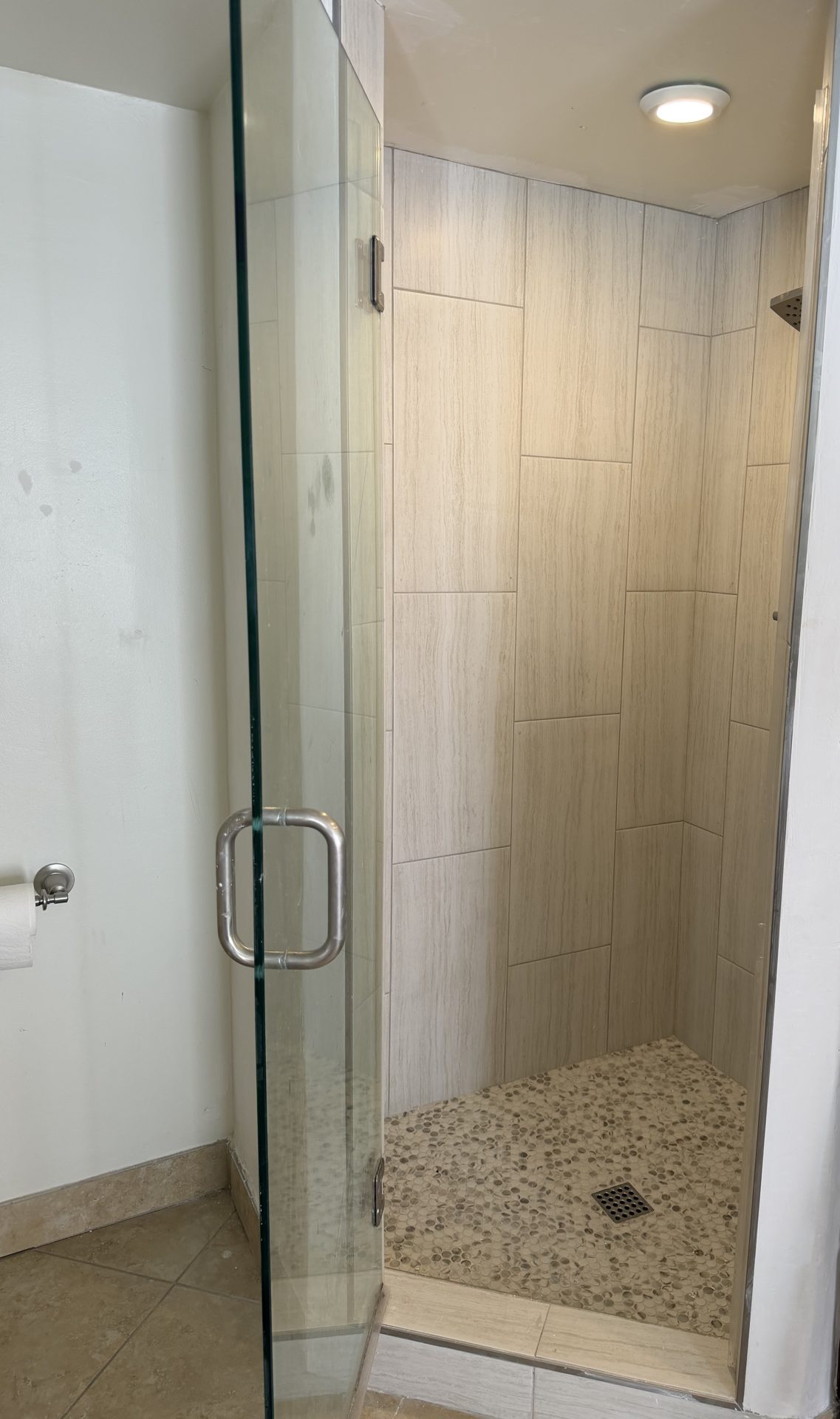
Yes, and showers are the tile work Lowe's says its own service doesn't do. A shower is a waterproofing job before it is a tile job. We build to a published TCNA method: B415, a clamped liner in a mortar bed, or B421 and B422, a bonded membrane over solid backing with a clamping-ring or a bonding-flange drain. The code's flood test, IRC P2503.6, holds at least two inches of water at the threshold for at least 15 minutes. We hold water overnight, and that test goes on the quote as its own line. The tile you picked at the showroom goes on last. Wall tile setting labor with your tile runs about $8 to $18 per square foot in the Phoenix metro, with the backer and membrane prep folded into the rate. A kitchen backsplash runs about $25 to $32 per square foot in labor, because nearly every piece around the outlets, the window and the hood is a cut.
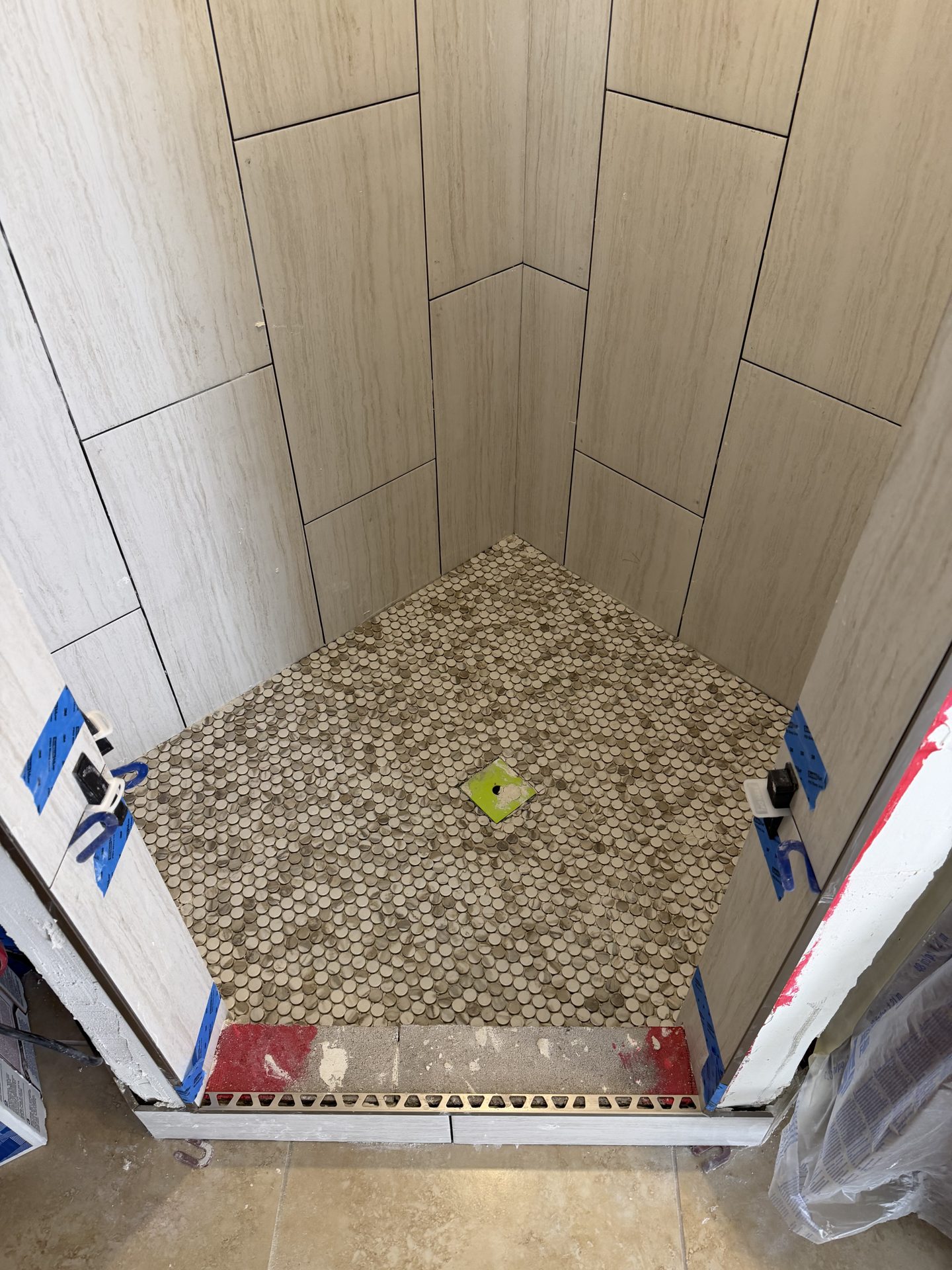
The full shower rebuild in Scottsdale shows the order day by day, from demo to the slab through the pre-slope, the liner and the glass. If one pan has failed and the wall tile is still sound and matched, rebuilding the pan and keeping the tile is often the first option, and our shower pan rebuild and leak repair page covers it. A whole room is on the bathroom remodeling page, and backsplash work inside a bigger job sits on kitchen remodeling in Phoenix.
What Does Tile Installation Cost in Phoenix When You Supply the Tile?
Setting labor for a straight-lay floor on a prepared slab runs about $7.25 to $9.25 per square foot in the Phoenix metro, and the prep lines decide most of what sits on top of it. The table labels labor rows and installed rows separately, because a bid that mixes the two can't be held against another one.
| Line item | Phoenix 2026 | What moves it |
|---|---|---|
| Floor tile setting labor, straight lay, on a prepared floor | $7.25 to $9.25 per sq ft, labor | Room shape. Small wet rooms cost more per foot than open floors because nearly every tile is a cut |
| Pattern uplift: diagonal or herringbone | Add about 17% on setting labor | More cuts and layout time. Material waste runs about 15 percent on a diagonal and 18 to 20 percent on a herringbone instead of 10 to 15 |
| Wall tile setting labor, tile supplied by you | $8 to $18 per sq ft, labor only | Cuts around the valve and niches. Backer and membrane prep are folded into this rate |
| Backsplash tile, installation labor | $25 to $32 per sq ft | Cut count and pattern around outlets, windows and a hood |
| For comparison: tile installed, labor plus mid-range material | $10.50 to $14 per sq ft, installed | Tile in the $1.70 to $3 per sq ft range with waste, plus mortar, grout, membrane and sundries |
| Tile tear-out and haul-off, ceramic or porcelain on slab | $3.25 to $4.50 per sq ft | Dust control and thinset ground back to concrete. It does not get cheaper on a big floor |
| Tear-out of travertine, saltillo, stone or a mortar bed | $5 to $7+ per sq ft | Thicker material set in a full mud bed, more to break out and haul |
| Carpet, pad and tack strip tear-out and haul-off | $0.50 to $1.50 per sq ft | Glue-down pad residue pushes the top of the range |
| Floor flattening and leveling | $0.50 to $6 per sq ft, by condition | Grinding a few high spots at the bottom, a primed self-leveling pour at the top. Large-format tile is the finish most likely to need the pour |
| Vinyl plank installation labor, floating | $3 to $5 per sq ft, labor | Doorways, closets and hallways more than square footage |
| Stairs, tread and riser with a stair nose | $60 to $120 per step | Each step is its own glued assembly. A landing is priced as floor area |
| Baseboard, installed and painted, on stock you supply | $3 to $6 per linear ft | Height and profile more than length |
| Transition and reducer strips | $1.75 to $3 per linear ft, material | Set on the same visit. Where two floors meet at different heights, a reducer protects the exposed tile edge and takes out the trip edge |
| Toilet pulled and reset around the new floor | $175 each | New wax ring and bolts on the existing flange. A flange that has to be raised or moved is priced on its own |
| Small job minimum | $600 per visit | Travel, setup, protection and haul-off cost the same for a closet as for a bedroom |
Researched Phoenix metro rates for 2026, the same rates as the price charts on our flooring, bathroom and kitchen pages. The labor rows assume you supply the tile. The installed row is there so you can hold a store-plus-labor total against an all-in bid.
For 300 square feet of straight-lay porcelain on a sound, flat slab, setting labor alone lands around $2,175 to $2,775. If ceramic has to come up first, tear-out adds about $975 to $1,350 before any leveling, baseboard or toilet reset. That is why we read the slab under a straightedge at the estimate: the leveling line is the one that moves most between two floors of the same size, and it is knowable before anyone opens a box.
Setting materials are the line people leave out when they total their own number. Mortar for large-format tile, grout, a membrane where the room needs one, and edge trim add up across a whole floor, and whether you buy them at the store or we supply them, they belong in the comparison. A bid that looks low next to ours is worth reading for the lines it skipped.
How Does a Job Go From the Store to a Finished Floor?
In seven steps, from a text with the room size to door bottoms trimmed to the new floor height.
- Text or call. Send the room size, photos of the floor coming out and the product name or a box label to (602) 492-1815. We reply with a range, or set up a free estimate visit for a whole floor or a shower.
- Measure and read the floor. A ten-foot straightedge across the room in both directions, a moisture screen on the slab and a look for a post-tension stamp near the garage. The estimate gets its leveling line here.
- Confirm the order. Quantity with overage, one lot code across every box, the setting materials and the trim. Extras stay sealed for the return window.
- Protect and demo. Containment at the doorways, furniture out, the baseboard and the toilet pulled, the old floor up with water or a shrouded vacuum, thinset ground back to concrete, debris hauled the same day.
- Prep the slab. High spots ground off, low areas primed and poured with self-leveling underlayment where the tile calls for it, then a cure before anything bonds to it.
- Lay out dry, then set. Door jambs and casings undercut so the tile slides under them, a dry layout so cut tiles land where nobody looks and full tiles land in the doorway, then set with movement joints where the standard puts them, including over any saw cuts in the slab.
- Grout, trim and hand over. Grout after the mortar has had its day, soft joints at the perimeter, then baseboard, transitions, the toilet reset, and door bottoms trimmed and rehung to the new floor height.
Tile Already in the Garage?
Quick quotes by text or phone at (602) 492-1815, and free in-person estimates for full floors and showers. Send the room size, a photo of the floor there now and one box label. Licensed Arizona contractor, ROC #365090.
Text Us Photos Call for a QuoteWhat Do Valley Homeowners Ask Before Booking a Tile Installer?
Will you install tile I bought at Floor & Decor or Home Depot?
Yes. Norem Contracting installs tile and flooring bought at any store: Floor & Decor, Arizona Tile, Bedrosians, Daltile, Emser, The Tile Shop, an MSI dealer, Home Depot, Lowe's or an online seller. We are not affiliated with any of them. We work in Phoenix, Scottsdale, Tempe, Mesa, Chandler, Gilbert, Glendale, Peoria and the rest of the Valley.
Can I buy the tile myself and pay you for labor only?
Yes, and most of these jobs run that way. Floor tile setting labor on a prepared slab runs about $7.25 to $9.25 per square foot in the Phoenix metro. Tear-out, leveling, setting materials, trim and baseboard are separate lines, so tell us what you already bought and we price the rest.
How much extra tile should I buy?
Plan on 10 to 15 percent over the measured area for a straight lay, about 15 percent for a diagonal and 18 to 20 percent for a herringbone. Buy it all from one dye lot, round up to full boxes and keep a few spares for repairs. Send us the room size before you buy and we will check the number.
Do you install vinyl plank, laminate and engineered wood from the same stores?
Yes. Floating rigid-core vinyl plank labor runs about $3 to $5 per square foot, and stairs are priced per step at about $60 to $120. Laminate floats over a slab the same way, over the moisture barrier its install guide calls for, and engineered wood glues down or floats, because nothing gets nailed into a post-tensioned slab.
Can you tile a covered patio?
Yes, with tile rated for exterior use and the outdoor layout rules. The TCNA EJ171 detail puts movement joints no more than 12 feet apart in both directions outdoors and in direct sun, about half the 25-foot indoor maximum, plus a perimeter joint, and saw cuts in the slab get carried up through the tile as movement joints. Mortar coverage goes to 95 percent outdoors, against 80 percent in a dry room, with large tile back-buttered. Check that the box or spec sheet lists exterior use before you buy.
With the Baseboard Off and the Rooms Empty, What Else Is Cheaper Now?
A tile job empties the rooms, pulls the baseboard and sets up a grinder, containment and a wet saw in the house for several days. Anything that touches the floor line costs less in that window, and work agreed before the job starts usually runs 25 to 50 percent below what it costs booked as its own visit later.
- Paint before the baseboard goes back. Walls are already masked and the base is off the wall, which is the cleanest moment for interior painting.
- Patch what the furniture hid. Old anchor holes and wall dings get a patch and a texture match while the room is empty. See drywall repair.
- Reset the patio door threshold. New tile can sit higher than what came out, and a slider threshold is easiest to deal with before the floor reaches it. See patio door installation.
- The shower that has been weeping. If the bathroom floor is coming up anyway, the pan and the floor share a substrate. See shower pan rebuild and leak repair.
- Stairs and the landing. Carpeted stairs next to a new tile floor get plank treads on the same visit. See vinyl plank installation and stair pricing.
- The garage floor. The grinder and the containment are already on site, which is most of the prep behind an epoxy garage floor coating.
- The rest of the list. Sticking doors, loose towel bars and the fixture that never got hung ride along as a punch list.
Our Chandler vinyl plank job shows why the subfloor gets a look first: soft spots underfoot turned out to be a water-damaged subfloor, cut back to solid framing before the new floor went down. And if a heavy light is going up in the same rooms, the Valley lighting stores we install chandeliers from is the companion to this list.
Bought it already? Text a photo of the room and one box label to (602) 492-1815, or call, and we'll send a quick quote.

Written by Harrison Norem, owner of Norem Contracting and a licensed Class B general contractor, Arizona ROC #365090. Fifteen years across the trades, including flooring, tile, showers and finish work, across the Phoenix metro. More about Harrison.