Arizona monsoon season runs June 15 through September 30, and a ceiling stain that appears in those months usually traces to one of four sources: a roof leak a storm found, an attic air handler's condensate drain, a supply duct sweating in a 150-degree attic, or a roof-mounted evaporative cooler. When the stain shows up tells you which. Repairing the drywall runs about $400 to $1,000 for a texture-matched section and $650 to $2,000 for a typical water-damage job all in, once the source is stopped and the cavity reads dry. The order matters more than the patch: find the water, dry the ceiling, then close it.
The patch itself, from texture matching to the full 2026 price chart, is on our drywall repair in Phoenix page.
Where Is the Water in My Ceiling Coming From?
Timing is the best clue. A stain that appears right after a storm points at the roof. One that grows on hot days with the AC running and no rain points at the air handler's condensate drain or a sweating duct. One that shows up when the evaporative cooler runs points at the cooler, and one that's wet all the time points at a pipe.
Reading the stain: when it shows up, and what to check first
| When the stain appears | Likely source | First thing to check |
|---|---|---|
| Right after a storm, worse when the rain blows sideways | Roof: flashing, a parapet, a clogged scupper, a roof penetration or the curb under a rooftop AC unit, a cracked tile or worn underlayment | The attic above the stain during or right after rain, and the roof drains |
| Hot days with the AC running, no rain | Air handler condensate: a plugged drain line, a cracked or full pan, a missing or failed float switch, or a rooftop package unit whose drain has backed up into its ductwork | Water dripping from a small pipe over a window, the pan under an attic unit, or water at a register below a rooftop unit |
| Humid monsoon days, in a ring around or beside a ceiling vent | A supply duct or register boot sweating | Duct insulation and the seal where the boot meets the drywall |
| Only when the evaporative cooler runs | Cooler overflow, the float valve, the water supply line, or the roof jack | Water level in the cooler pan and the curb where the duct enters the roof |
| All the time, whatever the weather | A supply or drain line in the ceiling, or a bathroom above | The water meter's leak indicator with every fixture off |
| Under an upstairs bath, worse after showers | A failed shower pan or drain | Whether it tracks with shower use rather than the toilet or sink |
Water runs along framing and ductwork before it drops, so a stain can sit several feet from where the water gets in. The clue is the timing, not the spot. Attic checks go early in the morning in summer, stepping only on framing, and roof checks wait for dry weather and a secure ladder.
The last row is common enough that we wrote it up separately: why a shower pan leaks and how it gets fixed. A stain under a bathroom that gets worse the longer the shower runs is usually that, not a supply line.
What Does an Arizona Monsoon Storm Do to a Roof?
It brings wind, heavy rain and dust, often in the same storm. The National Weather Service office in Phoenix says monsoon thunderstorms can cause damaging winds, torrential rainfall, frequent lightning and dust storms, and that their outflow winds can reach 50 mph or more. A severe downburst, a concentrated downdraft that bursts outward when it hits the ground, can do damage equivalent to an EF-0 or EF-1 tornado.
Each of those reaches a ceiling a different way. Gusts lift and crack roof tiles, so the rain that follows runs under them instead of over them. The dust wall ahead of a storm, which NWS Phoenix says can stretch miles across and thousands of feet high, settles in scuppers and roof drains, so the water that comes after it ponds on a flat roof instead of draining off. The 2024 season showed how fast it happens: on August 22, NWS Phoenix logged downed power lines and large uprooted trees in the Valley as a large dust storm moved across the East Valley.
Monsoon damage also shows up late. Water from a July storm can soak the insulation above the drywall before a stain comes through, and every storm after it adds more. After a storm with strong wind, look at the ceilings under the roof's valleys, low edges and parapets, and inside the closets nobody opens.
Why Do Phoenix Roofs Leak in the Monsoon?
Because monsoon rain arrives hard and sideways after months of sun on every seal and coating on the roof. The National Weather Service has defined the season as June 15 through September 30 since 2008, and NWS Phoenix puts the bulk of the thunderstorm activity in July and August. A short, heavy burst of rain driven by storm outflow winds finds weak spots that a slow winter rain never touches.
Flat roofs with parapets are the classic Valley leak. Water is supposed to leave through scuppers, the openings in the parapet wall, and when dust, leaves or a haboob's worth of debris clogs them, the roof ponds. Standing water then finds every crack in the parapet cap, every open seam where the roof meets the wall, and every penetration for a vent or a cooler. Many of those flat sections are sprayed polyurethane foam with an elastomeric coating on top, and the coating is what protects the foam from the sun. The Spray Polyurethane Foam Alliance says roof coatings may last 5 to 20 years depending on the system, and Valley foam roofs are commonly recoated about every five years. A foam roof that has gone well past its recoat is a roof to have looked at before the next storm season.
Tile roofs fail in a less obvious way. The concrete tiles shed most of the water and last for decades, but the waterproofing is the underlayment beneath them. In Arizona heat, 30-pound felt underlayment is commonly given 15 to 20 years and synthetic underlayment 20 to 30, while the tile above it can last 50. So a tile roof can look perfect from the street and still leak at a valley or a low edge, because the layer doing the work has worn out underneath.
The third common spot is where an addition meets the original house. Arizona rooms and enclosed patios usually sit under a low-slope roof tied into the main roof, and that joint is where water gets in. Older patio roofs are often built close to flat, and they pond. Our post on converting an Arizona room covers that roof in detail.
How Does an Air Conditioner Leak Through a Ceiling?
Through its condensate drain. An air handler in the attic pulls water out of the air as it cools, and that water runs down a drain line. When the line plugs with algae, sludge and dust, the water backs up into the unit and over the pan, and the drywall under the attic is the first thing it reaches.
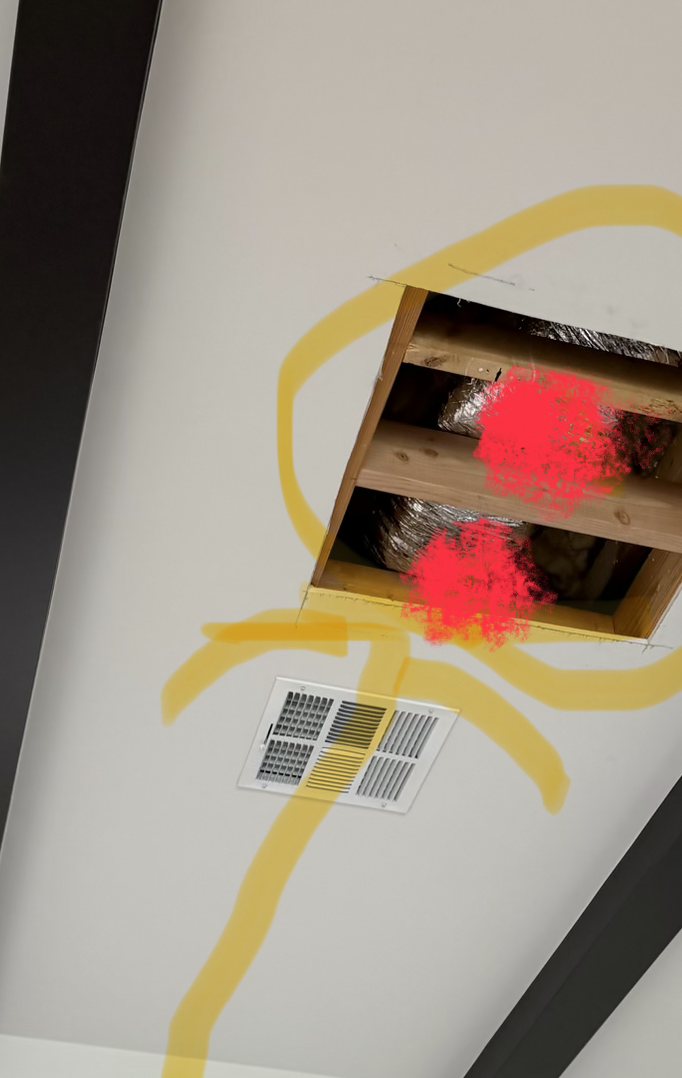
Code expects a second line of defense under or in an attic unit: a secondary drain pan, a water-level switch that shuts the equipment off, or a secondary drain line that discharges somewhere a person will notice. The section number and wording are on our drywall repair page, under ceilings. In Phoenix houses the secondary line often ends over a window or somewhere else you'll see it, on purpose, and water dripping from that little pipe on a dry day is the system telling you the primary drain is plugged.
A float switch is cheap insurance. RectorSeal's Safe-T-Switch SS2, about $32 at Home Depot, fits the auxiliary outlet of the primary drain pan and shuts the system off when it detects a clogged condensate drain. If one is already there, test it: lift the float and confirm the system shuts off. A switch nobody has tested is a guess.
The other AC leak isn't a leak at all. Supply ducts carry cold air through an attic that can run 140 to 150 degrees in a Phoenix summer, and when the duct's insulation is torn or the boot at the register isn't sealed, humid air meets a cold surface and condenses. Building Science Corporation calls it duct "sweating": dripping condensation on cold air-conditioning ductwork. It needs humid air, which is why in Phoenix it shows up in monsoon season, and it's the leak most often blamed on the roof.
Can a Swamp Cooler Leak Into the Ceiling?
Yes. A roof-mounted evaporative cooler has water running to it all summer, and that water has several ways into the house: an overflowing pan, a cracked supply line, the bleed-off line, or the roof jack where the duct passes through the roof. The U.S. Department of Energy's guide to evaporative cooling says it directly: roof-mounted systems can be difficult to access for maintenance and can lead to leaks in the roof.
Most often it's the float valve. The University of Arizona's Water Wise program says that if the valve sticks, the water runs continuously and overflows the tray. It recommends keeping the water level about an inch below the top of the tray and below the top of the overflow pipe. Phoenix's hard water adds scale to the valve and the pan, which is why many coolers have a bleed-off line that drains some of the recirculating water to slow mineral buildup. If that line is cracked or loose on the roof, it leaks too.
The seasonal changeover is the other risk. Both the DOE and Water Wise say to shut off and drain the water line, clean the pan and put a cover on the cooler for winter. In spring the water goes back on, and any fitting that cracked or loosened over the winter shows up on the ceiling under the cooler. Watch that ceiling for the first week the cooler runs each year.
What Should You Do in the First 48 Hours?
Stop the water, make the room safe, document it, and start drying. The EPA's guidance is to dry water-damaged areas and items within 24 to 48 hours to prevent mold growth. Most of what decides whether a ceiling gets dried and patched or torn out happens in those first two days.
- Stop the source. Turn the AC or the cooler off if either is suspect. If the water is constant, shut the main. If it's the roof, catch it and keep it off the floor until the storm passes.
- Cut the power. Switch off the breaker for any light, fan or outlet in the wet area. Ready.gov's advice is to turn the electricity off if it's safe to do so and never to touch wet electrical equipment while standing in water.
- Keep people out from under a bulge. A ceiling holding water can come down. With the power to that area off, if the bulge is small and the board around it is still firm, a small hole at its lowest point, with a bucket underneath, lets the water out in one place, which is American Family Insurance's advice. Make the hole from the side with a long tool, never from a ladder set under the bulge. If the sag is wide, the board is soft or a light fixture sits in it, stay out from under it and call.
- Photograph everything. The stain, the bulge, the attic above if you can get there safely, the wet belongings, and the source. Do it before cleanup. An insurance adjuster asks for the photos after the evidence is gone.
- Start drying. Belongings out from under the stain, fans and a dehumidifier in the room, and the AC running if it isn't the source, since it pulls moisture out of the air. In summer, keep the attic hatch closed: it lets attic heat and monsoon humidity into the house without drying the back of the board.
- Call your insurer before anything is torn out. Arizona's insurance department notes that a policy may require you to take steps to prevent further damage even before coverage is confirmed, and to keep receipts and photos of any emergency work. The steps above are that protection, and the carrier may want to see the ceiling before demolition.
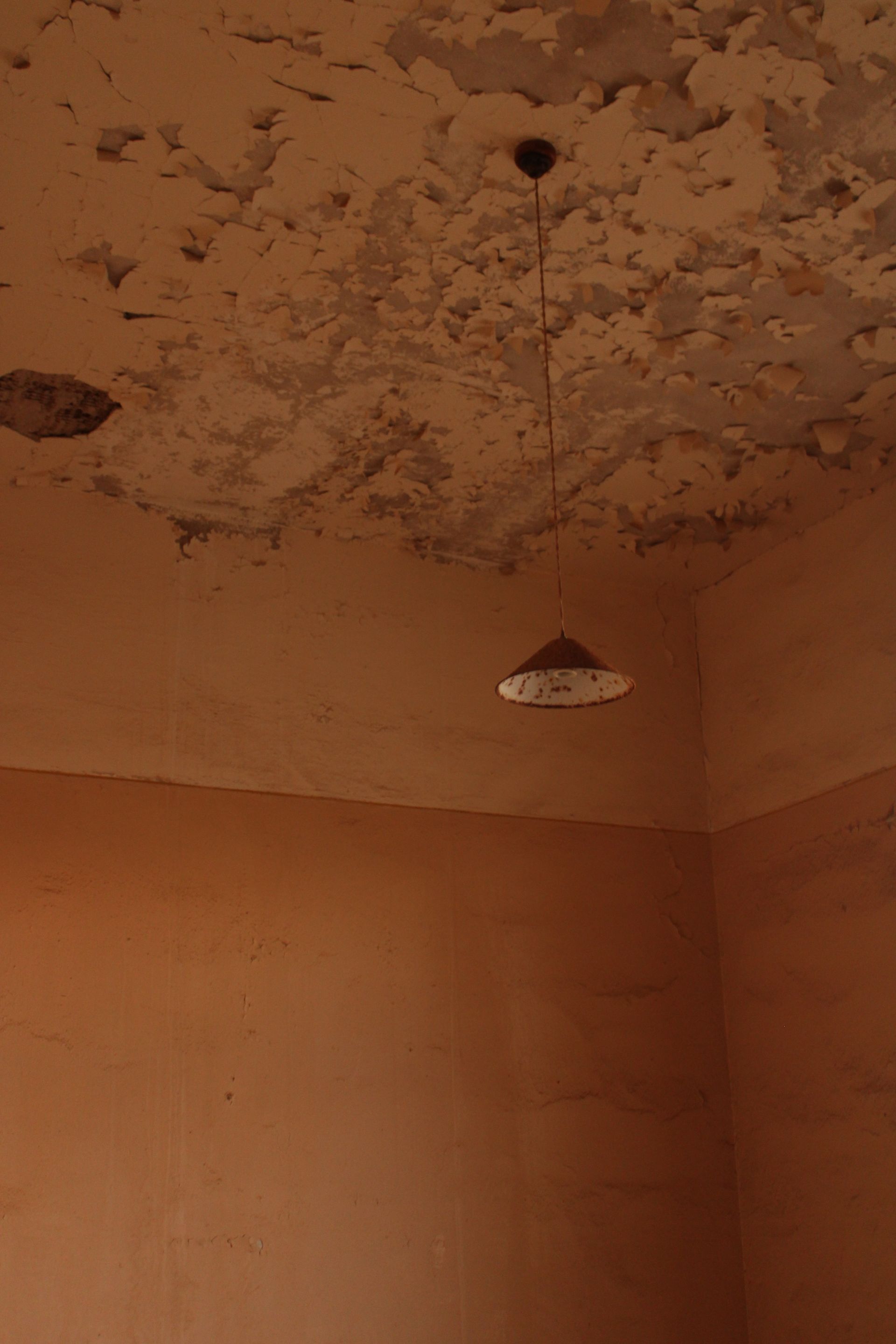
Snowbirds get the worst version of this. A monsoon leak in July can sit for months in an empty house before anyone sees the stain. If the house is empty in summer, a scheduled check through a service like our home watch in Phoenix is what catches it in days instead of in October.
When Does a Wet Ceiling Need Professional Drying, Not Just a Patch?
When the water was dirty, when the drywall is sagging or soft, when the insulation above it is soaked, or when it's been wet long enough for something to grow. The industry standard for this work, IICRC S500, sorts water by contamination: Category 1 comes from a sanitary source, Category 2 carries significant contamination, and Category 3 is grossly contaminated. Clean water doesn't stay clean either. Water that sits can deteriorate to Category 2 or 3. A small clean-water stain on sound board is a dry, seal and paint job. A soaked ceiling with wet insulation is a drying job first.
The same standard also grades a job by how much porous material got wet. In the current edition, Class 1 means wet porous material covers under 5 percent of the room's combined floor, wall and ceiling surface, Class 2 is 5 to 40 percent, Class 3 is more than 40 percent, and Class 4 is water held deep in dense materials like plaster, wood or concrete. The higher the class, the more air movers and dehumidifiers the drying takes and the longer they run.
Blown-in insulation is the part people miss. The EPA's water-damage table lists wet cellulose and fiberglass insulation as discard and replace, and the drywall itself follows the dry-in-place rule set out on our drywall repair page. Wet insulation also holds water against the back of the drywall long after the room below feels dry, which is why the cavity gets checked from above as well as below.
Before the ceiling closes, take moisture readings on the framing and the surrounding board with a meter, such as a Protimeter Mini or a Delmhorst BDX-20, and photograph the open cavity. Dry means the wet area reads close to the same material in a part of the house the water never reached, which is the yardstick the IICRC drying standard uses. If the ceiling needs structural drying with air movers and dehumidifiers, a water mitigation company does that work, and the drywall and paint follow once the readings come down.
How Much Does Ceiling Water Damage Repair Cost in Phoenix?
Once the source is fixed and the cavity is dry, a texture-matched ceiling section runs $400 to $1,000 in the Phoenix metro, a section with wet insulation pulled and replaced runs $900 to $1,400, and a typical water-damage repair lands $650 to $2,000 all in. Framing damage or established mold takes a job past $3,000.
| Repair | 2026 range | What moves it |
|---|---|---|
| Stain sealed, ceiling repainted, no board replaced | $1 to $2.50 per sq ft of ceiling, plus $25 to $75 to seal the stain | Only when the board is dry and sound. A stain blocker first, then the whole ceiling corner to corner so the patch doesn't flash. |
| Ceiling patch to about 20 sq ft, texture matched, you paint | $400-$800 per section | Overhead work, thinner coats and more of them, and knockdown or popcorn to match instead of orange peel. |
| Ceiling repair, texture matched, repair primed and painted | $500-$1,000 per section | Usually two visits, so the finish coat on the ceiling isn't rushed. |
| Ceiling repair plus the whole ceiling repainted | $700-$1,300 per room | Ceiling height, how much furniture moves, and whether you supply the paint. |
| Ceiling section with wet insulation pulled and R-30 replaced | $900-$1,400 per section | Cutting back past the damage, bagging out soaked blown-in, batts back in, a moisture reading and a stain blocker before new board. |
| Water damage repair, all in | $650-$2,000 per job | How much board comes out and whether the source is fixed. Framing damage or established mold puts a job past $3,000. |
| Large area or whole ceiling replaced | $2.00-$6.50 per sq ft | Tear-out, bagging and haul-away included. Access and ceiling height make most of the spread. |
| Popcorn ceiling patch and match | $300-$800 per patch | The hardest texture to match. In a house built before the mid-1980s, the material is tested before it's disturbed. |
Drywall and paint only, labor and materials, at Phoenix market rates except the first row, which is a national ceiling-painting rate. The source repair, whether roof, cooler, drain line or duct, is its own line and comes first.
Where the paint stops is the biggest swing in that table. A patch that's primed and left for you to paint is the cheapest version, and on a ceiling it's also the one most likely to show, because a dab of paint on fresh compound reads differently from the aged paint around it. Carrying the whole ceiling corner to corner is the version that disappears.
A ceiling quote worth signing names five things: what stopped the water, the moisture reading that says the cavity is dry, how far past the stain the board gets cut back, what happens to the insulation above it, and where the paint stops. A quote that prices a patch without the first two is pricing a ceiling you may buy twice. Texture is the last thing to agree on, because knockdown, orange peel and popcorn are matched differently, and a ceiling costs more than the same patch on a wall.

Send Us the Stain
One photo of the stain, one of the whole ceiling from across the room, and a note on when it showed up: after rain, with the AC on, or all the time. We'll tell you where we'd look first and what the repair lands at once the source is fixed.
Free Ceiling EstimateWill Homeowners Insurance Pay for a Monsoon-Damaged Ceiling?
Sometimes. A policy may pay for the ceiling when a sudden, covered event caused the leak, and it rarely pays to fix a roof that wore out. Homeowners policies are built around sudden and accidental damage. The Insurance Information Institute lists accidental discharge or overflow of water from a plumbing, heating or air conditioning system, or from a household appliance, as covered, and says a policy will not cover damage due to lack of maintenance, mold or infestation.
Roof leaks split the same way. Arizona's Department of Insurance and Financial Institutions says rain damage inside the home may not be covered unless the rain came in through a roof or wall damaged by wind or hail, and that water damage resulting in mold and rot is typically excluded. Farmers Insurance adds that leaks tied to wear and tear, aging materials, poor maintenance or long-term seepage typically aren't covered. A monsoon gust that lifts tiles and an underlayment that wore out over twenty summers can leave the same stain and land very differently on a claim.
That's why the photographs and the attic matter, and why the carrier hears about it before anything is torn out. A slow stain that's been growing since spring reads as long-term seepage. A stain that appeared the morning after a storm, with the roof damage photographed, reads as a sudden event. Your own policy language decides it.
Which Ceilings in a Phoenix House Leak Most?
The ones under equipment and under roof transitions. In a typical Valley house that means the ceiling below a roof-mounted cooler, the hallway or closet ceiling below an attic air handler, the flat-roof sections and Arizona rooms tied into a pitched roof, and the ceiling around skylights.
Skylights leak at the curb and the flashing, and the stain often shows on the light well's drywall rather than the main ceiling. Ceilings next to an exterior wall under a parapet take the water that gets past the parapet cap. In a two-story house, add the ceilings under the upstairs bathrooms and the laundry, where a toilet supply line or a washer hose can let go without warning.
Questions Phoenix Homeowners Ask About Water-Damaged Ceilings
Should I poke a hole in a ceiling that is bulging with water?
Only a small bulge in board that is still firm, and only with the power to that area off. A small hole at the lowest point, with a bucket under it, lets the water out in one place, which is American Family Insurance's advice. Make it from the side with a long tool, not from a ladder set under the bulge. If the sag is wide, the board is soft or a light fixture sits in it, keep everyone out from under it and call.
How long does a wet ceiling take to dry in Phoenix?
A professionally dried loss usually takes about 3 to 5 days, which is SERVPRO's average, and it varies a lot with how much got wet. Phoenix's dry air helps the room, but the back of the drywall and any insulation above it dry far slower than the painted face. Moisture meter readings on the board and the framing decide when it's dry, not how the ceiling feels to the touch.
Can I just paint over a water stain on the ceiling?
Only after the leak is fixed and the board is dry and sound. A stain blocker goes on first, such as Zinsser B-I-N, a shellac-base primer sold as a stain sealer, or KILZ Original, an oil-based primer its maker says blocks heavy interior stains including water. Ceiling paint alone lets the stain bleed back through. If the board is soft, sagging or the seams have opened, paint isn't the fix and the section gets replaced.
Why does my ceiling only leak when the rain blows sideways?
Because the leak is in something vertical. Wind-driven rain gets pushed into joints that straight-down rain never reaches: the top of a parapet wall, the flashing where a roof meets a wall, a window or vent opening high on a wall, or the side of a cooler curb. A leak that only shows in sideways rain points at those joints, not at the field of the roof.
Is a stain near the AC closet a mold risk?
It can be. Condensate sits warm in a pan and in the cavity above the ceiling, and the EPA's window for drying wet materials before mold is 24 to 48 hours. A stain near an air handler closet that has been growing for weeks should be opened and checked, not painted. A musty smell, spotting or soft board means the cavity is looked at before anything closes, and established mold changes the job before new drywall goes up.
What Else Is Worth Fixing While the Ceiling Is Open?
Repainting the room, swapping a fixture and adding lights all fit the same visit, because a ceiling repair already pays for the hard parts: the drop cloths, the ladder work, the dust control and a second trip to texture and paint. Anything else that uses that same setup, agreed before the start, usually lands 25 to 50 percent below what it costs as its own visit.
- Repaint the room. A freshly painted ceiling makes tired walls look worse. Our interior painting crew carries the walls while the room is already masked.
- Swap the fixture or the fan. If a light or fan sat in the wet area, it's already coming down. Replace it through our light fixture installation or ceiling fan installation work while the ceiling is open.
- Add recessed lighting. An open ceiling is the cheapest moment to run new cans or wafer lights. See our electrical page.
- Clear the rest of the list. The ding behind the door and the nail pops in the hallway ride along on the same trip through our punch list service.
- Selling soon? A stained ceiling is something a buyer's inspector will flag. Read what repairs to do when buying or selling a Phoenix home.
- The carport or patio cover. The same storm that found the roof often found the patio cover. See why Arizona carports fail in the monsoon.

Written by Harrison Norem, owner of Norem Contracting and a licensed Class B general contractor, Arizona ROC #365090. Fifteen years across the trades, including drywall, ceiling repair and finish work across the Phoenix metro. More about Harrison.