Yes. To remodel an Arizona home while you're away, five things have to be settled before you leave: a contractor whose license you've checked on the Arizona Registrar of Contractors' free online search, a signed contract with every finish already chosen, a way for the crew and the building inspector to get in, a schedule of photo updates, and a written change-order process with one person who can approve. One protection works differently for a winter home. The Residential Contractors' Recovery Fund, which can pay up to $30,000 per claimant, is limited by A.R.S. 32-1132 to owners who occupy or intend to occupy the house as their primary residence.
We work for owners who live somewhere else for part of the year, and we can start from photos and measurements when you can't be here. Keys, alarm codes and the thermostat setting for a vacant house are on our home watch page. A remodel adds its own list, and it starts with the person you hire.
Can a Remodel Run While You're Out of State?
Yes, and an empty house is easier to work in than one with people living in it. What changes is the order of things. Every decision moves to the front, before you leave, and the parts of the job that need a person on site get assigned to someone by name: letting the crew in, meeting the inspector, receiving deliveries. What you do from up north is read updates, answer questions and approve changes in writing.
Interior work suits it best. Kitchens, bathrooms, floors, paint and ceilings all go in under the air conditioning, in rooms nobody has to live around. Work that changes the outside of the house still has to clear your community first, on its own calendar. For anything beyond a small refresh we'll still want to see the house in person before the number is final, so the walkthrough is best booked while you're still in town. Deliveries need a plan of their own if you're buying the appliances or the vanity yourself. Our kitchen remodeling page puts the trade-off plainly: when we supply, a damaged door is our problem and we chase the replacement, and when you supply, the schedule waits on your supplier's replacement time.
How Do You Check Out an Arizona Contractor From Another State?
Online, through the Arizona Registrar of Contractors, in a few minutes from anywhere. The ROC's public search shows a license's classification, status, bond and complaint history, and our guide to choosing a remodel contractor in Phoenix walks through the lookup, including the detail page where discipline shows up. From a distance, three things deserve a closer look.
First, the class should be a residential one that fits the job. The ROC describes a B General Residential license as allowing the licensee to "construct and repair all or any part of a residential structure or appurtenance" (ROC license classifications), while a specialty class covers its one trade. Second, the license belongs to the business, not to the person who qualified for it, so the business name on your contract should match the name on the license. Third, anyone working without a license is limited to jobs under $1,000 in total, labor and materials included, with nothing that needs a building permit (A.R.S. 32-1121). A kitchen or bathroom remodel won't fit under that.
Then come two protections that turn on where you live. Arizona's Residential Contractors' Recovery Fund pays homeowners harmed by a licensed residential contractor's violations, and the maximum individual award is $30,000 (A.R.S. 32-1132.01). An individual owner qualifies only if they occupy or intend to occupy the house as their primary residence. An LLC qualifies only if at least one member does, and a revocable living trust only if all of its trustors do (A.R.S. 32-1132). The statute doesn't define primary residence, so if the Arizona house is your second home, ask the ROC how a claim would be treated before you count on the Fund.
Arizona's lien statute draws its line somewhere else. No one can record a lien against an owner-occupant's dwelling except a person who signed a written contract directly with that owner. An owner-occupant, under the statute, is a natural person who held recorded title before the work began and who resides or intends to reside in the house at least 30 days during the 12 months after the work is completed, without intending to sell or lease it (A.R.S. 33-1002). A winter resident who comes back for the season can meet that test even where the Fund's primary-residence test is in doubt. A house titled to an LLC can't, because the statute requires a natural person. How complaints, Fund claims and lien waivers work in practice is in our post on finishing a job another contractor abandoned.
Two protections, two different tests
| Protection | What it does | Who qualifies | For a winter home |
|---|---|---|---|
| Residential Contractors' Recovery Fund, A.R.S. 32-1132 | Pays actual damages caused by a licensed residential contractor's violation, up to the statute's maximum | An owner who occupies or intends to occupy the house as a primary residence; an LLC with at least one such member; a revocable trust whose trustors all do | Ask the ROC first if Arizona isn't your primary residence |
| Owner-occupant lien protection, A.R.S. 33-1002 | Bars liens on the dwelling except by someone with a written contract directly with you | A natural person, title recorded before the work, living or intending to live there at least 30 days in the 12 months after completion, not selling or leasing | A season in the house can meet it; an LLC-owned house can't |
Read from the statute text on azleg.gov. The Fund statute doesn't define a primary residence, which is why that question goes to the ROC.
What Should the Contract Say When You Won't Be There?
Everything someone on site would otherwise have to ask you. Arizona sets the minimum for any residential contract over $1,000: the contractor's name, business address and license number; your name and mailing address and the job address; the date of the contract and the estimated completion date; a description of the work; the total price with taxes; any deposit; each progress payment and the stage of construction that triggers it; and a notice, in at least ten-point bold type, that you can file a written complaint with the Registrar, with its phone number and website. At signing you get a legible copy of everything signed, and a receipt for any cash (A.R.S. 32-1158). Give the mailing address where you'll be over the summer, so paper sent to you doesn't sit in an empty mailbox.
For an owner who's away, the statute is only the floor. Add every finish by brand, model and color, with any allowance written as a dollar figure. Add who receives deliveries and checks them, how the crew gets in and on which days, how often you'll get updates and in what form, and who on site can make a decision if you can't be reached. The statute says nothing about change orders, so the contract has to, and the process belongs in writing before the first wall comes open.
None of it requires you to be in Arizona to sign. Under the state's electronic transactions law, a contract can't be denied legal effect because an electronic record was used to form it, and an electronic signature satisfies a law that requires a signature (A.R.S. 44-7007). The law applies between parties who have agreed to do business electronically, which is judged from the context and the parties' conduct (A.R.S. 44-7005), so say in the contract that it and any change orders may be signed electronically.
How Does the Crew Get In While You're Gone?
With a code of its own, set up before you leave. A keypad deadbolt you manage from your phone does the job better than a key under a planter, and our home watch page explains why a code beats a key that travels: a code can be changed the day the arrangement ends. Schlage's Encode Smart WiFi Deadbolt, for one, can schedule up to 100 access codes and lets you view a lock history and get push notifications, and it needs a 2.4GHz WiFi network and four AA batteries (Schlage Encode). In the Schlage Home app, a code can be always on, recurring at set times, or temporary, and you can choose to be alerted when a particular code is used (Schlage Home app).
Give the crew its own code, scheduled to the working hours, and keep separate codes for home watch, a cleaner or a family member, so the history shows who opened the door and when. Delete the crew's code the day the work ends. Leave the WiFi on and put fresh batteries in before you go. If the house has a monitored alarm, the crew has to be on the authorized list, or the first morning of work turns into a false alarm.
A gated community adds a step at the gate, and each one writes its own rules. DC Ranch in Scottsdale, for example, sells vendor gate passes, $5 a day or $50 a year per vehicle, to builders and contractors working on homes under construction there. The pass is issued at the East Gate with the driver and the vehicle present and a valid license, registration and insurance shown (DC Ranch contractor gate access). For a remodel of an existing home, ask your HOA or gate office how a contractor gets on the list while you're away, and ask in the winter. PebbleCreek's rules for work crews at its gates are in our post on remodeling in Sun City, Sun City West and PebbleCreek.
In Sun City West, the Posse runs a free Vacation Watch: members drive to the house and check the doors, the windows and the outside irrigation for signs of a problem. Residents sign up with the online form, which asks for both the leave and the return dates, and a trip of a week or less may end before a visit fits in (Sun City West Posse Vacation Watch). If the house is on the list, tell the Posse a crew will be working there and on which days.
The building inspector needs a way in too. Inside a city, the city that issued the permit sends the inspector. In unincorporated Maricopa County, which includes Sun City and Sun City West, inspections are requested through a county Permit Center account, and the county asks that the assigned inspector be contacted only on the day of the scheduled inspection (Maricopa County residential construction). When the contractor pulls the permit in its own name, scheduling and passing those inspections is the contractor's job, as our remodel permit guide explains, so the access plan has to cover inspection days as well as work days.
How Do You Follow the Work From Up North?
Through photos on a schedule you agree to, and one place where everything is kept. A workable rhythm: photos at the end of each work day and a video walk-through once a week, plus a written note whenever something is found or decided. Ask for photos of every wall and ceiling before it's closed: the wiring, the plumbing, the blocking behind grab bars and cabinets. Once the drywall goes up, those pictures are the only record of what's inside the wall. Keep everything in one shared folder or one email thread, so the record stays in order and in your hands.

Mind the clock. Arizona rejected daylight saving time by statute and keeps standard time all year (A.R.S. 1-242). From March to November, while most of the country is on daylight time, Phoenix runs three hours behind New York and Toronto and two behind Chicago, the same as Los Angeles. In winter it's two hours behind New York and one behind Chicago, the same as Denver. A 7 a.m. call in Phoenix in July is 10 a.m. in New York, and a question the crew raises at the end of its day can reach you at dinner.
A camera at the entry adds a record you don't have to ask for. Ring's app sorts its doorbells and cameras into three modes, Disarmed, Home and Away, and lets you choose whether each device records in each mode, with some features tied to a Ring subscription (Ring device modes). Point cameras at the doors and the driveway rather than into the rooms where people work, and tell the crew where they are.
One more address to fix before you leave is your HOA's. PebbleCreek's guidelines send notices of approval, disapproval and fines by U.S. mail to the address the HOA has on file, by email or by phone, and if you haven't given the HOA a current mailing address, a notice mailed to the old one is treated as received (PebbleCreek Architecture and Landscape Guidelines). Check how your own association sends notices, and give it your summer address and email.
Who Approves a Change When Something Turns Up Behind a Wall?
You do, in writing, before the extra work starts, unless something is actively causing damage. Open walls and floors turn up things nobody could see at the walkthrough: a soft subfloor, a corroded pipe, wiring that has to be replaced. The process is the same whether you're down the street or in Minnesota. The crew stops that piece of work and photographs it, and you get a written description and a price to approve before the work goes ahead. We handle change orders in writing, priced and approved before that work starts, and our flooring page states the same rule for a soft subfloor: work stops, you get a price, and the floor goes back on your say so.
The exception is anything that keeps getting worse while it waits. If opening a wall finds an active leak, the water gets shut off and the area dried first, and you hear about it that day. Our home watch page draws the same line for the repairs it finds: stopping active damage happens right away, and anything past that gets a written scope, a number and your approval first.
Two habits make approvals quicker from a distance. Name one person who can approve, you or someone local you trust, and write down any limit on what they can approve alone. Then agree on how quickly you'll answer, because the crew waits on the reply. Allowances are another source of changes, and our kitchen cost guide warns that an allowance set low is how a bid wins on paper and loses in change orders. Making every selection before you leave keeps that list short.
What Happens to the Empty House While the Work Is Underway?
It stays cooled, protected and checked, because the work and the materials depend on it. The air conditioning runs while the crew works, and after hours the house should stay inside the temperature range the installed materials call for. Rigid-core vinyl plank is a good example: its install guides want 55 to 85 degrees held before, during and after installation, with 80 as the install ceiling, as our flooring page explains. Our post on remodeling before you move in lists the application limit for an interior enamel, and the setting for the months after the work is finished is on the home watch page.
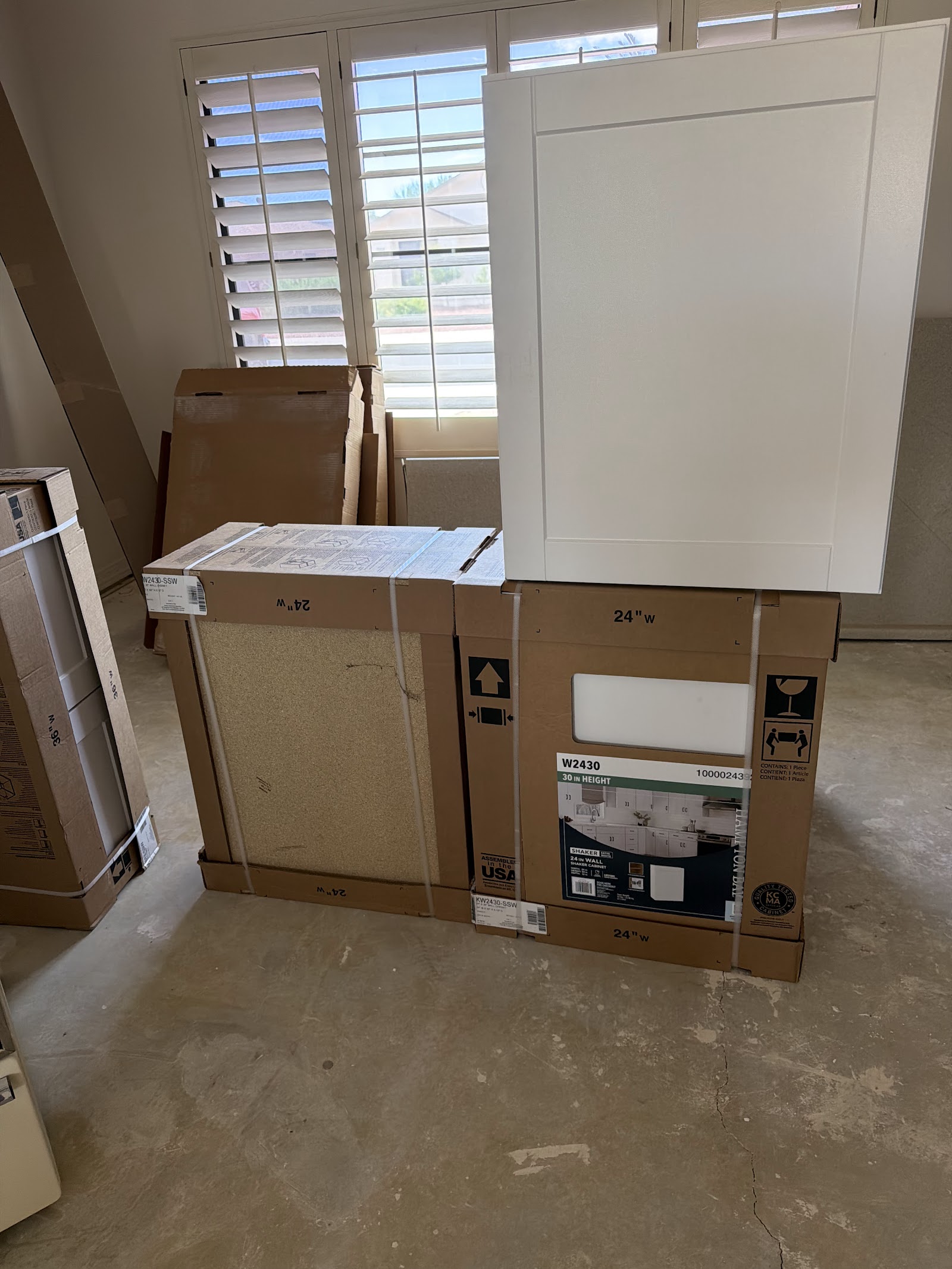
Stored materials need the same care. Paint is easy to forget: the Dunn-Edwards sheet for its EVERSHIELD exterior paint says to protect it from temperatures above 110 degrees for extended periods, because extreme temperatures can make paint unusable (EVERSHIELD product information). A closed garage in July is no place for it, or for boxed cabinets.
A smart thermostat is the backstop. Google's Nest thermostats have Safety Temperatures, which turn the cooling on when the house reaches a set limit, even if the thermostat is set to Off, and send a notification to your phone when that happens. The cooling safety temperature is off by default in a house with central air, so it has to be turned on, and the alerts need the home's Wi-Fi and internet, though the thermostat keeps cooling while the Wi-Fi is down (Google Nest Help, Safety Temperatures). If a crew member changes the setting for the work day, agree on who sets it back.
Dust is the last thing to plan for. A crew that closes off the work area and covers the return-air grilles keeps drywall dust from riding the air conditioning through the rest of the house, which matters more when nobody is home to see it settle. Our Sun City West kitchen post describes that setup: the kitchen entry zipped off and the returns covered.
What Does It Cost to Run a Remodel From Out of State?
The added costs are mostly setup. A single home watch visit runs $75 for a home up to 3,500 square feet and plans run $75 to $260 a month, a keypad deadbolt like Schlage's Encode lists at $299, and the license lookup is free. The rows below add the jobs that go fastest in an empty house.
| Item | Phoenix 2026 | What it covers |
|---|---|---|
| Home watch, single visit | $75 per visit | A home up to 3,500 sq ft, with a dated photo report the same day |
| Home watch plans | $75 to $260 a month | Monthly up to weekly visits |
| Closing the house | $150 per departure | The full departure pass, photographed so there's a record of how you left it |
| Opening the house | $150 per arrival | Done two to three days before you land |
| Closing and opening, booked together | $250 per season | The same work, one booking |
| Extra unscheduled visit | $75 per visit | After a storm, or when a neighbor calls |
| Keypad deadbolt, Schlage Encode Smart WiFi Deadbolt | $299 per lock, maker's list price, national | Up to 100 scheduled codes and a lock history |
| DC Ranch vendor gate pass | $5 per day or $50 per year, per vehicle | Builders and contractors on homes under construction in DC Ranch |
| ROC license lookup | Free, per search | Classification, status, bond and complaint history |
| Interior repaint: walls, ceilings and trim | $3.25 to $4.50 per sq ft of floor area | A 2,000 sq ft home lands $6,500 to $9,000 |
| Popcorn ceiling removed | $1.50 to $4.50 per sq ft | $2.50 to $7.00 per sq ft with skim, prime and paint; tested first |
| Vinyl plank flooring, installed | $4.50 to $9.50 per sq ft | Laid through rooms with nothing standing in them |
| Epoxy garage floor, flake broadcast | $6 to $9 per sq ft | Roughly $2,400 to $5,200 on a two-car garage |
Home watch rows are our published rates. The deadbolt is the maker's list price and the gate pass is DC Ranch's own fee. The rest are Phoenix-metro prices for 2026.
Remodel While You're Away
Send photos of the rooms, rough measurements and the dates you'll be gone. We'll tell you what has to be settled before you leave, how the crew will get in and how you'll see the work, and what it costs.
Get a Remote EstimateWhat Do Out-of-State Owners Ask Before Signing?
Do I have to be in Arizona to sign a remodeling contract?
No. Arizona's electronic transactions law says an electronic signature satisfies a legal requirement for a signature, and it applies between parties who have agreed to do business electronically, which is judged from the context and their conduct. Say in the contract that it and any change orders may be signed electronically, and keep a copy of everything signed.
Does the ROC Recovery Fund cover a winter home?
Only if it counts as your primary residence. A.R.S. 32-1132 limits individual claimants to owners who occupy or intend to occupy the house as their primary residence, and the maximum award is $30,000 per claimant. The statute doesn't define primary residence, so ask the Registrar of Contractors before counting on the Fund for a second home.
Can someone put a lien on my Arizona house while I'm away?
On an owner-occupant's house, only a person who signed a written contract directly with the owner. Arizona's lien statute treats you as an owner-occupant if you're a natural person, your title was recorded before the work started, and you live in or intend to live in the house at least 30 days in the 12 months after the work is completed, without planning to sell or lease it. A house owned by an LLC doesn't qualify.
Who lets the building inspector in if I'm not there?
Whoever holds the access plan, which is usually the contractor that pulled the permit. When a licensed contractor pulls the permit in its own name, scheduling and passing the inspections is its job, so the crew's code covers inspection days too. Inside a city, the city that issued the permit does the inspections; in unincorporated Maricopa County, including Sun City and Sun City West, they're requested through a county Permit Center account.
What time is it in Arizona when I'm back east for the summer?
Three hours earlier than New York or Toronto and two hours earlier than Chicago, from March to November, because Arizona keeps standard time all year under A.R.S. 1-242. In winter the gap shrinks to two hours behind New York and one behind Chicago. Phoenix matches Los Angeles in summer and Denver in winter.
With the House Empty and the Crew Booked, What Else Belongs on the Contract?
A remote remodel has already paid for its setup: a crew with a code to the door, an access plan, a photo routine and protection on the floors. Work added to the contract before you leave, while all of that is being arranged, commonly runs 25 to 50 percent below what it costs as its own trip, and it's the cheapest moment for the jobs that need a house with nobody in it.
- Paint every room at once. Empty rooms go faster, and the colors get chosen with the other finishes. See interior painting.
- Take the popcorn down. The ceilings get sampled and scraped with the furniture gone. See drywall repair.
- Run one floor through. A single plank floor across the open rooms, laid with nothing standing on it. See vinyl plank flooring.
- Coat the garage floor. It needs the garage cleared and no parking on it for a day to a week, depending on the system. See epoxy garage floor coating.
- Shade the west glass. Screens cut the sun on the windows that heat a closed house. See sun screens and window tint.
- Clear the small list. The sticking door and the loose towel bar, priced as one visit. See handyman services.
- Keep someone checking after the crew leaves. The house still needs eyes on it until you're back. See home watch services.
Text us photos of the rooms and the dates you'll be away, or call (602) 492-1815, and we'll send back a quick quote.

Written by Harrison Norem, owner of Norem Contracting and a licensed Class B general contractor, Arizona ROC #365090. Fifteen years across the trades, including kitchens, bathrooms, flooring and finish work for owners across the Phoenix metro. More about Harrison.