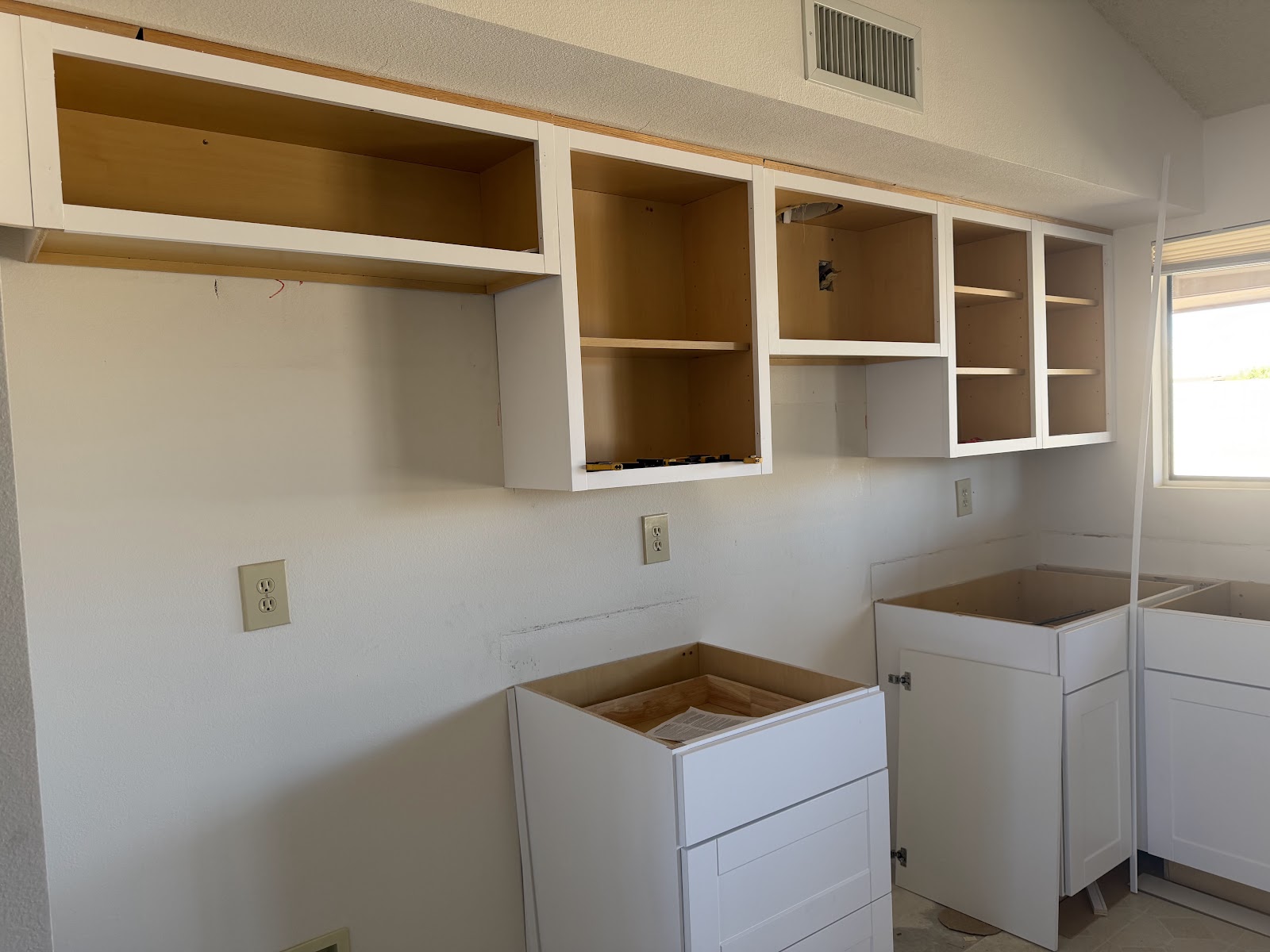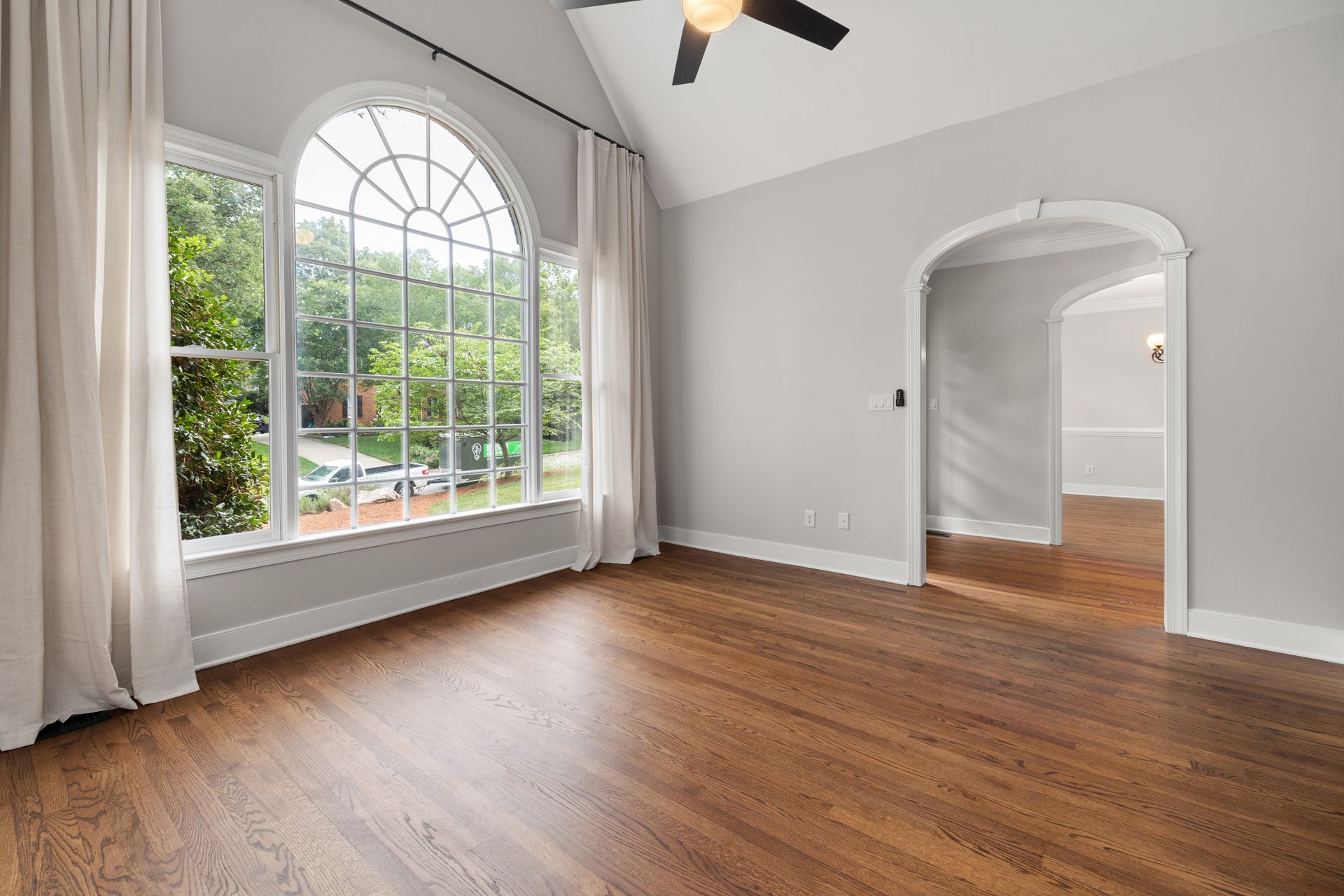
For a snowbird home remodel in Arizona, the schedule that works is to plan while you're here and build after you leave: walk the house, choose every finish, order what takes weeks to arrive and file for community and permit approvals between November and March, timed so they don't run out before the start, then let the work run in the empty house from spring into fall. Summer work is protected by state law, which since May 2025 bars cities and counties from using noise rules to stop permitted construction between 5 a.m. and 7 p.m. on business days from May 1 to October 15. The two dates to plan around are Phoenix's first 100-degree day, which averages May 2, and the monsoon, which the National Weather Service dates June 15 to September 30. A full kitchen remodel in the same footprint runs $25,000 to $40,000 in the Phoenix metro.
We work across the Valley, Sun City, Sun City West, Goodyear and Mesa included. The questions below follow the calendar from the first walkthrough to the week you're back in the fall. Who issues the permit in each community, and which community rules apply, are in our post on remodeling in Sun City, Sun City West and PebbleCreek.
When Should a Snowbird Plan a Remodel, and When Should It Be Built?
Plan it in the months you're here and build it in the months you're gone. The decisions need you in the house, holding a tile against the floor in morning light or opening every cabinet door before choosing new ones. The construction goes better without you in it. "An empty house is the best working condition a contractor ever gets," as our home watch page puts it, because nobody has to keep a kitchen running or a hallway clear around the crew.
For a house that's lived in all year, the advice runs the other way. Our bathroom remodeling page calls roughly October through April the easier window in Phoenix, because it misses peak summer and the monsoon. Many winter residents are here for exactly those months, so the choice is a summer build in an empty house or a winter build you live through. The same page puts booking lead time at four to six weeks for a fall or winter start and two to three months for spring and summer, which is one more reason to settle the job in January rather than April.
One split works well for a house you leave in the spring: the outside work in the cool months while you're here, the inside work after you leave. That puts exterior paint, a patio or a walkway, sun screens and yard work in February and March, when you can see them finished, and the kitchen, the bathrooms, the floors and the ceilings in the months the house is empty. If the summer work cuts a new window, door or vent through an outside wall, the exterior paint waits for it. The heat section below explains why.
A planning calendar for a house you leave in the spring
| When | What happens | Who you deal with |
|---|---|---|
| November and December | Walkthrough, measurements, the scope written down and a first price | The contractor |
| January | Every finish chosen: cabinets, counters, tile, fixtures, lighting, flooring, paint colors. Anything that changes the outside drawn up | Showrooms, the contractor |
| February | Cabinets and other slow items ordered; the community application filed for exterior changes | Suppliers, your HOA or architecture committee |
| March | Permit application in, timed so the permit issues close to the start date (plans for an addition or a moved wall go in sooner); home watch set up | Maricopa County, Mesa, Goodyear or your city |
| April and May | You leave; demolition and the rough work begin; outside work moves to early mornings | The crew and the building inspector |
| June 15 to September 30 | Monsoon season, with the roof and every new exterior opening already closed in | The crew |
| October and November | You're back: the final walkthrough and whatever is left on the list | The contractor |
How many of the summer months the build fills depends on the complexity of the work. A bathroom and a whole-house remodel don't use the same calendar.
What Has to Be Settled Before You Head North?
Every decision that would otherwise stop the crew. A remodel that runs without you stalls on questions nobody on site can answer: which grout, which pulls, whether the outlet goes left or right of the window. Finish this list before you leave:
- Every finish, by model and color.Cabinets, counters, tile and grout, plumbing fixtures, lighting, flooring and paint. Tile is easiest to choose in person; our guide to Valley tile and flooring stores lists where people shop, and a vanity or faucet bought at Ferguson or Central Arizona Supply installs the same as one we supply. A finish chosen in January is a question nobody has to ask you in June.
- The orders that set the calendar.On a kitchen, the cabinets decide the start date. A semi-custom order runs four to eight weeks before a box arrives and custom eight to sixteen weeks or more, according to the lead-time table in our post on remodeling right after you buy. Countertops are measured for fabrication only after the cabinets are installed, and shower glass only after the tile is set. Our kitchen remodeling page has the rule that follows: demolition doesn't start until the cabinets are ordered and confirmed.
- The appliances, by model number.Cabinet openings, outlets and the gas or water lines are laid out around them, so a range or a refrigerator chosen after the cabinets are ordered can mean a cabinet reordered.
- The approvals.Exterior changes go to your community where its rules call for review, as PebbleCreek's do, and permitted work goes to the county or the city. Most of these approvals run on clocks, covered next.
- How questions will reach you.Decide it now, along with who answers if you can't be reached.
How Long Do Community Reviews and Permits Take in the Sun Cities, PebbleCreek and Mesa?
Days to a few weeks for the review itself, and after approval most of them start a clock that can run out before a summer start. For a winter resident the clocks matter more than the review times, because an approval won in January has to still be good when the crew arrives in May.
PebbleCreek's Architecture and Landscape Committee keeps a weekly calendar. It normally meets Wednesdays at 9:30 a.m., and its guidelines ask for major permits and plans by the Friday before the meeting. Requests for other permits, complete and in good order, are normally processed within seven working days. The office is in the Tuscany Falls Clubhouse, open 8:30 a.m. to noon Tuesday through Friday, (623) 935-6747 (PebbleCreek Architecture and Landscape Guidelines). Then come the clocks. Those other permits are good for 60 days from approval, so one approved in February has lapsed by the end of April. A casita, golf cart garage or addition permit is good for 90 days from the work start date written on it, with 30-day extensions at $100 each, requested in writing before the permit expires, and a new permit after three, so the start date on the form should be the day the crew starts. Any project that needs a City of Goodyear permit needs the committee's major permit too, and filing both in the same month keeps one approval from aging while you wait on the other. PebbleCreek has posted proposed guideline revisions for November 2026, so confirm the schedule with the office before planning around it.
In Sun City West, whether a change needs anyone's sign-off is set lot by lot in the recorded CC&Rs, and the brochure from the Recreation Centers of Sun City West CC&R Department says the community has more than 100 different sets (RCSCW CC&R brochure). The winter job there is getting the copy for your own lot before anything that touches the outside is designed. The department is open weekdays from 8 a.m. to 2:30 p.m. at (623) 544-6661 (RCSCW CC&R page). In Sun City, the declaration the Sun City Home Owners Association enforces has no plan-approval article (SCHOA CC&Rs), so the clock that matters is the county's.
Maricopa County Planning and Development issues permits for both Sun Cities through its online Permit Center, (602) 506-3301 (Maricopa County residential construction). Its Fast Track lane can process simple projects within two days after the plans are accepted, and it lists patio covers, attached garages and carports, covered breezeways, fences up to 7 feet, and minor plumbing and electrical repair or replacement among them. A separate Permit By Inspector option covers single-story residential remodels of up to 2,000 square feet that don't remove or alter structural components (county permitting options). Once issued, a county permit expires 180 days from the date issued or from the last completed inspection. The county allows one free extension on a written request made before it expires, which adds 180 days, and renewing a permit within 360 days after it expires costs half the building permit fee (county permit expiration page). A permit issued in mid-February for a mid-June start has used two-thirds of its first 180 days before the first inspection.
Mesa gives written comments or an approval within 10 working days on a residential submittal, and counts only Monday through Thursday as working days, so 10 of them is about two and a half calendar weeks. Each round of corrections runs on the same clock. An expedited review in five working days costs extra, and a Mesa permit is valid for 180 days after it's issued (City of Mesa residential construction, Permit Services (480) 644-4273). Phoenix's targets, and its over-the-counter path for small interior remodels, are in our Phoenix remodel permit guide.
Review and permit clocks, community by community
| Who reviews | How the review is scheduled | The clock after approval |
|---|---|---|
| PebbleCreek Architecture and Landscape Committee | Meets Wednesdays at 9:30 a.m.; major permits due the Friday before; other permits normally within 7 working days | Other permits: 60 days from approval. Casita, golf cart garage or addition: 90 days from the start date on the permit, then 30-day extensions |
| Sun City West, RCSCW CC&R Department | No set schedule; your lot's recorded CC&Rs decide what needs sign-off, so ask for your lot's copy | Whatever your CC&Rs say |
| Sun City, SCHOA | No plan-approval article; written standards instead | None from SCHOA; the county permit's clock applies |
| Maricopa County Planning and Development | Online Permit Center; Fast Track processes simple projects within 2 days after plans are accepted | 180 days from issue or the last completed inspection; one free extension on written request |
| City of Mesa | Written comments or approval within 10 working days, Monday to Thursday; 5 if expedited | 180 days after issue |
From each body's own documents, read in November 2026. Committees and cities change their schedules, so ask whether yours keeps the same calendar through the summer.
What Hours Can a Crew Work While You're Gone?
From May 1 to October 15, no city or county in Arizona can use a noise rule to stop permitted work from starting at 5 a.m. on business days. A state law passed in 2025, A.R.S. 9-500.52 for cities and A.R.S. 11-269.30 for counties, bars any city or county from enforcing a noise rule that prohibits general construction between 5 a.m. and 7 p.m. on business days, or between 7 a.m. and 7 p.m. on Saturdays, in that window, as long as the work has a valid building permit. Cities and counties also have to allow concrete to be poured at least an hour before general work is regularly scheduled to begin. The Legislature passed it as an emergency measure, so it took effect when the governor signed it on May 13, 2025 (Laws 2025, chapter 181). The law binds cities and counties, not homeowners associations, so a community's own rules on work hours still apply.
In the unincorporated county, which includes both Sun Cities, Maricopa County's own rule already ran close to that. Within 500 feet of residential zoning and 1,500 feet of an occupied home, its Hours of Construction Ordinance lets construction work start at 5 a.m. from April 15 to October 15 and at 6 a.m. from October 16 to April 14, stopping by 7 p.m., and holds Saturdays, Sundays and federal holidays to 6 a.m. to 7 p.m. all year (Maricopa County Ordinance P-22). The ordinance counts pouring concrete, running construction equipment, outside construction work and loading or unloading materials as construction work. It defines an occupied home as a habitable dwelling receiving electrical service, so a winter house left with the power on counts. Landscaping and sod work, delivery trucks included, are exempt.
Outside that summer window, each city keeps its own rules. Phoenix, for one, holds weekday construction to 7 a.m. to 7 p.m. from October 16 to April 30, and allows no construction on Thanksgiving, Christmas or New Year's Day without an Extended Construction Work Permit (City of Phoenix construction hours). In Phoenix, then, a crew on a permitted job can start at 5 a.m. in July but not at 6 a.m. in January. The state protection covers permitted work only, so work that needs no permit runs under each city's ordinary rules all year.
For a house you've left for the season, those hours are the point. The outside work gets done before the afternoon heat, and our post on a Sun City West cabinet job describes the same habit indoors: work early in summer, so the house doesn't heat up with the door open.
Which Work Belongs in the Cool Months, and Which Can Wait for Summer?
Outside work belongs in the cool months, and inside work can wait for summer. At Sky Harbor, the 1991 to 2020 normals average 111 days a year at or above 100 degrees and 21 at or above 110. The first 100-degree day averages May 2 and the last October 5, and the 110-degree days run on average from June 11 to August 26. In 2024, Phoenix set a record with 70 days at 110 or higher (National Weather Service Phoenix, extreme temperatures). Inside a house with the air conditioning running, most of the work goes on as usual, though attic runs for new circuits, lights and vents get done early in the day. Outside, the heat sets the hours.
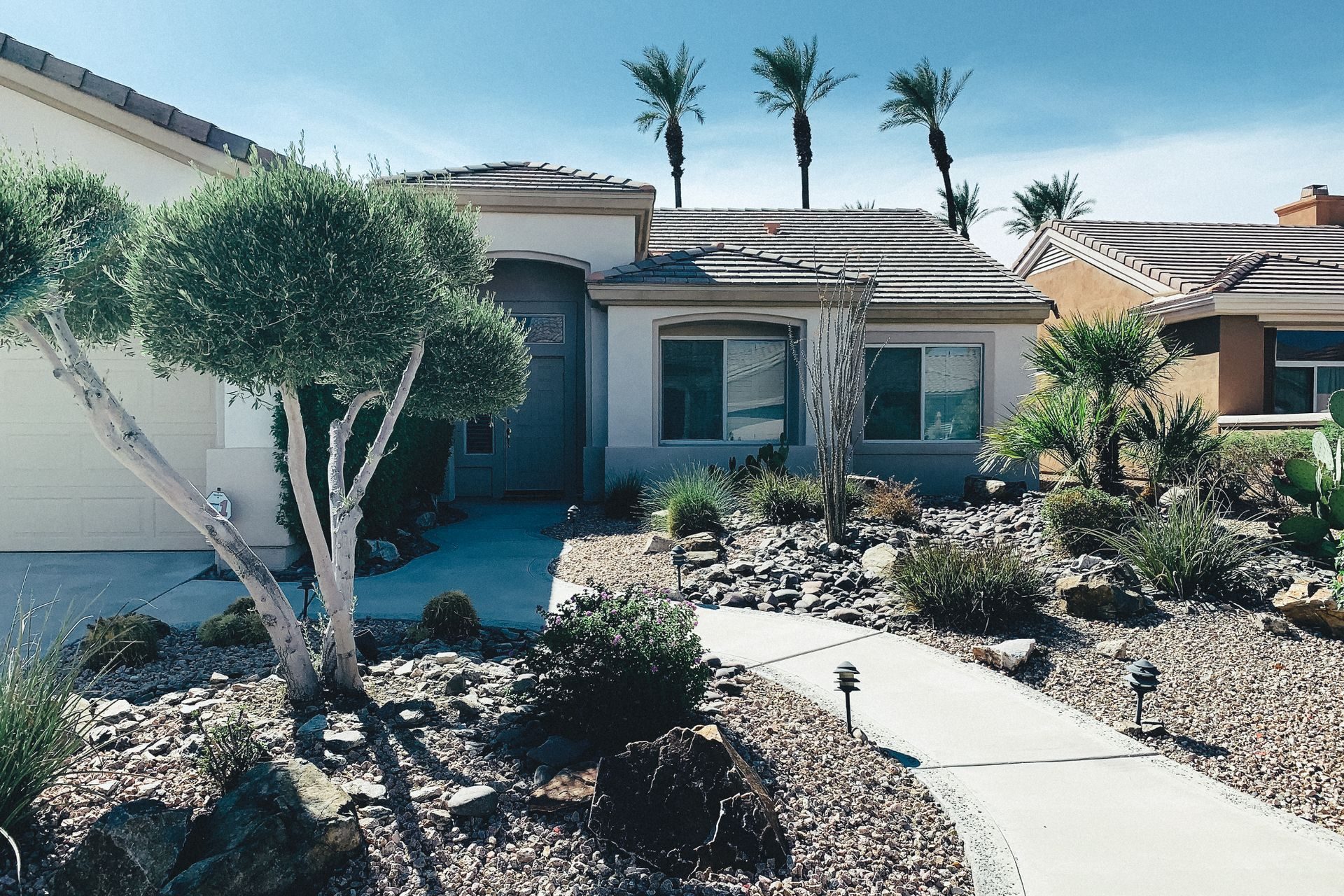
Exterior paint is the clearest case. Dunn-Edwards puts its summer rule plainly, "don't paint in the sun and follow the shade around the house" (Dunn-Edwards, insider tips for the outside), and the product sheet for its EVERSHIELD exterior paint says the company's exterior latex paints can be applied at temperatures up to 120 degrees, while recommending the industry's standard ranges (EVERSHIELD product information). In July, a painter following the shade works the west wall in the morning and the east wall in the afternoon. In February, the whole house runs on an ordinary schedule. Our exterior painting page covers prep and color.
Concrete is the other one. QUIKRETE's hot-weather guidance says concrete typically sets in about 4 hours at 80 degrees, about 2.5 hours after a 10-degree rise, and about 1.5 hours after a 20-degree rise. It calls for placing concrete early or late in the day, cool mixing water, shade and wind breaks, and its Acrylic Concrete Cure & Seal applied right after finishing (QUIKRETE, pouring concrete in hot weather). That's why a July patio pour happens at dawn, and the state hours law lets concrete start ahead of the rest of the crew. A broom-finish patio or a walkway poured in March skips all of it. Our concrete patios page and our comparison of concrete and pavers cover the choice itself.
Inside work is the opposite case. Cabinets, tile, drywall, floors and paint go in under the air conditioning, and an empty house lets the crew move through every room without working around a household. The temperature limits interior materials carry in an empty summer house are in our post on remodeling before you move in.
What Does Monsoon Season Change About the Schedule?
It sets a deadline for anything that opens the house to the weather. The National Weather Service says the monsoon officially runs from June 15 through September 30 (NWS Phoenix, monsoon awareness), and its safety page lists dust storms, downbursts and damaging winds, flash floods and lightning among the hazards (NWS Phoenix, monsoon safety). A roof tie-in for an addition, where the new roof joins the old one, a new window or door opening, a skylight, or a patio cover fastened to the house should all be closed in before mid-June. After that date they get built around the forecast.

Painting has a storm-season rule of its own. Dunn-Edwards says not to paint a day before or after rain is forecasted, so exterior paint in July and August waits for a dry stretch. Inside work carries on. When a storm does get in, our posts on monsoon ceiling water damage and on why Arizona carports fail cover the repair side.
What Does a Snowbird Remodel Cost in 2026?
At 2026 Phoenix-metro rates, a full kitchen in the same footprint runs $25,000 to $40,000, a full bathroom with the drains left where they are $8,000 to $20,000, and a finished, permitted addition about $80 to $500 per square foot, with most landing between $125 and $300. Exterior paint and concrete, the two cool-month jobs, are priced per square foot.
| Project | Phoenix 2026 installed | Best season for a winter resident |
|---|---|---|
| Kitchen refresh, keeping the cabinet boxes | $15,000 to $25,000 per kitchen | Summer, in the empty house |
| Full kitchen remodel, same footprint | $25,000 to $40,000 per kitchen | Summer, with the cabinets ordered in winter |
| Kitchen with a new layout: the sink, a wall or the island moves | $40,000 and up per kitchen | Summer; drawings and permit in winter |
| Bathroom, cosmetic refresh, layout untouched | $4,000 to $8,000 per bathroom | Either; a second bathroom keeps the house usable |
| Bathroom, full remodel, same drain locations | $8,000 to $20,000 per bathroom | Summer |
| Larger primary bath, new tile throughout | $25,000 to $45,000 per bathroom | Summer |
| Primary suite with the plumbing relocated | $45,000 to $60,000 and up per suite | Summer, in the empty house |
| Tub to walk-in shower, tiled, with a glass door | $6,000 to $14,000 per shower | Summer; glass is measured after the tile |
| Room addition, finished and permitted | About $80 to $500 per sq ft; most $125 to $300 | Plan it so the roof tie-in is closed before June 15 |
| Window replacement | $400 to $1,400 per opening | Before the monsoon, since the wall is open while the window changes |
| Exterior repaint | $2.50 to $5 or more per sq ft of wall | Cool months; often $4,000 to $10,000 or more for a single-story home |
| Concrete patio or walk, broom finish | $8 to $15 per sq ft | Cool months; stamped runs about $12 to $20 per sq ft |
| Sun screens | $80 to $180 per window | Spring, before the first 100-degree day |
Phoenix-metro prices for 2026.
Community fees sit on top of these. PebbleCreek's guidelines, for example, charge $100 for each 30-day extension of a major permit.
Plan It This Winter
Send photos of the rooms you want to change and the month you're heading north. We'll tell you what has to be decided before you go, what to order first, and what the work costs.
Plan a Summer BuildWhat Should Be Waiting When You Get Back in the Fall?
A finished job, a final inspection on the permit, and a short written list. Walk every room with the contractor in your first week back, while the summer's work is still fresh, and put anything that needs attention on one list rather than a string of calls. The last 100-degree day averages October 5, which is also about when outside work gets easy again, so that same walk is the time to line up any exterior work for the cool months and to price next summer's project. If you'd like the house opened before you land, our home watch service does that two to three days ahead of your arrival.
What Do Winter Residents Ask Before Scheduling a Remodel?
What time can a construction crew start in the summer in Arizona?
At 5 a.m. on business days from May 1 to October 15 for permitted work, under A.R.S. 9-500.52 and 11-269.30, and at 7 a.m. on Saturdays. In unincorporated Maricopa County, which includes Sun City and Sun City West, the county ordinance allows 5 a.m. starts from April 15 and no weekend or federal holiday work before 6 a.m. The county ordinance ends work at 7 p.m., the state law protects work only until 7 p.m., and a community's own rules can be stricter.
How long is a Maricopa County building permit good for?
It expires 180 days from the date it was issued or from the last completed inspection. The county allows one free extension, requested in writing before the permit expires, which adds 180 days. Renewing a permit within 360 days after it expires costs half the building permit fee.
When does PebbleCreek's architecture committee meet?
The Architecture and Landscape Committee normally meets on Wednesdays at 9:30 a.m. at the Tuscany Falls Clubhouse, and its guidelines ask for major permits and plans by the Friday before. The office is open 8:30 a.m. to noon, Tuesday through Friday, at (623) 935-6747.
How early should cabinets be ordered for a remodel that starts after I leave?
Early enough that the order is placed and its delivery date confirmed before demolition starts. A semi-custom order commonly takes four to eight weeks and custom eight to sixteen weeks or more, and countertops are measured only after the cabinets are installed. For a May start, that means choosing semi-custom cabinets in January and ordering them in February, or choosing and ordering a custom line by December.
Does monsoon season stop construction?
No, but it changes what gets scheduled. The National Weather Service dates the season June 15 to September 30. Inside work goes on, while roof tie-ins, new window and door openings and patio covers fastened to the house should be closed in before it starts, and exterior paint waits for a forecast with no rain a day on either side.
Planning One Project for Next Summer? What Else Fits the Same Empty House?
A summer build brings a crew, dust protection and an empty house nobody has to live around, and that setup rarely comes together twice in a few years. Anything added to the written scope before you leave, rather than by phone in July, commonly comes in 25 to 50 percent below its price as a separate job, because the crew, the protection and the cleanup are already on the schedule.
- Repaint the rooms around the work. A new kitchen makes the family room look tired, and empty rooms paint faster. See interior painting.
- Carry the floor through. One continuous floor from the kitchen into the living areas, laid while nothing stands on it. See vinyl plank flooring.
- Take the popcorn ceilings down. They get tested for asbestos and scraped while the rooms are bare. See drywall repair.
- Add the lights while the ceilings are open. New boxes and recessed lights cost far less before the drywall closes. See light fixture installation.
- Coat the garage floor. The garage has to be cleared for it, which is easier with nobody parking in it. See epoxy garage floor coating.
- Screen the west windows before May. Screened glass lets less sun into a house that sits closed all summer. See sun screens and window tint.
- Price the exterior paint at the same time. Schedule it for the cool months, when the crew doesn't have to chase shade. See exterior painting.
- Have someone checking the house. Visits through the summer, with a dated report. See home watch services.
Text us photos of the house and the month you're heading north, or call (602) 492-1815, and we'll send back a quick quote.

Written by Harrison Norem, owner of Norem Contracting and a licensed Class B general contractor, Arizona ROC #365090. Fifteen years across the trades, including kitchens, bathrooms and remodels across the Phoenix metro and the West Valley. More about Harrison.